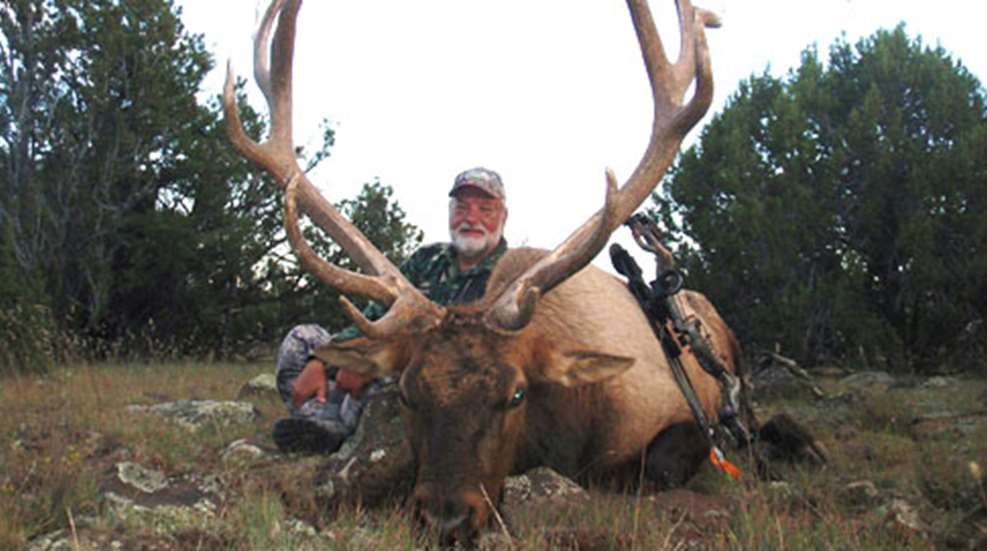
Regardless of where you live, if you are a serious big-game hunter you dream of traveling out West to hunt a giant bull elk, mule deer buck or record-class pronghorn. You may even go a step further and dream of hunting a bighorn ram, bison, Shiras moose, mountain goat or Coues deer buck. If you want to make that dream come true, December is the month in which you need to begin planning your strategy.
Not your hunting strategy per se, mind you, but your tag application game plan. That’s because, with very few exceptions, unless you have the deep pockets and big money required to purchase very expensive landowner tags, to play the western big-game hunting game you’re going to have to try and draw tags. These days, when it comes to western big-game hunting, demand exceeds supply. Because there are more folks who want to go hunting than animals to be harvested, tags are limited. The very best hunts are issued via a lottery draw.
Here are some things you need to know before you ever get started.
• If you do not have a hunter safety certificate, get one. Virtually all states require it, and some require a copy of the card when applying.
• Make sure you have a valid credit card with which you can charge license and tag fees, which can be quite pricey and must be fronted by you. In some states you must purchase a hunting license before applying (and the money is nonrefundable even if you do not draw), while in others you do not. In all states, if you do not draw a tag, the tag fees are refunded minus a handling fee.
• Once you begin applying for a specific species in a particular state, stay with it. Over time, the accrual of bonus and/or preference points will up your odds at drawing a tag.
You must also understand the difference between preference points and bonus points. In a state that uses the preference point system, all tags are reserved for applicants with the most preference points. You are issued a point for each year you apply and do not draw, or if you simply buy a point while not applying to actually draw a tag. The down side to this system is that until you reach the maximum point total—for glamorous species like sheep and some elk hunts, among others, this can be 20 points or more—you will not draw a tag. But once you reach that level, you are guaranteed to draw. In these states it generally makes more sense and is more economical when you’re beginning to apply only for points. Keep in mind that there are many very good hunts out there that only require a handful of points, so you can draw every few years.
Bonus points mean that a computer assigns a random number to each applicant. If there are, say, 20 elk tags available for a specific hunt, then the first 20 random numbers the computer draws are given those tags. A bonus point is, in effect, an extra random number for each year in which you have been unsuccessful in the draw, so the more bonus points you have, the better your chances of drawing. There are also a few hunts in which some states have instituted a maximum bonus point pool, in which some tags are reserved for those with the most points. Technically, with a bonus point system you could possibly draw a tag the first year you apply, but each subsequent year your odds improve.
New Mexico and Idaho are the only two states that do not have either a preference or bonus point system.
If this all seems confusing, that’s because it is. The reality is that today hunters need to plan a decade or more ahead so they can play the tag application game and use the point systems to their advantage. You also need goals. For example, if a huge bull elk is your dream, you need to begin accumulating points in those states where the biggest bulls are found. Then, when you finally draw—and it might take a decade or more—you will have a realistic chance at a big bull. By the same token, never forget that drawing a tag is just the first step and not a guarantee of success of a huge animal. Once the tag is drawn you still have to make it happen. Both outfitter and on-you-own hunts can be successful. Which I choose to do depends on the hunt itself.
There are private tag application services out there that can help you sort through the morass, come up with a game plan that fits your dreams and budget, and hook you up with an outfitter once you do draw if you so desire. Remember that not all tag application services are created equal, so do your homework before throwing in with them. A few that have good reputations include The Huntin’ Fool (435-865-1020), a magazine and application service run by the father and son team of Garth and Jason Carter; and the Cabela’s T.A.G.S. program, where the company will help you apply and in some cases even float the tag fees if you agree to hook up with one of their recommended outfitters when you draw. There are also outfitters in various states that will help their clients handle the paperwork and application process for hunts they run. Before doing any of that, however, one should study each state’s regulations and application procedures so you understand all the ins and outs of hunting that state.
The accompanying chart gives a general outline of each western state and its application system and deadlines. Never forget that deadline dates can change, so be sure to check and remember that applications that are submitted after the deadline, have been filled out incorrectly or the wrong amount of money has been submitted will be rejected.
Because some states have tag deadlines in January and February, you need to begin doing your research and planning now. Good luck and good hunting!