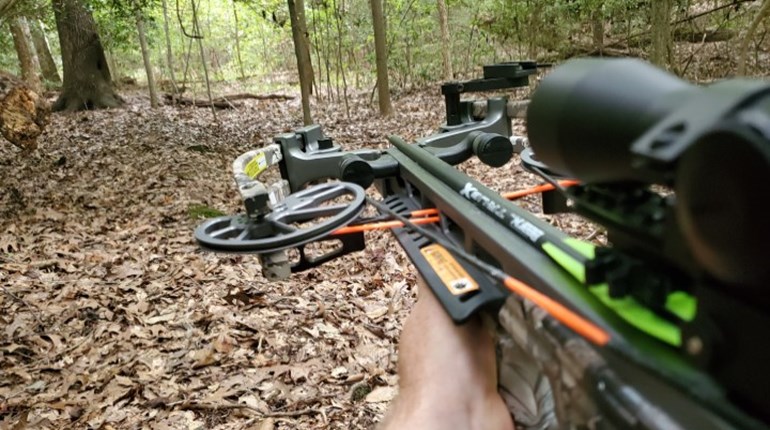
Two very important—yet often overlooked—parts of setting up a new hunting bow are correctly setting nock height and installing a peep sight. Many amateur archers take these steps for granted, yet these minor mistakes can result in impaired accuracy.
To set nock height, you must first decide whether to use a modern string loop or old-style brass nock button. In the old days, archers simply clamped a brass nock set onto the bowstring, placing the arrow’s nock underneath it so the arrow nock would snug up to the button at full draw. Then their fingers were placed above and below the nock set, or if a release aid were used, its jaws were placed under the nock. This works well, but can result in inconsistencies in the pressure applied to the string as well as an inconsistent release—thus, inconsistent arrow flight.
A better system is the string loop, which is nothing more than a short piece of cord tied onto the bowstring above and below the arrow nock. A loop keeps the release aid’s jaws off the bowstring and releases the string from one point, not two, eliminating inconsistencies—resulting in better accuracy.
Tying a string loop can make you feel like you’re all thumbs the first time or two, but it gets easier. To begin, release shooters should mark the bowstring with an indelible pen so the mark’s lower edge is about 1/8-inch above the hole in the riser where the arrow rest attaches. A bow square or simple T square is necessary to get this right. Then tie the top portion of the loop here, with the bottom tied just a bit wider than the width of the arrow nock lower on the string. Make the loop just long enough so your release’s jaw can easily fit onto it with an arrow nocked, but no more.
Getting the peep sight properly inserted into the bowstring at the right height is just as critical.
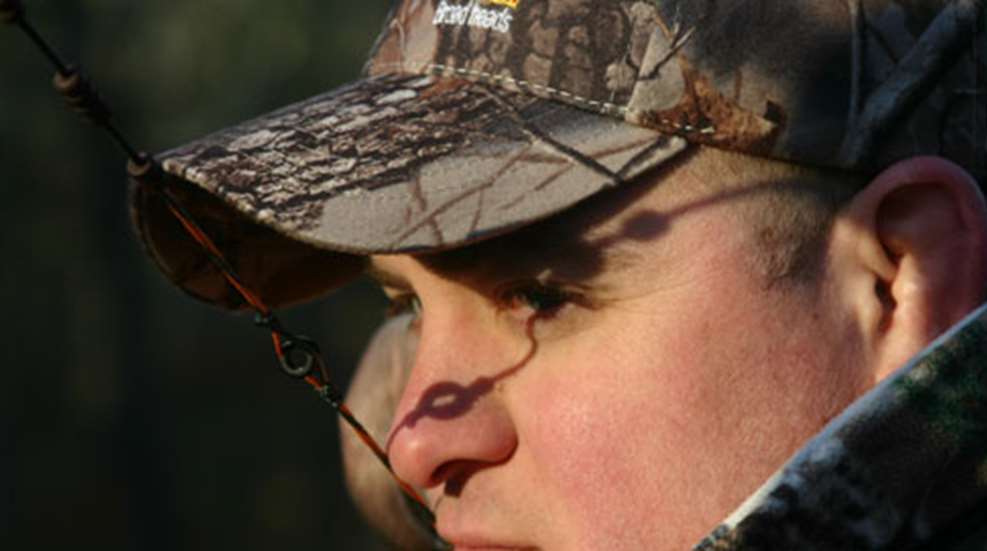
To do this, strap on your release and draw the bow, pretending you are aiming at a target with your head in the proper position. Have a friend mark the bowstring with an indelible marking pen right where the center of your eye pupil is located. This is where you’ll have the lower half of your peep sight hole. If you don’t have a bow press, use the proper Allen wrench to turn the bow’s poundage down. This will loosen the tension on the bowstring, making it easy to insert the peep in between the strands of the string. A small, inexpensive plastic tool designed to separate the strands of the bowstring without damaging them will help greatly in this regard, but I have also done it using a dull butter knife.
Now tighten the poundage back to where you want it, draw the bow back again and check the peep location. You may have to slide it up or down the string slightly, but in the end you want to be able to see right through the peep’s center with your head in the proper shooting position—erect (not slouching forward) with the nose lightly brushing the string.
In my opinion, the best peeps are those that do not use a rubber band to pull them straight at full draw. With most modern compounds and a release aid, you can set up non-tubing peeps to line up right at full draw. Sometimes, though, it just doesn’t work out that way, and when that happens to me—and it does from time to time—I go to the tubing.