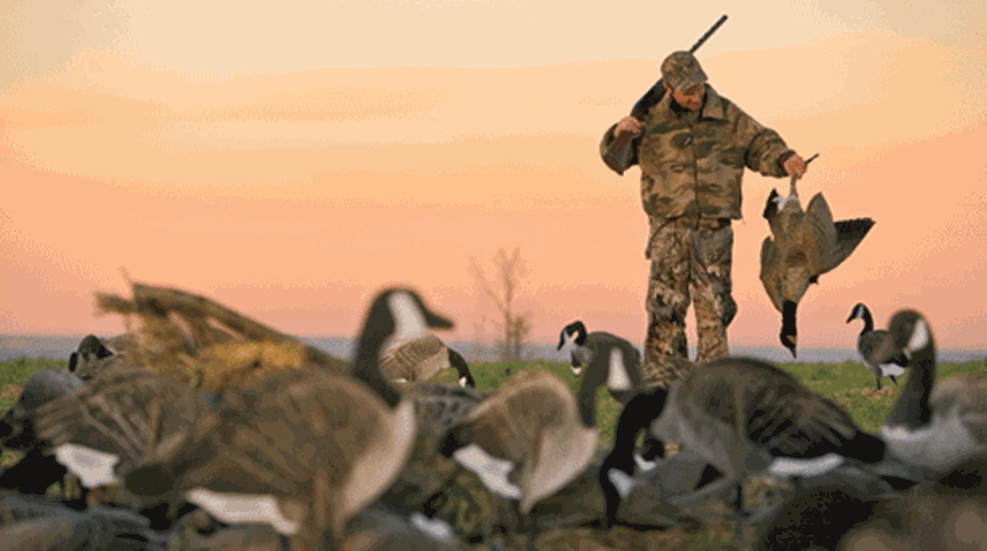
If you’re looking for new decoys, research them by visiting manufacturers’ websites for detailed pictures and suggested retail prices. If they’re available at local sporting goods stores, check them out for realism and durability. Are they going to help you attract more birds? More importantly, do you really need them? And are they that much better than what you already have? Will their different body and head positions enhance your current spread’s drawing power? If you do buy new ones, be a comparative shopper both locally and online, and be sure to factor in shipping costs if applicable.
You can get great deals on last year’s top models by checking out Craig’s List and your area’s version of The Mini-Nickel (weekly classified ads). Being locally based, these venues allow you to evaluate the decoys’ condition prior to buying them. You also won’t pay for shipping, which can kill a good deal in a hurry. Avoid the bidding wars on eBay, because the competitive spirit can sometimes get the best of you. I’ve seen decoys actually sell for more on eBay than they cost brand new! And shipping costs are almost always sizable given the bulky nature of decoys. Craig’s List is free and therefore a better venue for unloading (and obtaining) unwanted equipment. My buddy Andy sells lots of decoys through Craig’s List. There are other benefits, too. Through local transactions he’s met new hunting companions as well as great sources for different hunting grounds and local bird reports. You might find sellers who are interested in owning some of the decoys you want to sell, and a straight-up trade can save you both lots of money.
Keep in mind that some hunters and outfitters change out their entire spreads after every season. Find out who they are and get on their list of buyers. You can often get superb decoys in great condition for a fraction of what new ones cost. Chances are the outfitters got good prices to begin with and are willing to pass those savings on to you.
Those same outfitters got good deals because they purchased in bulk. Whoever you deal with—individuals, sporting goods stores, manufacturers or mail-order outlets—ask about quantity discounts. You might be surprised who’s willing to cut a deal in this economy. If you need only two or three dozen, team up with friends and order in bulk.
It’s amazing how much old equipment you can find in your garage. Rummage around and you might come up with enough old decoys and blinds to fund a couple dozen premium dekes. For the best prices, use yard sales as a last resort. Prospective buyers typically expect screaming deals. Conversely, check out yard sales for great deals on other hunters’ decoys.
If you’re selling, be sure to remove decoy lines and weights from the floaters and reserve them for the replacements. Decoy weights aren’t cheap and prospective buyers are going to value your decoys based on what they cost new. Since new decoys aren’t sold with weights and line, you might as well save money by making the transaction an apples-to-apples deal.
A more indirect way to save money is by purchasing a small number of premium decoys. There are days when more decoys will give you better drawing power, regardless of how they look, but in general you can get by with fewer decoys as long as they’re realistic. Not all ultra-realistic decoys are expensive (GreenHead Gear’s Hot Buy Mallards being a case in point), but buying fewer and more expensive premium decoys can save you money in the long run.
Far fewer decoys are needed when you’re hidden well. This applies particularly to field goose hunters. If you’d spend double the amount of time concealing your blinds, you could probably reduce your spread by half. Even in a flat dirt field, I can usually hide three layout blinds well enough to limit out with three dozen full bodies.
Proper decoy maintenance can keep your old decoys looking good and retain their drawing power. Washing your muddy decoys and repainting white and black areas will recapture critical contrast for long-distance visibility. Re-flocking goose decoy heads makes a huge difference. (For cheaper flocking materials, shop at arts-and-crafts stores.)
Adding motion with goose flags, jerk cords or other means will make any spread more realistic. So will learning how to set one that’s natural looking. A well-placed spread of one- or two-dozen decoys will out-compete most poorly assembled spreads that are five times as big. Spend time observing birds on water or in fields and set your spreads accordingly.
Here’s a big one: Learn how to master duck and goose calls and keep practicing. Then learn when and when not to call. A good caller with a small spread will trump two or three mediocre callers hunting over a huge spread any day of the week