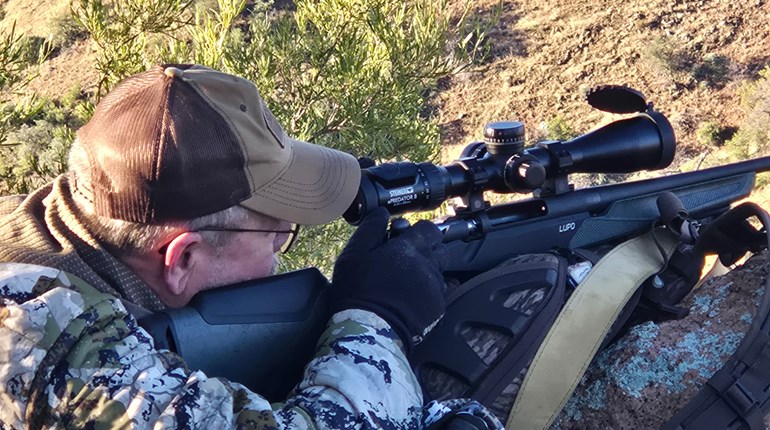
Your beloved deer rifle, duck shotgun and the rest of your firearms want to be faithful and true. They are among the few things we will ever own and use that can be passed down through generations. But they can only survive the hours at the range and the trips into the marshes and forests, no matter the weather, if we care for them properly. Here is how to do that in seven easy steps.
1. Disassemble
First, check and recheck to make sure the firearm is unloaded. Now, lay down the firearm on a stable bench or table, and open the action. Disassemble the firearm as much as you feel comfortable doing. Owner’s manuals, available on most manufacturers’ websites, are helpful guides to disassembly. So is The Official NRA Guide to Firearms Assembly, available for rifles and shotguns as well as pistols and revolvers, at NRAstore.com. Competition guns, or those used for a lot of target or clays shooting, will likely need a thorough cleaning more often than guns dedicated to a certain type of game and season.
2. Clean the Barrel
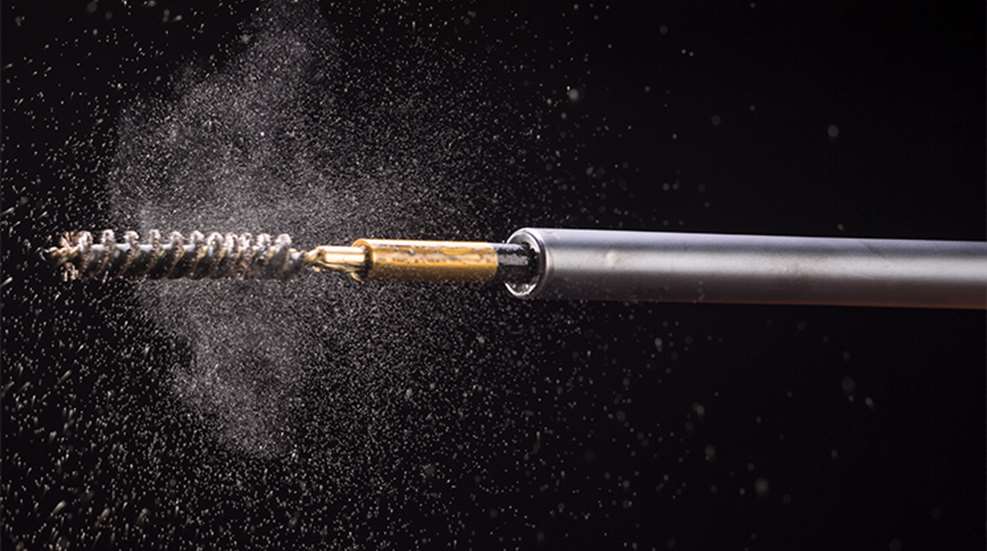
A lot of people think this means simply pushing an oily patch down the bore. A hunting gun, used sparingly, might be fine with this treatment for some time, but you should periodically clean the barrel so that a bore light will reveal bright steel inside. If possible, start at the chamber and work in the direction that projectiles travel with a one-piece aluminum or brass cleaning rod. (Pull-through bore cleaners are great in the field, but a rod is best for a thorough cleaning.)
“Begin with a nylon brush to break up the debris,” says Jason Flinkard, director of shooting accessories for Hoppe’s. “It should be caliber-specific for rifles and gauge-specific for shotguns. Next, use a product like No. 9 Gun Bore Cleaner to clear powder and lead fouling.”
If there is copper residue in the barrel, use a quality product like J-B Non-Embedding Bore Cleaning Compound or Hoppe’s Elite Copper Terminator until you can’t see any more copper streaks in the bore and patches come out clean. Finally, run a lightly oiled patch through the bore. Flinkard says many people over-oil patches. Hoppe’s makes pre-oiled patches to help get this right.
3. Clean the Action
A can of Hoppe’s Gun Medic Action Cleaner or Birchwood Casey’s Gun Scrubber makes this simple. Gun Medic Cleaner is a bio-based formula that evaporates in 60 seconds. Spray down and clean out the action. Also clean other parts, such as the bolt and the trigger. Wipe them down. Small paintbrushes and a can of compressed air can help free debris and excess cleaning solution from internal nooks and crannies.
4. Remove Excess Oil
This is listed as a separate step to reinforce the point that you need to wipe off any accumulated goo beneath the barrel or in the action. After you’ve gotten the gunk off, you can lightly re-oil with a lubricant such as Rem Oil. Put a small amount of oil on a rag and wipe down the metal parts (don’t put the oil directly on the gun). It is especially important to be careful with excess oil when cleaning a firearm that has a wood stock—oil will seep into the wood and soften it.
5. Check the Screws
Examine scope mounts, sling-swivel studs and other external screws on the firearm, such as those that secure the sideplates and grip panels on handguns. Make sure everything is tight and rust-free. If you see corrosion or dirt, remove the scope bases or other parts and thoroughly clean underneath them.
6. Remove Rust and Fix Worn Areas
You can remove light rust by scrubbing with #0000 super-fine steel wool and a little oil. Re-blue worn areas with a product like Brownells Formula 44/40 Instant Gun Blue or Outers Gun Blue. If corrosion or wear is serious and you don’t have the skills, take your firearm to a gunsmith.
7. Reassemble and Wipe Down
Carefully put the firearm back together. Finally, take a clean rag and wipe down the firearm to remove any fingerprint residue. Use a small amount of gun oil on the rag when you wipe down the metal. Close the action and safely drop the firing pin, as it is best to release any tension in the firearm before storing it.