As home to the nation’s most prominent hunter training school, the SAAM Precision course, the FTW Ranch in Southwest Texas is a familiar name to many rifle shooters. FTW’s special operations veteran instructors have watched thousands of hunters put hundreds of thousands of rounds downrange over the past decade, and have a pretty firm grasp of what works and what doesn’t. In 2015, Ruger introduced the FTW Hawkeye Predator rifle based on many of the lessons learned at its namesake property.
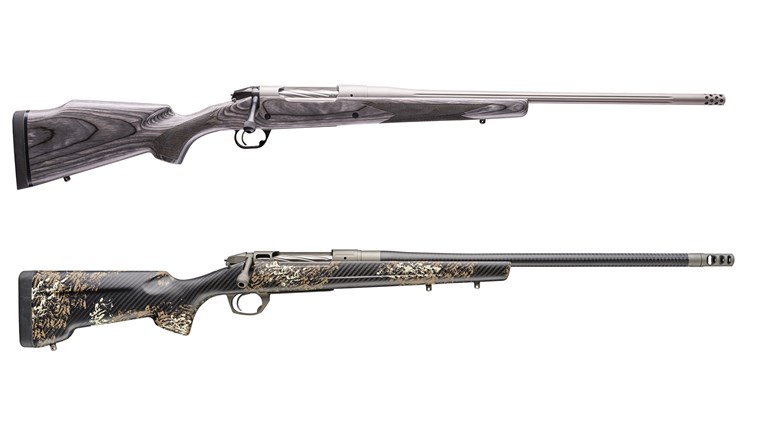
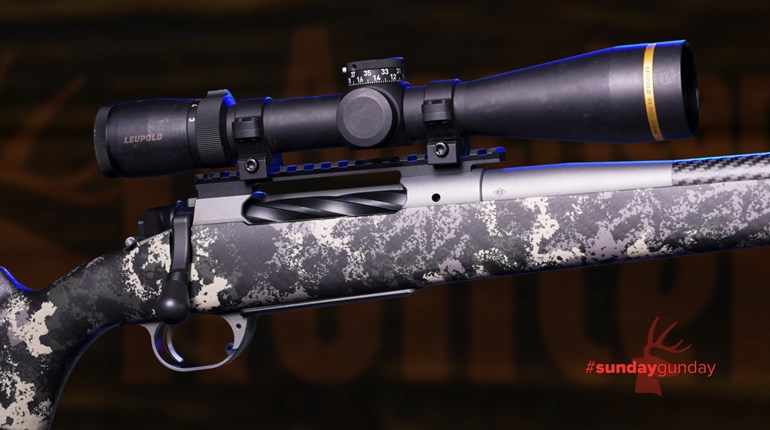
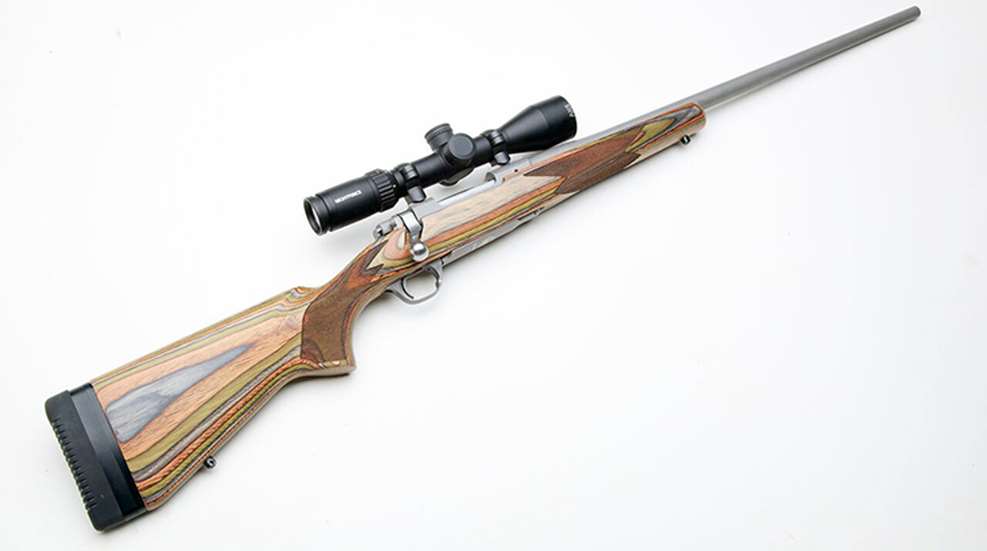
This rifle is built to be shot in the field, with many design elements drawn from the real world experiences of real shooters. The 8-pound stainless steel Hawkeye is not a trendy flyweight, but a rifle that is forgiving and stable away from the safety blanket of the bench; it also won’t pound the shooter with recoil. In my mind, “tactical” bolt guns are often too heavy to be useful for hunting and many hunting rifles are a bit too light to be shot with true precision—this rifle hits the mark just right. Our first generation rifle wore a laminated stock but the newer “Gen 2” rifles come with camouflage synthetics. Another new feature on the second evolution is the addition of a removable muzzle brake. The instructors at FTW have found them to be a vital tool in helping shooters reach their potential. The brake can be removed for hunting, if so desired. The star of the show, though, is the FTW’s two-pound, two-stage trigger. The first stage allows the shooter to get into the target and prepare to take the shot at the two-pound “wall” of the second stage. I cannot recall a better trigger on a factory hunting rifle.
The FTW is built on Ruger’s Hawkeye action, which incorporates several features that you won’t find on the crop of budget rifles that have become so popular in recent years. For starters, the Hawkeye incorporates some proven elements of the Mauser 98 action, including the fixed ejector and non-rotating claw extractor. The three-position safety allows the user to either fully lock the bolt and trigger or cycle the bolt with the safety engaged, depending on the situation. A hinged steel floorplate makes unloading the rifle fast and easy and can’t get lost the way detachable magazines can. Finally, the action uses integral scope mounts and a set of 1” rings come included with the rifle. We used the factory rings for mounting our 12x Leupold target scope for accuracy testing before trading both the scope and rings out for more practical shooting.
The instructors at the SAAM course are very big on rifle fit and natural point of aim. A rifle that fits the shooter is both faster to employ and easier to shoot with accuracy. All of us are built differently and stocks designed to fit the “average” shooter probably don’t fit most of us very well. To accommodate different sized shooters and varying clothing quality, the Hawkeye FTW comes with removable stock spacers that allow shooters to adjust the length of pull (the distance between the center of the recoil pad and the center of the trigger face) by up to 1 1/2”. Adjusting the stock’s length is accomplished by removing the two screws on the butt pad and adding or subtracting spacers until the stock fit is ideal—it’s a five minute process, at worst.
Testing this rifle was a perfectly good excuse for me to head out to Texas and run the rifle through the two-day SAAM “hunt prep” course. We essentially crammed four days of training into two long days of classroom and range time, with a strong emphasis on the latter. This is not a review of SAAM, but suffice it to say that I cannot recommend this course highly enough to anyone that hunts with a rifle. If you think you can’t benefit from training, you simply don’t know how much you don’t know. One of my friends who ran through the course with me is a U.S. Navy SEAL sniper with 19 years and seven combat deployments under his belt—even he came away impressed.
Caliber selection for the FTW was no accident. Students at the school fire up to 100 rounds of centerfire rifle ammunition per day so mild recoil is key. As targets are engaged out to 700 yards and beyond, flat trajectory, great accuracy, quality factory ammunition and bullets with a high ballistic coefficient are “must haves.” For these reasons, the 6.5 Creedmoor was chosen alongside the .308 Win. for the FTW edition. If you’re unfamiliar with the Creedmoor, you are missing the boat—the cartridge is the brainchild of Hornady’s lead ballistic engineer and drives the fantastic 140-grain AMAX bullet at around 2700 feet per second. This also happens to be a great deer load, though one must be mindful of shot placement when hunting with “match” bullets such as the AMAX. With a tougher bullet such as a Partition or TSX, I wouldn’t hesitate to elk hunt with the Creedmoor. PRIME Ammunition’s 130-grain HPBT load shot equally well and provided a full 100 fps of extra velocity at the same ballistic coefficient.
Prior to heading to the school, I spent several days and several hundred rounds getting to know the rifle. 3-round groups with Hornady and PRIME factory ammunition were consistently just over the 1/2 MOA mark. The factory ammo shot so well that I had a hard time beating it, even with carefully constructed handloads. Using Redding’s match dies, 140-grain AMAX bullets, and IMR-4350, I was able to shoot some groups as small as .3” at 100 yards but only by slowing the velocity down by 100 or so FPS. When it was time to head to Texas, I topped the rifle with a Nightforce SHV 3-10x42mm scope set in 30mm Leupold rings and shoot the course exclusively with Hornady’s factory load.
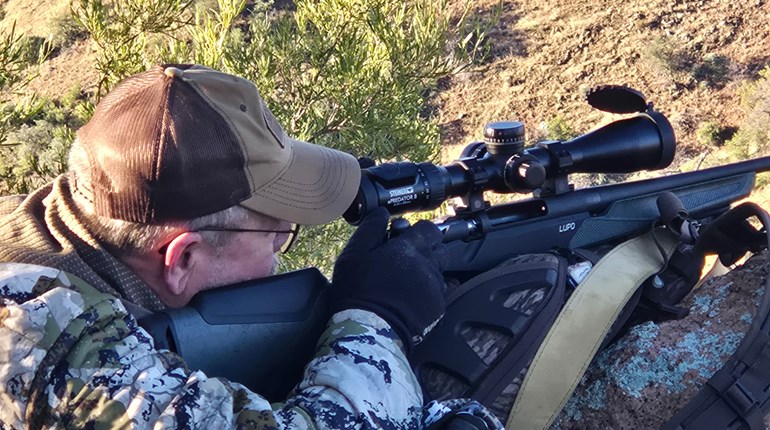
It’s rare that a rifle, scope, and factory load all pull their weight equally but this combination got it done. The intuitive MOAR reticle on the Nightforce, matched with the precise ¼ MOA dials, made holding and dialing for both elevation and windage a simple and predictable process. On the second afternoon of the course, with just a few minutes of shooting light remaining, I quickly got prone behind the Ruger and selected a 15” steel plate at 750 yards. That range equaled 19 MOA of drop, which I quickly dialed into the scope. My spotter gave me a wind call that translated into 4 MOA—I selected the appropriate hash mark on the reticle and exhaled deeply. The trigger’s second stage broke and I called the shot as a good one. Due to the light recoil, I was able to get the scope back on target in time to see the bullet strike the center of the target. I would not have made that shot without great instruction and great equipment—fortunately, there were no weak links in the chain.
Technical Specifications
• Weight: 8.1 lbs.
• Length: 43.25-44.75"
• Barrel: Stainless steel, 24” 1-8” RH Twist 6-groove
• Trigger: Adjustable two-stage, 2.0 Pounds
• Magazine Capacity: 4+1
• Stock: Synthetic
• LOP: 12.75-14.25” (adjustable via spacers)
• MSRP: $1099