Ultra-light rifles are a popular choice for Western big-game hunters who need to cover a lot of ground. They’re pleasant to carry all day, particularly up and down steep, rugged terrain. If counting total ounces on a hunt, ultra-light rifles free up some weight that can be assigned to other essentials like optics, water, food, etc. However, lightening a rifle’s load often comes at a price, sometimes including some extreme skeletonizing of components, or having to pay the figurative “titanium tax.” Building rifle actions out of titanium is expensive—the material costs more than steel and it’s more costly to machine. Quite often titanium actions don’t feel as smooth as steel actions either, albeit they are usually noticeably lighter.
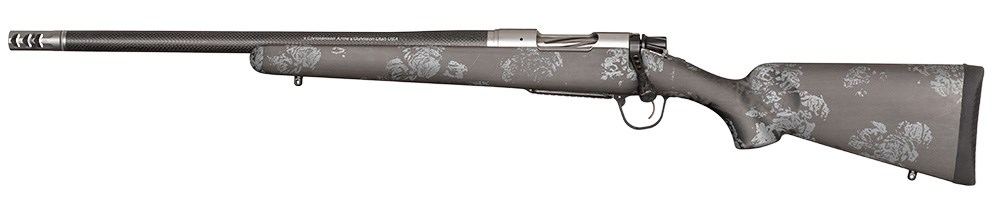
Christensen Arms is known for making lightweight rifles with carbon-fiber barrels. But when I first picked up the Ridgeline FFT, I was surprised. Not only was the Ridgeline FFT light, but it was what I would consider on the verge of ultra-light. I was taken aback because it weighed less than it appeared it would. Given the weight, I immediately assumed it was a titanium action. No, I was happy and again surprised to learn it was stainless steel. There is a titanium option, but at $1,000 more than the steel version. The extra money shaves off one more pound, which is significant given the steel Ridgeline weighs only 5.5 pounds. But a steel bolt-action rifle, with a full-size stock coming in at less than 6 pounds seemed like it was worth checking out.
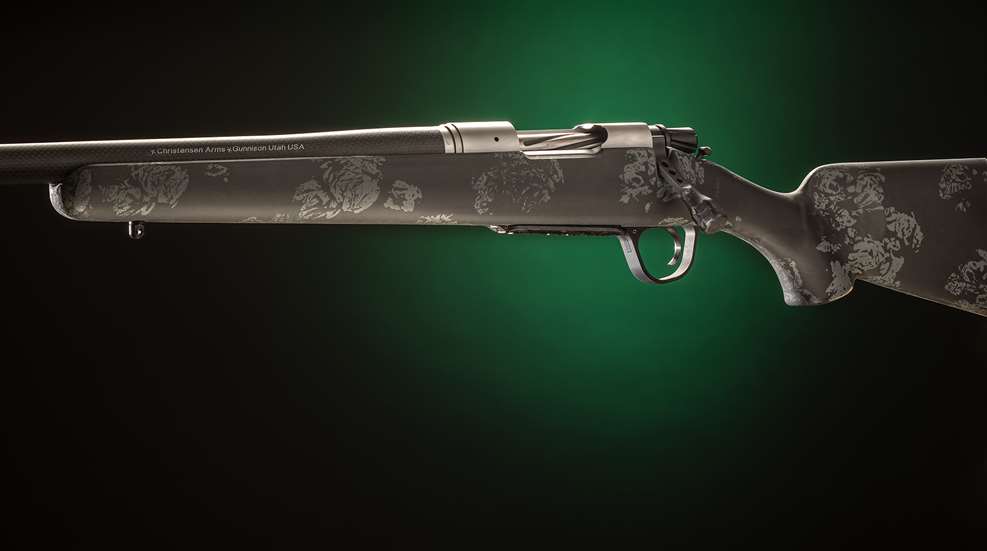
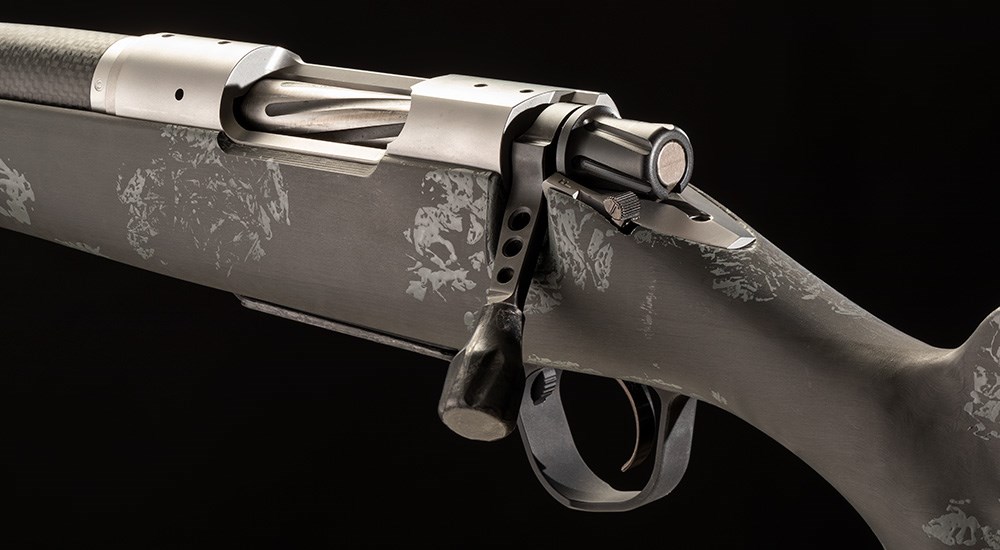
The nuts, bolts and carbon-fibers of the Ridgeline FFT are straightforward and well-executed. At a glance it appears like a typical bolt-action hunting rifle. A closer look quickly shows that it deviates from the standard and reveals how it weighs so little in comparison to its appearance. The heavy profile carbon-fiber barrel is the first thing you’ll notice. It’s a fairly large diameter, but being carbon fiber with a steel liner, it’s also fairly light. The action is attractive with only a slight relief of material for weight saving between the front and rear receiver rings. The Ridgeline FFT uses the same scope bases and stocks as a Remington 700. Fluting on the bolt and bolt shroud helps shed a few ounces, as does the carbon-fiber bolt handle. The muzzle brake is stainless steel, which is surprising given the overall weight. The bottom metal assembly is aluminum with a forged carbon-fiber floorplate that looks amazing and is responsible for even more weight savings.
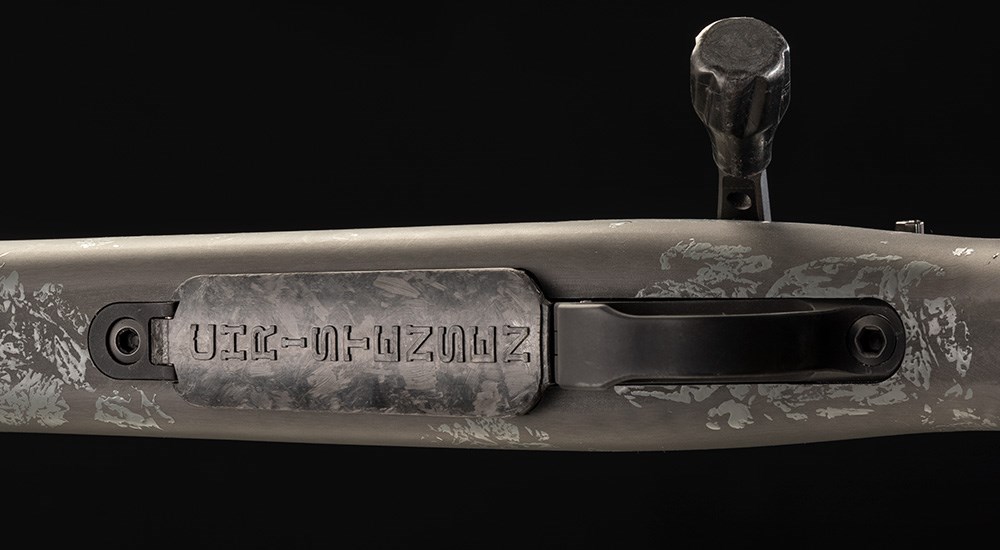
While thoughtful features in the action, bottom “metal” and other areas help shed weight, it’s the stock that is the hero in this battle with gravity. Like the bolt knob and carbon-fiber floorplate, the stock is made using Christensen’s Flash Forged Technology, or FFT for short. Unlike layup or prepreg carbon-fiber manufacturing processes, FFT utilizes omni-directional carbon-fiber strands and resin formed in a compression mold. This lets the manufacturer make complicated shapes that would be difficult or impossible with the other processes, and it’s cost effective. Our stock sample weighs only 1 pound, 3 ounces. That is light by any standard. My Glock 19MOS with a Holosun sight weighs more than that unloaded. To put it in perspective, an old McMillan stock I have laying around weighs 3 pounds, 12 ounces, and an old lightweight polymer Savage stock weighed in at 2 pounds, 3 ounces. In addition to being light, the Ridgeline FFT’s stock is stiff, with the fore-end showing only minimal deflection with significant pressure. Traditional sling swivel studs are included. Different color accents and camo finishes are available.
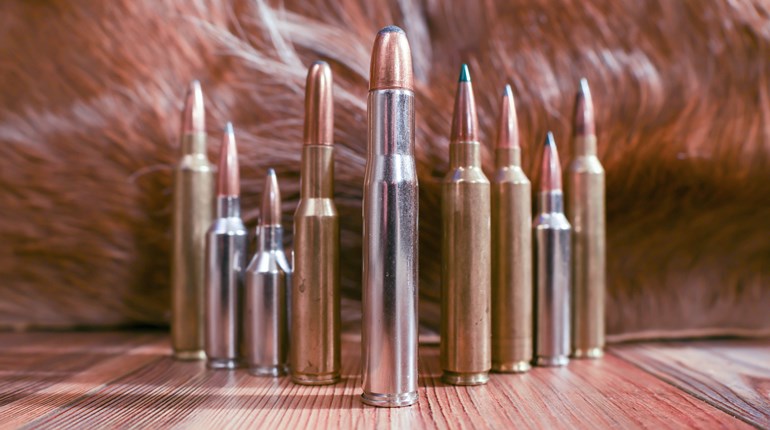
The Ridgeline FFT can be had in short- and long-actions, some in left hand (like my 6.5 PRC test rifle), in pretty much any cartridge you would want in a lightweight rifle, and some you probably don’t.
The Ridgeline FFT is built as a hunting rifle. Focusing on reliability, it utilizes a Sako-style extractor and dual plunger ejectors. During our testing there were no failures to feed, extract or eject. Another similarity to the Remington 700 is the dual locking lugs and 90-degree bolt throw. TriggerTech provides the fire control. Our sample’s trigger pull weight without any adjustment was 2 pounds, 3.6 ounces with no creep, a clean break and very little over travel. The two-position safety does not lock the bolt closed, but that means you can work the action to load and unload the rifle while it is on “safe.” Our test rifle, in 6.5 PRC, has a skeletonized internal box magazine with a three-round capacity.
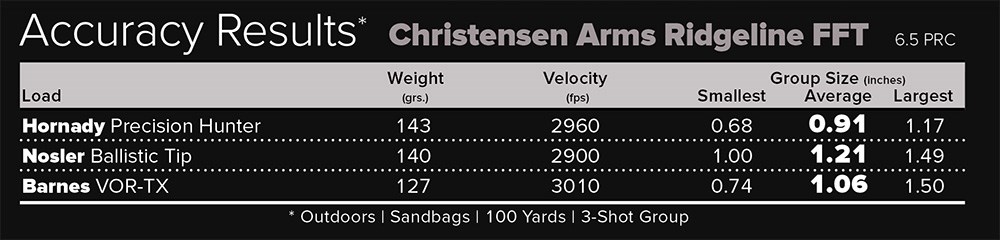
Its light weight will make the Ridgeline FFT a great rifle to tote around, but how will it shoot after being carried over hill and dale? To find out I mounted the new Burris Veracity PH 4-20x50mm riflescope with Leupold bases and rings. This is a heavy scope and not likely what you’d put on this lightweight rifle, but I wanted to test accuracy and the magnification helps for shooting tight groups. Ammunition used included loads from Barnes, Hornady and Nosler.
Overall accuracy was quite good. It is important to keep in mind that the carbon-fiber barrel consists of a thin steel barrel or liner wrapped in carbon-fiber. This does mean the steel heats up quickly. You probably are not going to shoot multiple sub-MOA groups in rapid succession. The barrel heats up, and the groups open up. That’s just a fact with barrels like this sometimes. That’s perfectly OK though, this is a hunting rifle, not a high round-count competition rifle.
After shooting a lot of ARs and chassis-type setups, it was nice to get behind a more traditional rifle, “an elegant weapon for a more civilized age.” The Ridgeline FFT is a svelte setup with good ergonomics. One interesting note is that the stock is so light that the setup felt top-heavy with the weighty scope mounted above, feeling like the rifle wanted to roll side to side. Just something to think about when choosing your optic for this rifle.
There are a few things to nitpick about the Ridgeline FFT. The stock’s fore-end is thin and rounded. Some casual shooting in the coastal range showed that when combined with the weight of a heavy optic, it is difficult to keep the rifle from rolling side to side when shooting from bags or a pack. It would be nice if the fore-end were a bit wider or had a flat bottom for stability. An optional Picatinny rail up front would also be nice for using bipods that attach that way. Lastly, QD cups embedded in the stock for push-button sling swivels would be great. None of these keep me from wanting to take this rifle hunting.
It has been said that ounces add up to pounds, and pounds add up to pain. Feeling weighed down by heavy gear, including your rifle, can be a real drag when climbing up and down terrain looking for an animal or maneuvering for a shot. The Ridgeline FFT is a pleasant surprise in that it’s most definitely light for a bolt-action hunting rifle, without an excessive amount of skeletonizing or titanium, or an excessive price tag for that matter. No, it’s not cheap by any means, but it’s quite reasonable, and there certainly are more expensive options that don’t necessarily buy you anything but a lighter wallet.
Technical Specifications
• Type: bolt-action centerfire rifle
• Caliber: .450 Bushmaster, .22-250 Rem., .243 Win., 6 Creedmoor, 6.5 Creedmoor, 6.5 PRC (tested), 6.5-284 Norma, 6.8 Western, 26 Nosler, .270 Win., .270 WSM, 7mm-08 Rem., 7 PRC, .280 Ack., 28 Nosler, 7mm Rem. Mag., .308 Win., 30-06 Sprg., 30 Nosler, .300 WSM, .300 Win. Mag., 300 PRC, .300 RUM.
• Magazine: internal w/hinged floorplate; 3-rnd. capacity (6.5 PRC)
• Barrel: 20" (6.5 PRC); carbon-fiber wrapped 416R stainless steel; button rifled; 1:8" RH twist; free-floating; threaded 5/8x24 TPI w/muzzle brake
• Trigger: TriggerTech; single-stage; adjustable pull weight 1.5-4 lbs.
• Sights: none, drilled and tapped for Rem. 700 bases
• Safety: two-position toggle
• Stock: Christensen Arms FFT carbon-fiber; straight comb, sporter-style; multiple finish options available; 14" LOP
• Metal Finish: stainless steel or Burnt Bronze Cerakote
• Overall Length: 41.5"
• Weight: 5 lbs., 6 ozs.
• Accessories: none
• MSRP: $2,399.99; christensenarms.com