Why do I hate the .270 Winchester? Well perhaps for the same reasons I dislike fish dinners, smart cars and rap music—they just are not to my taste.
First off, the .270 is too popular, and I have always disliked running with the crowd. I usually find the misfits of the world much more interesting, but I can’t make that argument and still talk about how much I like the even more popular .30-06 Springfield without embracing hypocrisy.
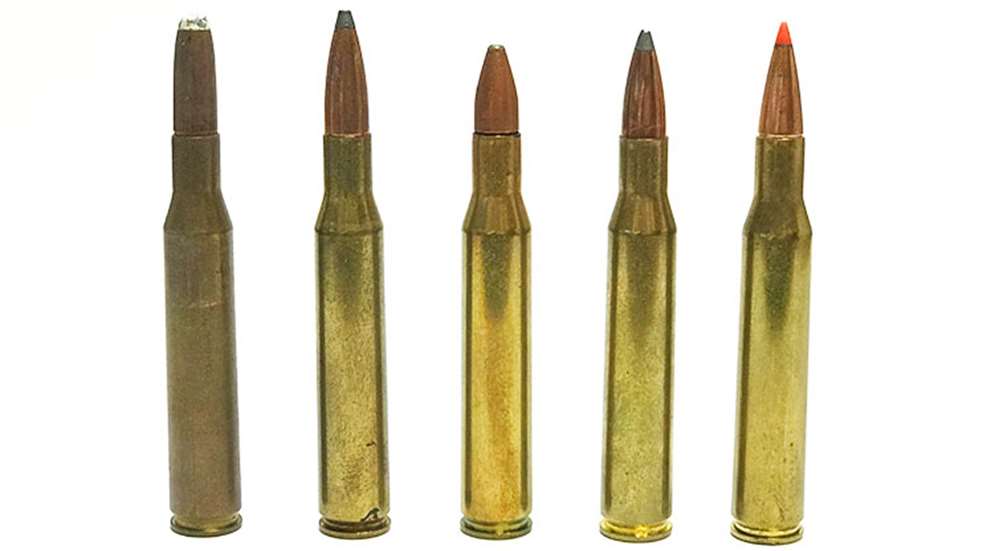
The .270 Win. was introduced in 1925 along with a new Winchester bolt-action rifle—the Model 54. It ushered in a new era for American hunters, with a muzzle velocity in excess of 3000 fps, and a bullet big and heavy enough for big game. It’s a mystery exactly why Winchester chose the .277-inch bullet diameter. One theory is that the company wanted something different and distinctive from the bullets everyone else was using. The 30-caliber was well established with the .30-06 Springfield, .30-30 Win., .30-40 Krag and other cartridges. The 7mm cartridges were mostly European at the time and not popular with or well-known by American hunters. That left the .250-3000 Savage as the next step down in popular U.S. rifle cartridges. I don’t think it’s any accident that the .270 Win. split the difference almost exactly.
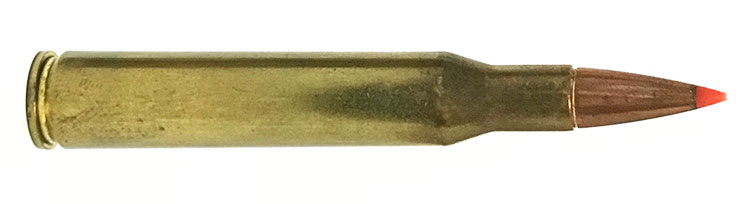
The .270 Win. was an orphan for 20 years. Then for the next 56 years, its only sibling was a stepbrother, the .270 Weatherby Magnum. The latter is a good cartridge, perhaps even a great cartridge, but it has never enjoyed the commercial success of the .270 Winchester.
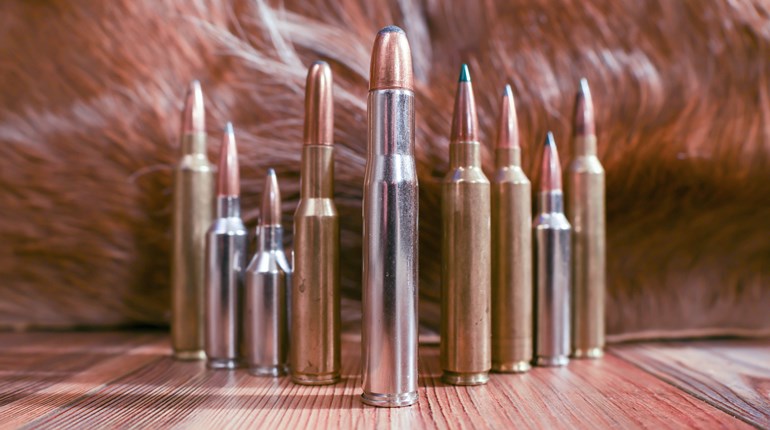
It’s only recently that a few more 27-caliber cartridges have entered the market. The .270 WSM was introduced in 2001, but sales withered in the shadow of its bigger sibling, the .300 WSM. The 6.8 SPC was introduced commercially by Remington in 2004 and was designed to bring a bit more performance to the AR-15 rifle platform. It has a small but loyal following.
The truth is, the .270 Win. is the only 27-caliber cartridge that enjoys huge commercial success—and it didn’t gain popularity until decades after its release. My guess is that if the .270 Win. were introduced into today’s “make-or-break” market, it likely would never have survived. Its eventual success is attributed to the writings of Jack O’Connor, who is often quoted as saying he thought the .30-06 was a better cartridge.
It’s said that foolish people get their opinions from others, but intelligent people form opinions from multiple sources, including their experiences. My experiences with the .270 Win. have not been very impressive.
The first time I saw it in action was back in the ’60s when my grandfather shot a whitetail on the point of the shoulder. It politely fell down and didn’t move. It was, however, in a different pasture on the other side of a fence. When we arrived, the deer was gone. We looked long and hard, but never found it.
Years later, I was hunting moose in Newfoundland and I watched a man shoot a spike bull seven times with a .270 Win. The last shot hit the spine, and mercifully the bull tipped over and hit the ground. I gutted it for him, and was shocked to find most of the bullets only penetrated about halfway through the moose.
I could, and have, blamed both of those experiences on bullet failure. While I’ll never know for sure with my grandfather’s whitetail, the moose hunter spent thousands of dollars on his hunt, yet went cheap on his ammo. He had the lowest priced, bargain-basement ammo he could find.
Bad bullet, not a bad cartridge? Not so fast.
Several years later, I was hunting mule deer in Montana when I spotted a rutted out, scrawny buck with a huge rack. I shot him with a .270 Win. loaded with factory ammo using the latest, high-tech wonder bullet. The deer dropped, but as I walked closer it tried to get up, so I shot it again. Both were broadside shots, and neither of the 140-grain bullets managed to exit the deer’s body.
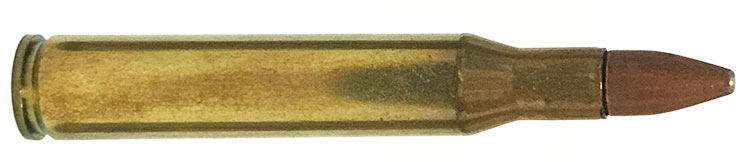
I have plenty of other experiences with the .270 Win. that were also less than impressive—whitetails in Alabama, Maine, Saskatchewan and probably a few other places I am mentally blocking. There was a hog in California and an elk in Colorado. They all died, so the unimaginative will argue that the cartridge worked. I am a student of terminal ballistics, and can tell you without hesitation that in each of these circumstances it did not—at least in the technical sense. The fact that the critter died was secondary to the failed performance of the cartridge.
I used to do a lot of black bear hunting in Canada and I think I have tracked more wounded bears that were hit with the .270 than all other cartridges combined. But don’t just take my word for it. Kenny Jarrett—inventor of the legendary Beanfield Rifle, the .300 Jarrett cartridge and a world-traveled hunter—told me that hunters lose more deer at his Cowden Plantation in South Carolina with the .270 Win. than with any other cartridge.
I know this will ruffle some feathers, as the .270 has a large, loyal following. I understand that it makes no sense that I’ve had better luck with a .243 Win. than with the .270 Win. I’m a huge fan of the .280 Remington, but when you compare it to the .270 Win., there is little ballistic difference. Explain it? I can’t—at least not from a technical standpoint.
Most will agree that our dislikes and biases are often anything but logical. If you love the .270, I understand—there is no need for you to send me hate mail. I am simply explaining why I do not. I’ll bet there is a cartridge out there you feel the same way about.
For the record, I am stubborn. If anything, I continually try to prove myself wrong. I own several rifles chambered for .270 Win. and keep hunting with them, mostly because I like a little contradiction in my life. I find it keeps things interesting. But it also ensures that my opinions are drawn from a solid foundation of experience. I maintain they are.
It seems no matter how hard I try—as with the search for the Holy Grail—my quest to find love for the .270 has gone and may always remain unfulfilled.