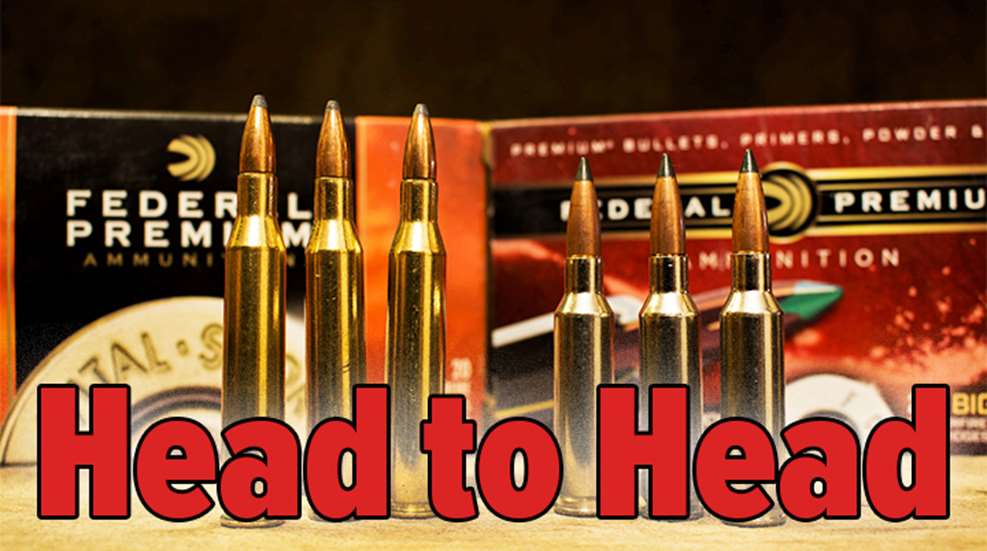
Yes, I brought the 6.5 Creedmoor back into the mix. And before you swipe away or click the back button or use whatever means of escape, please realize that while I recognize the merits of the Creedmoor design, I also don’t worship it blindly. But there’s no denying its popularity, and I get enough requests for an alternative cartridge with a similar performance level that I felt a comparison between these two is warranted.
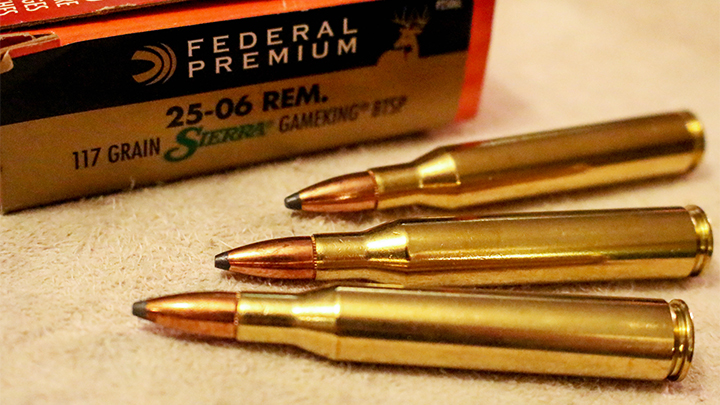
.25-06 Remington
For deer, antelope, sheep and similar-sized game, the .25-06 Remington has long been a favorite among hunters. Remington has a knack for adopting wildcat cartridges and bringing them to the masses; the list includes the .22-250 Remington, the .35 Whelen, the .257 Roberts, (perhaps disputably) the .416 Remington Magnum and the .25-06 Remington. The cartridge had been around in various iterations, being initially developed by Charles Newton as early as 1912, with versions offered by A.O. Neidner and even by the Frankford Arsenal during the First World War, but it wouldn’t be until 1969 that the .25-06 Remington in its commercial form would be available.
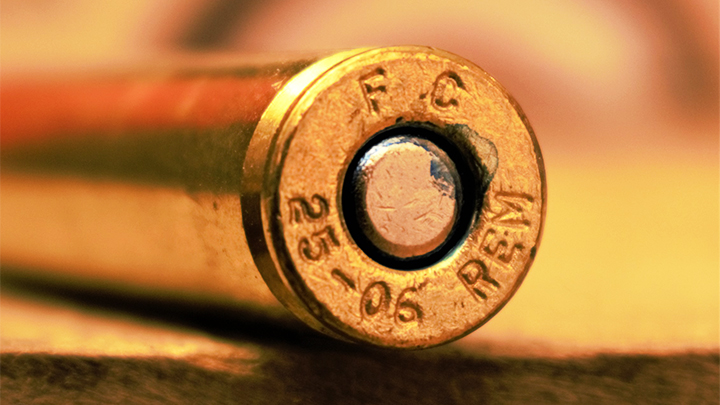
It is a simple design: nothing more and nothing less than the .30-06 Springfield case necked down to hold .257-inch diameter bullets. Unlike the .270 Winchester and .280 Remington—which use the .30-03 Springfield as a parent case and maintain the 2.54-inch case length—the .25-06 Remington (and the .35 Whelen) uses the shorter .30-06 Springfield as a parent case and shares the same 17-degree, 30-minute shoulder angle. The overall length of the .25-06 Remington is a bit shorter than the .30-06 (3.250 inches vs. 3.340 inches) and the factory ammunition usually features bullets weighing between 85 and 120 grains, with the most popular choices being those hunting bullets between 100 and 120 grains.
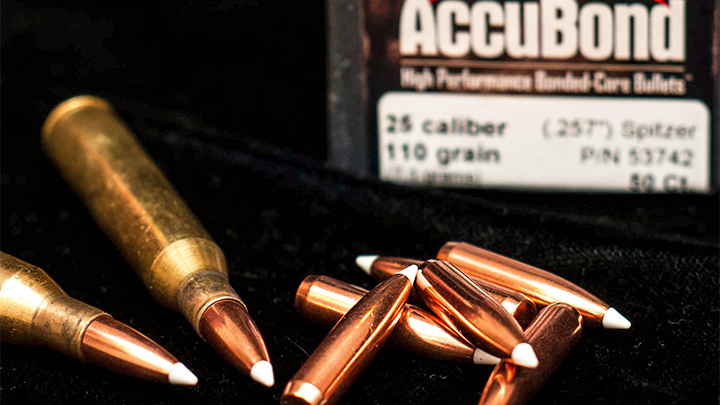
Primarily a hunting cartridge, the .25-06 is well-suited to game animals up to the size of caribou; though there have been elk, moose and bears taken with the .25-06, there are most certainly better tools for the job. It was, when I was younger, considered to be the quintessential antelope cartridge. The 100-grain bullets leave the muzzle at over 3200 fps—and that includes a number of the monometal choices—and the 117- and 120-grain choices average a muzzle velocity between 2950 and 3100 fps; this results in a great trajectory for the hunter. Looking at Federal’s 117-grain Sierra GameKing spitzer boat tail load, you’ll see a trajectory almost identical to the .300 Winchester Magnum with a 180-grain bullet; using a 200-yard zero, your bullet will strike 6.7 inches low at 300 yards and 19.7 inches low at 400 yards. If there is a problem with the .25-06 Remington, it is that the bore diameter tops out at 120 grains, so using it for the larger species may not be the most sound decision. Despite the high velocities, the recoil of the .25-06 Remington is negligible in comparison to other big game cartridges, and can be effectively used by almost all shooters.
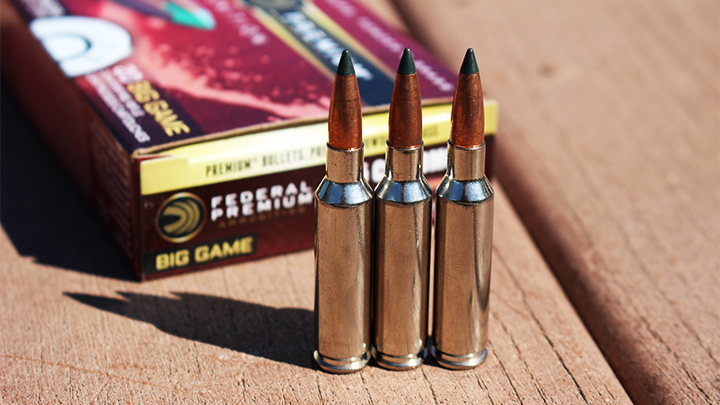
6.5 Creedmoor
The 6.5 Creedmoor is based on the now-obscure .30 T/C (designed to give true .30-06 ballistics in a short action cartridge) and has gained both lovers and haters during the last decade or so. Released in 2007, the 6.5 Creedmoor has a shorter case than does the similar .260 Remington, and can use the longer, high ballistic coefficient (BC) bullets in a short-action magazine much easier than the .260 can, and is equally at home in the hunting fields as it is on the target range. Recoil is very manageable, and ammunition availability and choices are increasing every year. While it was designed to function in the AR-10 magazine, it caught on in the bolt-action rifles among the target shooters, and makes a good choice in the hunting fields as well. The high BC bullets of the 6.5mm bore diameter retain much of their energy and resist the effects of wind deflection well, making the Creedmoor (and many other 6.5mm cartridges) a great choice for double duty as both a hunting and target cartridge.
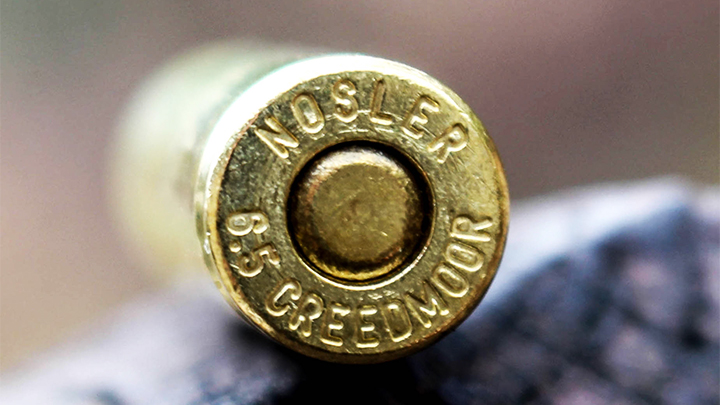
Hunting ammunition is usually built around bullets weighing between 120 and 140 grains, with a handful of loads using the 156-grain bullets. Muzzle velocities for the 120-grain bullets run around 2900 fps, the 130-grain bullets leave the barrel at about 2850 fps, and the 140- through 143-grain bullets run at roughly 2700 fps. The 140-grain bullets are the most popular, and looking at the Federal Terminal Ascent 140-grain hunting load, the trajectory isn’t much worse than the .25-06. Using that 200-yard zero that 140-grain bullet will strike 8.5 inches low at 300 yards, and 24.3 inches low at 400 yards.
For the hunter looking for a cartridge for species lighter than elk, which makes the better choice? With a sleek bullet, both cartridges maintain over 1,000 ft.-lbs. of energy out the 500-yard mark, and both offer a trajectory any hunter can quickly adapt to. I think the additional bullet weight of the Creedmoor can be an advantage for those who will insist on using the cartridge for elk and larger species. I also think the Creedmoor is the better choice for the shooter who wants one rifle to serve as both a hunting rifle and a target rifle; at common hunting distances though, the two can be so similar that the choice wouldn’t matter, save the bullet weight.
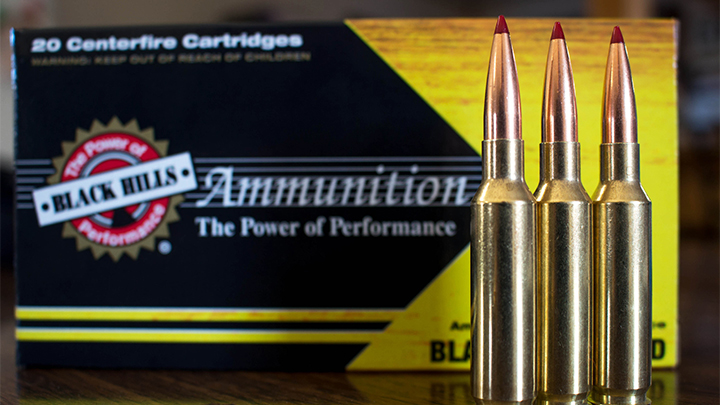
I’ll have to give the edge to the 6.5 Creedmoor, simply based on that bullet weight, though I want to go on record as saying the .25-06 Remington is a very useful, accurate and well-balanced cartridge. Among the .25-caliber cartridges, it may be my favorite, as it is speedy yet not terrible on barrels, and hits harder than the paper ballistics would indicate. In this instance it is simple a comparison of the 6.5mm bore to the .25-caliber bore; the 6.5’s additional bullet weight makes it a more flexible choice.
Looking for previous installments of our "Head to Head" series? We've got you covered.
• .444 Marlin vs. .45-70 Government
• 7x57mm Mauser vs. .280 Remington
• .300 Win. Mag. vs. .300 Wby. Mag.
• .375 Ruger vs. .375 H&H Magnum
• 7mm-08 Remington vs. .280 Remington
• .280 Remington vs. .280 Ackley Improved
• 7mm vs. .30 Caliber
• 6.5 Weatherby RPM vs. 6.5 PRC
• .338 Win. Mag. vs. .340 Wby. Mag.
• .300 RSAUM vs. .300 WSM
• .500 Jeffrey vs. .505 Gibbs
• 7mm RUM vs. .300 RUM
• .308 Winchester vs. 7mm-08 Remington
• 6.5 Creedmoor vs. .260 Remington
• .303 British vs. 8x57 Mauser
• .30-06 Springfield vs. All Other .30s
• .17 HMR vs. .17 WSM
• .450 Nitro Express vs. .470 Nitro Express
• 350 Legend vs. .35 Remington
• .280 Ackley Improved vs. 7mm Rem. Mag.
• .404 Jeffery vs. .416 Rigby
• .243 Winchester vs. 6mm Creedmoor
• .300 PRC vs. .300 Win. Mag.
• .30-06 Springfield vs. .270 Winchester
• 6.5 Creedmoor vs. 7mm-08 Remington
• 8x57 Mauser vs. .318 Westley Richards
• .358 Winchester vs. .350 Remington Magnum
• .22-250 Remington vs. .220 Swift
• .270 Winchester vs. .270 WSM
• .26 Nosler vs. 6.5-300 Weatherby Magnum
• .458 Win. Mag. vs. .458 Lott
• 7mm Rem. Mag. vs. .300 Win. Mag.
• .243 Winchester vs. 6mm Remington
• 7x57mm Mauser vs. 7mm-08 Remington
• .25-06 Remington vs. .257 Weatherby Magnum
• .338 Winchester vs. .375 H&H Magnum
• .30-30 Winchester vs. .35 Remington
• .257 Roberts vs. .250-3000 Savage
• .270 Winchester vs. .280 Remington
• .35 Whelen vs. 9.3x62mm Mauser
• .416 Rigby vs. .416 Remington Magnum
• .308 Winchester vs. .30-06 Springfield
• .22 Nosler vs. .224 Valkyrie
• .300 Win. Mag. vs. .300 WSM
• .223 Remington vs. .22-250 Remington