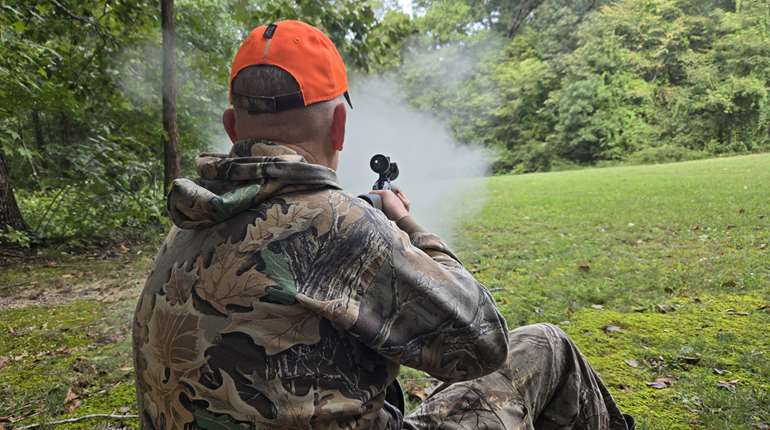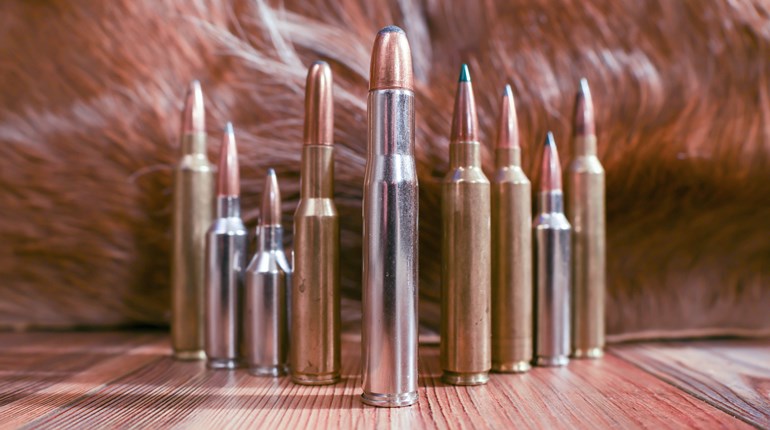
Twenty-six years ago this fall, waterfowlers were forevermore barred from using lead shot while hunting migratory birds in the United States. Though the 1991-1992 season was the first time steel shot was required nationwide, lead-free duck and goose hunting had already been the norm in certain parts of the U.S. since the mid- to late ’80s. And, as any observer of the gun industry knows, regulation often leads to inspiration. As steel shot became more prevalent, the market saw a sudden demand for a larger payload. The result: 3½-inch steel shotshells, and firearms capable of chambering such dynamite sticks.
Mossberg’s 835 pump gun, debuting in 1988, was the first such scattergun to be commercially available. A few years later, Benelli rolled out the original 31/2-inch semi-automatic. You’ve probably heard of it. In the decades since, shotguns chambered for 3½-inch shells have become a staple for waterfowlers and turkey hunters alike—if a company produces shotguns, it typically has at least one 3½-inch model. Thing is, they’re often among the more expensive shotguns you’ll find on the shelf—which is just part of what makes the new Viper Max from TriStar all that more intriguing. The company’s first 3½-inch semi-auto launched with an MSRP of $730.
Based in Missouri, TriStar imports its goods from Turkey and has spent the better part of the last 20-odd years delivering value-friendly firearms to the American market. Some hunters may snub their nose at the thought of a Turkish-made shotgun—let that be their loss. More companies than you might know import their wares from Turkey, and TriStar’s are true quality. The company has enough faith in its guns to offer a five-year warranty. It’s hard to argue with that.
 While the Viper Max represents a first of sorts for TriStar, the company’s signature gas-operated semi-auto Viper G2 series has long included 3-inch shotguns in a bevy of configurations. TriStar also offers a 3½-inch over/under it calls the Hunter Mag, and a 3½-inch pump gun known as the Cobra Mag. The new semi-auto is an extension of the Viper G2 line, hence the name.
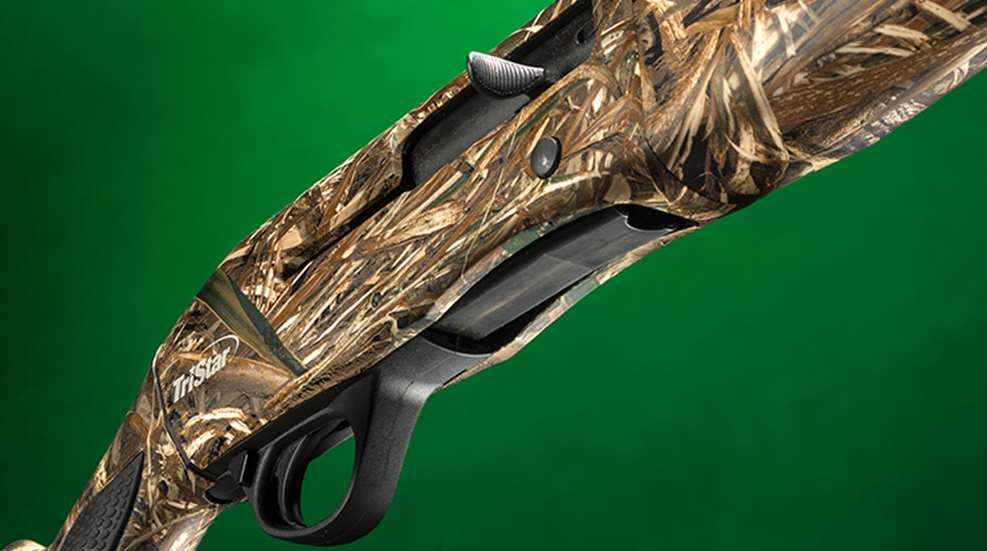
We’ll start with the aesthetics. Straight out of the box, the Viper Max looks and feels like a shotgun at a significantly higher price point. The model I tested featured a Realtree Max-5 stock (a black synthetic version is also available). The forearm and buttstock feature over-molded rubber grips, and the entire forearm has an inviting, rubberized feel to it. A cheek pad is embedded into the comb—a perk not found on many guns within the “budget” class.
The same can be said of the magazine cut-off feature: It’s a nice extra, especially considering the price. The cut-off “switch,” situated near the trigger guard, locks the lifter in place. It allows you to eject the shell from the chamber and lock the bolt open, but keep shells in the magazine just in case. You’re empty without being empty, so to speak.
Another feature that adds both value and performance is a fiber-optic front sight that sits atop a vented rib with a finely checkered surface to reduce glare. In addition, the chamber and barrel are both chrome-lined, which is a TriStar standard.
The Viper Max is more than a budget-priced beauty queen, though, beyond a shadow of a doubt. I evaluated it in one of the more tortuous environments possible: a spring snow goose hunt. That meant lots of shooting, lots of cycling and not much time—if any at all—to clean the gun. I experienced nary a hiccup. The Viper Max ran box after box of heavy waterfowl loads without fail. It swung easy and smooth, and proved quick to shoulder, even when rising from my back in a layout blind. The beefy recoil pad proved more than sufficient in keeping my right shoulder happy.
Twice while afield I made use of the Viper Max’s two-piston system, swapping out the heavy piston for its lighter compatriot in order to test-fire different ammunition. Doing so is rather easy, since TriStar left room in the forearm to store the second piston.
That two-piston system is something consumers should particularly note. The Viper Max is capable of cycling everything from some of the lightest 2¾-inch loads to the hardest-hitting 3½-inch shells on the market. The thing is, you’re going to have to experiment a bit before settling on a piston for your chosen shell. Do not assume the light piston is just for your sporting clays shoot. I found that it’s sufficient for all but the heaviest magnum loads.
The first time I took the Viper Max to the range, with the heavy piston installed, I had trouble getting it to cycle properly—even with what I felt were some of the industry’s hottest loads. After testing the gun with shells from five different companies, one thing became abundantly clear: The only loads I could get to cycle with the heavy piston were the fastest, most powerful 3½-inch shells on the market, such as Federal Premium Black Cloud. The light piston, meanwhile, ran everything short of those thumpers just fine. This isn’t a problem whatsoever; you just need to take your Viper Max to the range and test drive it with your favorite duck load a few times before going afield—which you should do with any gun and load. You’ll figure out which piston you need rather quickly.
It’s true that the 3½-inch shotshell is somewhat polarizing. Some hunters see no need for it, while others, like my father, will tell you they only shoot 3½’s “because nobody makes a 4.” The glory of a 3½-inch scattergun is that you don’t have to limit your ammo selection: a 3½-inch gun will typically cycle the whole gamut and never leave you wanting. As far as I’m concerned, 3½-inch shells were one thing the ’80s definitely did right—and if you find yourself putting them to use in the TriStar Viper Max, you won’t have any complaints.
Technical Specifications:
• Type: gas-operated semi-automatic shotgun
• Gauge/Chamber: 12/31/2"
• Barrel: 26", 28" (tested), 30"; vent rib; chrome-lined; threaded for Beretta Mobil choke tubes
• Sights: green fiber-optic front
• Magazine Capacity: 5 rnds.
• Trigger: 6.8-lb. pull weight
• Safety: cross-bolt
• Stock: synthetic w/rubber over-molding; Realtree Max-5 (tested), black finish; LOP 141/4"; drop at comb 15/8"; drop at heel 2"
• Metal Finish: Realtree Max-5 (tested), matte black
• Overall Length: 49"
• Weight: 7.4 lbs.
• Accessories: 4 choke tubes (SK, IC, M, F)
• MSRP: $730