Whenever a gunmaker introduces a new handgun or a carbine chambered in a pistol round, one of the social media comments to immediately follow will be: “Are you going to make it in 10mm?”
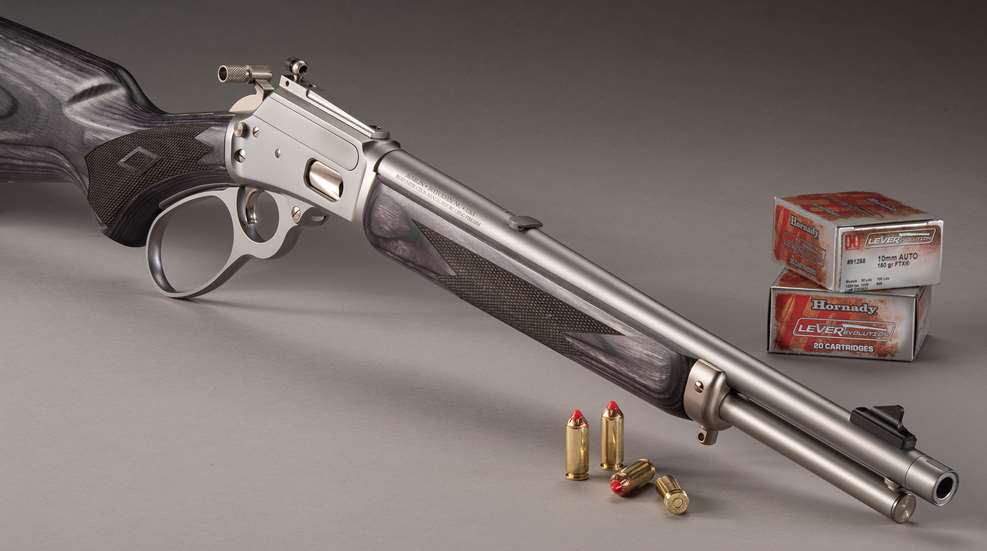
You asked, and Marlin Firearms answered. They recently added to their Trapper Model 1894 lever-action series with a new 10mm Auto model, joining the established .357 Mag. and .44 Rem. Mag. options. Marlin, which of course is now a Sturm, Ruger brand, not only made the Trapper in 10mm Auto, Marlin made it right, in this reviewer’s opinion.
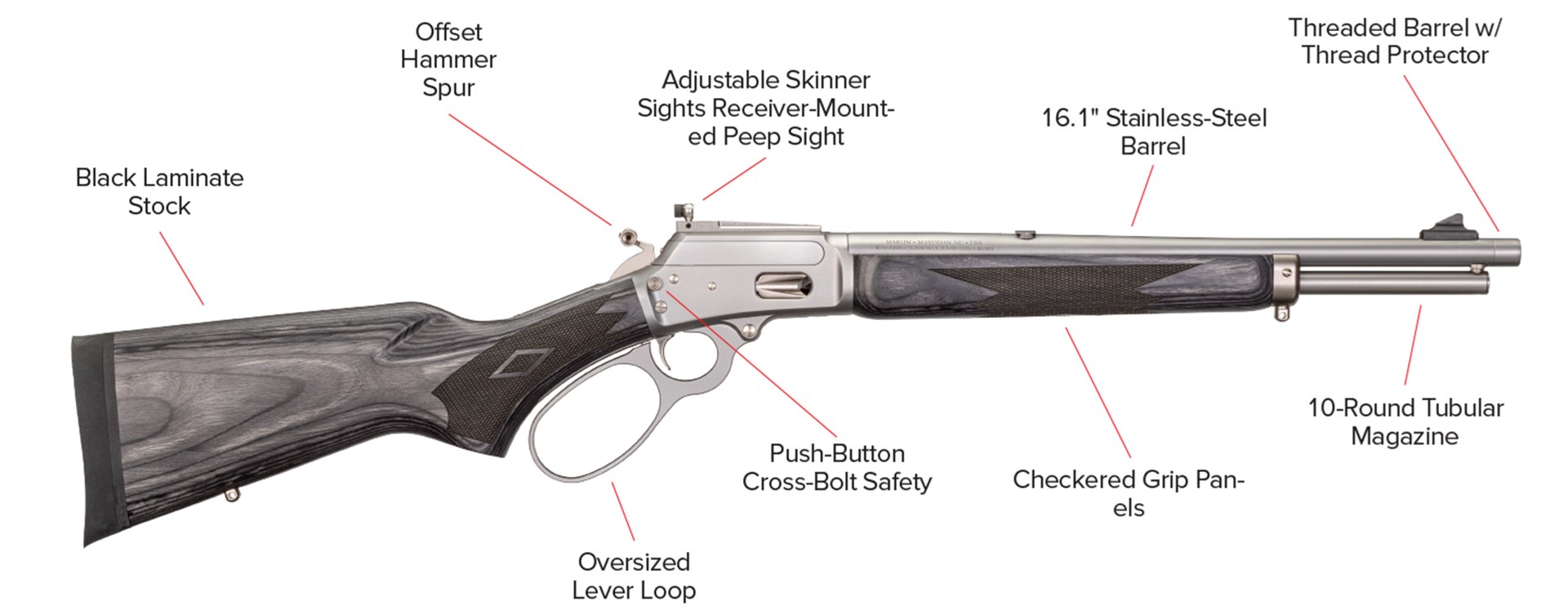
In my 200-plus rounds with it, the new Trapper functioned near-perfectly and was extremely accurate. It looked great, too, with its matte stainless finished receiver and barrel set off by the black laminate wood stock and fore-end. Lightweight and very handy, the Trapper 10mm will be a great companion in the hunting blind and for stalking in heavier brush. With its 10+1 ammunition capacity, the rifle will no doubt function fine as a truck gun and a home-defense firearm, too.
The Trapper’s cold hammer-forged barrel measures just over 16 inches and has a 1:16 twist rate. Marlin threads the muzzle at 5/8x24 TPI for a suppressor and includes a polished thread protector.
One solid carbine, the Trapper’s receiver, lever, magazine tube and barrel are stainless steel. All smaller parts, including the fore-end cap, hammer and trigger, are nickel-plated.
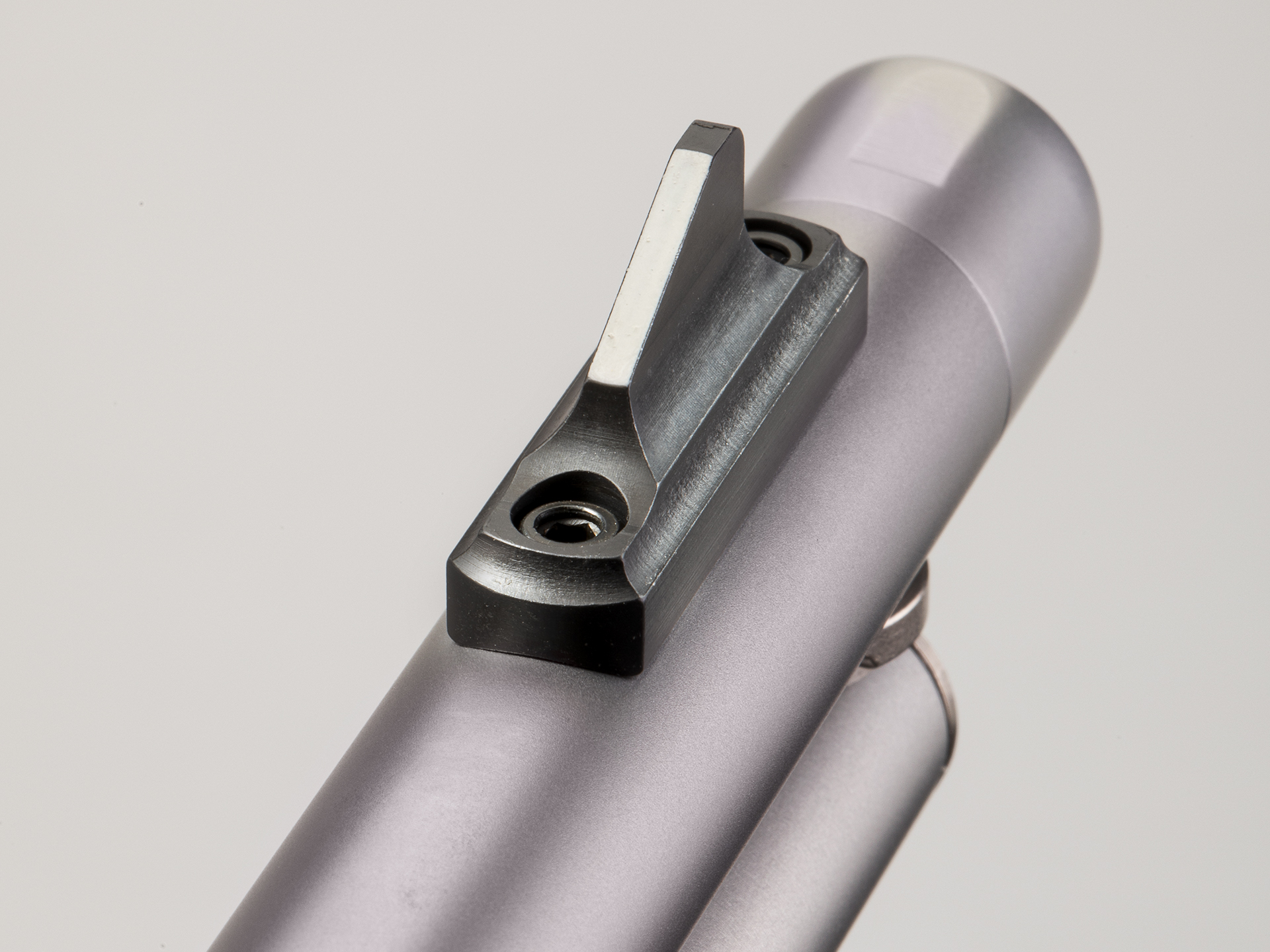
The rifle arrives standard with a Skinner sight system featuring a fully adjustable rear aperture and a white-ramped front post for quick target acquisition.
Marlin upgraded the fire-control system on the Trapper line, starting with this rifle. The sear is now e-nickel Teflon plated, and Marlin improved the sear notch geometry in the hammer to create a smoother and more consistent trigger feel. Additionally, a small spring was added between the sear and trigger to eliminate the trigger “flop”—all of which clearly worked. The trigger on my test Trapper was among the smoothest lever-action triggers I’ve used. None of that mid-point lever-action “hitch” as the trigger is pulled. I experienced zero uptake and the trigger snapped off at a crisp 2 pounds, 3 ounces on average. Good news for everyone, Marlin is adding this improved sear design to all its lever-action rifles.
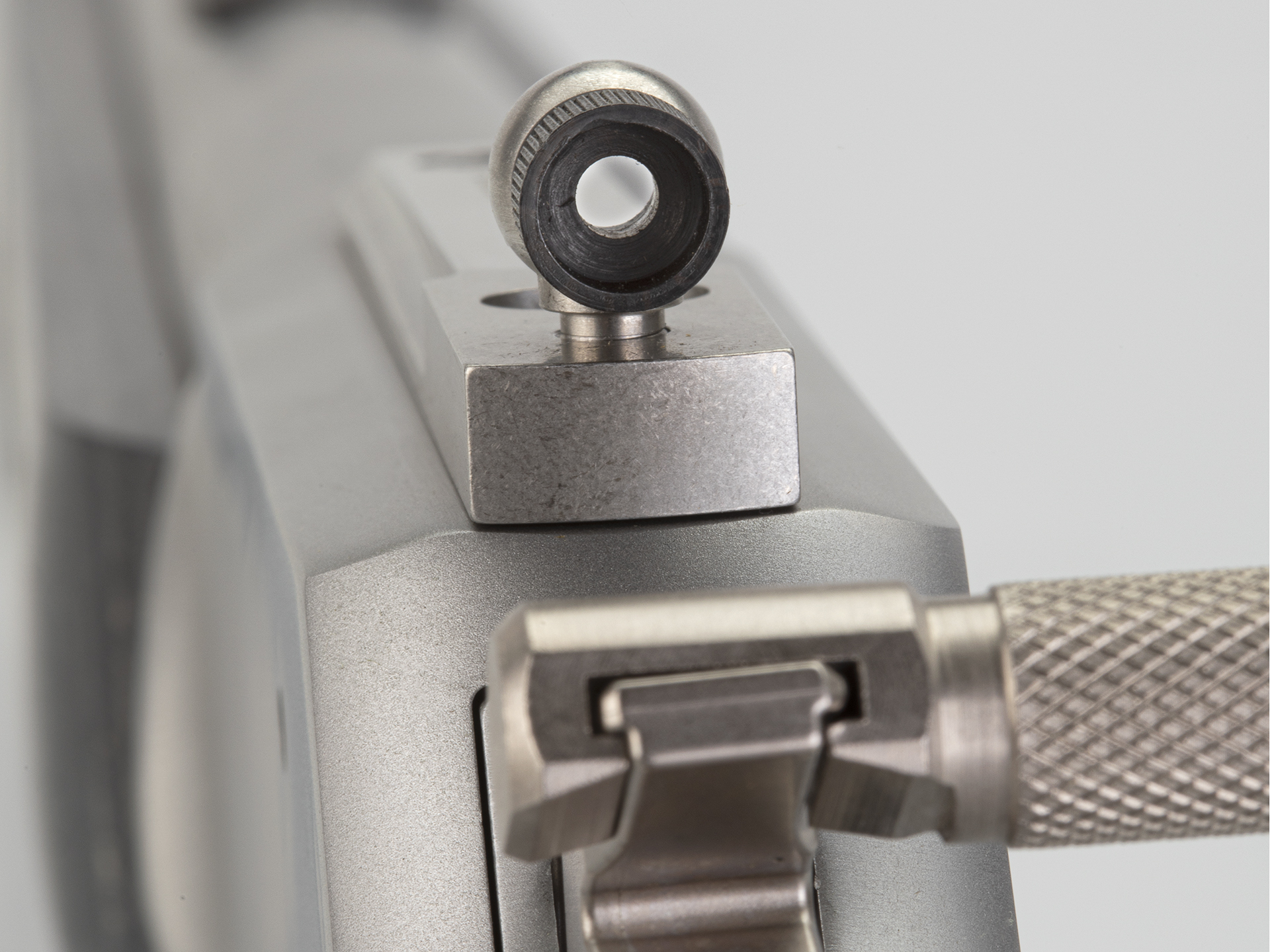
For my test shooting, I removed the Skinner rear sight. While certainly a quality product, aperture-style rear sights no longer work very well for this reviewer’s eyes. To see what the rifle was capable of, I needed an optic. I outfitted the Trapper with a Trijicon Credo HX 1-8x28 riflescope, with the help of a Midwest Industries rail I mounted atop the receiver. Then I added a Banish HNT 46 Ti suppressor, which threaded directly onto the end of the barrel.
At my outdoor range, I ran the Trapper with two brands of 10mm hunting ammunition and one range round for my accuracy and function evaluations. The hunting rounds were Federal Premium Fusion loaded with 200-grain bonded soft-point bullets and Remington Core-Lokt featuring 200-grain jacketed hollow-points. Winchester Target White Box and its 180-grain full metal jackets were my third option.
I zeroed the rifle at 50 yards from a rest using the Winchester, and then began my accuracy testing using five, five-round groups. My best groups included a .70-inch cluster with the Fusion, a 1-inch group shooting the Core-Lokt and 1.15 inches with the Winchester.
I also pegged a number of three-shot groups that came in at .60 inch.
Average group sizes were higher (see the accuracy chart), but not by a great deal. Pretty impressive.
Of note, Marlin launched this rifle in conjunction with a brand new 150-grain 10mm Auto LeveRevolution load from Hornady, and while I didn’t have the new ammo on hand for my testing, your AH editors did, and so their accuracy results are also listed in the included accuracy chart.
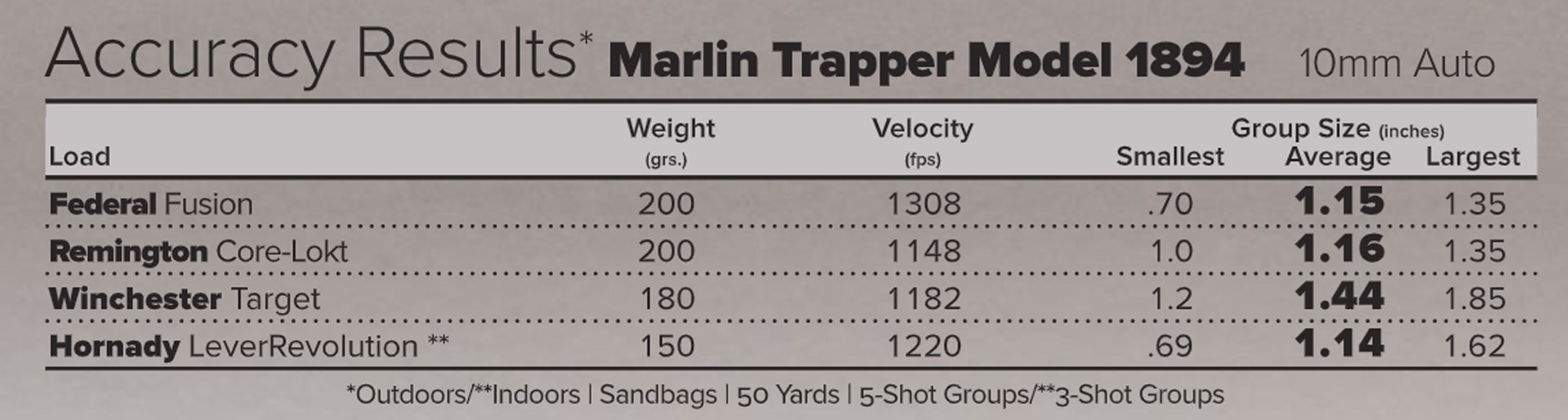
Also of note, I performed all of my shooting with the rifle right out of the box. I didn’t lubricate it as the bolt already sported a thin coat of oil. I didn’t treat the barrel as I do with some rifles, using a bore brush and bore cleaner every five to 10 shots for the first 50 rounds. I experienced zero problems with rounds hanging up as they were levered up and into the chamber and recorded no problems ejecting empty brass. The lever action worked smoothly throughout my shooting.
Truth be told, I was a little disappointed that the ammunition velocity difference between a 10mm pistol and the Trapper wasn’t greater. I chronographed the two hunting rounds through a Remington 1911R1 Hunter with a 6-inch barrel. Out of the Remington R1, the Fusion averaged 1210 fps, and the Core-Lokt 1100 fps. Those rounds ran faster with the Trapper and its 16-inch barrel, but only by an additional 98 fps at the muzzle with the Fusion, and just 48 fps shooting the Core-Lokt. I expected an additional 125 fps because of the carbine’s longer barrel. (Of note, Marlin’s internal testing data revealed a wide range of ammunition velocity differences between the Trapper-fired rounds and those through pistols, too.)
As for recoil, I shot a dozen rounds without the Banish suppressor and recoil was minimal. With the Banish attached, recoil was reduced to a firm push into the shoulder.
The checkering in the laminate wood was decent on the sides of the grip. Yet, I felt it could’ve been deeper and slightly sharper on the fore-end where it would have provided a bit more purchase.
That aside, the newest Marlin Trapper 1894 is truly a first-rate carbine, and will provide a very handy pairing for those of us who carry a 10mm handgun afield while hunting, too.
Marlin Trapper Model 1894
- marlinfirearms.com
- Type: lever-action, centerfire rifle
- Caliber: 10mm Auto (tested)
- Capacity: 10+1
- Magazine: tubular
- Barrel: stainless steel; 16.1"; 1:16 RH twist; 6 grooves; 5/8-24 threaded muzzle
- Receiver: stainless steel
- Trigger: single stage; 2 lbs., 3 ozs. pull weight
- Sights: Skinner Sights adjustable rear peep; Skinner Sights front blade
- Safety: cross-bolt
- Stock: straight comb; black laminate wood
- Metal Finish: matte stainless
- Overall Length:33.25"
- Weight: 6.3 lbs.
- MSRP: $1,499