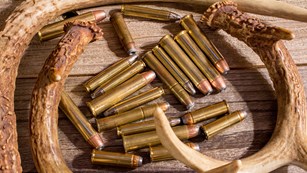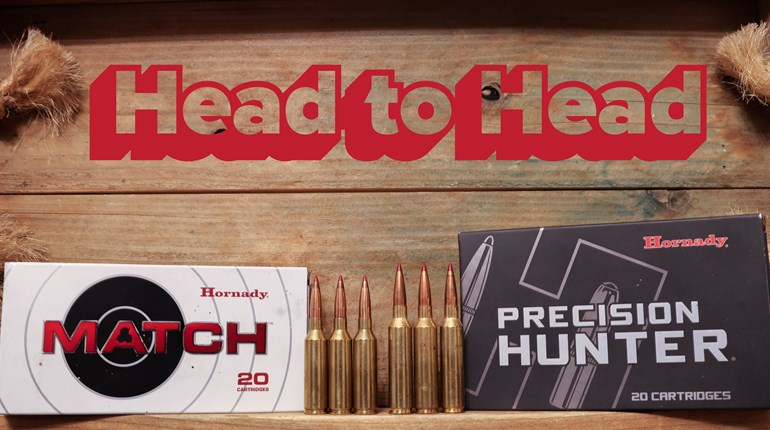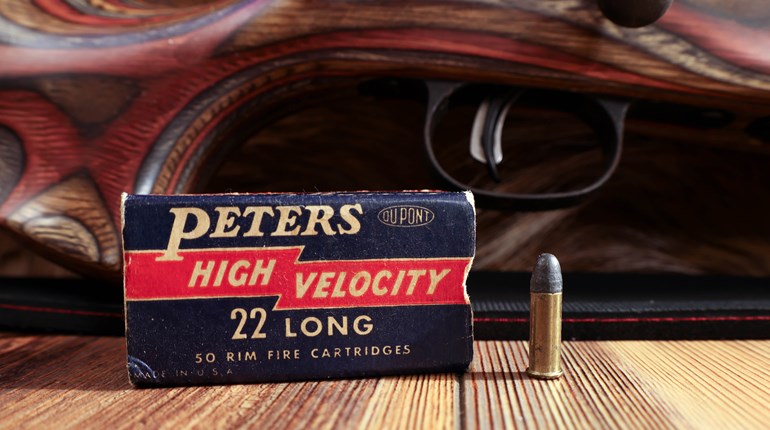
The latter half of the 1950s saw Winchester bring us a trio of cartridges based on the belted Holland & Holland case, all shortened to fit in the standard (read .30-06 Springfield-length) long-action receiver. The smallest of the new belted magnums was the the .264 Winchester Magnum, offering a flat-shooting option for medium game animals using the 6.5mm bullets made so popular in the 6.5x55 Swedish and 6.5x54 Mannlicher-Schoenauer. Next up was the .338 Winchester Magnum, using the bore and bullet diameter of the older .33 Winchester but in spitzer form, offering those traveling hunters headed to Alaska one cartridge perfectly suited for all of her game animals, from deer and sheep to moose and brown bears. The biggest (and the one of the lot which might not have been worthy of the magnum moniker) was the .458 Winchester Magnum, which basically replicated the ballistic formula of the .450 Nitro Express. All three were available in the highly popular Winchester Model 70 rifle, as was the .375 H&H Magnum and .300 H&H Magnum, not to mention the ever-popular .30-06 Springfield and the new-fangled .308 Winchester. The three latter cartridges are mentioned to emphasize the fact that the .30-caliber cartridges were well covered in the Winchester lineup.
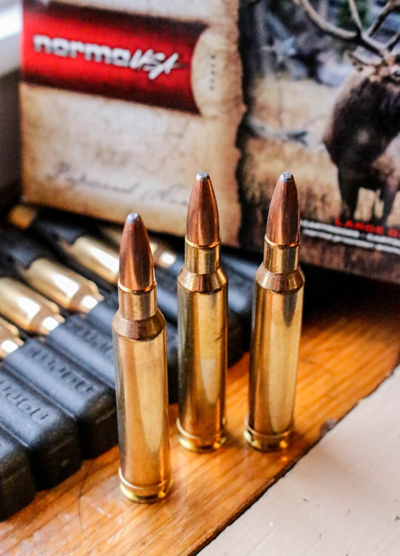
With that trio of shorter belted magnums, and an obvious plethora of .30-caliber projectiles on hand, many hunters and shooters of that era expected Winchester to mate the belted case to a .30-caliber bullet. But it wouldn’t be Winchester who did that first; it would be the Swedish firm of Norma. Formed in Amotfors, Sweden in 1902, Norma’s ballistician Nils Kvale saw the wisdom of having the velocity and horsepower of the .300 H&H Magnum, but in a shorter, more affordable receiver, and used the H&H case to develop his .358 Norma Magnum in 1959 as well as the .308 Norma Magnum one year later. The .308 Norma Magnum closely resembles the wildcat .30-338 cartridge, though the shoulder of the former is located a bit more toward the base than that of the .308 Norma Magnum. The case shares the 0.532-inch base diameter of the H&H family, has a length of 2.559 inches, and a neck measuring 0.318 inches—more than the desired one-caliber in length for good neck tension. Though the belt handles all the headspacing duty, the .308 Norma Magnum has a 26-degree shoulder, with minimal body taper.
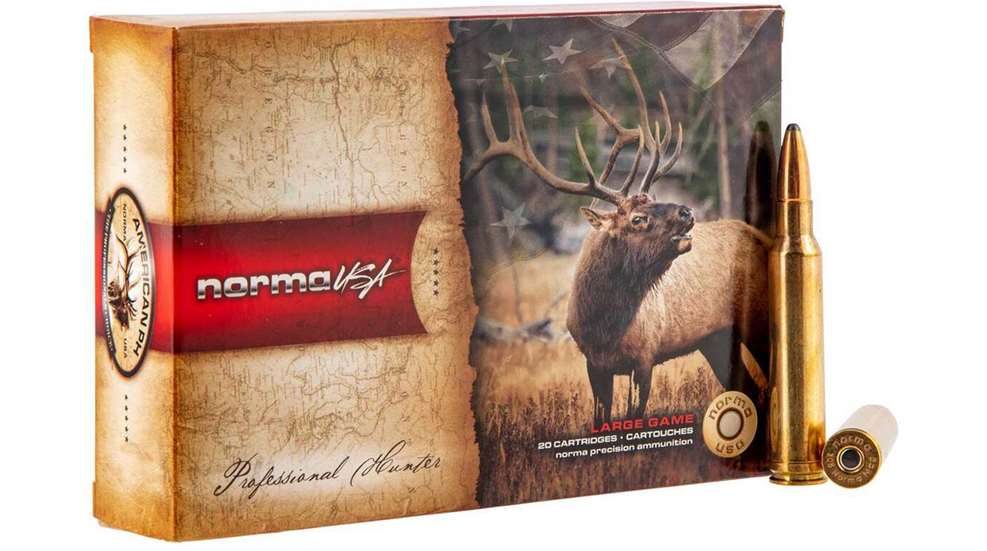
Looking at the very few available factory loads historically available for the .308 Norma Magnum, you’ll see that the cartridge is every bit the equal of the much more popular .300 Winchester Magnum. Norma’s own load, using the excellent 180-grain Norma Oryx bullet—a semi-bonded softpoint with a slightly rounded nose—sees a muzzle velocity of 2,960 fps, perfect for a nice, flat trajectory and plenty of striking energy. In fact, the dimensions and performance of the .308 Norma Magnum —n the opinion of this author—influenced the design of the .300 Winchester Magnum. Comparing the two, Winchester uncharacteristically abandoned the 2.500-inch case for a longer 2.62-inch case, and moved the shoulder forward, leaving a neck length of just .264 inches, despite maintaining the 3.340-inch cartridge overall length. In 1963, that longer body dimension translated to a greater powder capacity, meaning a higher velocity. In that era, the idea of using the higher B.C. bullets at a lower velocity being superior to any old bullet at a higher velocity was unthinkable. Therefore, Winchester used the longer body/shorter neck to market its .300 Winchester Magnum, and completely knock the .308 Norma Magnum off the international stage. A lack of readily available rifles for the .308 Norma Magnum certainly didn’t help put the cartridge into many hunter’s hands, and when Winchester turned its corporate eye toward promoting a proper .300 Magnum, the immediate availability of rifles so chambered definitely played a role. But we know how things played out, and Mr. Kvale’s design paled in comparison to the .300 Winchester Magnum, at least in sales.
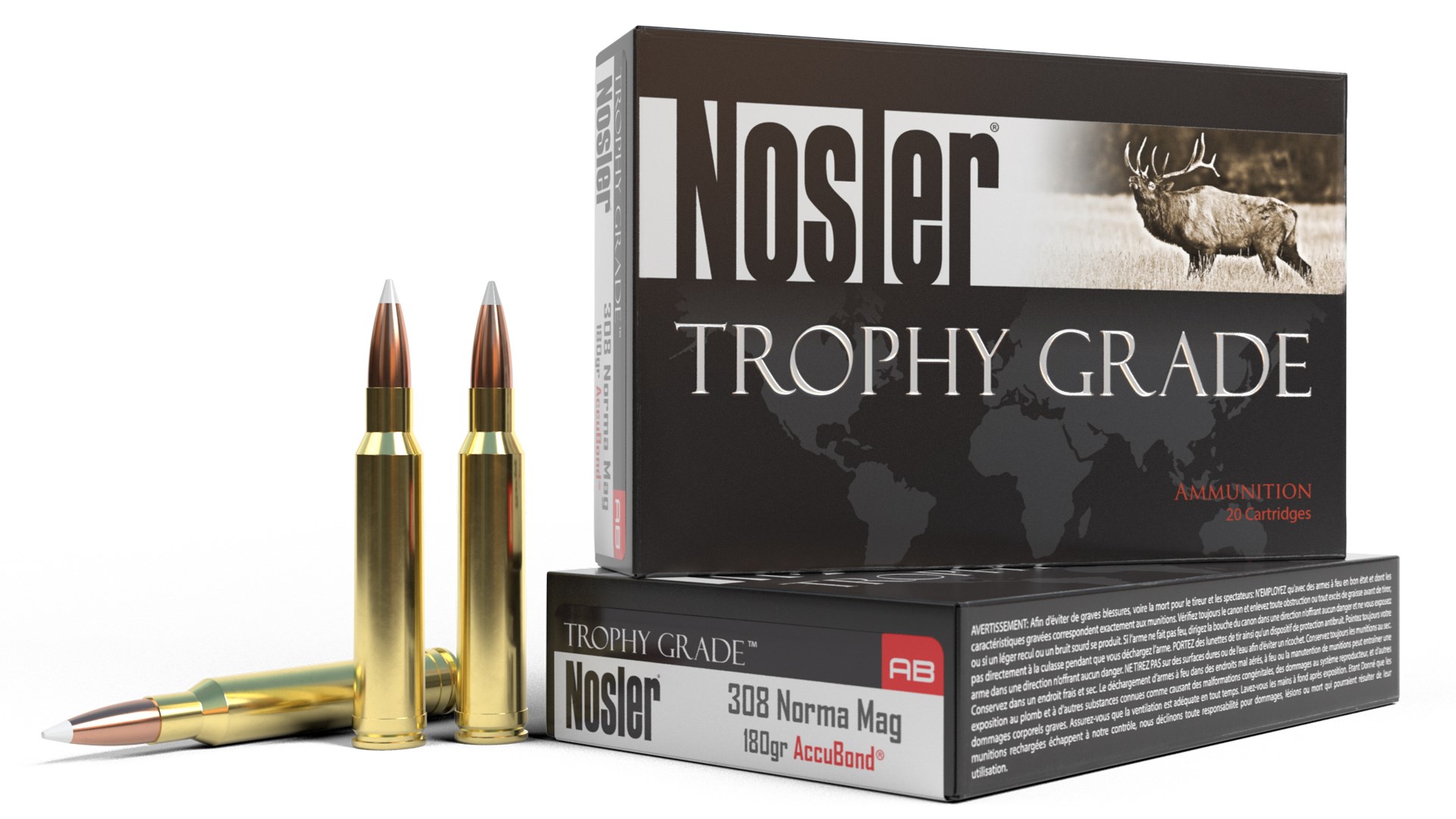
Today, the .308 Norma Magnum is a rarity, and that’s sad because the design is sound. As I said, though the two cartridges are dimensionally different and definitely not interchangeable, their performance in the field is nearly identical, if not completely indistinguishable. The issue with the .308 Norma Magnum in the 2020s is a definite lack of available factory ammunition. Nosler once loaded for it, but it seems that is discontinued as of this writing, leaving Norma as the main source of factory ammo, and they only load that 180-grain Oryx—that load is difficult to find in the United States. HSM (Hunting Shack Magnum) offers a 168-grain Berger load, and there are a couple of boutique shops offering ammo, such as Pendleton’s or Hendershots. Should you find a rifle chambered for the .308 Norma Magnum which you simply must have, handloading is your best means to keep that rifle working in the field. You’ll want a large rifle primer and a healthy amount of a medium-to-slow burning powder, and if you cannot obtain spent cases, it isn’t very difficult to make cases from either 7mm Remington Magnum cases or .338 Winchester Magnum cases. These is plenty of good load data for the .308 Norma Magnum—Nosler’s website comes quickly to mind—so that should give the handloader plenty to work with.
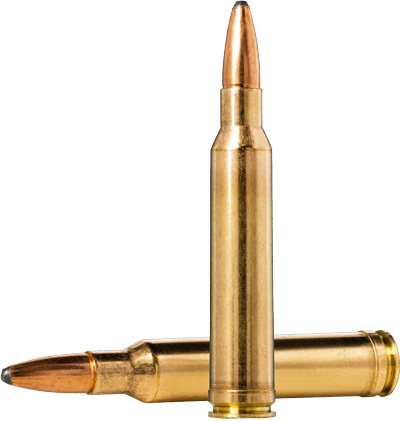
If you look at the design, the .308 Norma Magnum actually has an advantage over the .300 Winchester Magnum: it leaves more room outside the case to load the longer bullets. If the slate were to be wiped clean, the .308 Norma Magnum might actually have more appeal today, but both wear that lately unpopular belt. Nonetheless, the .300 Winchester Magnum has become one of our most cherished hunting and shooting cartridges, doing double duty among the hunting community and gaining fame as a sniper cartridge in the military. Nils Kvale did, however, design a sound cartridge, and I’d have no qualms taking a good .308 Norma Magnum rifle for any hunt suitable for a .30-caliber cartridge.