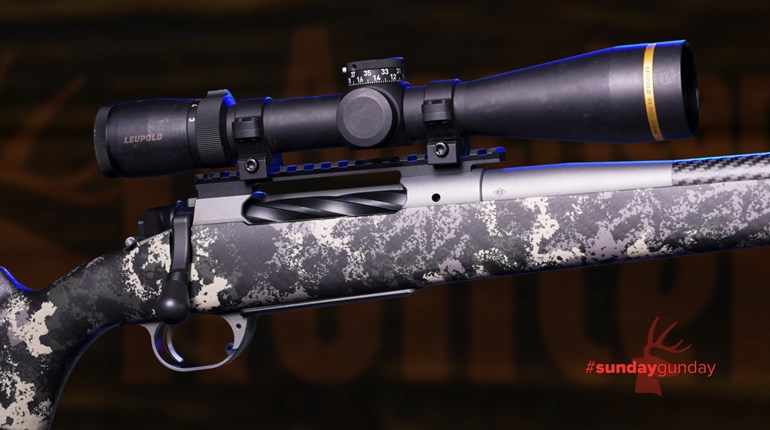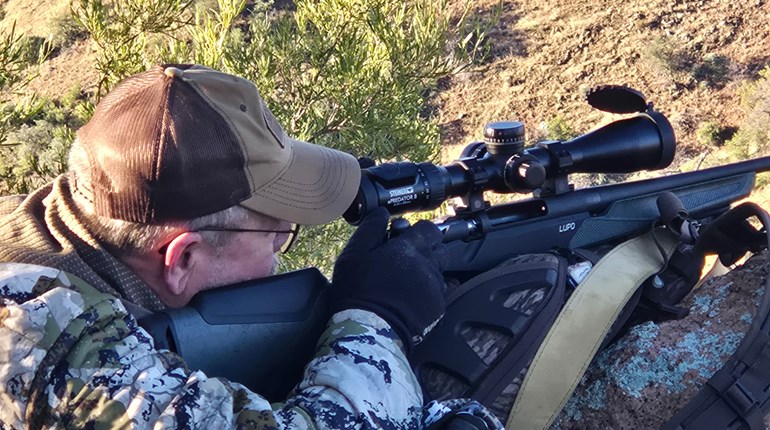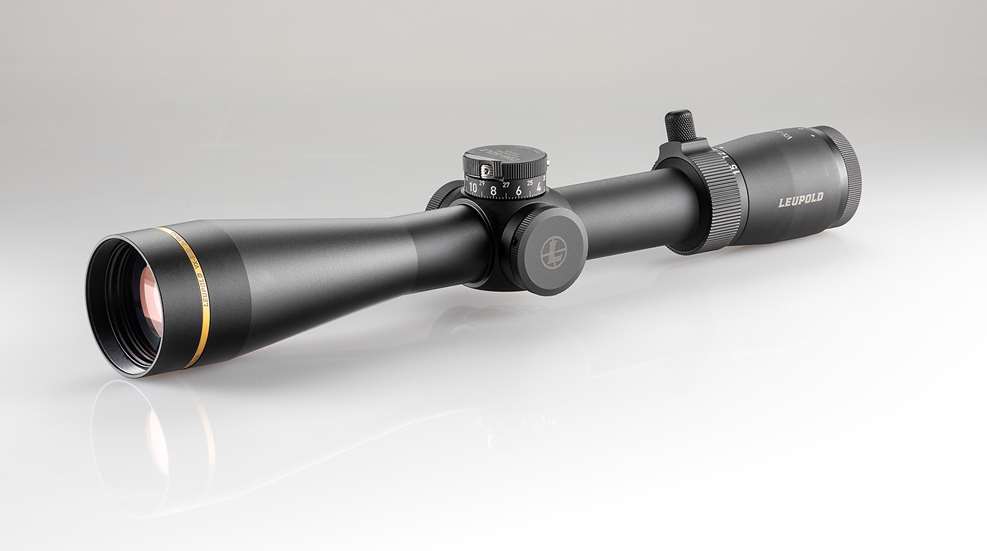
As I looked through another piece of characteristically clear Leupold glass, I was less surprised than I should have been to see the light coat of a muley in the crosshairs. After all, this was a rifle I had built specifically to satisfy my growing mule-deer obsession. But just as my finger tightened on the trigger, yet another mosquito bite shattered the illusion, and I was instantly back on my test range in the muggy summer heat of Virginia, staring at a paper target instead of a buck. At least the group looked good. I can’t take too much credit, though, the Leupold VX-5HD Gen 2 had made it pretty easy to place some confident shots.
The latest in Leupold’s 5X magnification line of hunt-focused second focal plane (SFP) scopes, the Leupold VX-5HD Gen 2 takes all the best parts of its predecessor and, somehow, improves on them. While the lineup currently spans six difference magnification levels and objective lens sizes—from a 1-5x24mm LPVO to a 4-20x52mm long-range monster—I’ve been working with the 3-15x44mm. One of my all-time favorites in regard to range, the 3-15x44mm has enough low-end magnification to make it agile at closer ranges, enough top-end to stretch across a canyon, and an objective lens that allows for a decently sized exit pupil. In short, it’s bright, clear and exactly what a hunter needs.
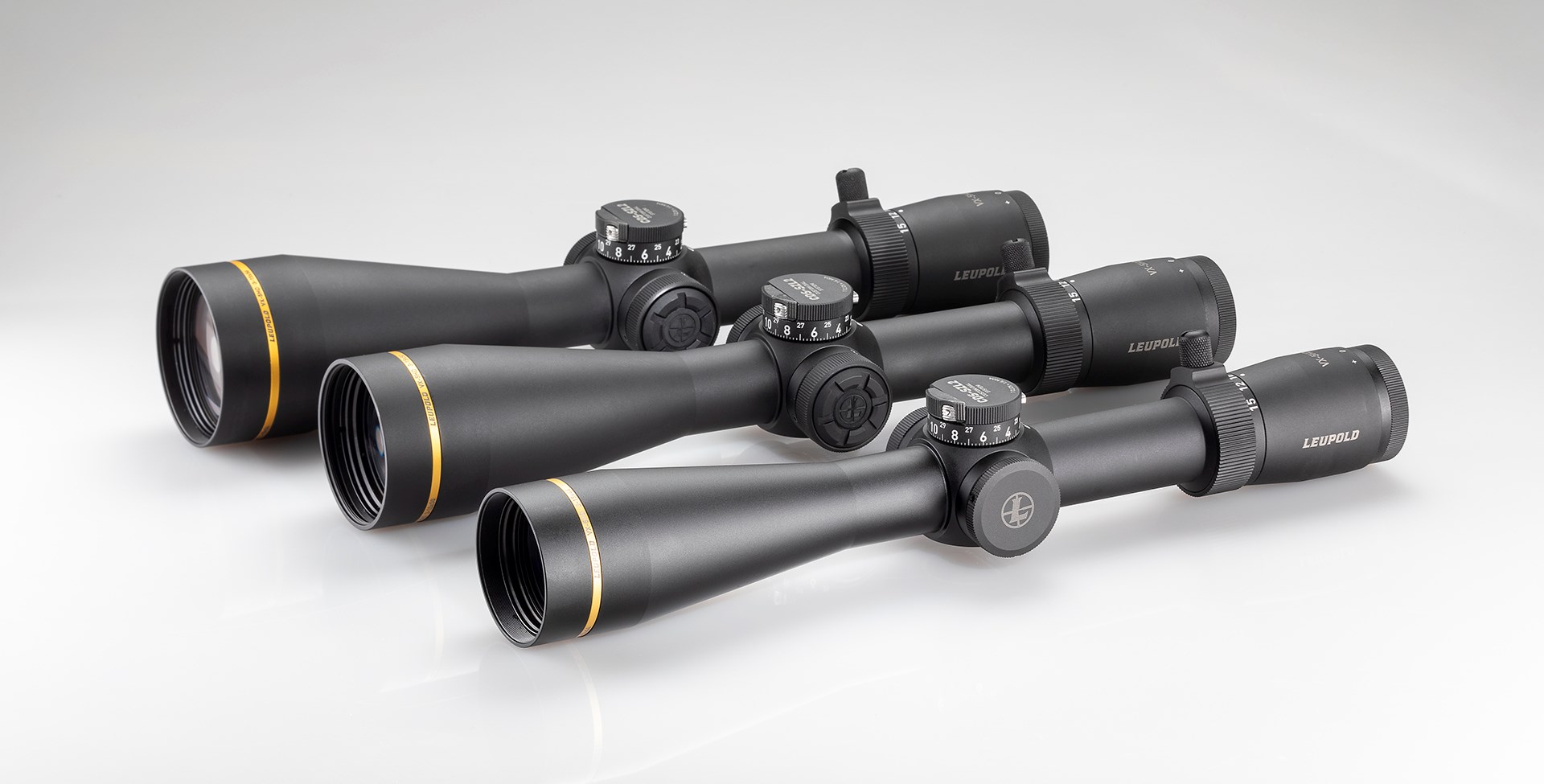 Leupold’s VX-5HD Gen 2 line includes three variations in the 3X-15X magnification range, each with a different objective bell diameter: 44mm, 50mm and 56mm. The 3-15x44mm, front, is our favorite as it provides maximum performance in a manageable package.
Next, Leupold’s Professional-Grade Optical System, complete with exceptional lens coatings and a precise erector assembly, allows for light transmission and glare reduction that is pretty hard to beat, particularly for any other scope of its dimensions. The scope is waterproof and fogproof, and the exterior lenses are scratch resistant with a Guard-ion lens coating to boot, which sheds water and resists fogging. Tubes are either 30mm or 34mm, depending on magnification level. As great as all that is, this is all fairly standard Leupold fare, which really speaks to the consistent quality found all across the company’s offerings. What sets the scope apart is still to come.
I won’t bury the lead here—among a long list of cool new features, the most useful has to be Leupold’s new SpeedSet dial system. Now, I will admit I am a little biased. Most people likely do not have to continually zero and re-zero their scopes as much as I do, but one of the necessities of my particular occupation is constantly flipping scopes between rifles when doing accuracy testing (I know, I know; poor me, what a hard life). As many times as I’ve done it, you’d think I would remember to bring every tool under the sun needed to pull caps and reset zero, but invariably, 50 percent of the time I forget the exact Torx or Allen necessary to pull my particular caps and end up trudging back to the garage halfway through a range session. With the SpeedSet dial system, re-zeroing is tool-less—simply lift the locking throw lever and the cap slides right off. Even better, it’s compatible with Leupold’s Custom Dial System (CDS), which exactly matches the markings on the cap to your own personal ballistics and (average) environmental conditions (as reported by you to Leupold). This is even more of a boon than it may seem at the outset.
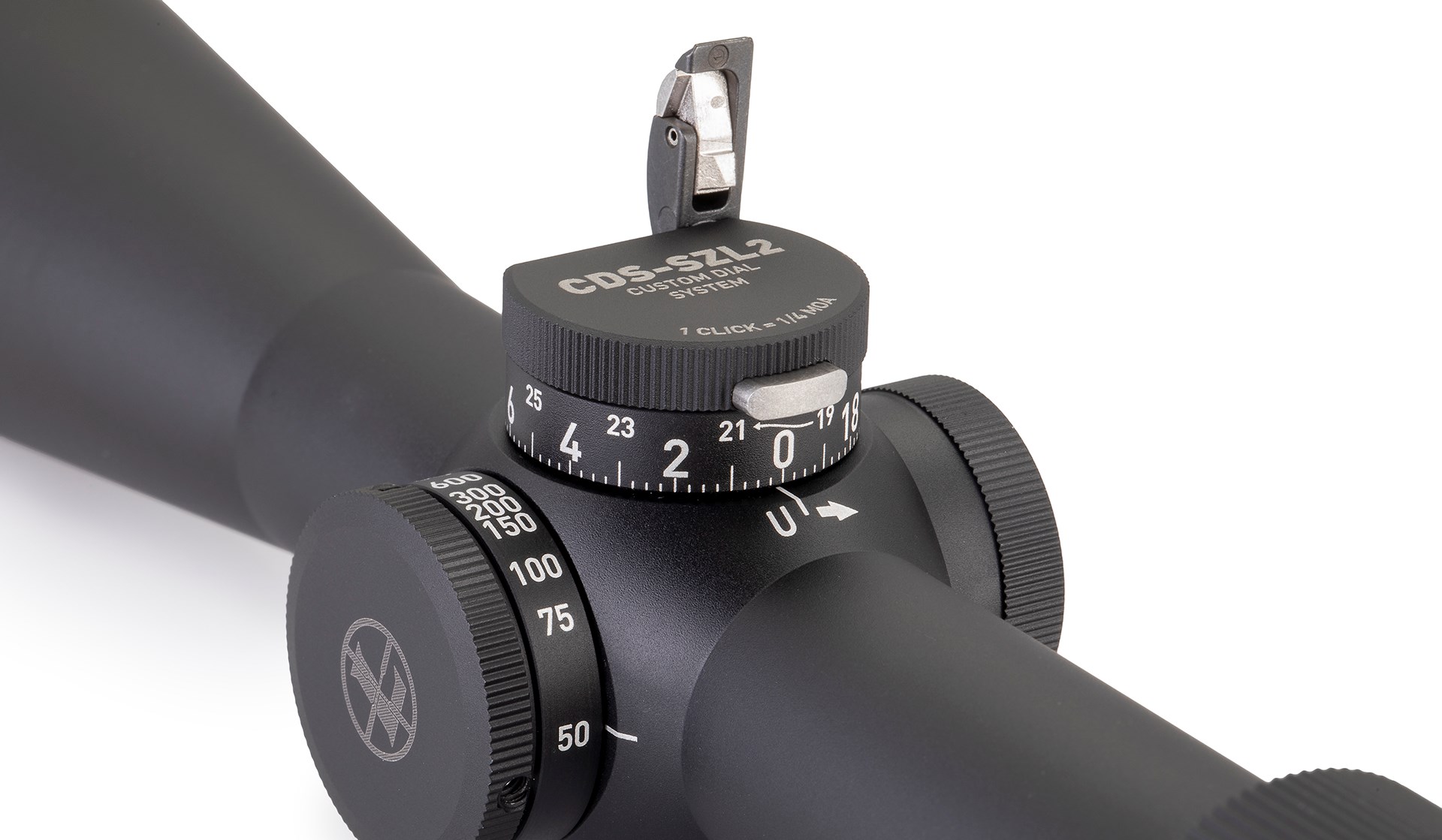
My personal holdup with custom dial systems has always been that I’m never quite sure of the environmental conditions where I’ll be hunting. Sure, I can be fairly certain of the conditions in my little pocket of Virginia, but when I want to take my scope and rifle out of state (which is usually where my longer shots happen), the environment is way different. With the SpeedSet dial system, however, I don’t have to choose. I could mount a CDS system when at home and then, when hitting the road, pop the standard 1/4-click MOA turret back on in about 10 seconds flat, no worrying about whether I bumped a setting when I tediously tried unscrewing one cap and fastening down another. Leupold’s CDS system was already cool in its own right—I’ve shot several scopes equipped with it and it is frighteningly accurate—but the SpeedSet turret really brings it into its own for folks who don’t always hunt the same environs year after year, or even those who repeatedly hunt a variety of the same places. It makes swapping dials an incredibly simple process. Similar to its predecessors, SpeedSet does incorporate a zero stop for peace of mind when bumping through rough terrain or dialing quickly back to zero.
Next up, the VX-5HD Gen 2 comes with a number of SFP reticles—some illuminated, including the FireDot Duplex, the FireDot Twilight Hunter and the FireDot4 Fine. For these illuminated models, which run off a CR2032 battery, illumination is turned on and off via a push button on the left-hand side of the scope, while Motion Sensor Technology (MST) conserves the battery by shutting down illumination after five minutes of inactivity, and switching it back on the instant it senses motion.
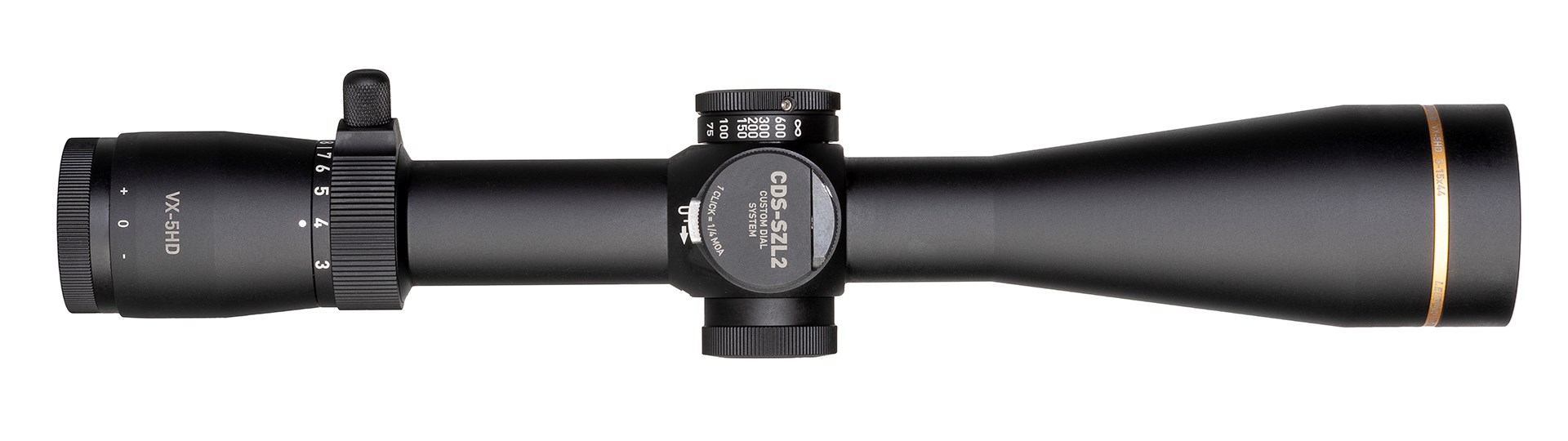
So, how does the VX-5HD Gen 2 perform? At just 19.9 ounces, it doesn’t add much weight to the gun and can easily cope with recoil, which is a boon right off the bat. Granted, any scope that can survive Leupold’s Punisher testing process is capable of handling far heavier recoil and mistreatment than most will ever encounter. The Wind-Plex reticle in my model makes for a very clean viewing window, particularly for the majority of hunters who will dial for elevation and hold for wind. Without any elevation hash marks to contend with, the picture stays clear and precise, with 10 single-MOA hash marks on either side of the crosshair for precise windage. Thanks to the SFP reticle, the crosshair was also very easy to see at all magnification levels and, despite the lack of illumination in my model, all hours of day and twilight. Magnification is easily adjusted with a stubby, removable throw lever.
Finally, how well do the dials/turrets track? At 100 yards, it was easy to check turrets on a standard sight-in target, as 1 MOA corresponds to one the inch-square blocks. So, once the scope was zeroed, I kept the same aiming point while dialing various amounts of MOA to see if my hits were the corresponding distance away from my aiming point. This test ensures the scope’s erector assembly is moving as precisely as it should. The VX-5HD Gen 2 passed this test with flying colors. If I miss my mark this fall, at any distance, it sure won’t be the fault of the glass.
Leupold VX-5HD Gen 2 Specifications:
- leupold.com
- Type: variable-power riflescope
- Magnification: 1X-5X; 2X-10X; 3X-15X (tested); 4X-20X
- Objective Lens Diameter: 24mm; 42mm; 44mm (tested); 50mm; 52mm; 56mm
- Eye Relief: 3.8" (3X)-3.9" (15X)
- Exit Pupil: 14.6mm (3X)-2.93mm (15X)
- Field of View @ 100 Yards: 37.8 ft. (3X); 8 ft. (15X)
- Reticle: second focal plane; FireDot Duplex Illum.; TMOA; Duplex; FireDot Twilight Hunter Illum.; Wind-Plex; HTMR
- Adjustments: ¼ MOA
- Coatings: fully multi-coated; Guard-Ion
- Dimensions: 30mm; 13.5"; 19.9 ozs. (3-15x44)
- Construction: aluminum tube; HD glass; matte black
- Battery: CR2032
- Accessories: SpeedSet Dial; magnification throwlever
- MSRP: $1,399.99-$1,999.99
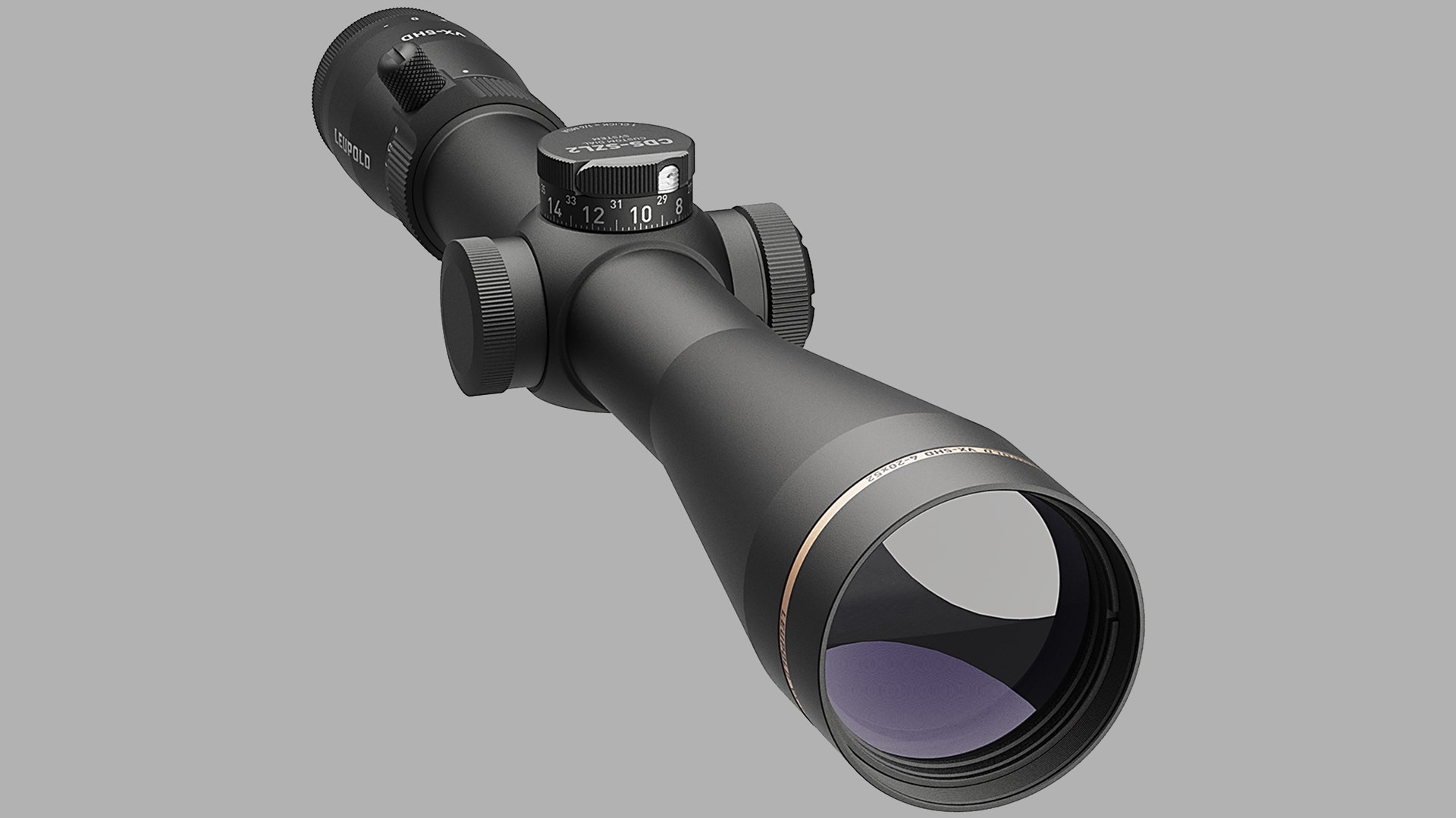
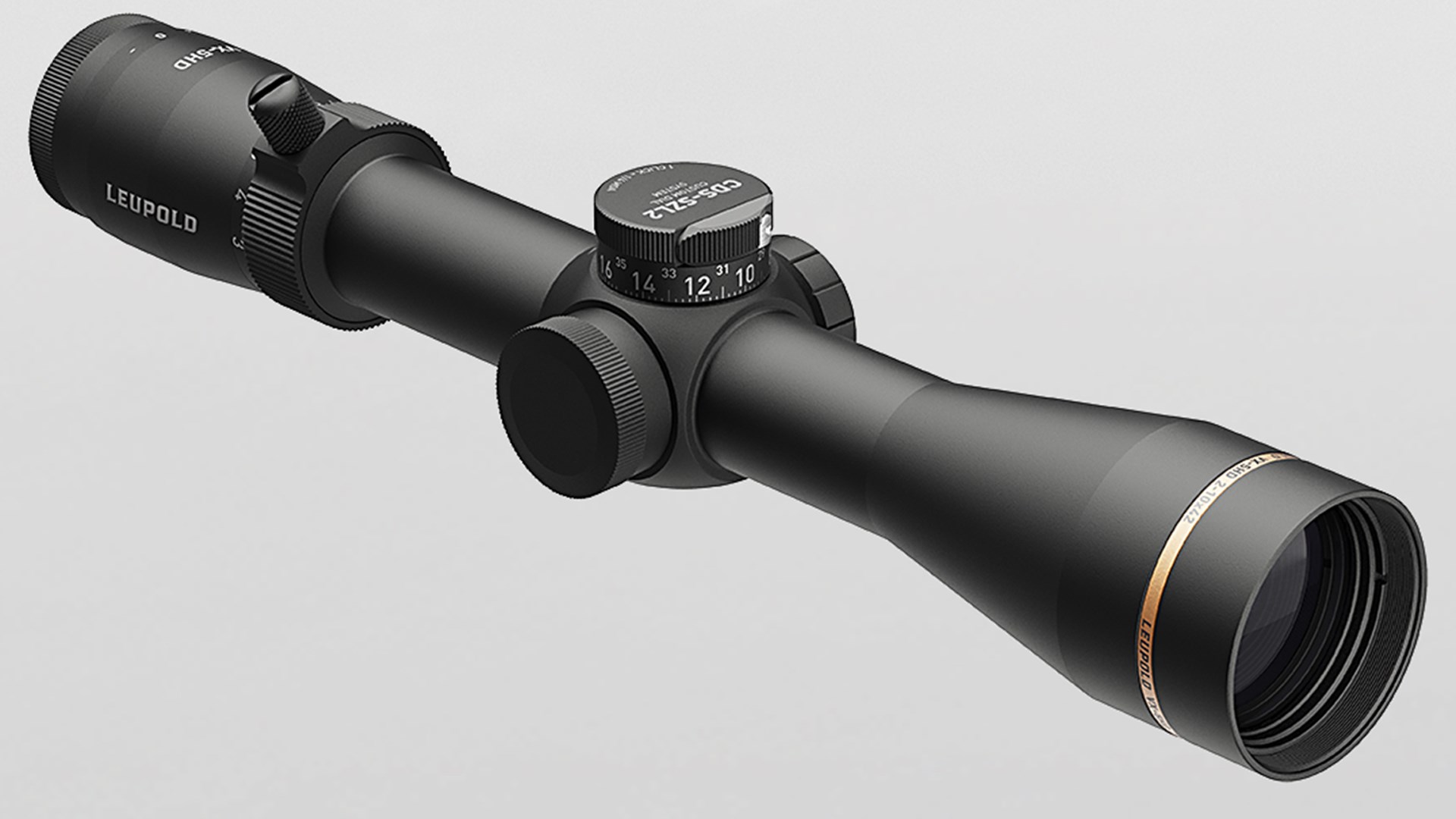
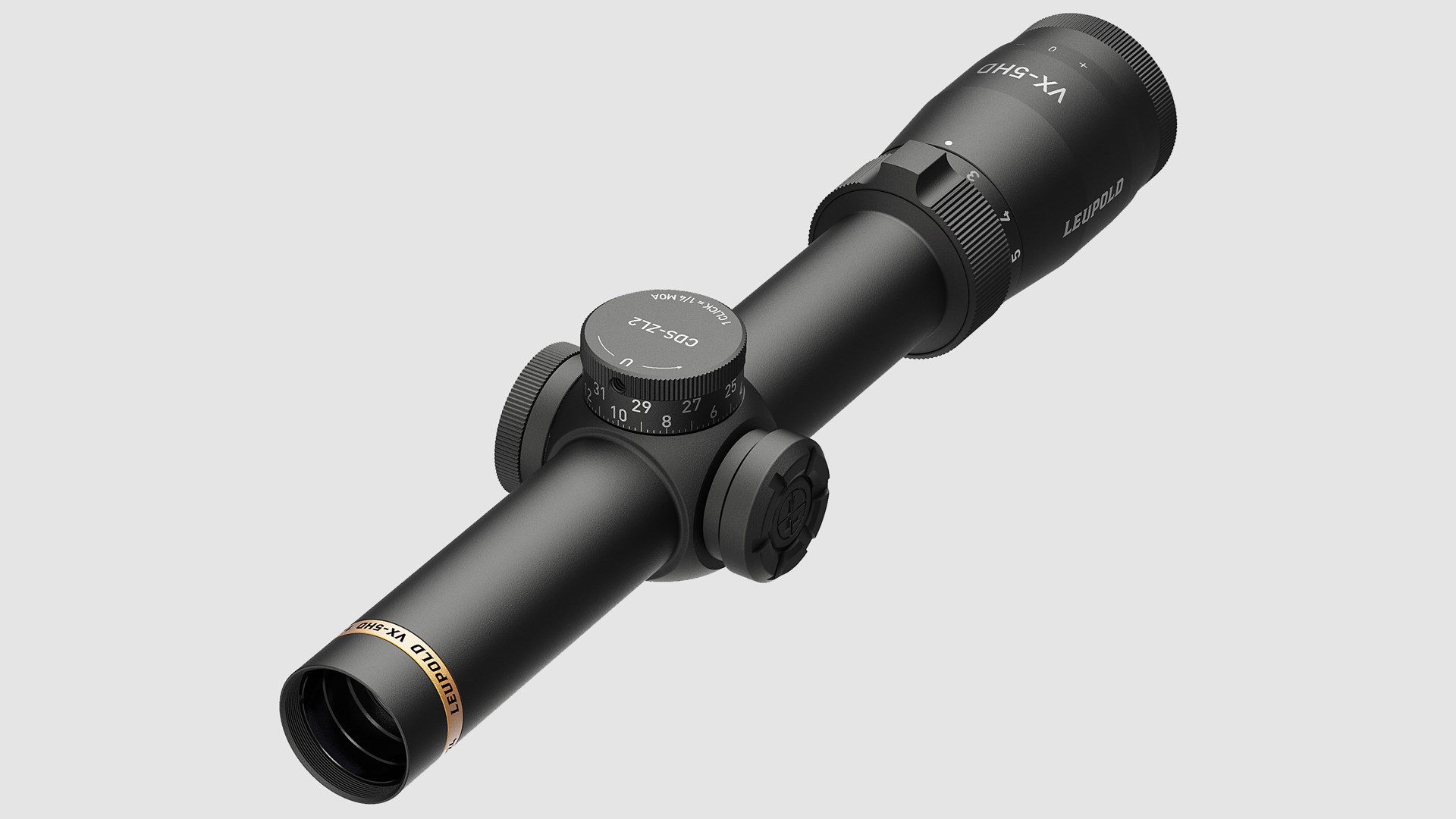 Rounding out the full range of the VX-5HD Gen 2 line is the 1-5x24mm, bottom, the 2-10x42mm, middle and the 4-20x52mm, top. All VX-5HD Gen 2 optics, aside from the 1-5x24, come complete with a SpeedSet elevation dial.