Across North America, agencies responsible for the conservation and management of native mammals, including large carnivores, employ science-based tools to manage wildlife populations. Data is collected throughout the year on habitat conditions, population, impact on other native wildlife species, human-wildlife conflicts and public safety concerns. It’s a delicate balance too often compromised by emotion at the ballot box.
The approach used by Arizona Game and Fish Department (AZGFD) wildlife biologists demonstrates the effort the goes managing mountain lion populations in states where they live. Collaring and tracking of dozens of the animals, along with hands-on observation and research, provides critical information. Analysis of it helps determine how to reduce the chances of potentially dangerous conflicts between the large carnivores and humans. Hunting is often determined to be the most effective method.
Science Drives Decisions
In 2020, AZGFD launched the Mountain Lion Survival and Cause-Specific Mortality Study to better understand the different causes and rates of mortality, reproduction and survival. In addition, it also analyzes how mountain lions use the state’s landscape.
“We are working on a study area the size of the state and tracking 30-plus mountain lions at all times,” explained Dr. Brian Jansen, an AZGFD senior wildlife biologist and mountain lion expert who has studied mountain lions in Arizona for more than 20 years. “The size of our work area makes this project more comprehensive in understanding all aspects of mountain lion ecology.”
Data from the study continue to inform the way the department evaluates and manages Arizona’s mountain lions, so that decisions about sustainable harvest recommendations and conflict management are based on the best available science. Most recently the information has been used to refine the department’s mountain lion population model.
“This model allows us to monitor trends in the mountain lion population over time, and the results indicate that Arizona’s mountain lion population is robust and stable,” said April Howard, AZGFD’s predator, furbearer and large carnivore biologist.
The state’s mountain lion population has rebounded since its low point in the early 1970s, thanks to changes in management of the species that included reclassification as a huntable big game species. Current regulatory protections include established legal season dates, legal methods of take, mandatory physical check outs, and annual bag limits for hunter harvest.
AZGFD adapts and improves management as new information and research comes to light. The updated information is routinely harnessed to refine harvest management strategies. Recent changes include: establishing management zones with associated harvest thresholds, implementing female harvest triggers to protect females, and developing a statewide population reconstruction model to more closely monitor abundance and inform harvest objectives.
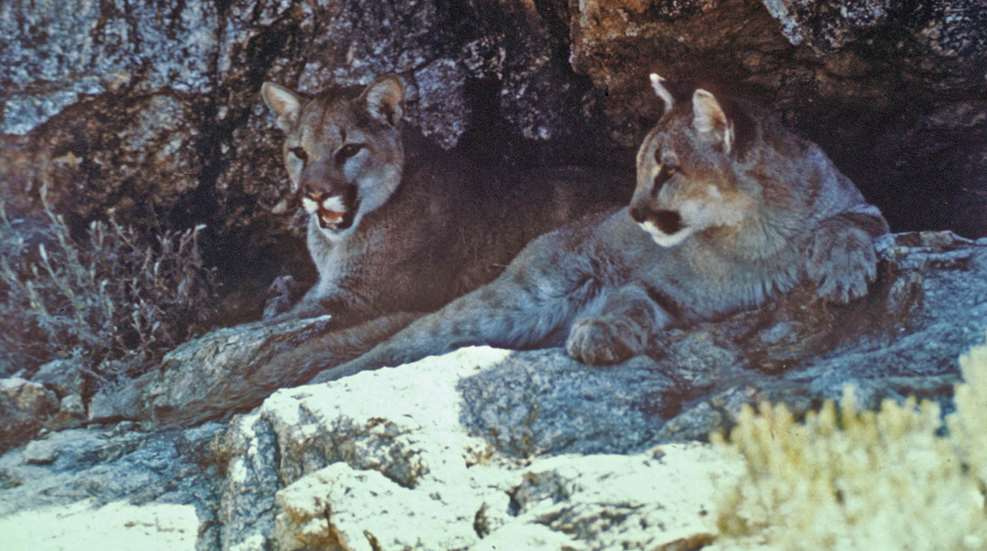
Mountain lions are not endangered, threatened, at-risk or listed as a sensitive species in Arizona. Rather, they are widely distributed throughout the state and have expanded into the southwest region of the state where they were once only transient.
Living With Mountain Lions
Mountain lions are large carnivores that can seriously injure or kill humans. They are secretive, and can be dangerous and unpredictable. A woman was killed by a mountain lion earlier this year while hiking in northern Colorado. In 2024, two brothers were attacked, one killed and the other badly injured, by a mountain lion about 50 miles east of Sacramento, Calif., while shed antler hunting. A man was attacked in Gila County, Ariz., in 2023, while camping along the Salt River.
In 2025, AZGFD responded to 531 mountain-lion related calls from the public. Wildlife officers are guided by the Department’s human-wildlife conflicts policy which describes acceptable or unacceptable wildlife behaviors and the appropriate responses related to large carnivores. Various factors, such as habitat fragmentation, drought and growing human populations, may increase the likelihood of encounters with mountain lions, especially in urban-wildland areas.