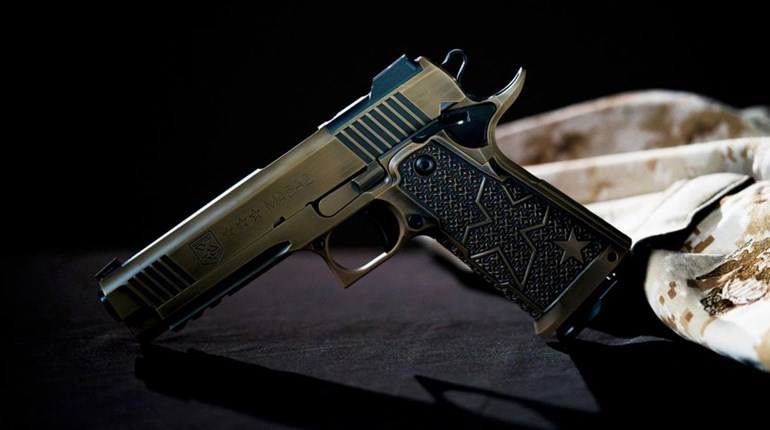
John Moses Browning. The mention of this name immediately conjures up—to anyone even moderately versed in the history of firearms and cartridge development—an American genius. The Winchester Model 1885, 1886, 1894 and 1895 rifles; the Browning Auto-5 and Superposed shotguns, the M2 .50-caliber machine gun; all are credited to John Browning. Yet the little handgun cartridge he developed, along with the iconic handgun that the U.S. Military adopted to shoot it, may be his crowning achievement.
The .45 ACP—or Automatic Colt Pistol—is a wonderful cartridge, it is simple, effective and easy to shoot. It came to life as a result of unsatisfactory performance of the .38-caliber handgun our Armed Forces were using during the Philippine-American War at the end of the 19th century. Soldiers had noted that the .38 handguns were definitely less effective than the .45 caliber Colt Single Action Army. The Army Ordinance Department agreed, and development of a new sidearm began. Germany’s DWM, and the American firms of Savage and Colt (the Browning design) submitted new designs, with the Colt pistol and cartridge coming out on top. This iconic combination was officially adopted as the M1911, firing “Cal. 45 Automatic Pistol Ball Cartridge, Model of 1911.” The original load centered around a 200-grain bullet at 900 fps, but was revised to the formula we all know, driving a 230-grain round nosed bullet at a muzzle velocity of 850 fps. The .45 ACP was an immediate success, and continues to be so to this day.
The design in and of itself is smart, using a rimless, straight-walled case measuring 0.898”, that headspaces off of the case mouth. There is plenty of capacity in that case; room enough to reach those prescribed velocities. Though it has a profile resembling Danny DeVito, it is perfectly suited to handgun ranges as a defensive weapon.
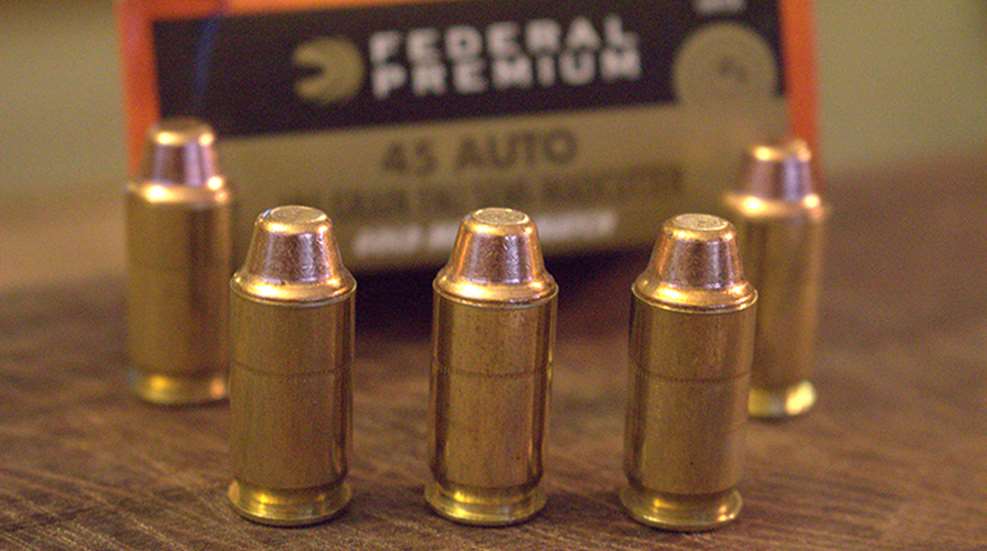
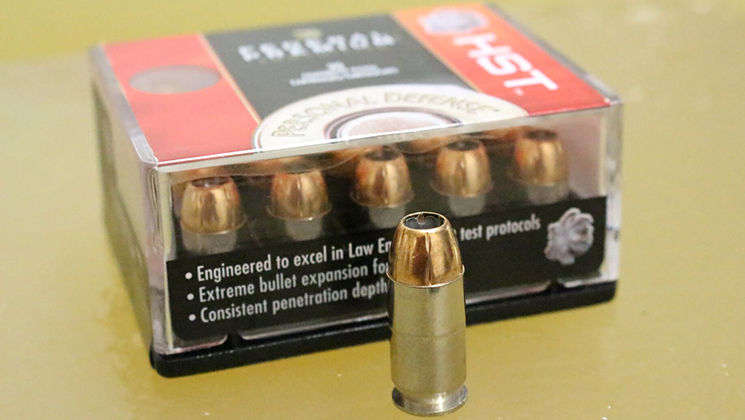
While the 230-grain load is still a perfectly viable choice for fueling your .45 ACP, it is by no means the only choice. Ammunition companies currently offer bullets as heavy as 255 grains, and as light as 150 grains, with all sorts of stuff in between. The lighter stuff, like Cutting Edge Bullets HG Raptor in their PHD ammunition line, will obtain higher velocities—this 150-grain fragmenting slug leaves the muzzle at 1050 fps—and deliver lethal terminal performance. There are the traditional premium bullet loads, like the Federal HydraShok, HST and Guard Dog, the Winchester Defender and Hornady XTP, as well as Speer Gold Dot, all available between 185 and 230 grains, to provide differing levels of recoil and velocity, yet reliable defensive qualities. A shooter can obtain affordable practice ammunition, in the form of full metal jacket ammunition, or cast-lead bullets, or simply the cheaper steel-cased stuff. I like the American Eagle SynTech coated-lead ammunition, as it is affordable, accurate, and keeps things clean inside the gun.
As a hunting cartridge, the .45 ACP is, well, less than ideal, yet I know those who have used it successfully for deer-sized game at close ranges. In my personal opinion, there are better choices for a hunting handgun cartridge.
The .45 ACP has long been a military darling—though in recent years it was replaced by the 9mm Parabellum as the Army’s issued sidearm—and the debates continue regarding the 9mm/.40 S&W/.45 ACP conundrum. I’ve long been a heavy bullet fan, especially when it comes to handguns, and I believe that all things being equal, if a shooter can effectively handle the .45 ACP, he or she would be well-served by carrying one.
A couple of good friends of mine—father and son Lek and Mark Nazi of Double Eagle Tactical Training—sat with me to discuss the merits of the good ol’ .45 ACP. As NRA Certified instructors, they firmly believe in the theory of training a handgunner to use whatever sensible caliber they are comfortable with, but for their personal guns, they both recognize the power and effectiveness of the .45 ACP. Lek, perhaps a bit more than Mark, adamantly feels the .45 ACP is the epitome of a defensive caliber, in that it possesses a bore diameter and throw weight that will neutralize a threat better than any lesser caliber. I will report that though I have had the good fortune of shooting a whole bunch of .45 ACP ammunition into ballistic gelatin and through a variety of barriers, I do not have as much experience with this cartridge as Lek Nazi, and I trust him enough to value his opinion.
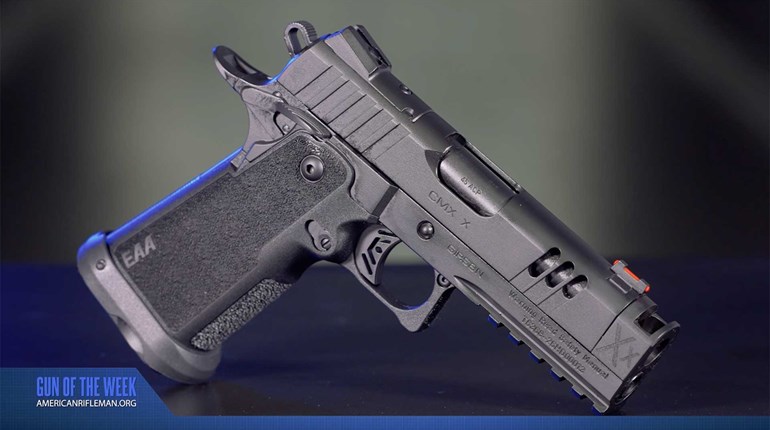
The .45 ACP has been chambered in too many pistols to list; it isn’t just the 1911 that fared well from being chambered for this. It is the cartridge that fueled the Tommy Gun, as well as other carbines. It is the cartridge that saw Iwo Jima, Normandy, Anzio, the Tet Offensive, Korea and many other bloody places. It was present at the St. Valentine’s Day Massacre, it was used by Bonnie & Clyde, it was the preferred cartridge of John Dillinger. Few other cartridges in the history of firearms development can attest to such a long and sordid history. In spite of the numerous developments in handgun cartridge technology over the last century, it seems that the John Browning design is as valid and as ever, and I’d bet that assessment will be valid in another 100 years.
Looking for previous installments of Behind the Bullet? We've got you covered.
• .404 Jeffery
• .44 Remington Magnum
• .243 Winchester
• .338 Winchester Magnum
• .357 S&W Magnum
• 6.5-284 Norma
• 8x57 Mauser
• .38 Smith & Wesson Special
• 7x57mm Mauser
• 9 mm Luger
• .35 Whelen
• .454 Casull
• .375 H&H Magnum
• .45 Colt
• .22-250 Remington
• 10mm Auto
• .308 Winchester