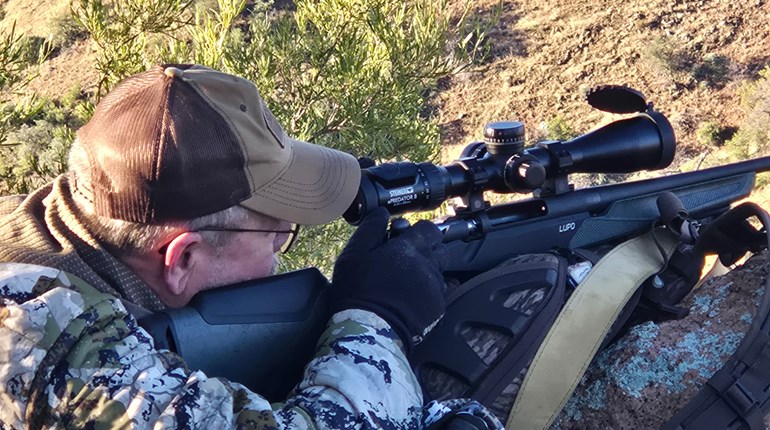
Mention the Rigby name to any rifle aficionado, and odds are that the famous .416 Rigby cartridge will come quickly to mind, and with good reason; it is an undeniable classic. The writings of Robert Ruark certainly helped the reputation of the cartridge and the company, as Ruark put his young PH Harry Selby and the .416 Rigby rifle he carried on a pedestal. But the .416 is certainly not the only cartridge to bear the Rigby surname; read the works of Walter Dalrymple Maitland “Karamoja” Bell, or Col. Jim Corbett and the .275 Rigby—better known as the 7x57mm Mauser—will get all sorts of praise.
In more recent times, the 1994 release of the .450 Rigby gave dangerous game hunters a bit more bullet weight than the .416 Rigby and has developed a small but devout following among both professional hunters and their clients alike. But there is another Rigby cartridge, vastly overlooked even among rifle cranks, but which was at one time as popular as the .375 H&H Magnum: the .350 Rigby Magnum.
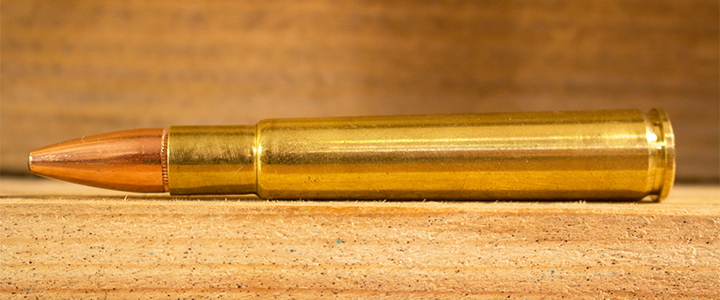
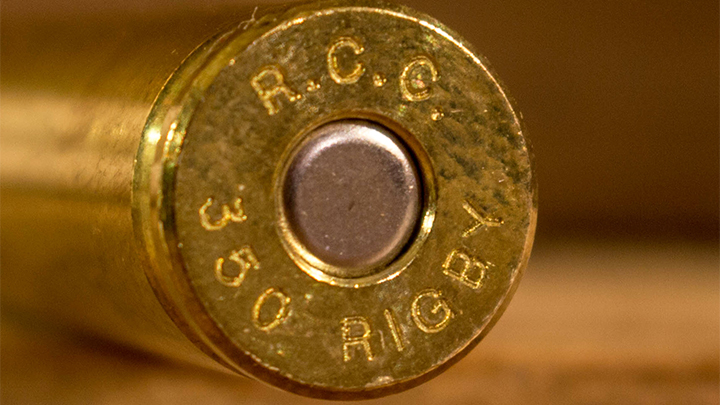
Released in 1908, the .350 Rigby Magnum is an entirely original design, with no parent cartridge. The cartridge predates the more famous .416 by three years, and the .350 Rigby was the first to feature the sharp 45-degree shoulder which is the hallmark of the Rigby designs. The body of the .350 Magnum measures 0.517 inches at the base, smaller than the 0.589-inch base of the .416 Rigby. The .350 Magnum has a case length of 2.742 inches, and an overall cartridge length 3.44 inches, so it will feel at home in a magnum-length receiver.
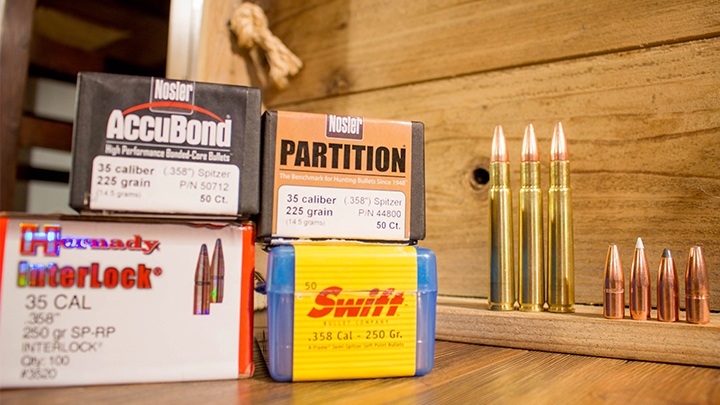
The classic .350 Rigby Magnum load pushes a .358-inch diameter 225-grain bullet to a muzzle velocity of 2625 fps for 3,440 ft.-lbs. of muzzle energy. As it was released in the first century of the 20th century, when the common boundaries of cartridge usage were being defined, the .350 Rigby Magnum was considered an all-around cartridge, especially in the more open terrain of British and German East Africa, known today as Kenya and Tanzania. The softpoints were used for the various antelope species, dangerous cats and even buffalo, while the full-patch, non-expanding solids would be used on elephant. The cartridge would be championed by Denys Finch Hatton (of “Out of Africa” fame), John ‘Pondoro’ Taylor and Pete Pearson, and would be used by Baron Bror von Blixen-Fineke as well.
That 225-grain bullet has a sectional density (SD) value of 0.251, a bit light for what is normally considered to be appropriate for dangerous game. Most Professional Hunters agree that a bullet with a S.D. figure of 0.300 is desirable, and comparing similar cartridges, you’ll see the .350 Rigby comes in a bit behind the other popular choices of the day. The .318 Westley Richards was a highly popular choice at that time, and it drives a 250-grain bullet of .330-inch diameter, with a SD of 0.328, and the .375 Holland & Holland uses a 300-grain bullet of nominal diameter with a SD of 0.305; both are renowned for their penetration. So when it comes to penetrating thick hide and heavy bone, one could see where the .350 Rigby could benefit from a heavier bullet, say a premium 250-grain with a SD of .279. To reach the .300 mark, you’d need a 270-grain bullet (the North Fork and Woodleigh bullets come immediately to mind), but stabilization becomes an issue in the slower twists, and that’s long been a problem in .35-caliber barrels. But perhaps you’re not after thick-skinned dangerous game.
The .350 Rigby Magnum is, in the words of veteran Professional Hunter Robin Hurt, “a perfect caliber… …to hunt lion and leopard.” With a few exceptions, most African countries require a minimum of .375-caliber cartridges for thick-skinned dangerous game like Cape buffalo and elephant, and that makes sense in most instances. But in those countries where the lighter cartridges are legal for the cats, the .350 Rigby Magnum is just about perfect. And for the larger antelope species, like any of the eland, wildebeest, zebra and roan, the .350 Rigby Magnum is a sound choice.
Here in North America, you could take the .350 Rigby anywhere you’d take the .35 Whelen or .358 Norma Magnum, and that includes north to Alaska for the great bears. If the .350 Rigby Magnum was effective in the golden era of safari, modern premium bullet designs will make it even better. It’s a great gun for moose and elk, bear and boar, and for bison as well.
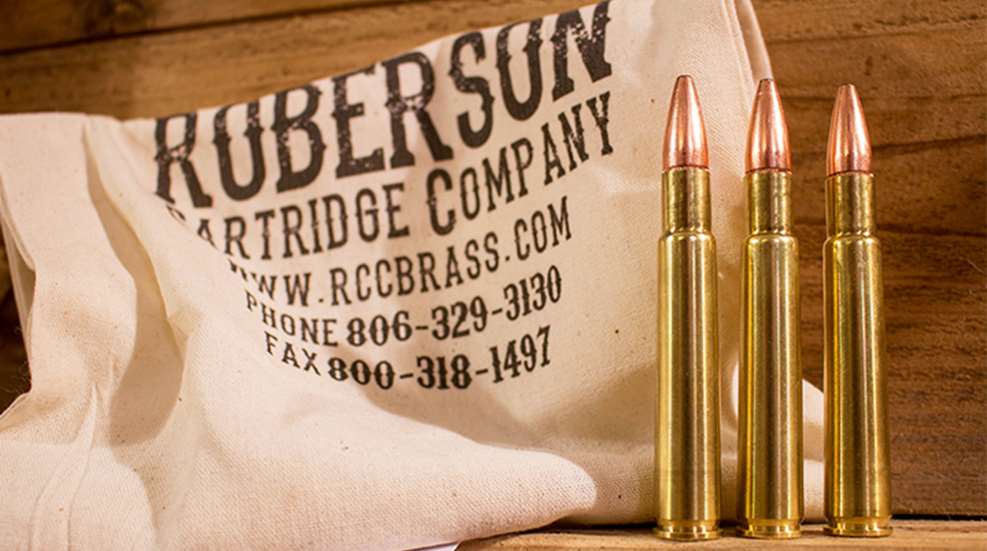
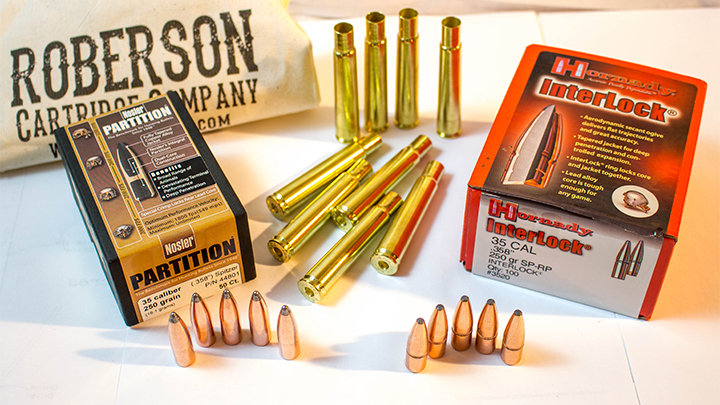
The big issue with the .350 Rigby Magnum is the lack of available ammunition. Kynoch was a big producer of .350 ammo, but that has ceased in the recent past. So, if you have an interest in carrying an ultra-rare cartridge of impeccable pedigree, you either roll your own or have someone load it for you. There is certainly no lack of .358-inch diameter bullets to choose from but brass is limited. Bertram Brass from Australia is a good source when you can get it, and Quality Cartridge makes a run of .350 Rigby every few years, but you could be waiting a considerable amount of time. I rely on Roberson Cartridge Company out of Texas for projects like these, and their .350 Rigby brass is wonderfully uniform and properly headstamped.
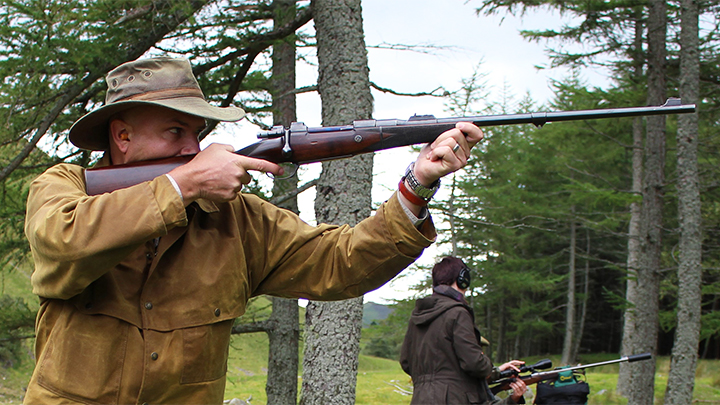
The case capacity of the .350 Rigby is very similar to that of the .358 Norma Magnum, and the performance is likewise similar. With modern powders the muzzle velocities can certainly beat those of the Cordite loads a century ago, especially in a modern rifle. I had the privilege of spending some time with a 1917 vintage take-down Rigby-Mauser rifle while on a hunt in Scotland, and the words ‘sweet shooting’ came quickly to mind. Recoil was completely manageable, and it inspired me to begin the journey of having my own .350 Rigby rifle built. Though still under construction, I’m eager to take the classic cartridge into the hunting fields.
Quite honestly, the .350 Rigby isn’t a cartridge I’d describe as practical, but if you are looking for something quite left of center, this may be for you. The Whelen is a more sensible choice, but the Rigby isn’t about sensibility, it’s about nostalgia and a connection to a bygone age. And those sentiments can be an awful lot of fun.
Looking for previous installments of our "Behind the Bullet" series? We've got you covered.
• .450 Nitro Express
• .17 Hornet
• 7mm STW
• 6.8 Western
• .375 Ruger
• .223 Remington
• 6.5x55 Swedish
• .416 Remington Magnum
• .300 Winchester Short Magnum
• 28 Nosler
• 6.5 PRC
• .22 WMR
• .458 Winchester Magnum
• .22 Hornet
• .280 Ackley Improved
• .240 Weatherby Magnum
• .458 Lott
• .264 Winchester Magnum
• .348 Winchester
• .33 Nosler
• .260 Remington
• .30-30 Winchester
• .416 Rigby
• .358 Norma Magnum
• .22 LR
• 7mm-08 Remington
• 8mm Remington Magnum
• .338 Federal
• .224 Valkyrie
• .338-06 A-Square
• 9.3x62mm Mauser
• .257 Weatherby Magnum
• .45-70 Government
• .300 H&H Magnum
• .25-06 Remington
• .30-06 Springfield
• 6.5 Creedmoor
• .300 Remington Ultra Magnum
• 7mm Remington Magnum
• .470 Nitro Express
• .280 Remington
• .300 Winchester Magnum
• .270 Winchester
• .222 Remington
• .45 ACP
• .404 Jeffery
• .44 Remington Magnum
• .41 Remington Magnum
• .243 Winchester
• .338 Winchester Magnum
• .357 S&W Magnum
• 6.5-284 Norma
• 8x57 Mauser
• .38 Smith & Wesson Special
• 7x57mm Mauser
• 9mm Luger
• .35 Whelen
• .454 Casull
• .375 H&H Magnum
• .45 Colt
• .22-250 Remington
• 10mm Auto
• .308 Winchester