I lived, hunted and guided part-time in Alaska from 1991-2005, and before moving north, I made two other hunting trips there, taking every big-game species available on that barren tundra multiple times except a musk ox. I’ve also made five hunting trips to sub-Saharan Africa, shooting everything from Cape buffalo, lion and leopard to many different plains-game species.
I’ve hunted both places with rifles and bows. After all that, I can tell you that both are about as much fun as a person can have with their clothes on. Generally speaking, on a per-animal basis, hunting in Alaska is more expensive than hunting African plains-game. But if I had to choose one over the other, I’d take Alaska every time. Here’s why.
*Toughness: Alaska is big, rough and tumble country. There are huge mountains, deep, icy rivers, vast oceans and lakes and huge expanses of tundra to conquer. In addition, the weather can change from sunny and bright, warm and nice to cloudy and dark, cold and windy—sometimes all in the same day. I once started a September moose hunt in gorgeous 50-degree weather, and 10 days later it was 25 below zero with three feet of snow on the ground. Not only do you have to be in good physical condition, you have to be mentally tough to win on an Alaskan hunt.
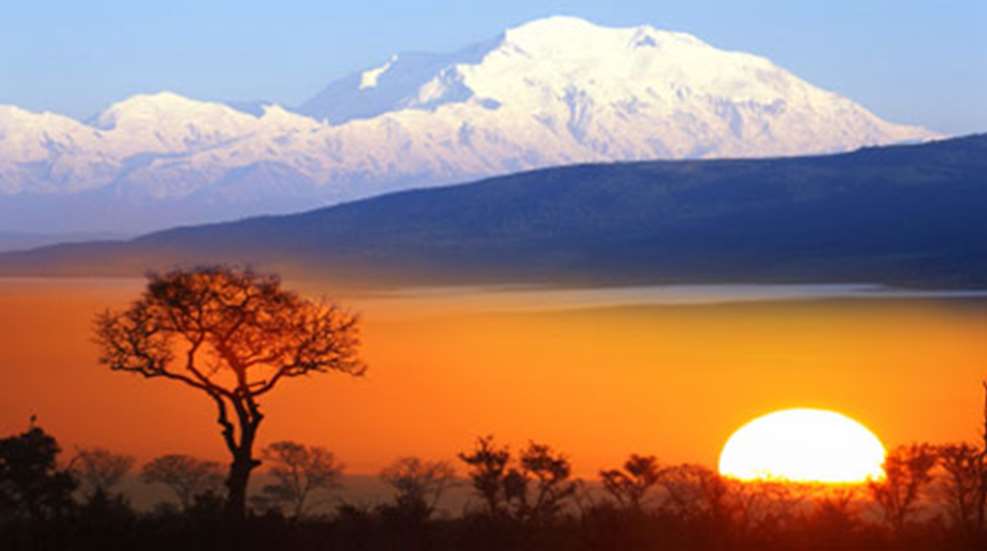
*Breathtaking Beauty: I have hunted around the world and in all 50 states, but nowhere have I been is as breathtakingly beautiful as Alaska. The mountains, glaciers, oceans, rivers, and even the flat tundra are unique unto themselves. In the Southeastern panhandle is a huge old growth forest which is almost primeval in nature. The North Slope of the Brooks Range has been called the Serengeti of the North. No matter where you travel in this state, the beauty is unsurpassed.
*Real Camps: In Africa, odds are hunting camp will be a beautiful lodge with all the amenities, great food, good wine, cable TV and internet access— just like home. In rural Alaska I’ve stayed in a nice lodge—but that was base camp. Hunting took place from wall tent camps or, if I was lucky, a small line shack, reached by horseback, a bumpy ATV ride or boat. Most of my sheep hunting has been a backpack affair, sleeping in a tiny tent, eating freeze-dried food and not changing clothes for 10 days. I used to guide on a 34-foot boat where the clients had two small bunks, the skipper a cramped berth and I slept on a makeshift bed on the galley table. But hey, at least it was dry.
*(Almost) No Road Hunting: Plains game hunting in sub-Saharan Africa usually involves lots of driving around— in essence, road hunting. In Alaska you may do a little of this, but in unique ways—like boating along ocean beaches or floating down rivers in search of bears and moose, or riding horses to from point A to B, glassing as you go. But mostly you hike, covering ground on foot. You learn quickly that in bush Alaska there simply are no roads.
*No Sure Thing: Unless something really unusual happens, on an African plains-game hunt you will shoot several different species of game. In fact, it is not unusual to shoot at least one animal each day, and sometimes more—sometimes collecting all without walking more than a few yards from the truck. In Alaska, you may hunt 10 full days to get one opportunity at a quality bear, moose, caribou, ram or goat, and you’ll work hard for each and every opportunity you get. Believe me, after a week of busting your hump and finally making it happen, success is never sweeter.
I like to tell my friends that Alaskan hunting is for the committed, dedicated, serious outdoorsman. You have to prepare for this type of adventure for many months, getting your body in shape, your gear ready, your equipment dialed up. On the other hand, a successful plains-game hunt in Africa can be made by the casual sportsman who has to do nothing to prepare except, perhaps, get a little target practice in and make sure his passport is up to date. Either way, both are great fun, and those who love to hunt should try both if they can.
But in terms of real adventure, there’s no question which I’d rather do. How about you?