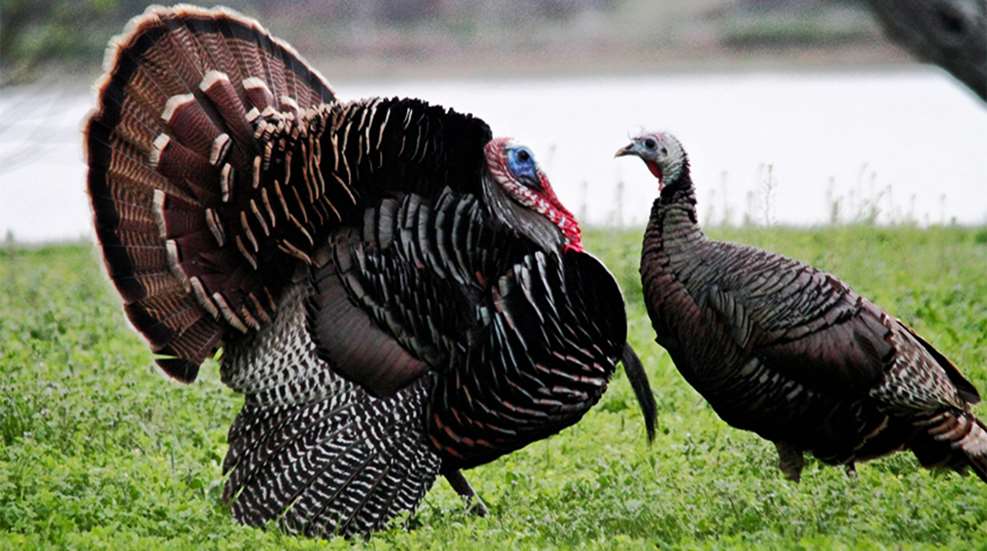
For a bird that has a brain the size of a medium peanut, turkeys seem to be great at outsmarting us. Turkey hunters are often quick to give gobblers way too much credit in the smarts department, and usually when a turkey eludes us, we have done something that was not so smart and given him the advantage. Here are five common turkey hunting mistakes you should avoid making to give you a better chance of bagging that ol’ longbeard.
1. Going Back to the Same Turkey Every Morning
It’s really tempting; you know that he’s there, you know he’s probably going to gobble and you know what he’s going to do after he flys down off the roost. The thing is, you’ve been there and watched this show four days in row, and you haven’t even been close to getting a bead on him. You need to let this relationship cool for a few days, maybe longer. Let this turkey do his thing for a while (maybe some of his girlfriends will sneak off and leave him), and after a week or so, you can show up refreshed and ready to take up the battle once more. Hunting the same turkey every day can get boring, and the season is too short for that. Strike out and find a new gobbler to talk to—who knows, you may find a hot two year old that comes running in when you cluck one time.
2. Worrying About Your Calling
So you can’t turkey call like Ben Lee or Ray Eye, that’s ok, the turkeys don’t care anyway. All that’s required to call in a gobbler is the ability to make a reasonable imitation of a hen yelp—that’s it. Sure, it’s nice to make fancy purrs, cackles and clucks—and they can help for drawing in a stubborn tom—but the fact is, if a gobbler is ready to respond to a call and approach what he thinks is a hen, it doesn’t take calling-contest-level turkey talk to fool him. If he gobbles, answer with a few yelps; if he gobbles back at you, yelp again, then shut up, get your gun up and be ready. This may be all it takes.
3. Complaining About the Season Being Too Early or Too Late
I think this happens in almost every state. When your state game department sets the spring season, odds are good that at least half of the state’s turkey hunters will complain about it. “The season is too late!”, “By the time we get to hunt, they’re all gobbled out!” You’ll hear this all season, mostly from unsuccessful hunters. Maybe we should give the biologists that set our season dates a little leeway. Most turkey biologists will tell you that turkeys go through a couple different cycles of gobbling activity, and the idea is to get as many hens bred as possible during the first peak of activity. This will hopefully give you a good hatch and continue the population. The season is often set during the second peak of gobbling so that hunters can get on vocal birds while a lot of the hens are on the nest. The point is, it’s spring; the turkeys are out there doing their thing, stop complaining about season dates and go hunting; the turkeys don’t have a calendar, anyway.
4. Not Walking Enough on Public Land
We often shy away from public hunting ground because there are just way too many hunters. We get tired of all the traffic and calling that seems to come from every ridge. When was the last time you left the vehicle an hour earlier than usual and struck out on a trail to take you far from the maddening crowd? More than one study in recent years has shown that gobblers on public land equipped with transmitters often lived through the season, and though they moved away from the heavy activity areas, they didn’t go far. Leave the turkey that gobbles close to the road every morning and look for the one that no one else can hear, because they don’t want to walk too far.
5. Giving Up on a Gobbler Too Quickly
Maybe you’ve heard that turkey hunters are supposed to be patient. Many times, we go through an encounter with a turkey that is gobbling and seems like he is going to come and greet us, but then clams up or fades in the distance. Often, the inclination is to jump up and do the “run and gun” routine trying to find another turkey. Well, unless you know that another gobbler is waiting for you somewhere, what’s your hurry? Turkeys do things that we don’t understand. Sometimes they quit calling for no apparent reason—at least to us. Turkeys don’t wear watches and couldn’t care less what time it is. Unless you have some place to be, when the gobbler hushes up, kick back and relax. Enjoy the spring morning; hear the song birds, if the truth was known, I sometimes grab a quick nap.
You can relax, but remember this: the gobbler heard your calls and he knows exactly where they came from. Anywhere from thirty minutes to two hours later, he may well come and check on that hen he heard calling. He may gobble as a courtesy, or he might come in on you silently. Be ready.