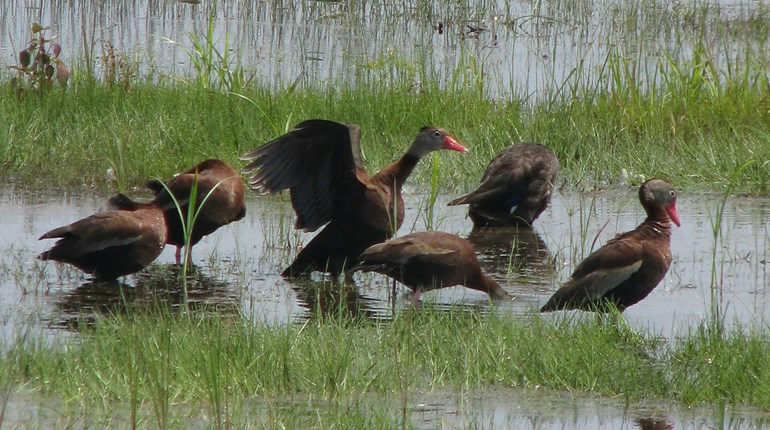
A Michigan Department of Natural Resources (DNR) reminder, applicable nationwide, includes tips on how waterfowl hunters can protect themselves and domestic animals amid ongoing cases of highly pathogenic avian influenza (HPAI). Commonly known as “bird flu,” HPAI is a highly contagious respiratory disease that causes sickness and sometimes death in birds and mammals. Wild birds can carry it without appearing sick.
Risks to Humans
The risk of HPAI infecting people is low, but hunters should always take precautions when handling wild birds. The virus can infect people, especially those who come into contact with infected animals or material.
Do not harvest or handle wild birds that are obviously sick or found dead. If you observe a die-off of six or more waterfowl, gulls or shorebirds, report it to your local game and fish or conservation office.
If you have close contact with obviously sick or dead wild birds, or surfaces contaminated by them, monitor for these symptoms for 10 days after your last exposure:
- Fever with temperature over 100-degrees Fahrenheit or chills. Fever may not always be present.
- Sore throat.
- Difficulty breathing or shortness of breath.
- Eye tearing, redness or irritation.
- Runny or stuffy nose.
- Muscle or body aches.
Precautions for Waterfowl Hunters
Hunters should take the following precautions to avoid contracting or spreading bird flu:
- Cook all meat to an internal temperature of 165-degrees Fahrenheit to kill any viruses.
- Process wild birds in the field. Remains from processed birds should be buried on-site or double-bagged and disposed of with household trash.
- Avoid touching your eyes, nose and mouth when handling wild birds.
- Wear rubber or disposable gloves while handling and cleaning wild birds, and wash hands with soap and water or alcohol-based hand cleanser, even if hands are not visibly soiled.
- Thoroughly clean and disinfect all knives, equipment and surfaces that come into contact with wild birds.
- Do not eat, drink or smoke while handling or cleaning wild birds.
Risks to Animals
Waterfowl hunters who care for other domestic animals should take added steps to protect the health of their animals. These precautions include:
- Keeping domestic animals away from wild birds.
- Keeping domestic animals away from dead waterfowl.
- Keeping domestic animals away from hunting apparel and footwear that has come into contact with wild birds or their mucous, saliva or feces.
- Cooking waterfowl meat to 165 degrees Fahrenheit before feeding it to other animals.
- Showering after the hunt and before tending to domestic animals.
- Washing hands immediately before and after caring for animals.
- Not sharing equipment or other supplies between premises.
In Michigan
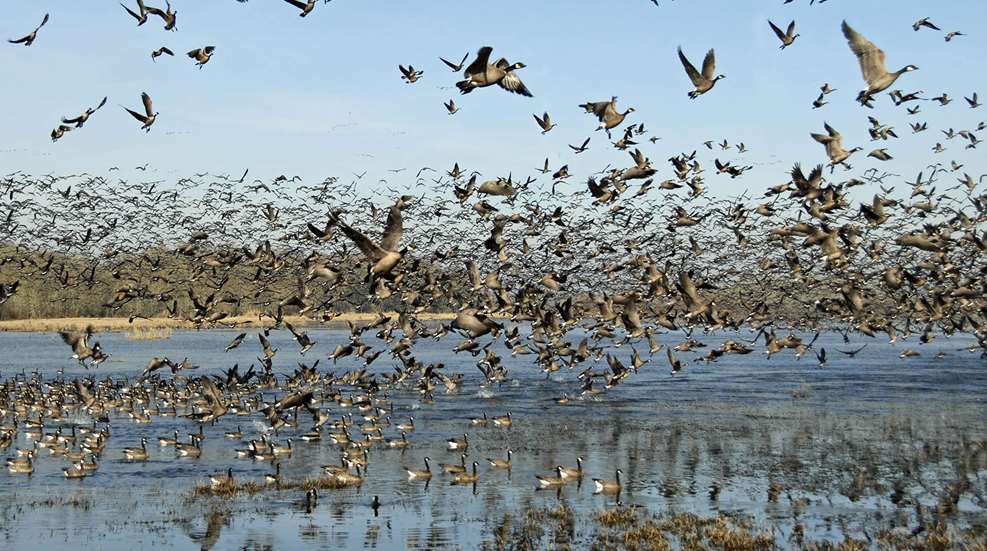
HPAI has been found in North American waterfowl since 2021. This year, the DNR has detected cases of HPAI primarily in Canada geese, bald eagles and red-tailed hawks. A list of Michigan detections are posted on the DNR’s HPAI webpage. Cases can be found at any time of the year, but upticks are expected during spring and fall waterfowl migrations.
“Although it has been seen in Michigan for a few years now, the patterns of infection differ each year, and we continue to monitor this disease in Michigan’s wildlife,” said Dr. Scott Larsen, DNR wildlife veterinarian. “We count on our hunters, birdwatchers and other Michiganders to let us know what they’re seeing, and the online DNR Eyes in the Field reporting tool is a great way for folks to notify us of events with multiple sick or dead birds.”
For more information about HPAI and human health, visit the Michigan Department of Health and Human Services webpage for Communicable Disease Information and Resources or the Centers for Disease Control and Prevention webpage for Avian Flu.