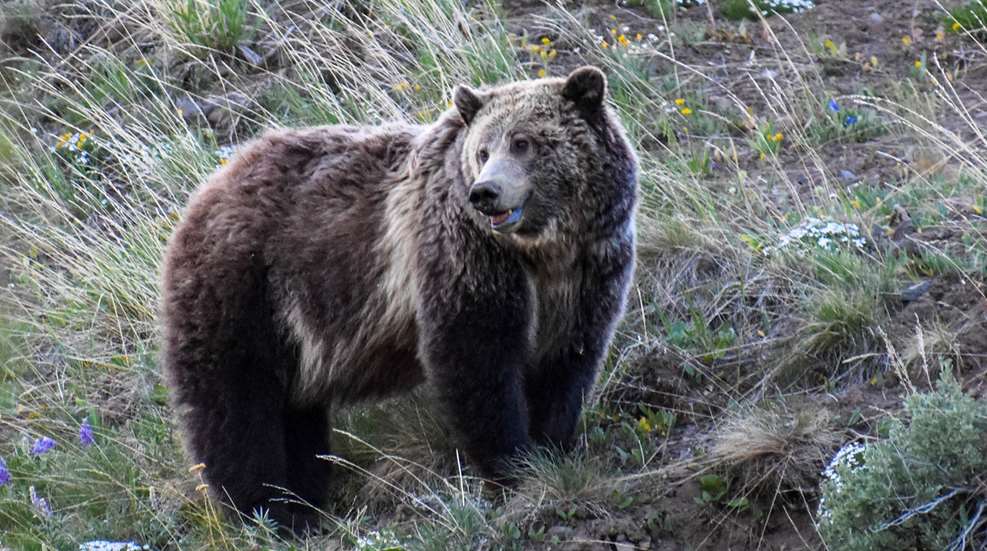
On July 17 the U.S. Fish and Wildlife Service (USFWS) published a proposed rulemaking change on the Federal Register that, if approved, would allow western states to better manage their grizzly bear population. Despite their burgeoning population the big bruins remain on the “endangered” list under the Endangered Species Act (ESA), a fact that has paralyzed regional conservation efforts, impacted other wildlife populations and dramatically increased human/bear conflicts.
In 1975, when grizzlies were first listed as “threatened” under the ESA, biologists estimated there were 136 of the animals in the Greater Yellowstone area. Today there are more than 1,000, a location that attracts somewhere between 8 and 9 million tourists annually.
The proposed rule would allow state and tribal wildlife agencies to activate their own management plans for grizzlies in coordination with the USFWS. They, in turn, will begin participating in their conservation and deterring conflicts in areas where bear numbers exceed objectives.
The announcement drew unanimous praise from major conservation organizations.
“Director Nesvik, Secretary Burgum, and the entire leadership of the Department of the Interior have found a way to declare a conservation victory under ESA and to provide for continued conservation under state management,” said Simon Roosevelt, Boone and Crockett Club executive vice president of conservation, research and policy. “The rule advances grizzly conservation from the now-resolved problem of too few bears to the now-emerging realities of abundant bears. The predictable and misleading criticism of this will be that bears are losing protection. The accurate view is that bears and people are gaining the benefits of sustainable management.”
“This rule reflects what successful conservation should look like—recognizing recovery while providing the tools needed to address the challenges that accompany it,” said Gray N. Thornton, president and CEO of the Wild Sheep Foundation. “We commend Secretary Doug Burgum, Director Brian Nesvik, and the U.S. Fish and Wildlife Service for advancing a practical, science-based approach that benefits both grizzly bears and the people who live alongside them.”
“Grizzly populations have grown steadily for decades, exceeding ESA recovery goals, yet state wildlife agencies and affected landowners have been handcuffed with very limited management options,” said Rocky Mountain Elk Foundation President and CEO Kyle Weaver. “We agree with biologists that grizzlies met and exceeded recovery goals years ago and should be delisted. This proposal allows state wildlife agencies and private landowners to effectively manage the impacts of grizzlies as populations continue to swell and expand.”