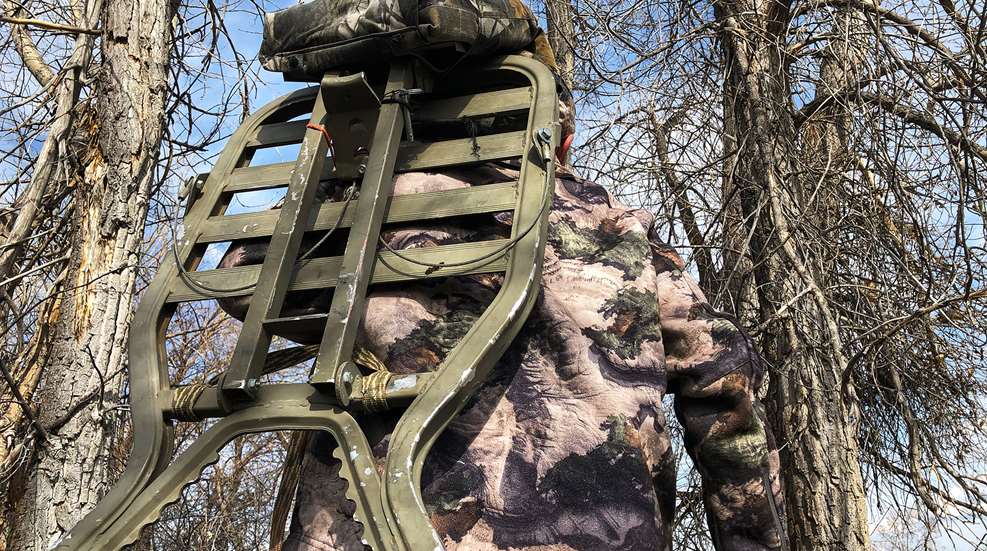
Few things suck more than completing a project only to discover you must do it all over again on account of the unforeseen. Wackiness in the whitetail woods during the rut could spur you to contemplate a change of ambush sites. Hunting pressure, harvest, livestock movements and more also add to the bedlam of autumn to make whitetails change their daily behavior beyond your preseason scouting setup. Make the move, but move discreetly.
When your stands become as abandoned as a VHS player in a pawn shop, you need to “buck-up buttercup” and reset where whitetail activity has picked up. That may mean an intrusion into a new whitetail area, unsettling for both you and whitetails alike. To make that makeover seamless and veiled, consider teaming the ambush relocation with elements to increase your invisibility.

Make Ready for a Move
First, have a backup stand ready to roll. Hey, I understand the cost of stands and step sections, but one or more backups saves you time and decreases your time in whitetail-sensitive areas, such as the periphery of refuge. Nabbing a stand from a field edge at midday may not pose a risk, but during the rut you never know when or where a buck could show. Bucks roaming bedrooms is common during the rut. The fewer disruptions you can manage the better to minimize educating a mature buck.
Next, that stand and those steps need to be easy to hang. Lightweight aluminum units rank high for ease in hanging when doing it alone. Spraying truck undercoating or a rubberized spray on chains and other metal parts can reduce the metal-to-metal noise while hanging a stand. The same is true of steps or ladder sections. Think lightweight and noiseless to expedite your cloaked stand deployment.
And if you no longer appreciate heights, research easy-to-set-up ground blinds. I lost count of the ground blinds I surrendered to in set-up and tear-down battles, especially those bendy models. Ditch those for a quality hub-style blind or other straightforward design. Brush in your blind well. It needs to completely disappear or deer will avoid it for a few days before warming to it. By then, the deer pattern may be already shifting again in the rut winds. Lastly, use snippers to clear shooting lanes if possible as snippers are quieter than sawing. Before you slip back out, spray down everything—blinds, stands and steps—with a scent-elimination spray like Scent Killer Gold.
Schedule Your Move With the Deer
When you must move to an ambush location, do it on the deer’s schedule. FedEx doesn’t deliver a package requiring a signature at 2 a.m. and you shouldn’t be moving a stand along a food plot at sunset. Between your past hunting experience and a treasure trove of trail camera evidence, you have a sound understanding of when deer move on your hunting property. Use that information to schedule your stand or ground blind move.
Adding or removing a stand from a field edge typically makes sense from midmorning through midday when deer retreat to cover. But what do you do about those interior stands, particularly when breeding activity could spike at any moment? You bet on FanDuel for the Super Bowl, and you will need to gamble on any interior move. Consider making any interior moves, like those near bedding cover, during the hours when deer will likely be elsewhere. Yes, that includes a Batman move after dark.
Right before dusk, deer may already have left bedding cover giving you a green light to creep in from the opposite direction of their travel. Think of deer transitioning to a soybean field. You should arrive from the opposite direction. After dark, many interior sites are vacant as tenants swarm fields for nutrition and estrus updates. Equip yourself with a quality light, keep it on low beam and hang away.
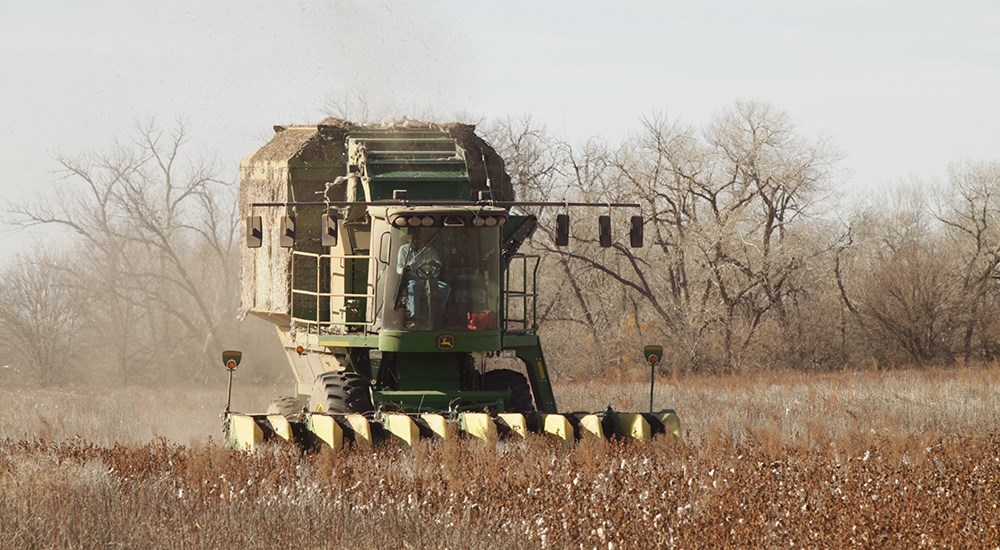 Over the years, the author often timed setting new stands with the hum of combines in bean or cornfields flanking woods he needed to invade. The noise of the harvesting machines together with grain trucks going in and out of fields worked in concert for the time needed to hang a new set.
Schedule Your Move With the Weather
No debate needed. Weather provides the tops in cover concealment when you need to be covert, especially in cover. The biggest challenge you face utilizing a weather coverup is scheduling a weather event when you need it. It ranks right up there with the difficulty of booking a doctor’s appointment on your timetable.
A hunting app, like HuntStand, can make the chore of finding a weather event or weather window a bit easier. Look for incoming fronts, outgoing fronts and cycles of weather that may only arise for brief instances during a day.
Common weather to team a move with includes wind, drizzle, snow and fog. Any inclement weather or a combination of provides not only cloaking by reducing visibility, but wind that creates a background din to mask any accidental noise you might create while establishing that new ambush site. When drizzle or rain coincides with your move, embrace it as it washes away scent and again adds its own noise to cover yours.
Schedule Your Move With Other Moving Parts
Rarely does a hunting property only serve the sole purpose of hunting. Whether you hunt on a property via permission or lease, the deed holder maintains authority to farm, round up livestock, cut firewood and even recreationally shoot. These and other irregular activities provide distractions and cover for you to make your stand move. Similar activities on bordering properties can also fill in as a distraction while you get busy placing new hides.
Stay in touch with landowners, land managers and friends who control the goings-on of a land tract. Over the years I often timed setting new stands with the hum of combines in bean or cornfields flanking woods I needed to invade. The noise of the harvesting machines together with grain trucks going in and out of fields worked in concert for the time needed to hang a new set.
One year I hunted a property next to a busy highway. The morning and afternoon rush hours worked exceptionally well to cover the intrusion of hanging a new stand, and camouflaged my ingress and egress to the stand during the hunt. Halfway through the rut a stand adjustment was needed, aided by the traffic noise. The next sit a mature buck sauntered past at 20 yards. My Prime bow worked its magic and game over.