This year marks the 20th anniversary of the launch of one of Taurus Firearms most enduring models, the Judge series of double-action revolvers. In April I had the opportunity to post this write-up which highlights the two-decade history of this uncommon wheel gun and its various configurations. At the time, I thought Taurus had already celebrated this milestone with the release of the highly engraved, 20th-Anniversary limited edition. But the following month, Taurus pulled another .45 Colt/.410 Bore rabbit out of their hat.
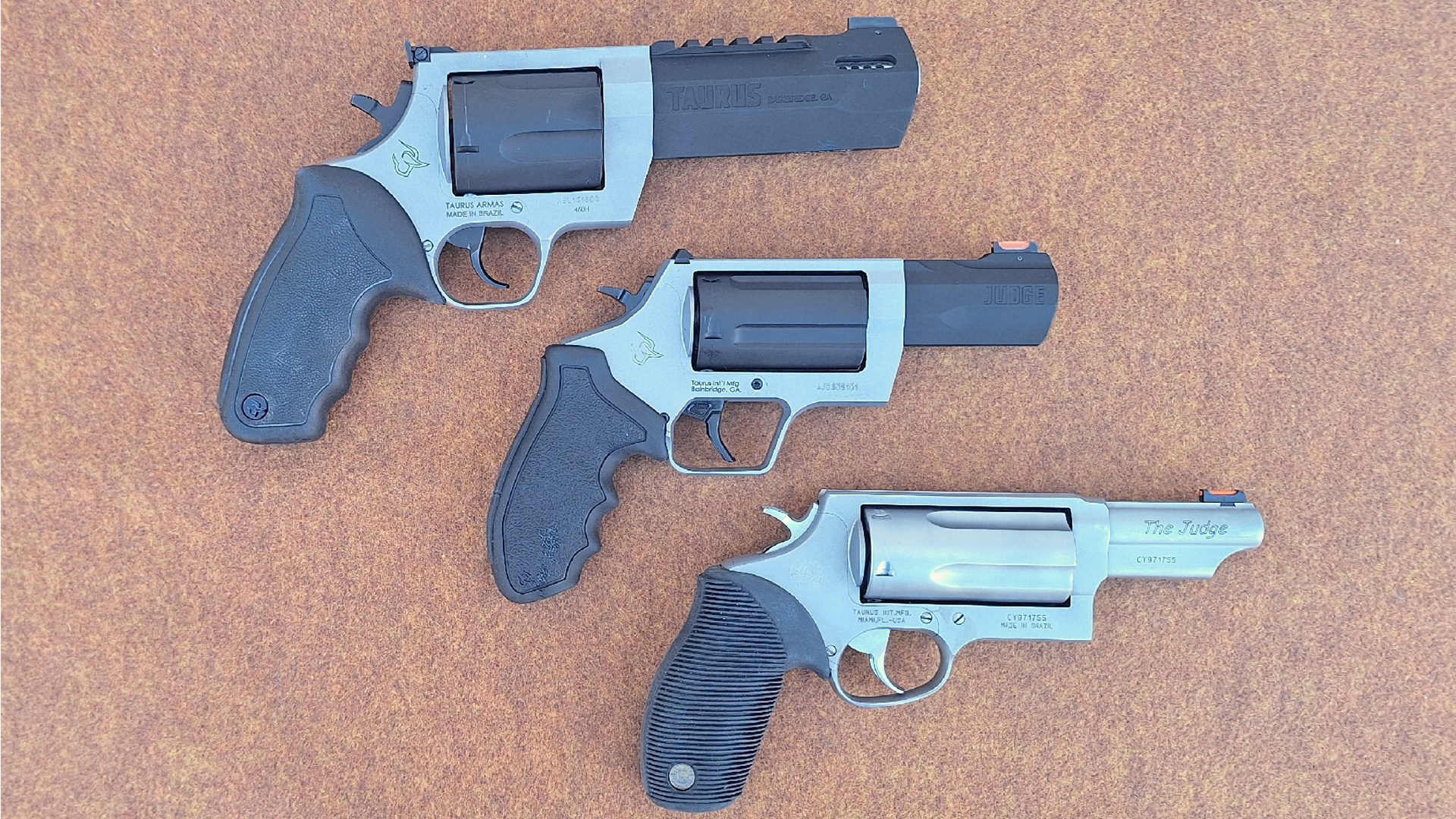 The Taurus Raging Hunter (Top) compared to the new Judge (Center) and the classic Judge (Bottom).
Taurus now offers a new, or next generation, line up that takes the platform in a different direction that is both fresh and familiar. The classic Judge takes its design cues from the medium-framed, 5-shot Model 44 Tracker. Most of the models from this generation have stuck close to the Tracker configuration. The next generation Judge is, for all intents and purposes, the company's top-notch Raging Hunter revolver reconfigured as a .45 Colt/.410 bore platform. It should be considered a member of that series. In fact, a clever name for it would be the 'Raging Judge.'
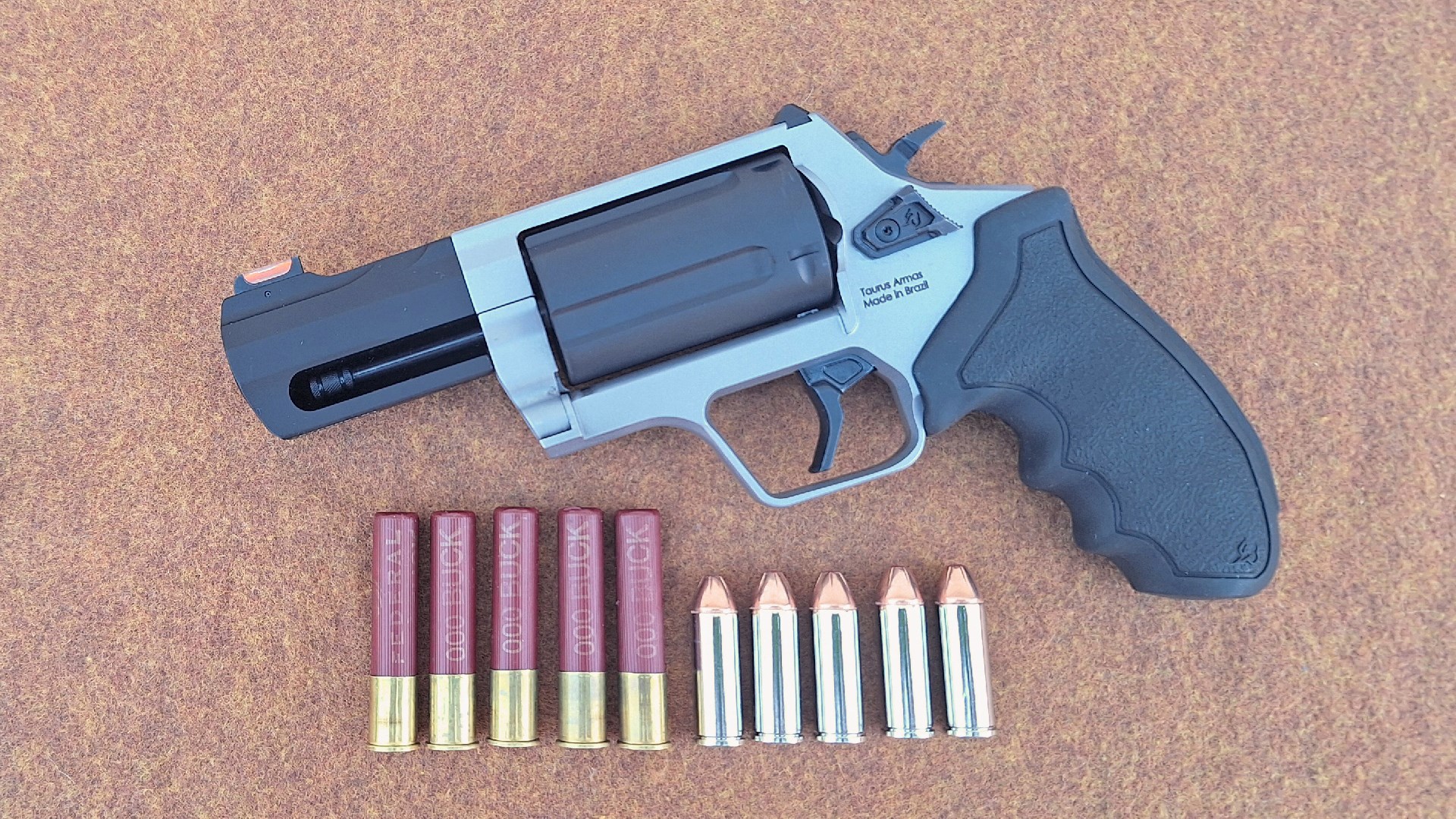 This revolver would probably be called the Raging Judge if the name wasn’t already taken.
Unfortunately, that rather convenient name was bestowed upon the beefy large-frame, 6-shot version released back in 2010 which can fire .454 Casull in addition to .45 Colt and .410 bore shells. Since Taurus has yet to work out the nomenclature for these 'all new' models, I'm going to refer to the revolver sent for this evaluation as the Judge for the sake of simplicity.
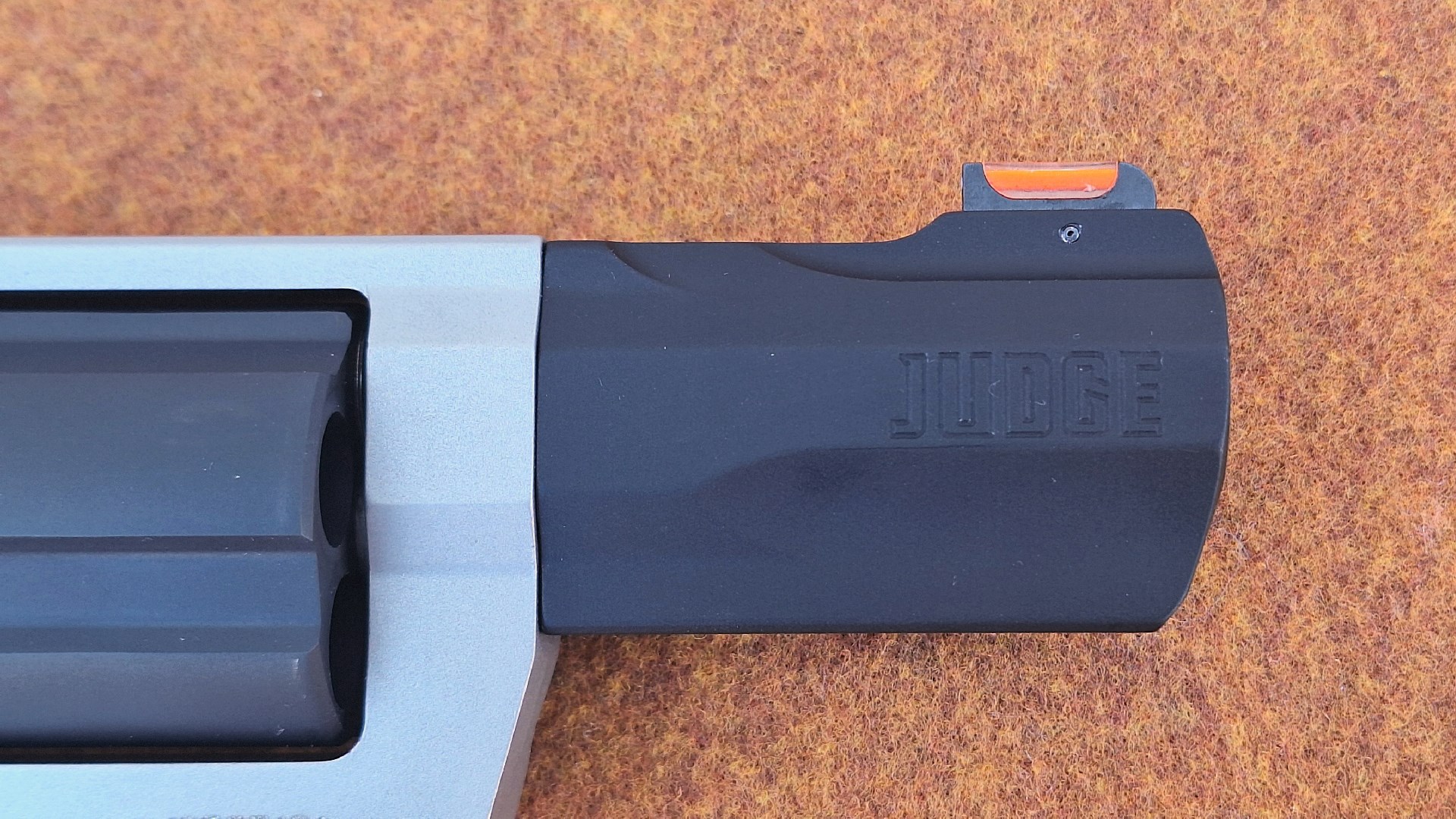
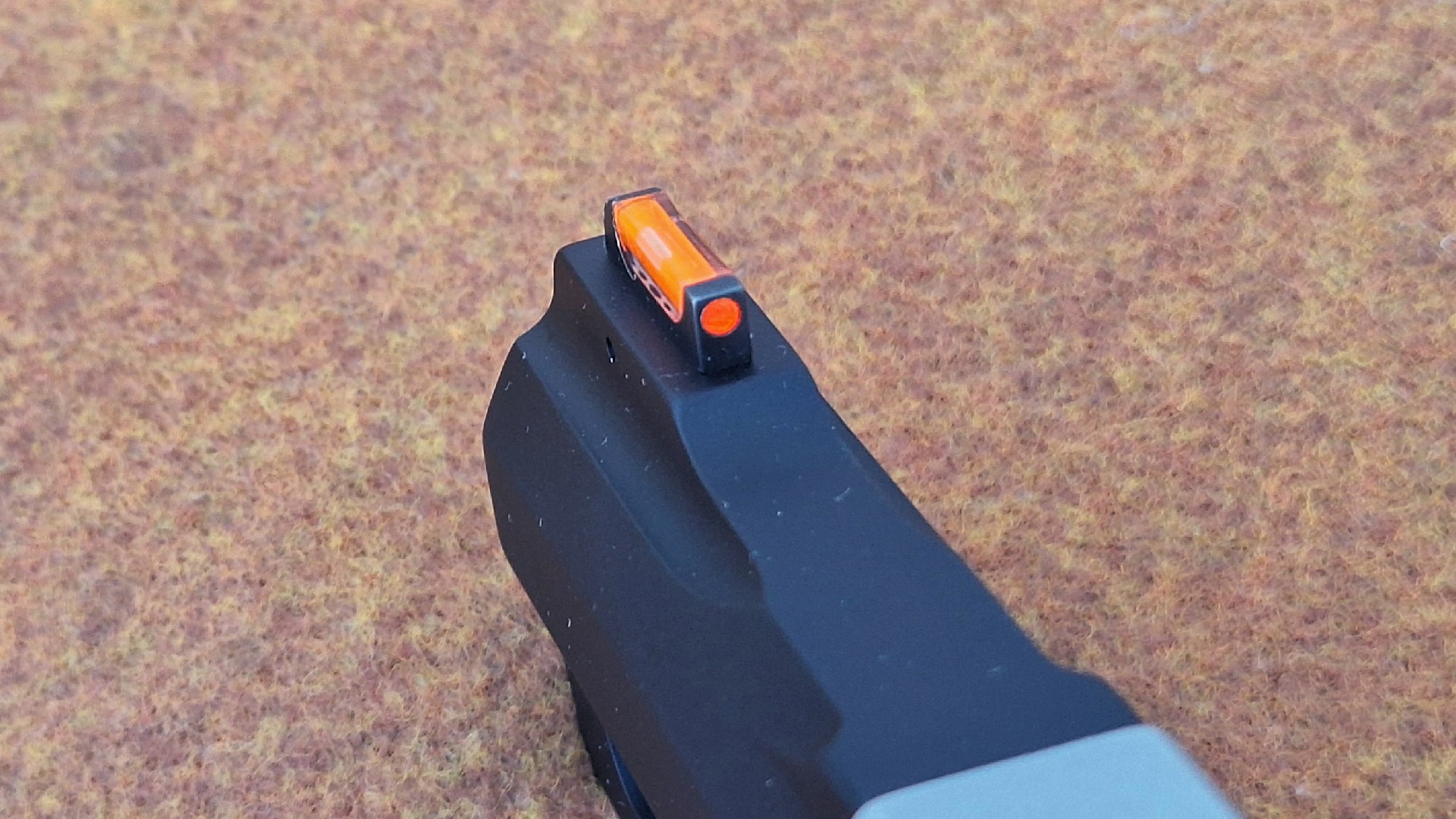 The front sight has been upgraded to an encased fiber optic.
A New-New Judge
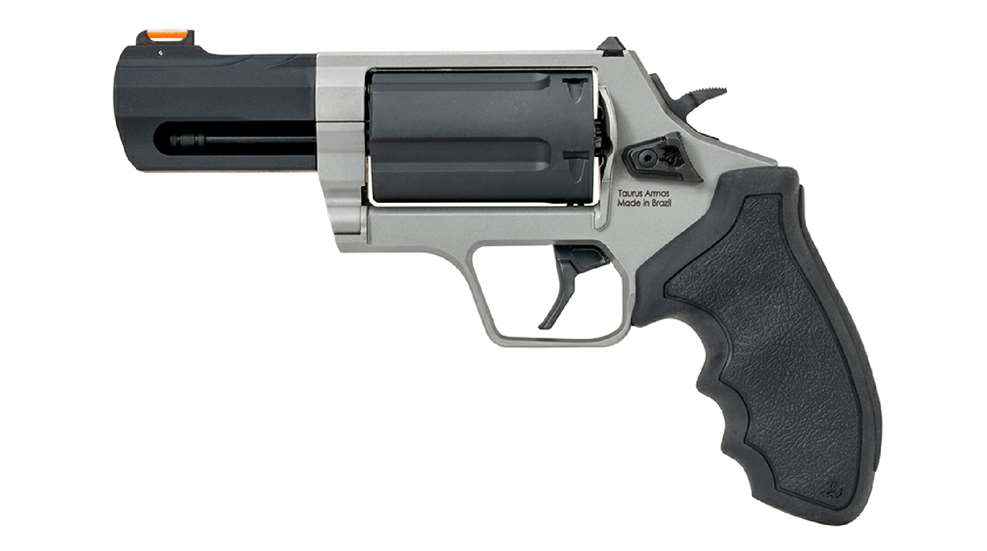
Like many of the long-framed Raging Hunter revolvers models, the Judge is built around a stainless steel frame which has a natural matte-silver finish. It has been extended to accommodate a cylinder elongated to chamber 2.5-inch long .410 Bore shells in addition to .45 Colt revolver rounds. This series launched with a total of four configurations. Customers can choose from either all black or Duo Tone (black and silver) finished with either a 3-inch or a 6-inch barrel. This is an evaluation of the 3-inch barrel Duo Tone version.
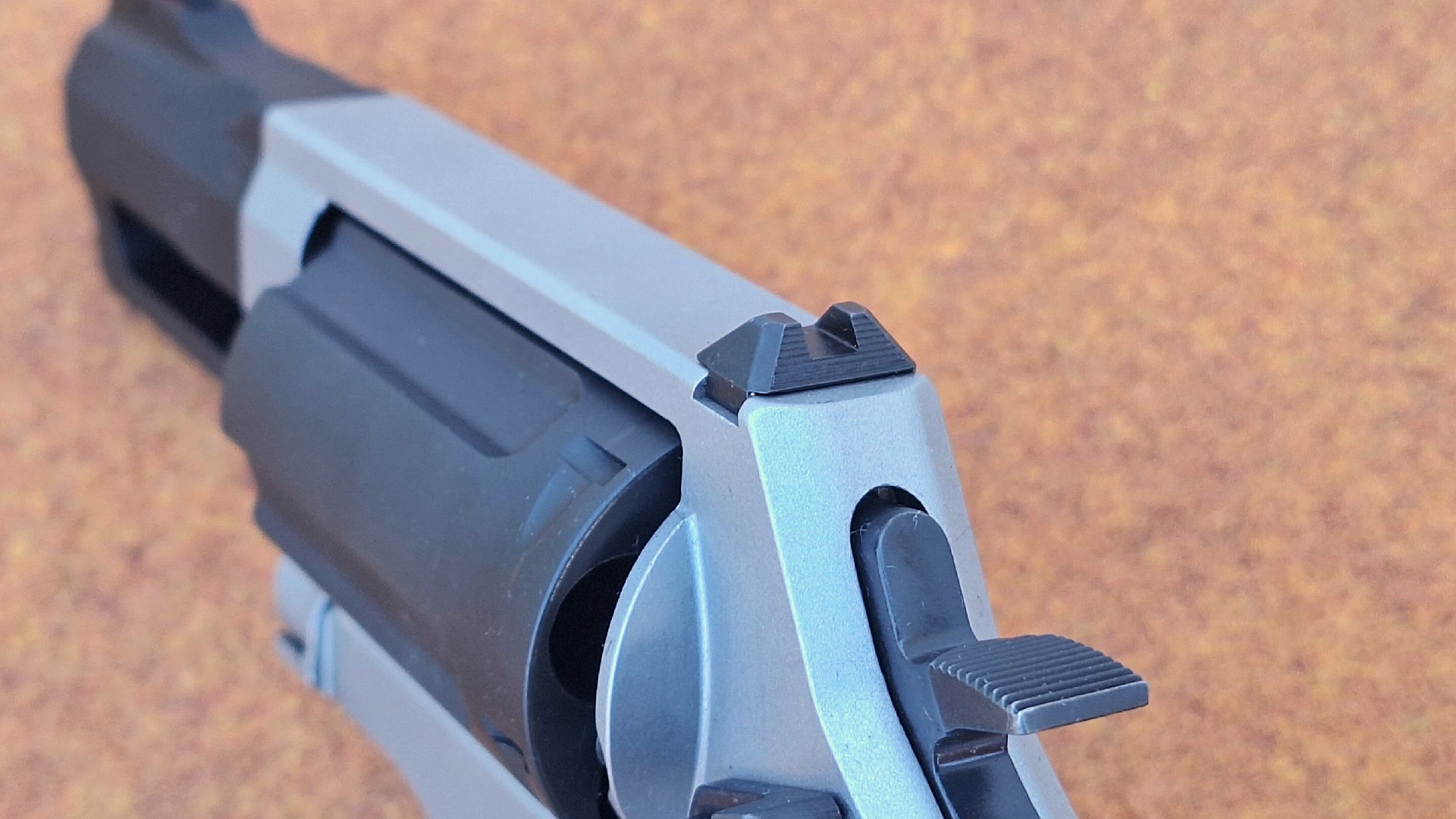 The rear sight is drift adjustable for windage.
The stainless steel barrel is secured inside of a hard-coat anodized aluminum shroud via a barrel nut which is visible at the muzzle. This shroud reduces the revolver’s weight, supports the front sight and it has an alcove cut into the underlug which houses the cylinder's relatively long ejector rod. However, the beveled top of this shroud is not long enough for the front sight and the integral optics rail found on the Raging Hunter models.
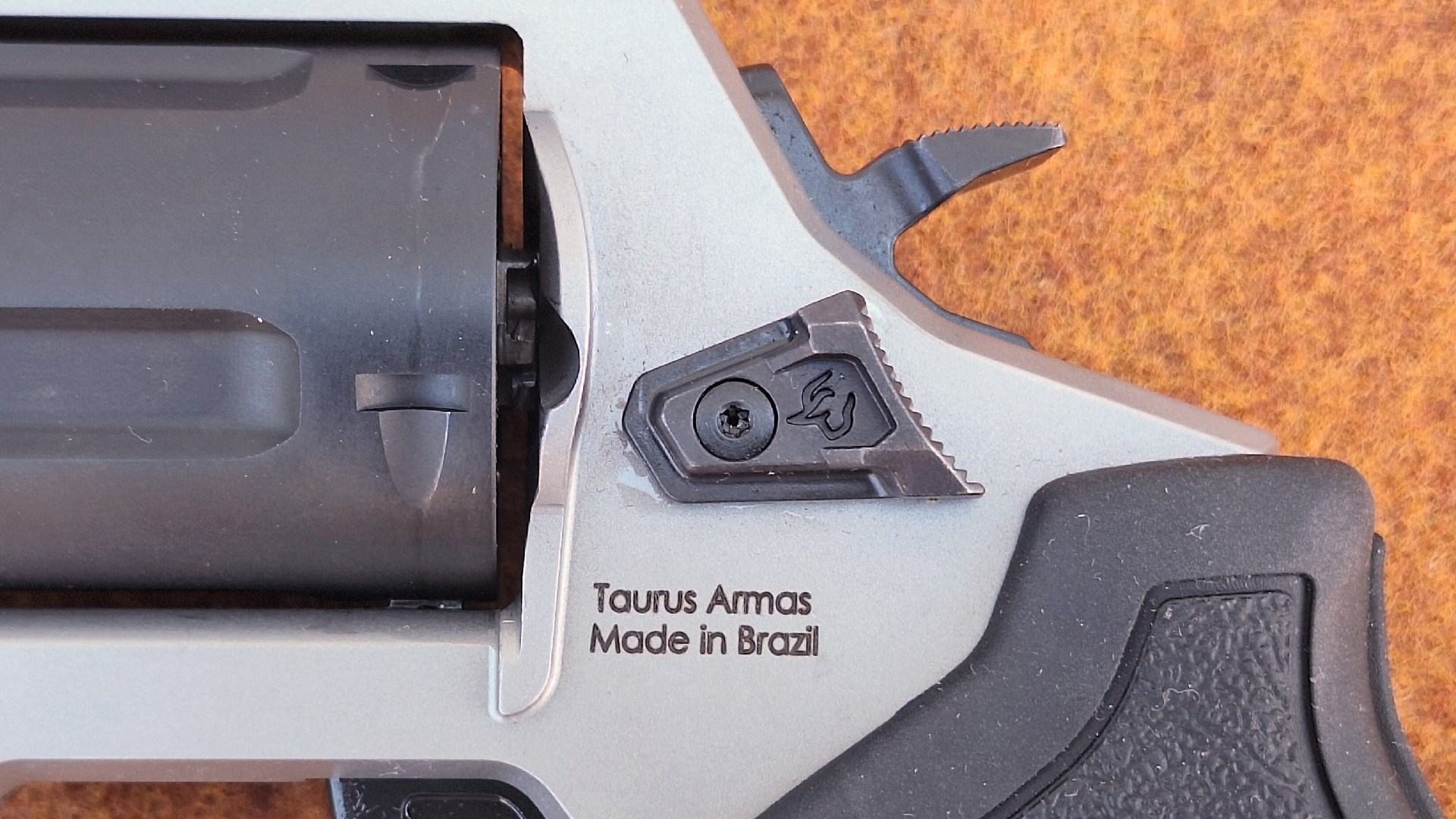 The new ‘gas pedal’ cylinder release is more intuitive to operate.
The sights have been upgraded to include a pinned fiber-optic front sight with the light pipe encased in clear polymer to prevent it from falling out. The low-profile, square-notch rear sight is serrated and dovetailed into the frame. This allows for it to be drifted for windage adjustments.
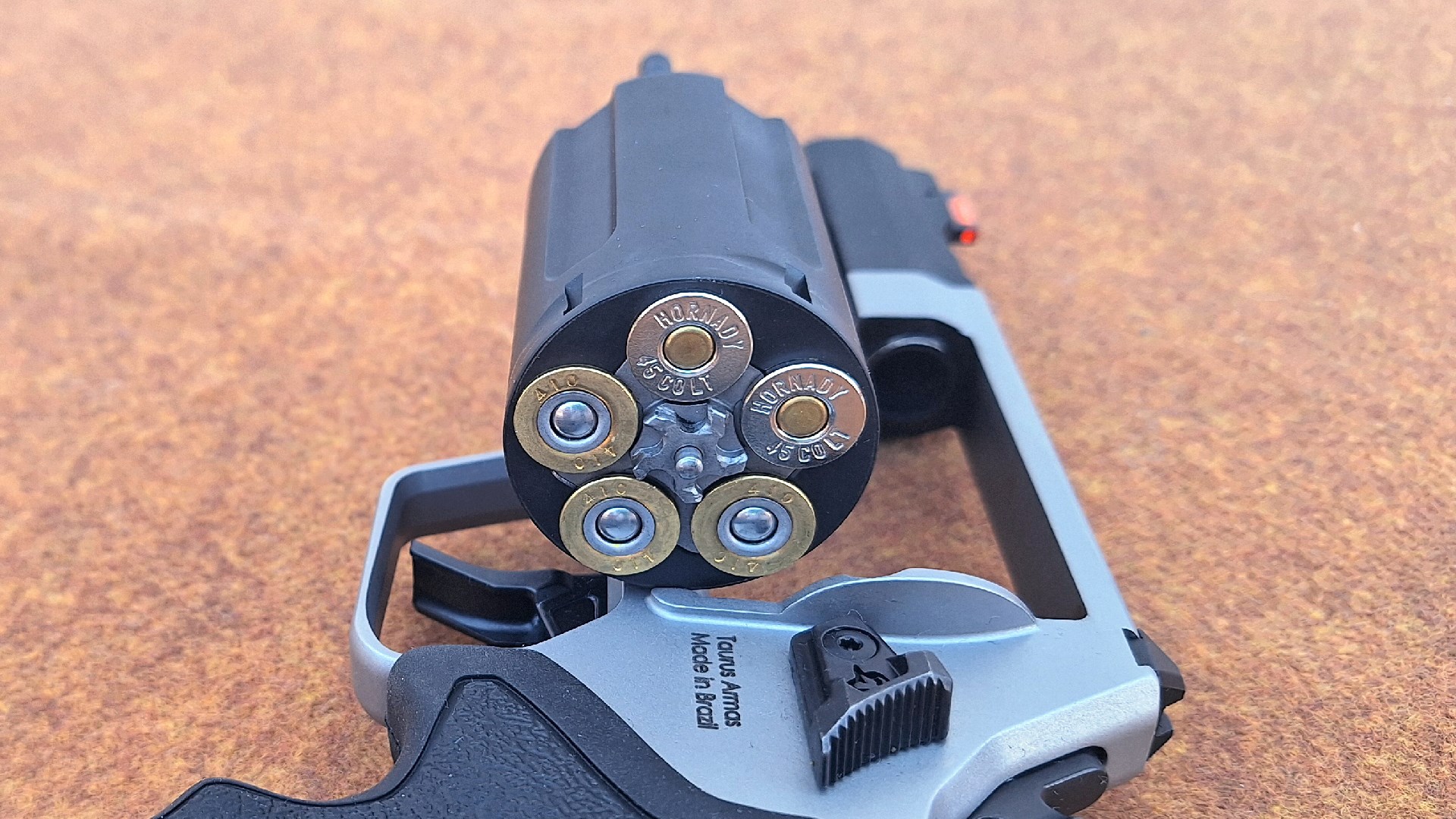 The cylinder holds up to five rounds of .45 Colt or 2.5-inch .410-bore shot shells.
The 5-shot carbon steel alloy cylinder is treated with a matte-black finish. It matches the barrel shroud, sights and the external controls. The shallow cylinder flutes are squared off much like the trigger guard to contribute to the gun's unique appearance.
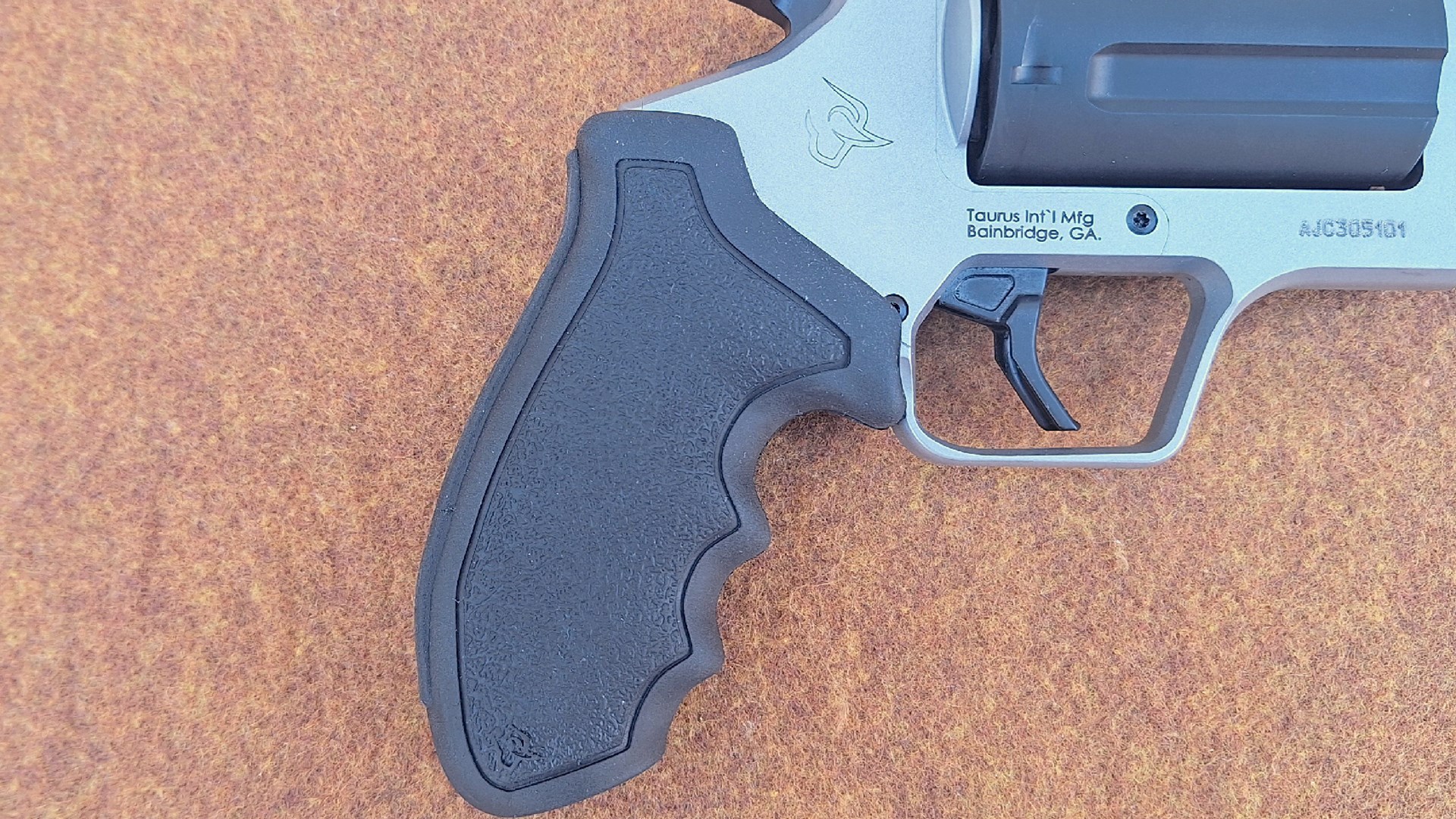 The Raging Bull style rubber grip is a welcome improvement.
The hammer sports a wide spur which is deeply serrated for added purchase. It is also fitted with a transfer bar safety to prevent the revolver from firing if the hammer is bumped. This model is fitted with a new style of cylinder release. It has a wide serrated extension, like a gas pedal, that faces back towards the shooting hand thumb. It is by far one of the most intuitive and easy to use of the push-forward style of releases that I've worked with. Hopefully it will become a standard feature for other models.
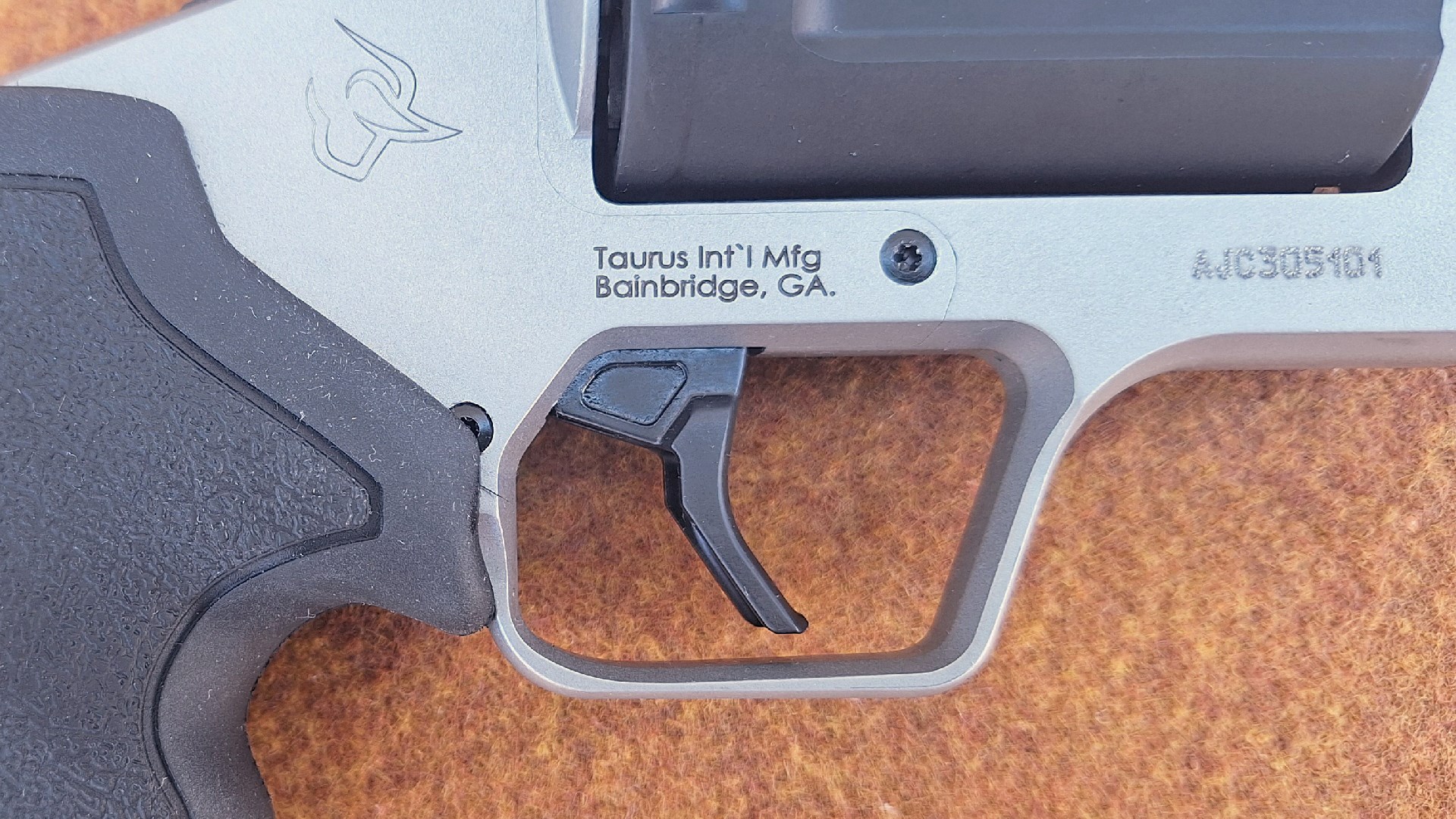 The flat-face trigger is vertical when the hammer is manually cocked.
The trigger shape is new as well. The traditional double-action revolver trigger shape is deeply curved. This trigger has a flat-faced, straight profile much like those of the semi-automatic pistol race guns which have become a popular feature for defensive pistols. When the hammer is manually cocked for single-action fire, the trigger face is vertical to the ground and, in the case of this particular gun, it broke cleanly with 4 pounds 9 ounces of trigger pull. When firing double-action, the trigger pull was 11 pounds 12 ounces.
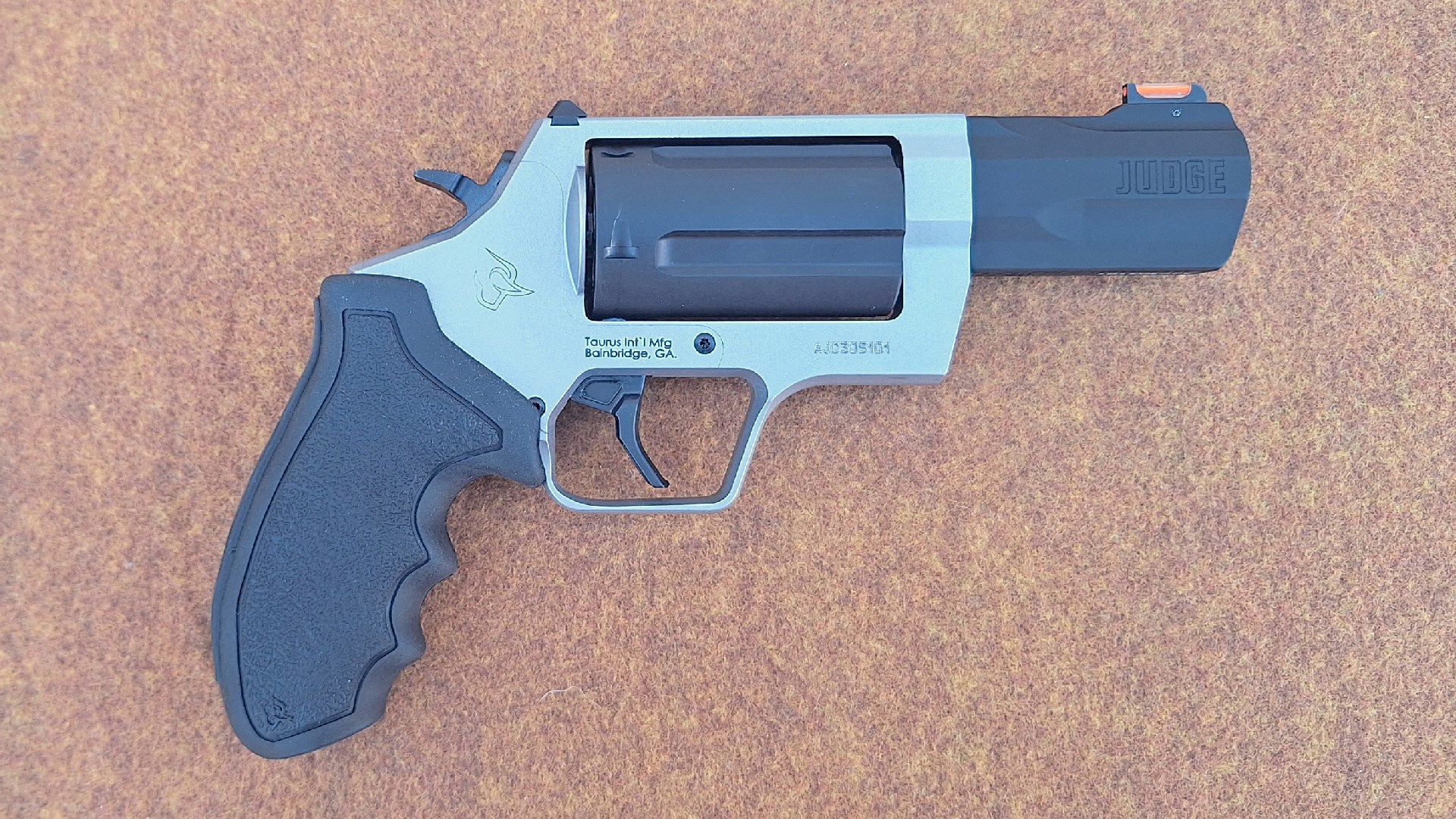 This Judge tips the scales at 38-ounces, unloaded.
When Taurus introduced the Raging Bull .454 Casull revolver back in 1997, it came with a specialized, finger grooved and textured rubber grip. The backstrap incorporated a recoil cushioning raised rubber strip to protect the shooting hand from the intense levels of felt recoil that revolver could produce. The Judge ships with the same type of grip, although it is a more compact shape in order to fit a wider range of hand shapes. It was a welcome feature at the shooting range. Thanks to this revolver's unloaded weight of 38-ounces and this grip, it was more manageable to shoot than one might expect.
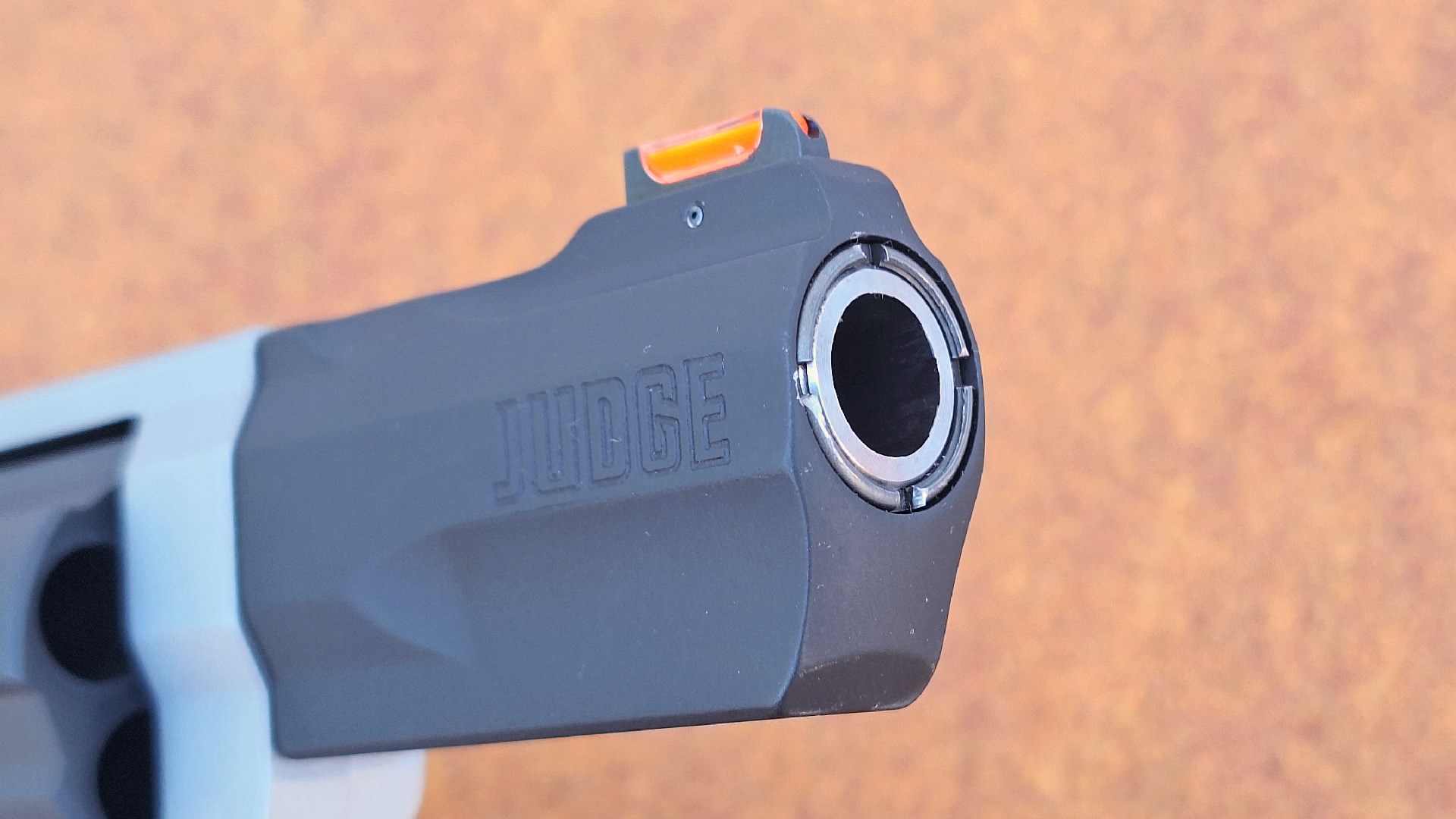 The stainless steel barrel is set into an aluminum shroud.
Range Results
At the shooting range, this Judge was evaluated using a quartet of the 2.5-inch long .410 bore shotshells developed specifically for this platform. From a bench rest, individual rounds were fired into Action Target's Law Enforcement 23” x 35" B-27E Silhouettes at a distance of 7 yards. The ammunition test set was rounded out with a modern jacketed hollow point .45 Colt load by firing a five-round group at the same distance. Just a reminder for those who might be wondering, this and other Judge revolvers are not rated for use with .45 Colt +P ammunition.
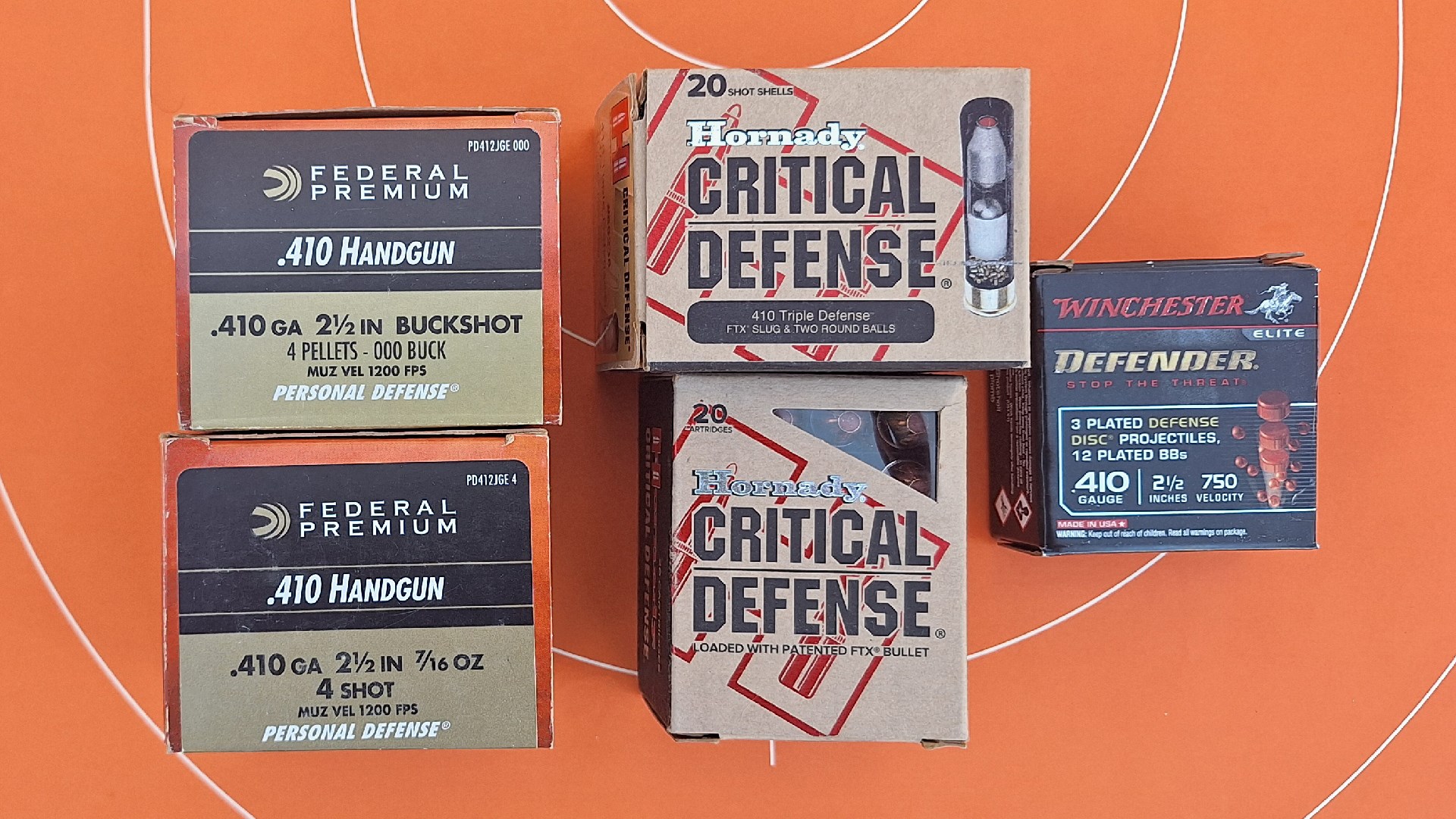
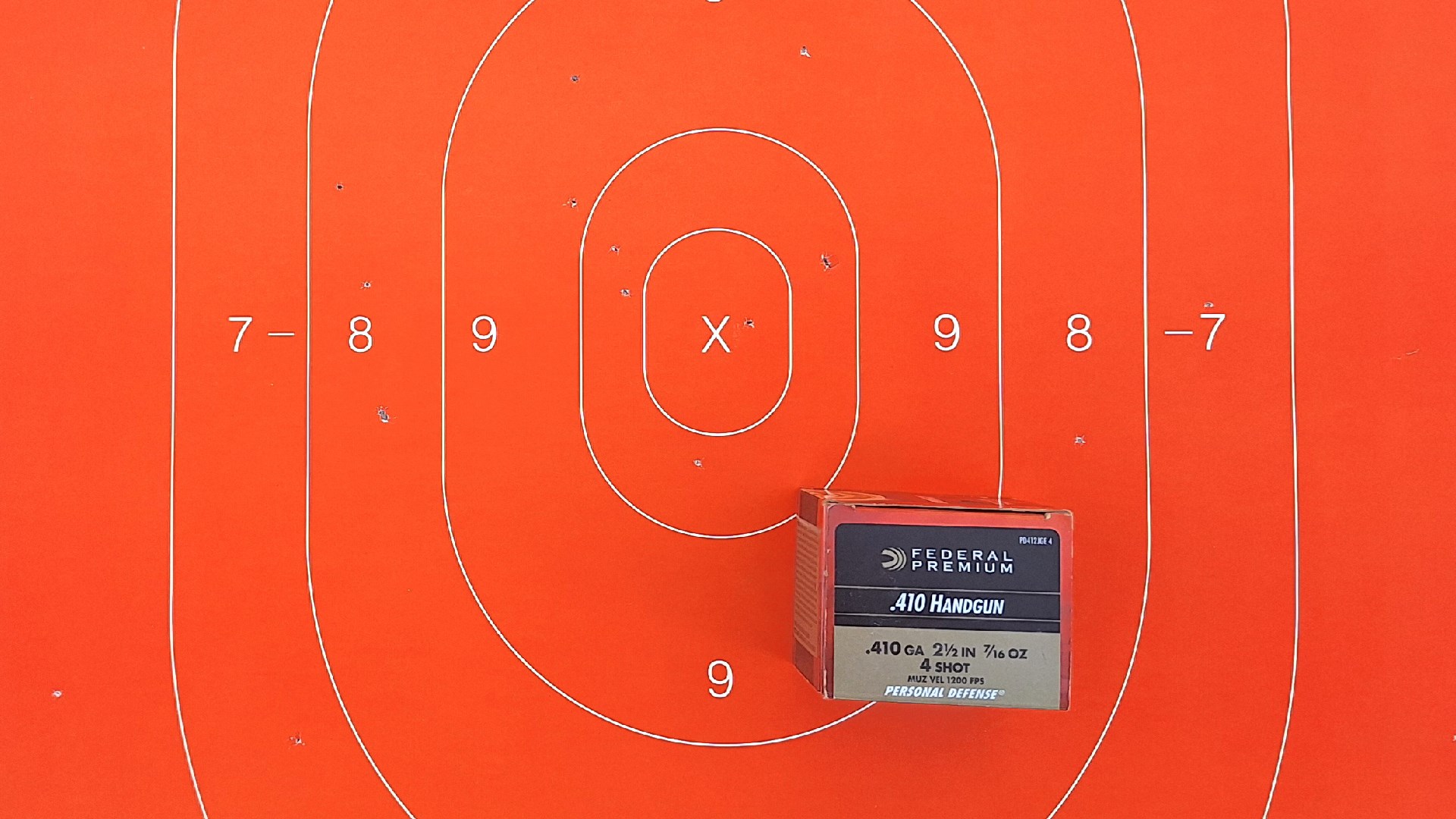
First up was the only birdshot load I've found designed specifically for use in a revolver. The Federal Handgun shell, now sold as part of Federal's Personal Defense lineup, is stoked with 7/16 ounces (or about 60-pellets) of #4 copper plated lead birdshot launching at a listed velocity of 950 fps. When fired from this gun, the pellets formed a sparse pattern that covered the target from top to bottom. Although it could be useful for pest control, the round would need to be fired at a shorter distance in order to form a dense enough pattern to be effective.
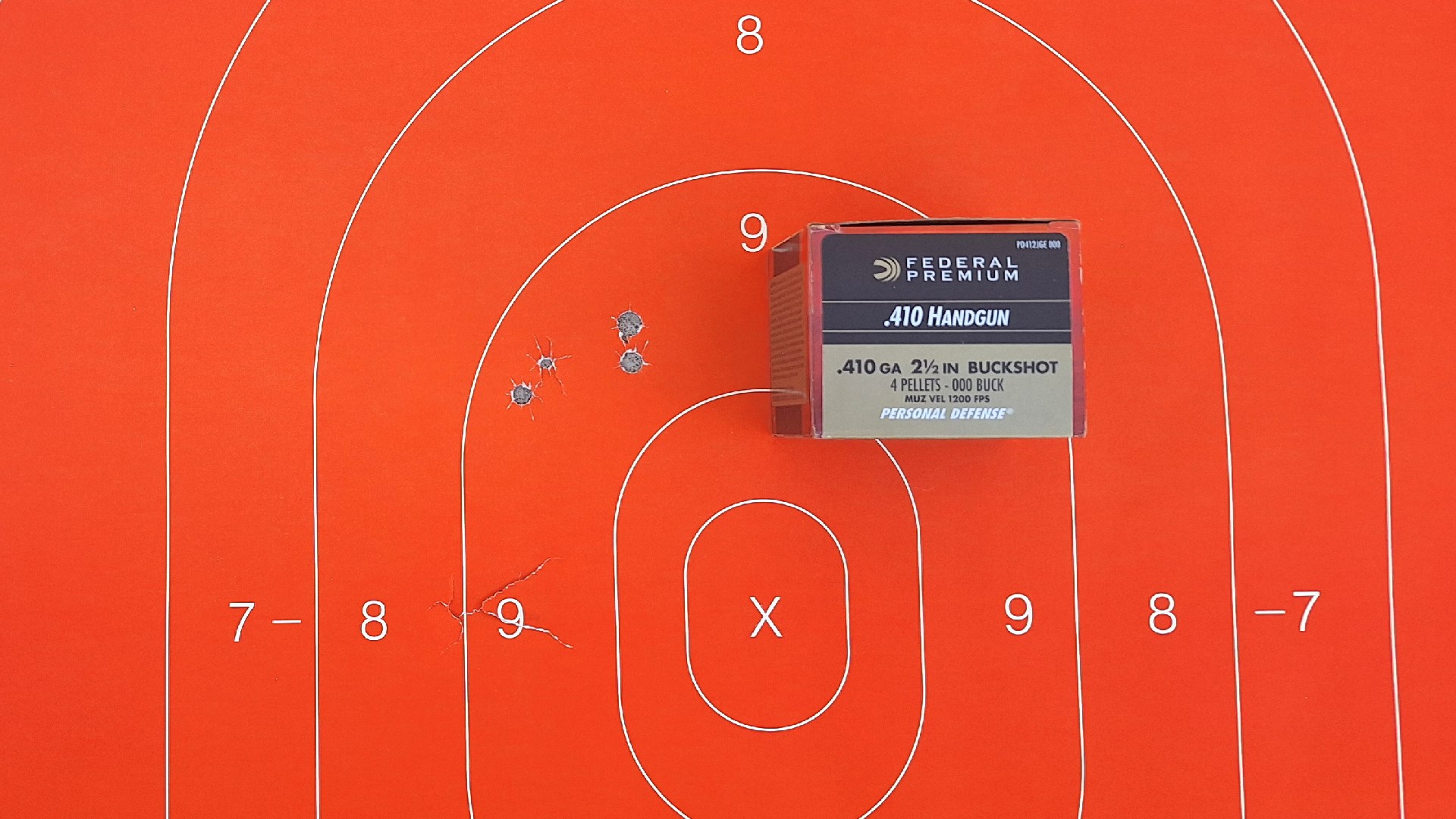
Next was another member of Federal's Personal Protection 410 Handgun series. This round is filled with four pieces of copper plated lead 000 buckshot (.36 caliber, 72.9-grain per ball) that travel at a listed velocity of 850 fps. These shells employ a specialized wad designed to stabilize the buckshot column in the shallow rifling of revolver barrels, like the Judge. Technically speaking, it's not Federals lauded Flight Control Wad, but it behaves enough like one that I can't see the difference.
The four pellets formed a tidy pattern that measured 2 inches from side-to-side. I've fired this particular buckshot load, in its 2.5- and 3-inch configurations (when compatible), though just about every .45 Colt/.410 handgun I've handled and almost all of the defensive shotguns as well. Across the board it has cycled reliably and consistently yielded tight groups. In short, it's simply one of the best go-to options for loading a .410 with buckshot.
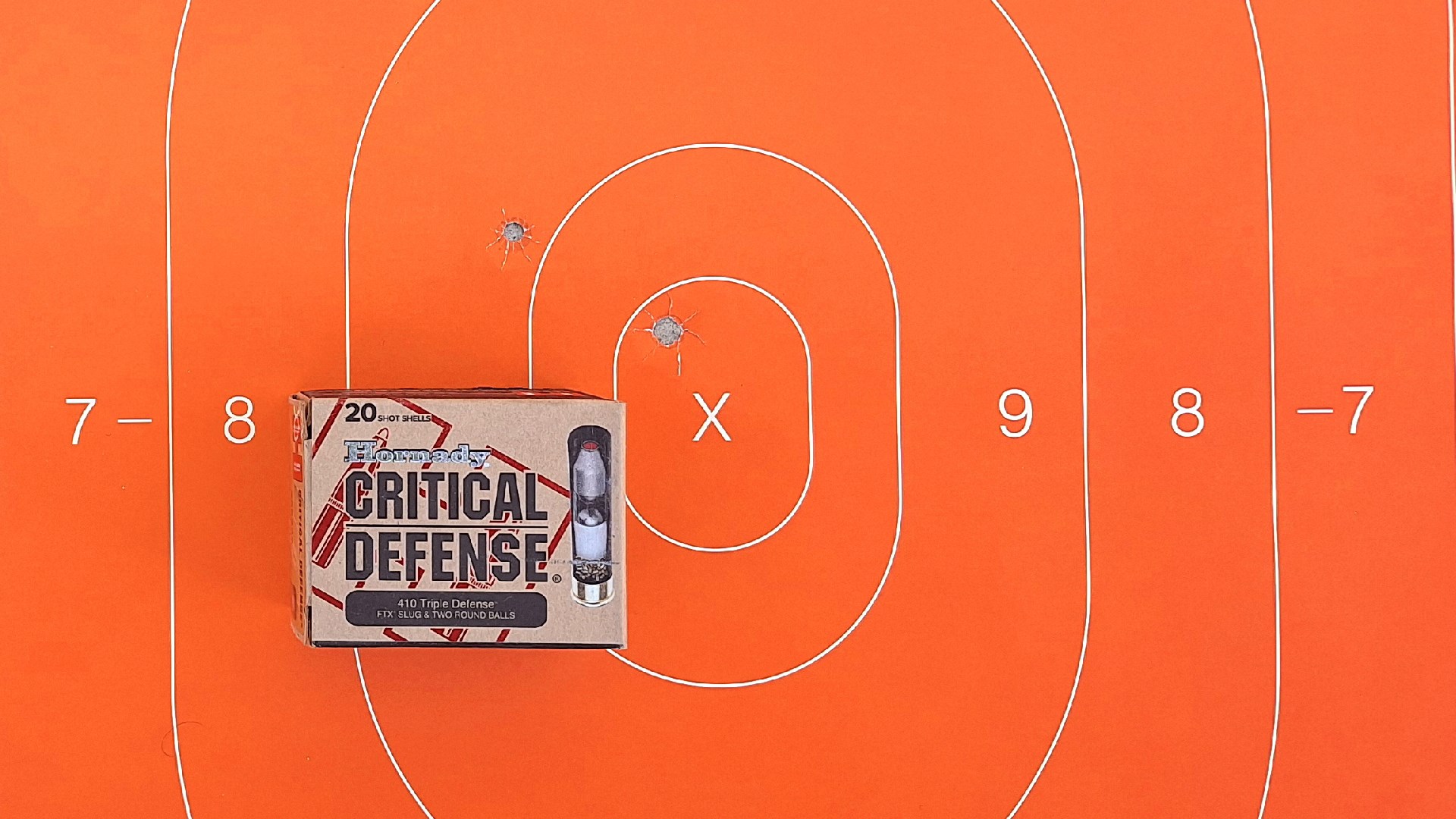
A mixed projectile shell that has proven to be a solid option with several guns is Hornady's Critical Defense Triple Threat load. The payload consists of a .41 caliber (115-grain) FTX lead slug followed by a pair of .35-caliber lead balls (65-grains each) with a listed velocity of 750-fps. The three projectiles formed a 2.5-inch group when measured from side-to-side. In this case, only two holes are visible on the target, one from the slug and the other from one of the balls. The second ball followed one of these two projectiles through the target.
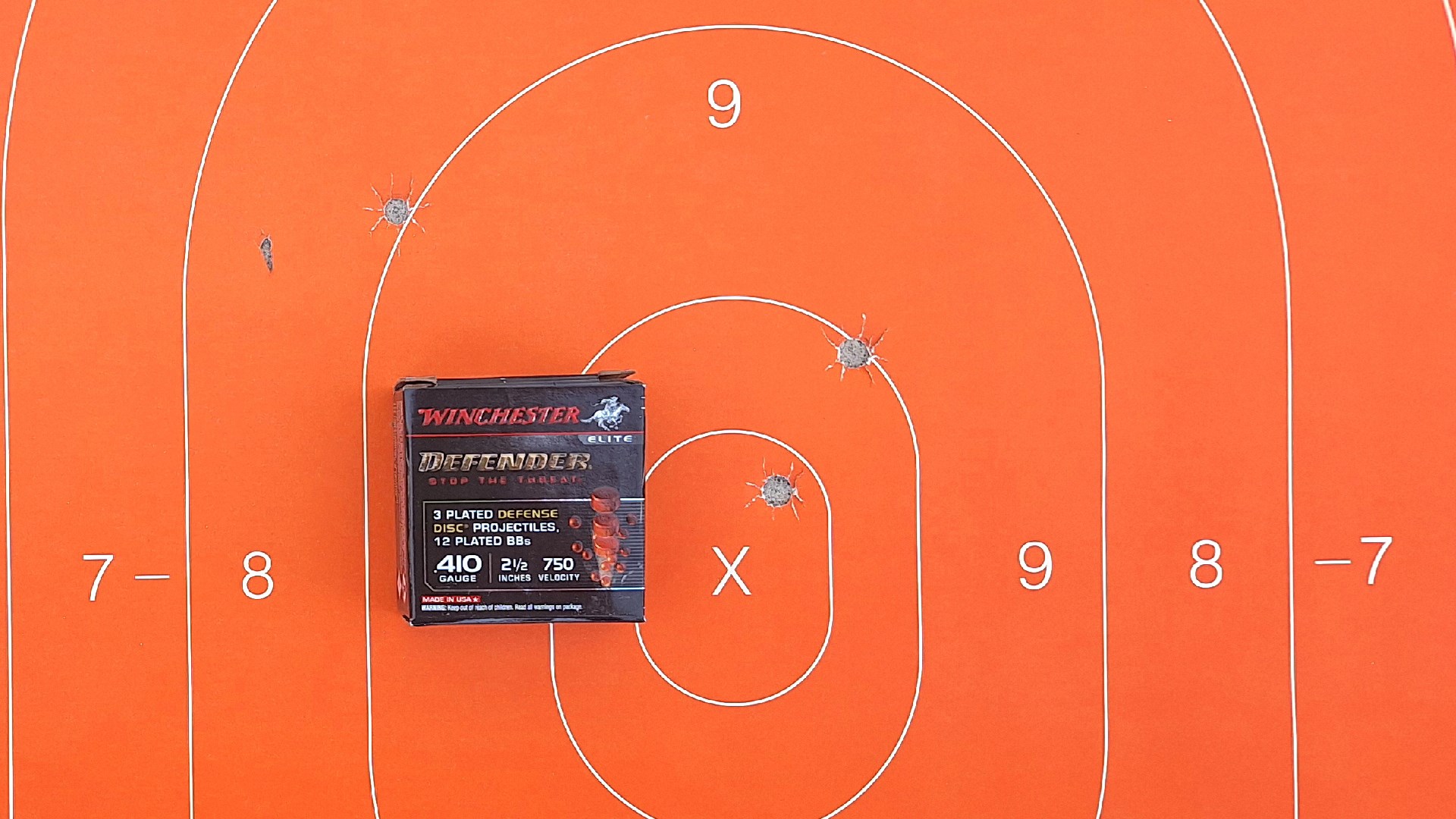
The last shotshell was the mixed projectile Winchester PDX1 Defender. Since buckshot pellets tend to flatten out when stacked on top of each other in a column, Winchester opted to pre-flatten this round's three copper-coated lead projectiles, aka. Defense Discs. The discs are followed by a dozen pieces of BB size shot for a total payload weight of about 11/16-ounce, or 310-grains. The listed velocity is 750-fps.
This PDX1 Defender load has produced effective patterns with other guns in the past. When fired from this particular wheel gun did not fare so well. The three Defense Disks formed a 5.5-inch group while the BB shot spread out enough to pepper the paper target from top to bottom with three of the twelve pellets missing the target all together.
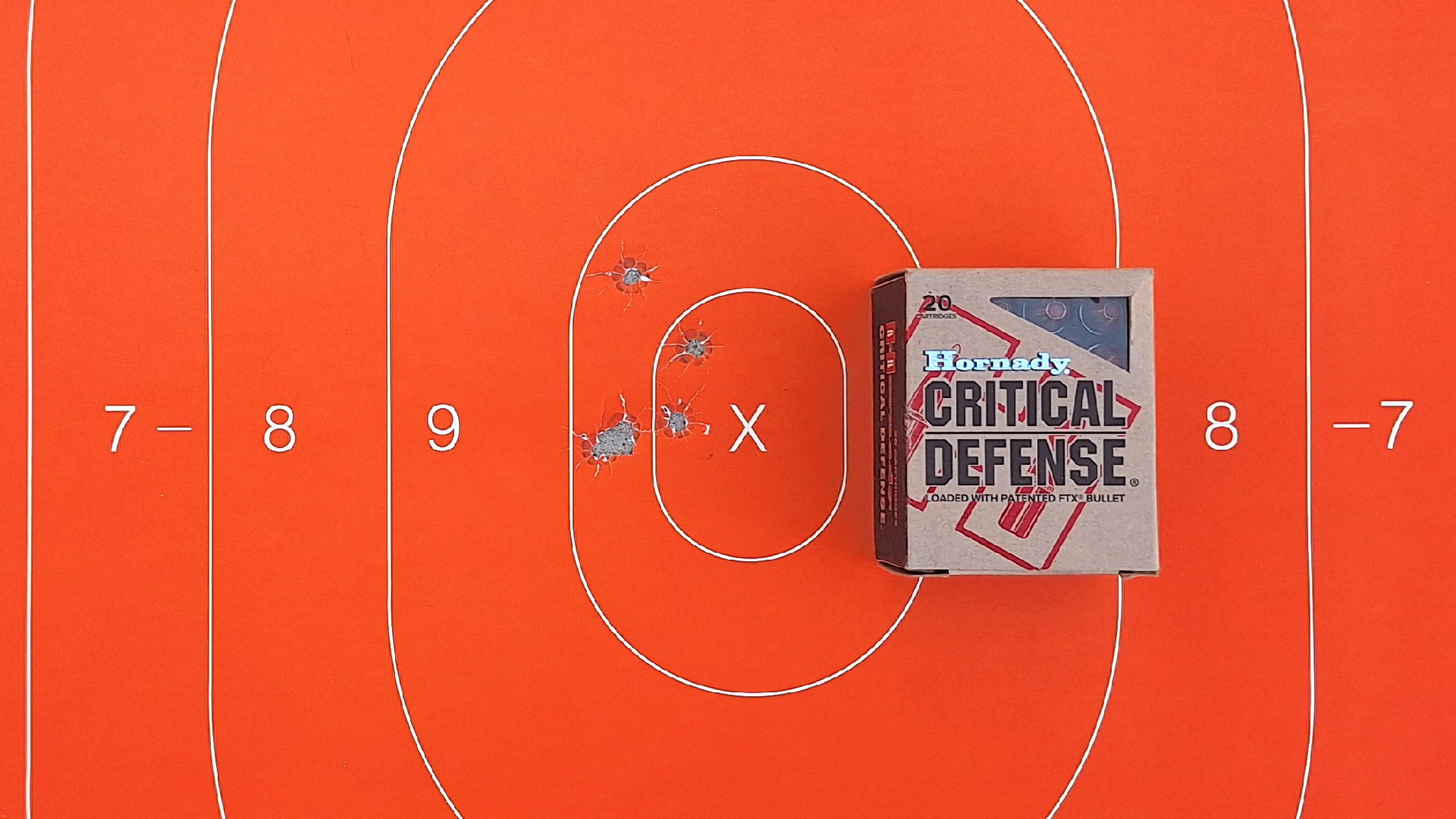
The .45 Colt ammunition used for the 5-shot group test was Hornady's Critical Defense 185-grain FTX load. The group was 1.99-inches when measured from the middle of the two bullets that landed the farthest from each other. According to a Garmin Xero C1 Pro chronograph, the five rounds fired at this target exhibited an average muzzle velocity of 885-fps for 322-ft.-lbs. of muzzle energy.
In summary, birdshot loads should be reserved for close range pest control only. Modern jacketed .45 Colt loads, buckshot rounds and some of the specialized mixed payload shells exhibited patterns that indicate they may be effective options out to 10- to 15-yard distances. But the best way to know for sure is to test the loads you intend to use thoroughly in your particular revolver before staging any of them for self defense.
Parting Shots
I've had the opportunity over the course of the Judge revolver's two decades of production history to shoot and evaluate at least half a dozen different configurations. This new version is one of the best models yet. It successfully blends what folks like best about the Judge and the Raging Hunter series.
It certainly looks more up-to-date with sleek lines and a well balanced feel. The Hunter style grip is a useful feature that lends itself well to recoil management with harder kicking loads. The new cylinder release and trigger configuration are welcome changes as well.
But what hasn't changed is that the new Judge still patterns like the classic models due to the NFA regulations in effect as of this writing. The .410 Bore shot shell was designed for use in choked, smooth-bore shotgun barrels, not 3-inch rifled revolver barrels. The rifled bore reduces the gun's effective range significantly with some loads when compared to a shotgun. But within those shorter ranges, it can be an effective option when loaded properly. For more information, visit taurususa.com.
Technical Specifications:
- Type: medium frame double-action revolver
- Caliber: .45 Colt/.410 Bore 2.5" Shells
- Cylinder Capacity: 6 rounds
- Barrel: 3-inch; full under lug; shrouded ejector; 1:12.14-inch RH twist
- Trigger: 4-pound 9-ounce (SA), 11-pound 12-ounce (DA) pull weight
- Sights: fiber optic front; drift adjustable square notch rear
- Grip/Stocks: one piece textured black rubber
- Metal Finish: Duo Tone black and silver
- Overall Length: 9.15-inches
- Weight: 38 ounces, unloaded
- MSRP: $719.99; taurususa.com