Information gathered by hunters using today’s generation of game cameras can improve the odds of success on opening day, but state conservation departments are also adopting the technology to get a better glimpse of tough-to-count wildlife populations. Biologists in Michigan and Idaho are among the latest to join that growing list.
Michigan
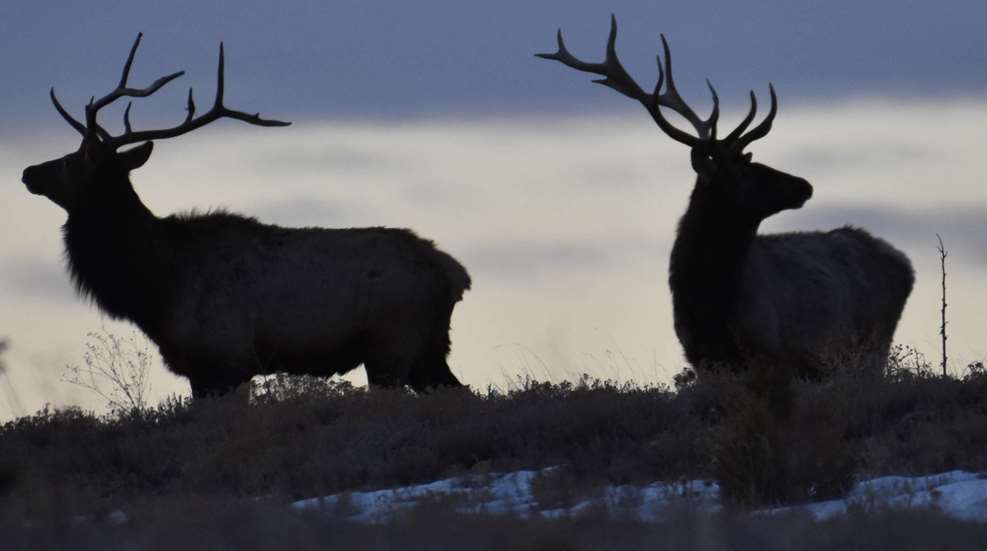
Researchers from the Michigan Department of Natural Resources (DNR) have begun a pilot program for the use of trail cameras to estimate its elk population. The effort is part of a larger research project aimed at determining the most accurate and cost-effective way to manage the herd.
DNR’s Wildlife Division recently set up roughly 200 cameras in and around the core elk range, which encompasses some 1,100 square miles across northern Lower Michigan. Most of the cameras are on state-managed land, although researchers also worked with landowners to set up cameras on their property.
Camera data will be compared against the DNR’s current method of estimating the elk population—aerial surveys—to determine which method is more precise and cost-effective. An accurate elk population estimate helps the state determine how many elk hunting licenses to issue every year. The DNR uses the annual harvest as the main tool to maintain a sustainable population, while providing highly prized recreational opportunities for hunters.
“We will compare the results from these different survey methods and balance the precision of the estimates they provide with the resources they require,” said Angela Kujawa, a DNR wildlife biologist.
For more than two decades, the DNR has conducted aerial surveys every other year to estimate the size of the elk herd. The last aerial survey, in 2024, estimated the elk population at 1,146, with a confidence interval range of plus/minus 262, meaning the population is between 884 and 1,408 animals.
Tyler Petroelje, the DNR’s northern Michigan wildlife research specialist, noted that the aerial survey requires sufficient snow cover—which has recently been unreliable during the January survey period—to aid in detection of elk. The aerial survey’s uncertainty rate of about 25 percent would adequately inform typical wildlife population management needs but is somewhat imprecise to evaluate effectiveness at reaching Michigan’s narrow population goal of 500 to 900 elk.
Idaho
The summer Idaho Fish and Game biologists (IFG) were testing whether trail cameras can help estimate the number of black bears in one of the state’s most popular bear hunting areas, Unit 32A. The pilot project is designed to determine if remote cameras can produce a reliable population estimate for the 60-mile-long unit, located east of Council. The area is known for quality bear hunting and the unit’s population trends have drawn increased attention from hunters and wildlife managers.
Some species lend themselves to straightforward surveys. For example, deer and elk bunch up on open winter ranges where aerial counts work well. Black bears don’t. They’re mostly solitary, favor dense cover, are active mostly at dawn and dusk and hibernate for months, which makes traditional counting methods tough.
“Bears are one of the hardest species to survey,” said IFG Regional Wildlife Manager Regan Berkley. “And that makes obtaining adequate population data to inform decision making one of the biggest challenges of black bear management.”
In early summer 2025, Fish and Game deployed 150 trail cameras at randomly assigned locations across 32A. The cameras span a variety of habitats, from sagebrush-covered rangelands to dense forests and alpine meadows.
Cameras will operate through the summer and early fall before being retrieved. Each unit is expected to record up to tens of thousands of images.
Biologists will begin reviewing and analyzing the images this fall. Processing the data will take months. The first population estimate from this project is unlikely before spring 2026.