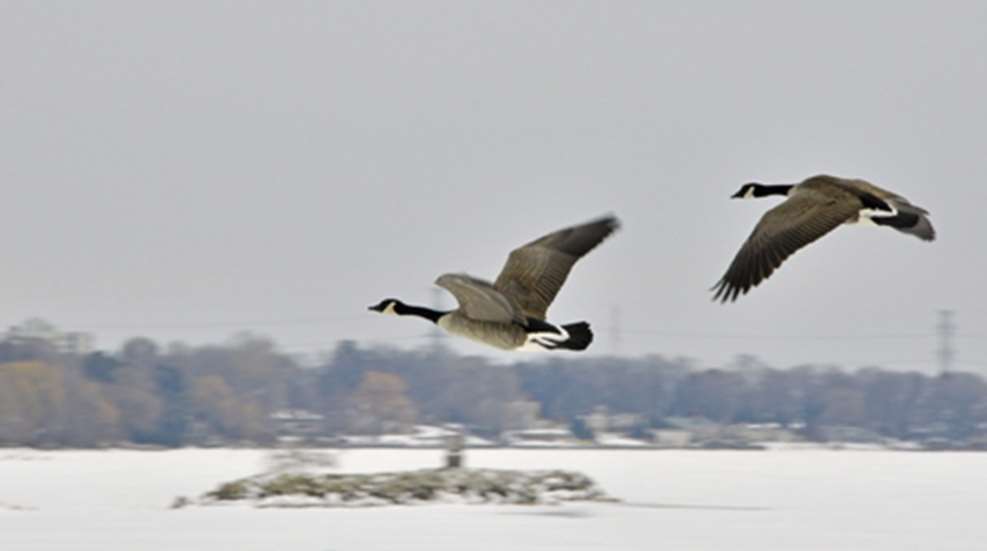
It’s the final weeks and days of duck and goose season across the country, and now is the time to use every last trick and strategy you know to make the most of the remaining hours afield. Every misstep from here on out might cost you the last chance the season offers. Follow these calling, decoy and spread tips to pull the trigger on educated birds on public and private lands.
Back Off the Talk
Calling reveals your location to traveling birds, brings them closer and is an audible indicator that everything is copacetic on the ground. While there are times you might need to vocal, remember that the birds that are still flying around these final weeks of the season have heard every good—and bad—caller out there.
While you might be the best caller among your hunting buddies, take a page from the beginner’s book and keep quiet. Get the birds’ attention and, as long as they keep coming to your spread, keep your vocal pleads to a minimum. Mimic the quacks of the ducks and clucks and moans of the geese circling your location and don’t get fancy; just answer and return the same calls you’re hearing from the flock.
Late-season weather can also affect calling. If you’re having problems catching the ear and eye of distant flocks, try using an acrylic call. With long-range calling, especially if there’s high winds, acrylic calls can help close the distance and get birds to look your way; the composite material tends to produce sharper, louder pitches that can cut through wind.
For close-in calling of working birds or during calm days, switch to wooden calls; they tend to produce deeper, richer sounds with subtle undertones.
Deadly Decoy Tricks
Generally speaking, during this time of the season the massive flocks seen during the height of the migration have begun to break up. Reduce the size of your spread to match the size of flocks you witness flying around.
While you’re reducing the size of your spread, you should use the biggest and best-looking fakes in your arsenal. This is the two-minute drill. There’s no time for the second-string to mess things up. Larger decoys allow distance birds to easily locate your position while using fewer of them, and obviously the best-looking and most detailed fakes look the most authentic.
To add extra realism to your spread, put drake and hen ducks together within the layout and use plenty of rester decoys to mimic sleeping ducks and geese that are conserving energy. The colder the weather, the more sleepers and resters you should mix in.
Perhaps the best late-season trick in the book is the use of a lone hen decoy. With courting of mating pairs, the singles’ scene of the early season is quickly turning into a couples’ affair. Unpaired drakes are more likely to beeline for an unclaimed hen during this time than any other. Place a lone hen decoy at the far edge of your landing hole, right out in the open for every passing flock to see.
Add Movement…Or Don’t
Movement within your spread adds realism and keeps it from looking static and unnatural. Spinning-wing decoys, quiver pucks, battery-powered swimmers, motion-rigged feeders and the employment of jerk rigs all help stir the water up and push ripples through your spread, causing all the other decoys to bob and appear to swim.
Anything you can do to add movement to your fakes during a calm day will help draw in wary, educated birds. That said, spinning-wing decoys—whether battery-operated or string—are among the most common and popular motion-producers around. After surviving spread after spread of spinning-wing decoys, many late-season birds become wary of the repetitive motion. If you’re flaring birds for no apparent reason, consider pulling the prominent decoy for a few flocks and see if things change.
Be Obnoxious on Public Lands
It’s nice to have manicured flooded fields to hunt or acre after acre of private property to move around on, but the truth is: Few of us have that luxury. Public property is the beacon of truth for most waterfowlers, and the biggest gamble on easy access is not if the birds will show up, but whether the yahoos 200 yards down the shore will pull them in or skybust them before they commit to your spread.
On high-pressure property, you have to be more aggressive. Be obnoxiously loud and big. Lots of hardcore calling and big spreads with as many motion-producing setups as you can afford, deploy and control.
Hammer them hard to grab their attention and don’t let up. Beat everyone else out of the marsh with the biggest spread you can muster—be the location that everyone else is trying to keep the birds away from.
Being passive in this environment will oftentimes make your biggest challenge that of staying awake.