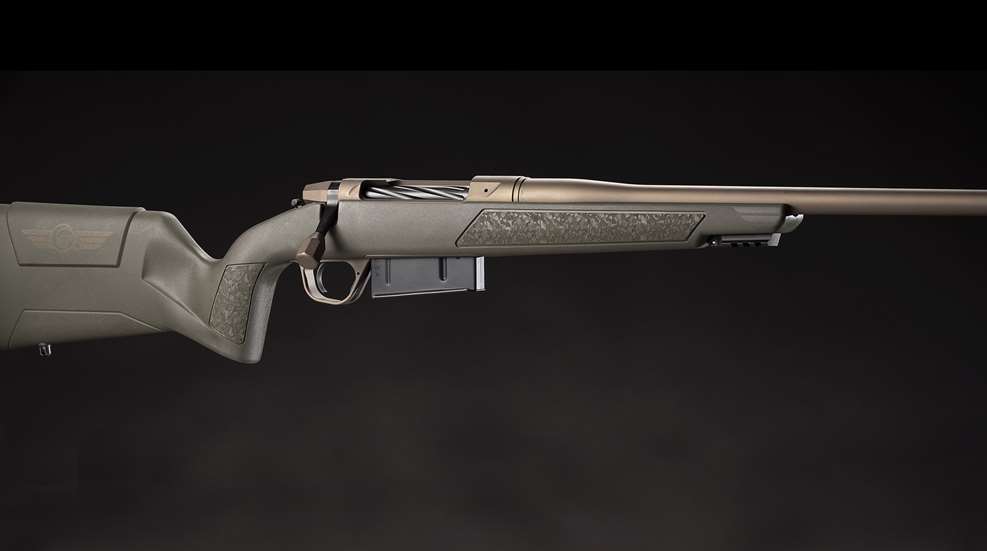
Modern day rifles offer an unprecedented combination of accuracy, reliability and affordability, with many models coming in at a relatively unheard-of price point and value. In the most common, do-all hunting calibers like .308 Winchester, .30-06 Springfield and 7mm Remington Magnum, there are plenty of good choices. But if you’re shopping for the do-all of the big bores—the venerated .375 H&H Belted Magnum—you will be challenged to find many options that won’t put a serious dent on your hunting budget. Christensen Arms has just made your shopping trip a bit easier, as they now offer their Evoke rifle chambered for the Three-Seven-Five.
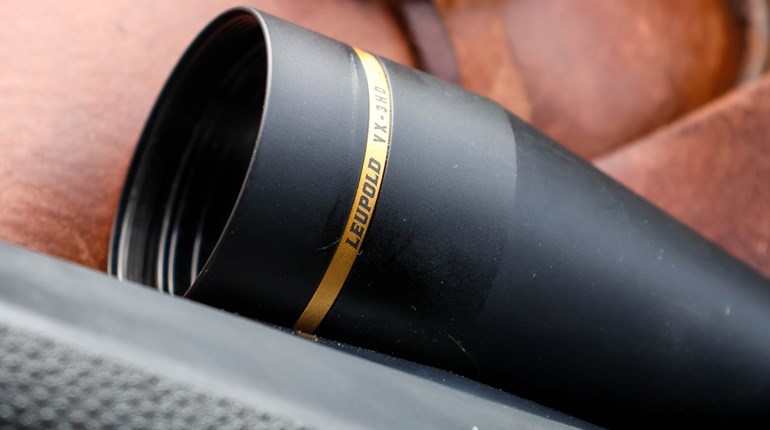
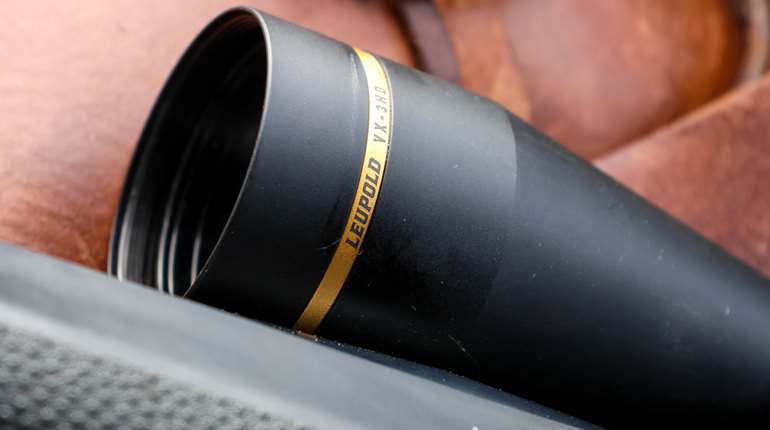
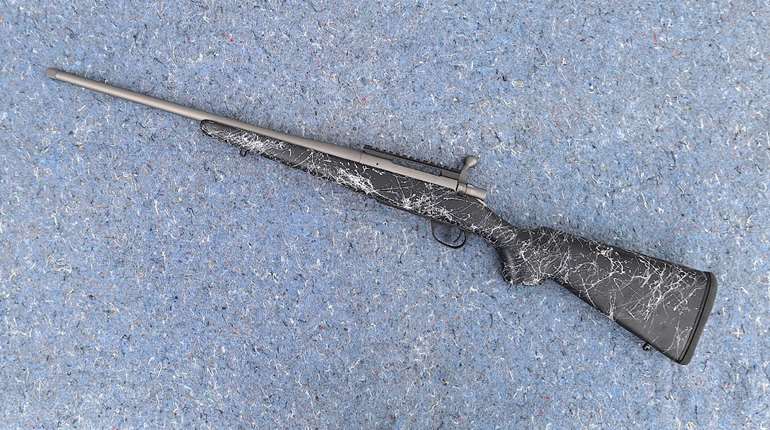
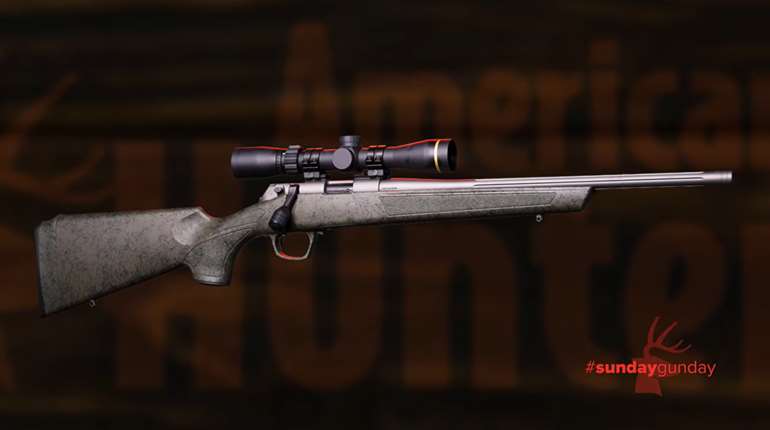
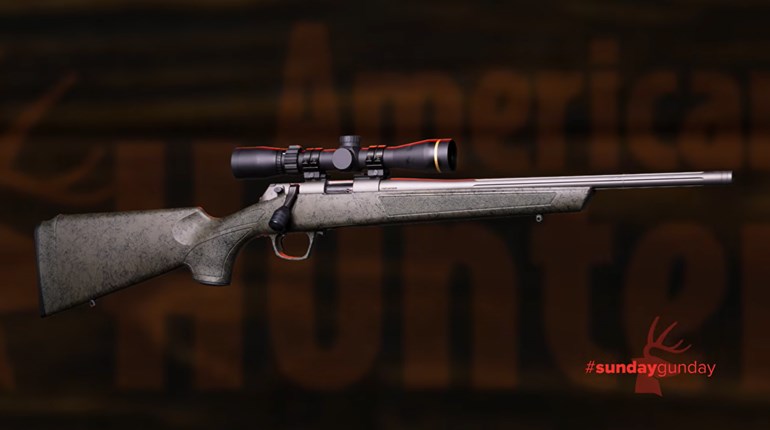
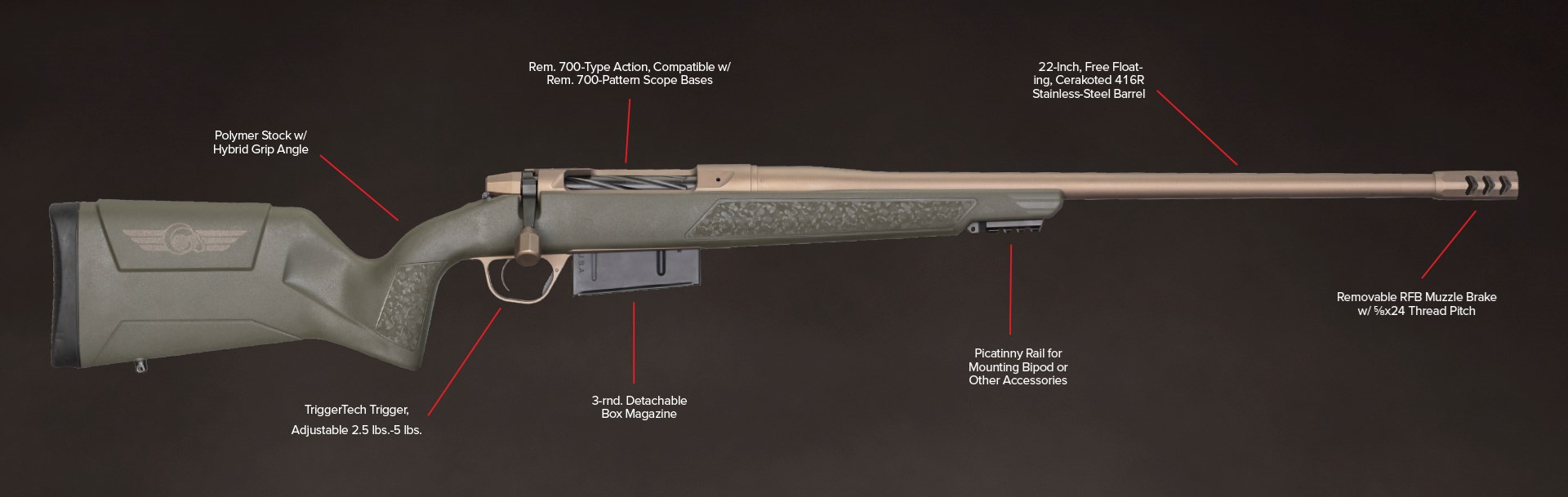
The Evoke series from Christensen Arms is designed around their unique, proprietary action, mated to a 416R stainless-steel barrel for a simple-yet-effective package. With an ergonomic polymer stock—which might be a far cry from a traditional design—and Cerakoted metalwork, the Evoke is designed for use in the field. The push-feed action uses a dual-lug, 90-degree throw bolt, using a large extractor and dual plunger ejectors. The bolt body is fluted, and the octagonal bolt handle offers a firm grip area, even with gloves on. The action utilizes a two-position rocker safety on the right side of the receiver, reminiscent of that of a Remington 700, but with the bolt being operable in the rearward (safe) position for safe unloading of the rifle. On the left side of the receiver, you’ll find the spring-loaded bolt release, which needs to be depressed at the rear in order to remove the bolt. The Evoke uses a detachable polymer magazine, or a metal magazine, holding three cartridges. While both functioned just fine, I highly recommend the polymer magazine for hunting as the metal version rattles considerably, and I wouldn’t want to take that in the field. The spring-loaded magazine release is located on the front of the trigger guard. Christensen provided a Picatinny rail that is designed for the rifle, to which I mounted Leupold’s new VX-5HD Gen 2 3-15x44mm riflescope.
The Evoke’s 22-inch 416R stainless-steel barrel employs the standard 1:12 twist rate and culminates in their RFR (Reduced Felt Recoil) muzzle brake, to take the sting out of the .375 H&H Magnum. If you spend a significant amount of time shooting the true big-bores—like the .404 Jeffery, .416 Rigby, .458 Lott and .470 Nitro Express—you’ll find the recoil level of the .375 H&H to be relatively mild. However, if you spend the majority of your time shooting a .300 Winchester Magnum, .308 Winchester or 6.5 Creedmoor, the .375 H&H Magnum can seem like an unprecedented level of recoil, and you will definitely appreciate the RFR’s effects. Like all the exposed action metal, the barrel is finished in Smoked Bronze Cerakote to be weatherproof. The barrel has no iron sights.
Christensen Arms equips the Evoke with a user-adjustable TriggerTech trigger, with a pull weight ranging from 2.5 to 5 pounds, though it is set at roughly 3 pounds at the factory. My Lyman scale showed that the test rifle’s trigger broke consistently at 2 pounds, 10.5 ounces, and it had very little creep or overtravel. All in all, the Evoke’s trigger made the rifle a pleasure to shoot.
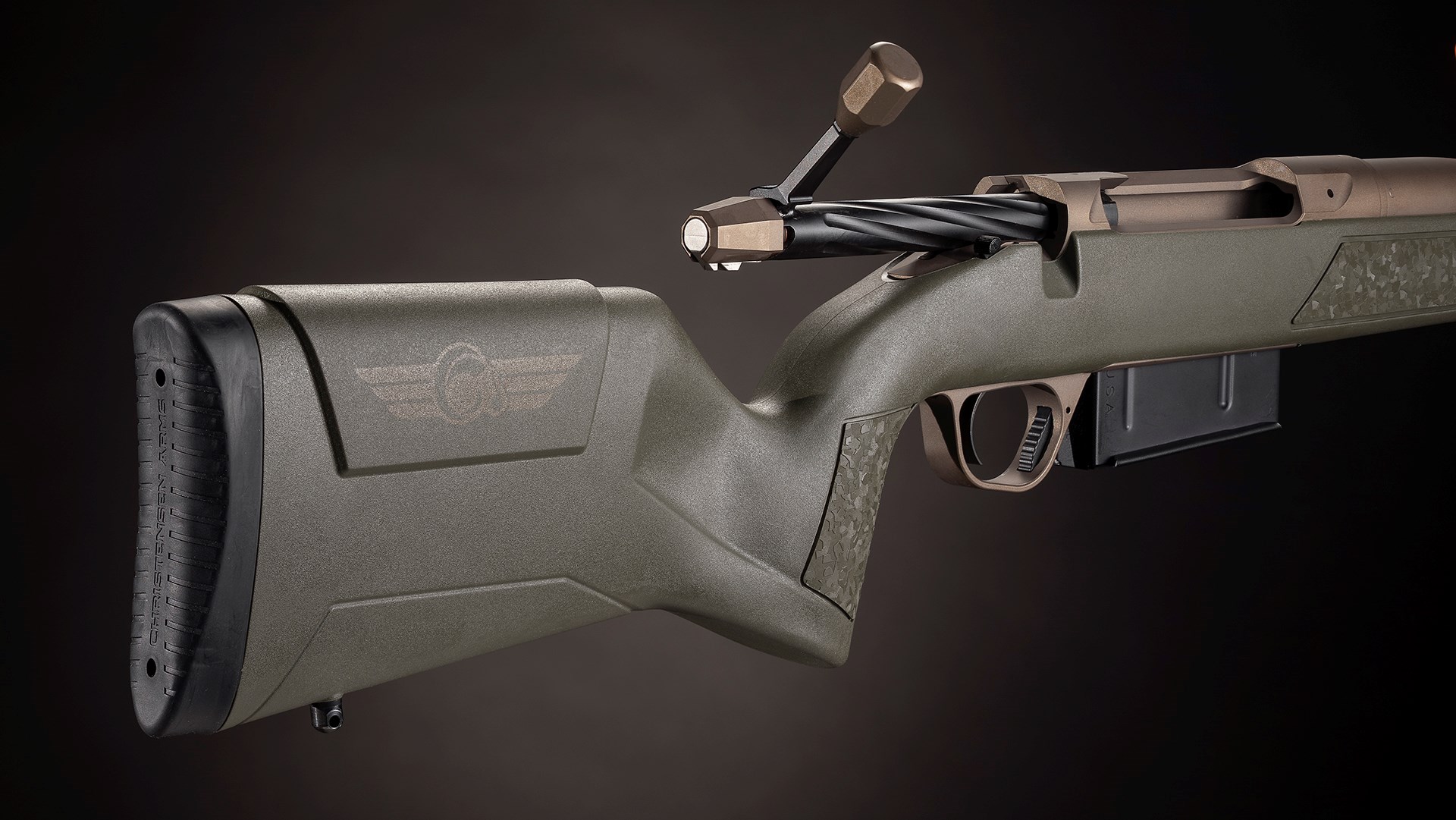
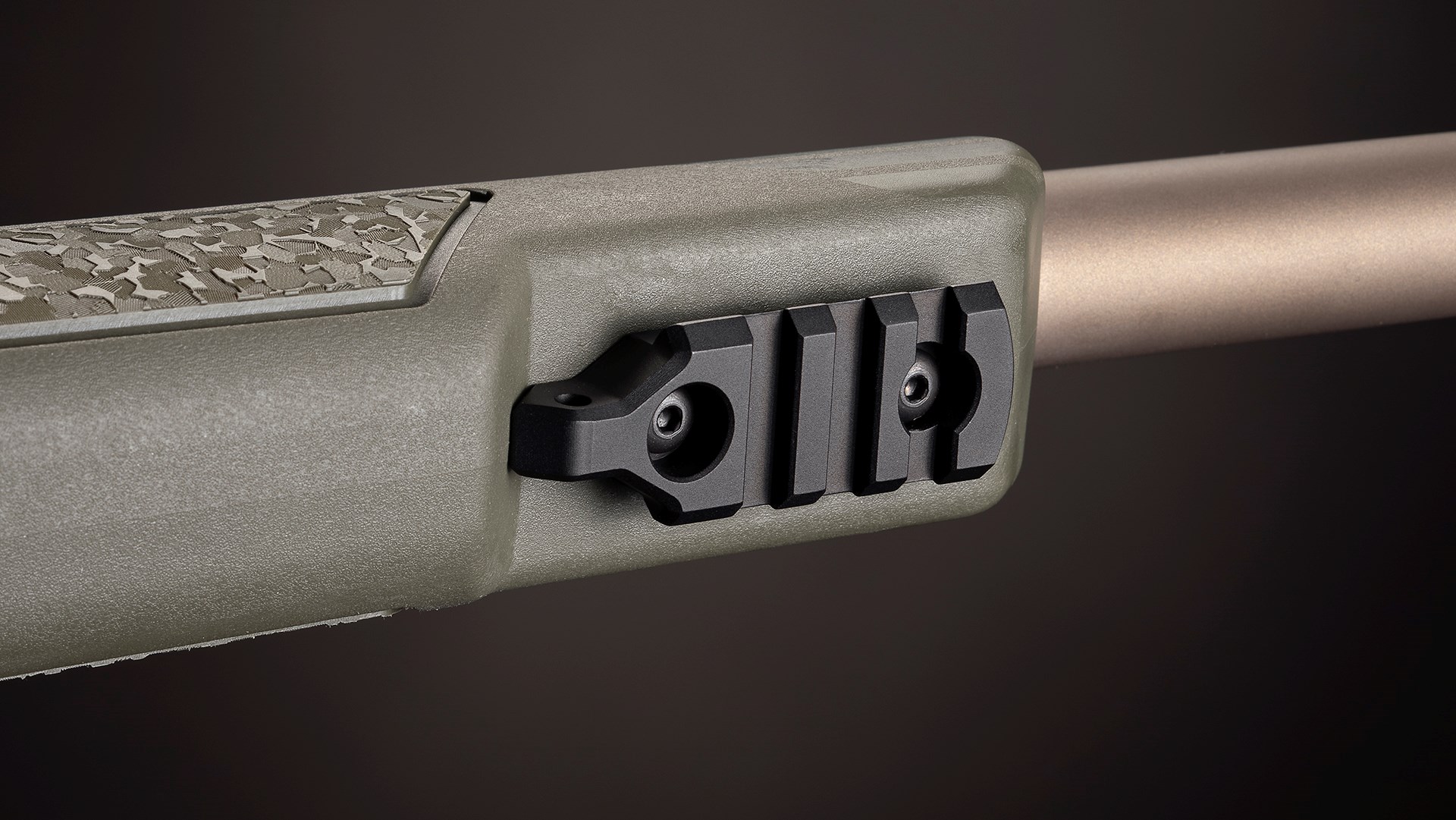
The Evoke’s OD green polymer stock is, quite possibly, the most striking feature of the rifle line. Unlike many dangerous-game rifles, Christensen Arms uses a much more vertical pistol grip, and features a 13¼-inch length of pull. There is a ⅞-inch recoil pad to help take the sting out of the .375 H&H Magnum, and the underside of the fore-end features a short Picatinny rail for attaching the rifle to a bipod or tripod, with a sling attachment point at the base of that rail. The butt end features a traditional sling swivel stud. There are textured areas molded into the stock on the pistol grip and fore-end, and Christensen has also molded a sort of cheekpiece onto the comb, with the height most definitely set for a riflescope.
Even set in Leupold’s low rings, the VX5-HD Gen 2 scope had plenty of clearance off the barrel, and it offered well more than 4 inches of eye relief—a feature any shooter of a big-bore rifle will certainly appreciate. And while many assume that a low-power scope with a minimum-sized objective lens is what has traditionally been used for the .375 H&H Magnum, the 3-15X range makes an already flexible rifle/cartridge combo that much more effective. The 3X magnification will allow the hunter to shoot a grizzly at a range measured in feet, yet the 15X top end allows the long-range capabilities of the cartridge to be utilized, allowing the shooter to take a kudu bull across an open pan, or a bull elk across a canyon.
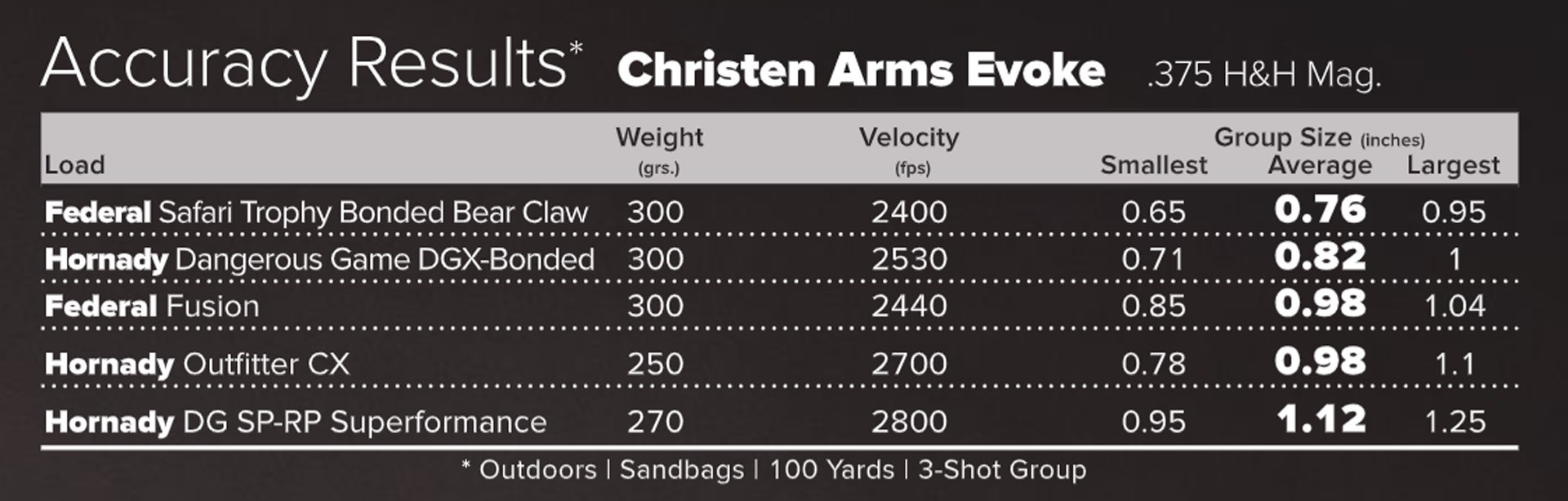
Taking the rifle to the range, I grabbed what I felt to be a good cross section of bullet weights and styles. I’ve heard more than one writer say that the .375 H&H is absolutely perfect for nothing but can easily do it all. One of the features of the cartridges that lends to this reputation is the selection of bullet weights—generally between 250 grains and 300 grains in factory ammo, and between 210 and 350 grains for component projectiles—and the ability to handle deer/elk/African antelope species as well as brown/grizzly/polar bear to Cape buffalo to elephant. Accordingly, I chose the Hornady 250-grain CX Outfitter load, the 270-grain Interlock in the Superformance line, and their highly respected 300-grain DGX Bonded in the Dangerous Game line. I also chose Federal Premium’s 300-grain Trophy Bonded Bear Claw in their Safari line, and the 300-grain Fusion load, long overlooked as an affordable-yet-premium choice. None of the ammo showed a failure to feed or extract properly.
The rifle showed a preference for the longer, 300-grain bullets, though none of the loads gave disappointing results. The Federal TBBC came in at the head of the class, printing ¾-MOA three-shot groups at the 100-yard target, followed by Hornady’s DGX Bonded load that averaged .82 inch. The Federal Fusion and Hornady Outfitter CX load tied for third place, giving three-shot groups of .98 inch, and the Hornady 270-grain Interlock bullet pulled up the rear, giving an average group size of 1.12 inches, just over the MOA mark. Christensen Arms gives a sub-MOA guarantee, and I feel the majority of the factory ammo delivers just that. I wouldn’t hesitate to take a rifle that shoots like this on any hunt where a .375 H&H is applicable.
Now, I will be the first to admit that the Evoke does not resemble the classic Winchester Model 70, Rigby London’s Best or a Heym Express by Martini; there are no sweeping lines or glowing, figured walnut to be found here. What I do see is a rifle worthy of a wet trek through the thickets of coastal Alaska, be it in pursuit of brown bears or moose, where function supersedes form every time. What I see is a great value for the hunter who wants the most for his or her dollar, taking full advantage of the capabilities of the time-tested .375 H&H Magnum, while being utterly reliable. If I could make any revisions to the design, I’d add half an inch to the length of pull, but even without that, the Christensen Arms Evoke brings a whole lot to the table for the hunter on a budget.
Christensen Arms Evoke Specifications
- christensenarms.com
- Type: bolt-action, centerfire rifle
- Caliber: .243 Win., 6.5 Creedmoor, 6.5 PRC, .270 Win., 7mm Rem. Mag., 7 PRC, 7mm BC, .308 Win., .30-’06 Sprg., .300 Win. Mag., 300 PRC, .375 H&H Mag. (tested), .450 Bushmaster
- Magazine: detachable box; 3-rnd. capacity
- Barrel: 22"; stainless steel; medium contour; button rifled; 1:12" twist; free-floated; 5/8x24 threaded muzzle w/RFR muzzle brake
- Trigger: TriggerTech; single stage; adjustable 2.5-5 lbs. pull weight
- Sights: none; drilled and tapped for Rem. 700-pattern bases
- Safety: two-position toggle
- Stock: polymer w/FFT carbon fiber cheek riser; hybrid pistol grip; Picatinny rail under fore-end; OD Green finish; 13.25" LOP
- Metal Finish: Burnt Bronze Cerakote
- Overall Length: 43.75"
- Weight: 7.4 lbs.
- Accessories: none
- MSRP: $948.99