The Debate
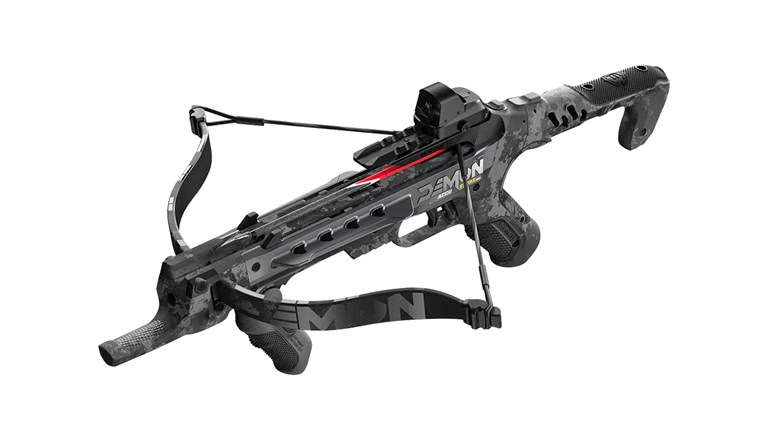
With more states legalizing crossbows for normal archery seasons, I sometimes hear traditional and compound bowhunters bemoan that crossbows are much easier to shoot and use effectively on game. Then some crossbow hunters retort that crossbows are not easier: In fact, they say, crossbows are cumbersome and they must get just as close to the game as compound bow users do.
While this author believes that hunters should be allowed to hunt in any style or with whatever tool they choose—so long as it’s legal in their area—I want to know:
Are crossbows easier than compound bows to use effectively?
The Test
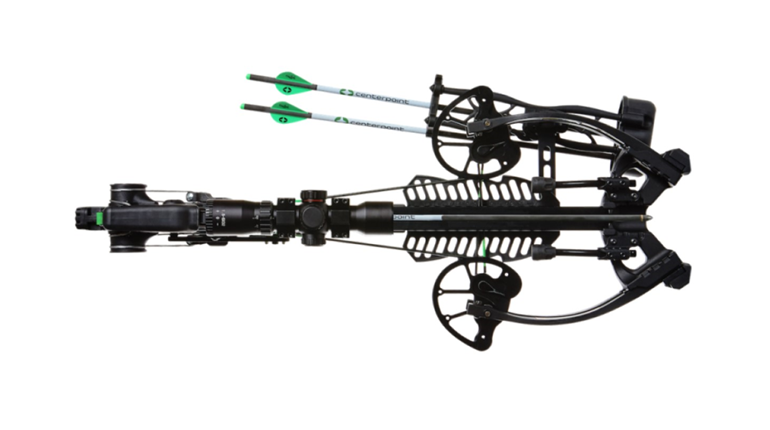
I shot a stock crossbow, the Stryker Strykzone 380, and compared it to one of the most popular compound bows available now, the Creed XS, for a mathematical comparison in terms of energy. Next I shot for accuracy. Then I tested a beginner.
The Numbers
While not all compound bows and bolts are created equal, not all crossbows are either. But how much kinetic energy these arms deliver is academic. The Stryker 380’s 395-grain bolt and field tip recorded a speed of 375 fps on my Easton chronograph. That amounts to 123-ft.-lbs. of kinetic energy. On the other hand, top-end compound bow advertising literature claims that a good compound can shoot a 350-grain arrow at 340 fps. Even if this were true, this “screamer” bow would only have 93.5 ft.-lbs.—but in actuality, most bows rated for 340 shoot closer to 300 fps instead. This yields a kinetic energy rating of 69 ft.-lbs. This clearly gives crossbows the advantage.
But, does this make them easier to shoot? The faster speeds lend crossbows a flatter trajectory path, therefore mistakes in range estimation are slightly less critical. More energy means more killing power when a game animal is struck, a fact that maximizes penetration and therefore effectiveness. Finally, a projectile’s time of flight (and size) influences its wind drift. Since bolts are shooter, and faster, they are effected by crosswinds less than compound bows. Advantage crossbow.
The Accuracy Data
I averaged 1.18-inch groups at 30 yards with the crossbow, and 3-inch groups with the Mathews. Over 30 years of bowshooting, I know that the latter number is average for me. Since a scope can be mounted on a crossbow and the whole device can rested solidly like a rifle, crossbows are inherently more accurate than compound bows. Are they tougher to carry in the woods? Yes, but shooting, not carrying, is the most important factor. Is it possible for an expert archer to outshoot a crossbow shooter? Sure, but it’s also possible for you to kill a Booner buck this season—just don’t bet on it! Advantage crossbow.
The Rookie Test
Finally, I handed my 12-year old nephew Harmon a crossbow and noted the time it took him to hit a bullseye at 20 yards. Then I observed the same test only substituted the crossbow for a compound bow that fit him.
With the crossbow, Harmon drilled the bullseye on his second shot. The entire “practice period” took 3 minutes. However, it should be noted that Harmon was not strong enough yet to cock the bow. I had to help him.
With the compound bow, Harmon required three days of practice—1 hour per session—to hit the bullseye, and even then, he was inconsistent. Speaking from experience, it takes a couple months of bi-weekly practice to begin hitting a bullseye consistently at 20 yards. Advantage crossbow.
The Answer
No myth here: Crossbows are indeed easier to shoot effectively, especially for beginners.
The Point
If you’ve never tried bowhunting, but would like to take advantage of longer seasons, get a crossbow and get to the woods. Don’t think you don’t have to practice—you certainly do—but don’t believe that you must be Fred Bear, either. If hunting is good for wildlife and society, then any hunting—including hunting with a crossbow—is a good thing indeed.