Second in diminutiveness only to Florida’s tiny Key deer, the Coues deer is arguably America’s most beautiful and challenging whitetail to hunt. Preferring craggy ridges and peaks over bottomlands and meadows, they’re known to hardcore hunters that pursue them as the “Grey Ghost” due to their ability to appear and disappear like a puff of smoke from a mesquite fire. Their racks are small but often massive, their legs tough and imbedded with cactus spines.
They’re primarily found in Southern Arizona and New Mexico, as well as much of northern Mexico. They like to eat browse, acorns from desert oaks and fruit from atop barrel cactus. Coues deer are hard to hunt, challenging to stalk and difficult to shoot. They are, in a word, inspiring.
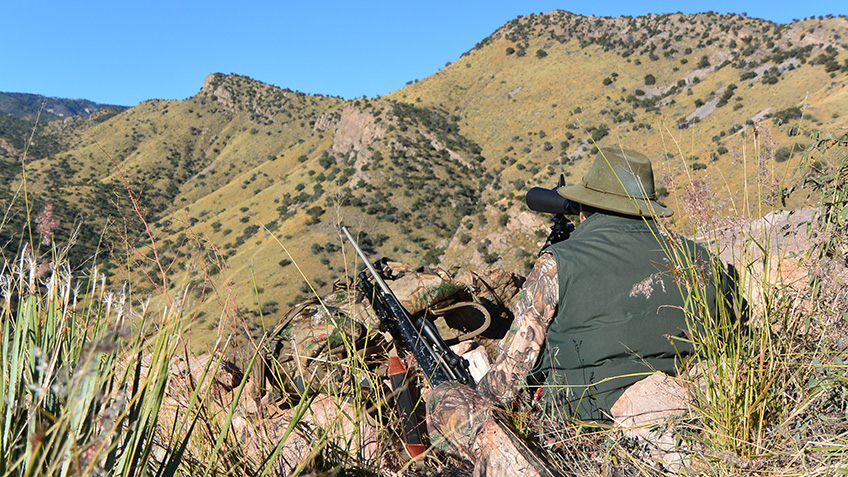
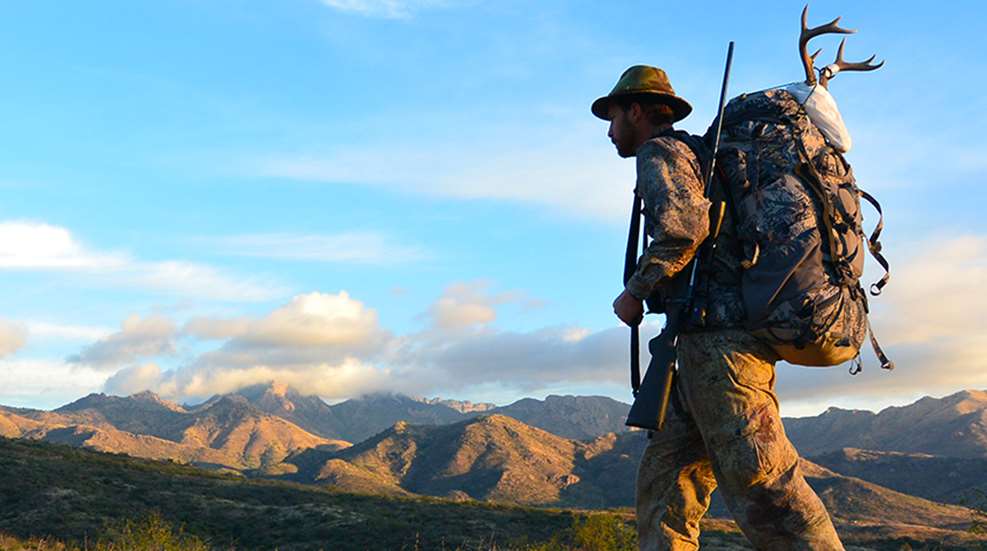
Serious Coues deer hunters are more avid than a bunch of tailgating Steeler’s fans, and utilize special tools and techniques for hunting their ghost-like quarry. I can’t claim to be numbered among their ranks, having spent only a few weeks among the desert thorns and cacti that Coues deer call home. But those weeks have inspired me, challenged me and left me a better hunter. Each of my hunts has been an unguided, do-it-yourself adventure, and on each I’ve successfully carried home meat and memories. Here are some tips and techniques that will help you do the same, should you be inclined to try the challenge of hunting America’s southwestern-most whitetail subspecies.
Shoot Flat
Coues deer make a small target, and shot distance usually far exceeds your typical whitetail-woods shot. You’ll want an accurate, lightweight, flat-shooting rifle in something like 6.5 Creedmoor, .270 Winchester or 6.5 PRC. Shoot high-BC projectiles that maintain good downrange accuracy and energy. Top your rifle with a quality, lightweight riflescope fitted with a yardage-marked turret customized to your load and the area’s typical temperature and elevation. A good rangefinder will round out your shooting gear. Practice until you’re comfortable shooting a 7-inch target to 500-plus yards.
Use Lightweight Gear
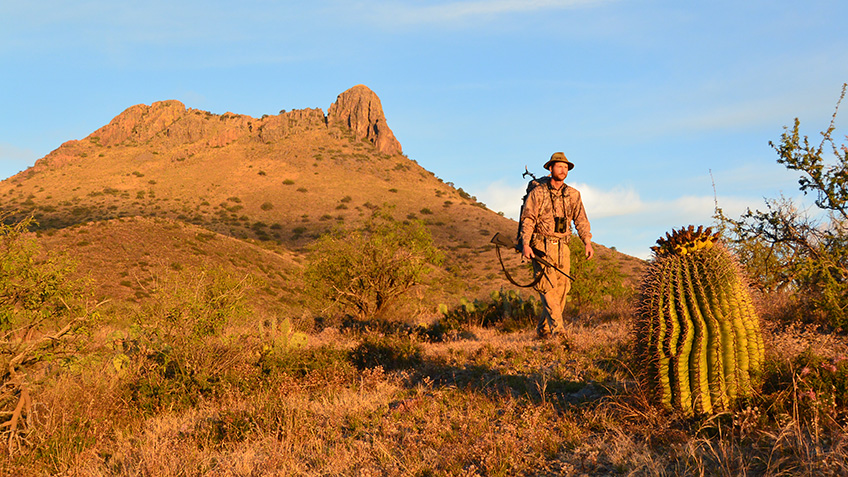
It goes without saying that you want the best, lightest gear you can get. Carry it all in a good mid-sized pack—my favorite is the Badlands 2200—that will hold your tripod, food, water, bivy gear and rifle, as well as a quartered-out deer if you’re successful.
Dress for the Occasion
Desert nights can be chilly, but the majority of the time, you’ll be fighting the heat. Wear cotton or synthetic clothing that will keep you cool during the heat of the day, and pull on a set of lightweight wool long johns overnight. A lightweight down coat will keep you warm and will double as a sleeping pillow. Precipitation is uncommon in Coues country, so just keep a little emergency poncho or large trash bag in your pack in place of raingear.
Bivy Out
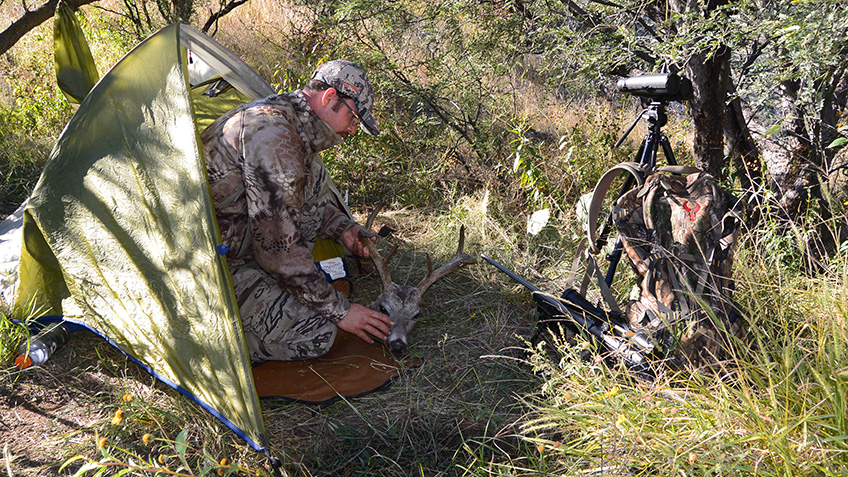
I’m a firm believer in sleeping on the mountain while I’m hunting. The time, sleep and energy savings you reap by bivying out are tremendous. Just load a superlight sleeping bag, pad and tent into your pack along with water, food and your other gear. That way, you can bed down wherever darkness finds you, leaving you ready and in position to glass and hunt at the first light of dawn.
Beat the Heat
In my opinion, the hardest thing about hunting Coues deer is the heat. It’s a dry desert heat, which renders it slightly less problematic than humid heat, but if you’re not careful, it can still kill you. Dehydration is a real concern, as is heat exhaustion/stroke. Wear cool, lightweight clothing, eat salty snacks and food, and try to shade up during the heat of the day. Above all, stay hydrated.
Footwear
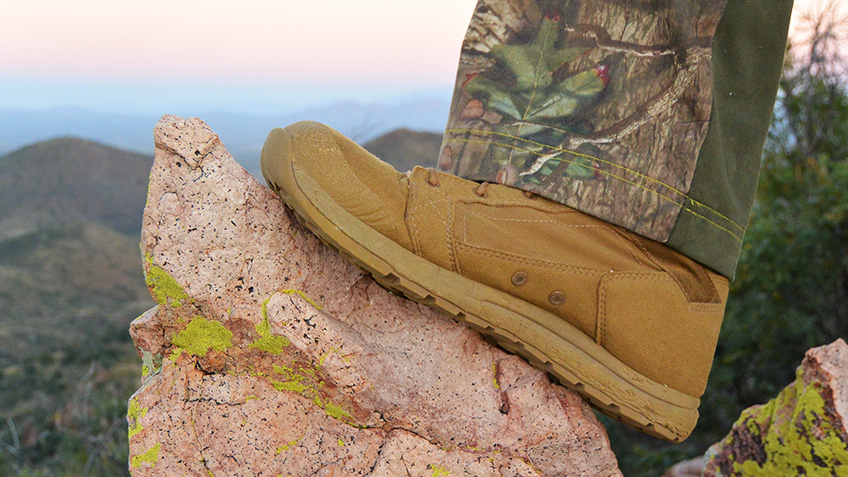
Just staying on your feet can be a challenge when hiking through the desert terrain Coues deer call home. Jagged, fist-sized rocks are strewn around like vicious marbles, just waiting to roll underfoot; cacti, catclaw and thorns abound. Some hunters prefer heavy leather footwear that supports and protects the ankle and foot. Personally, I don’t like stiff footwear hampering my movements. I prefer lightweight shoes that grip and conform, enabling me to feel the ground underfoot. My favorite shoes for Coues deer hunting are Danner’s Tachyon. They don’t offer much protection against cactus spines and snake bites, but I find that I’m most likely to stay vertically positioned above my feet when I’m wearing them; as opposed to slipping, sliding and plunging haphazardly into every nearby barrel cactus.
Trekking Poles
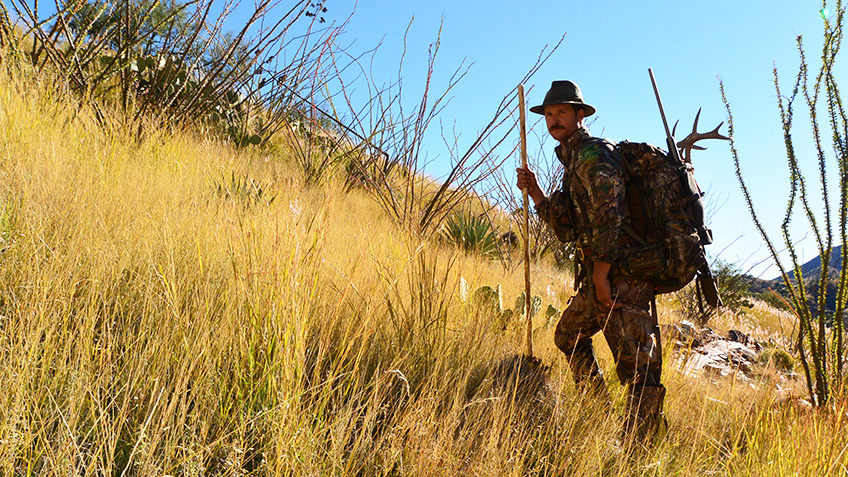
Standard equipment among many mountain hunters across the West, trekking poles can be invaluable when pursuing rough-country Coues deer. The most dangerous terrain I’ve ever carried a deer through—in the dark, no less—was while hunting Coues deer. I generally just find or cut a couple old sotol stalks to use, but a pair of lightweight collapsible trekking poles would be a worthy addition any hardcore Coues hunter’s toolset.
Snake Gators
One of the handiest articles of gear that I’ve used while hunting Coues deer are Cabela’s snake gators. Not only do they provide protection against snake bite while hiking, they’re awesome for sitting on, using as tent door mats and a 101 other things when hunting where every single thing wants to stick, stab, sting or bite you.
Hunt Deep
Typical of all public-land hunting, getting away from pressure provides better hunting. Backpack as far as you can away from busy roads and trails, and as deep as you can into rugged, remote terrain. The rougher an area is, the better Coues deer like it. Search out steep canyons, ridges faced with ribbon cliffs and tiny hidden seeps.
Let Your Glass Do the Walking
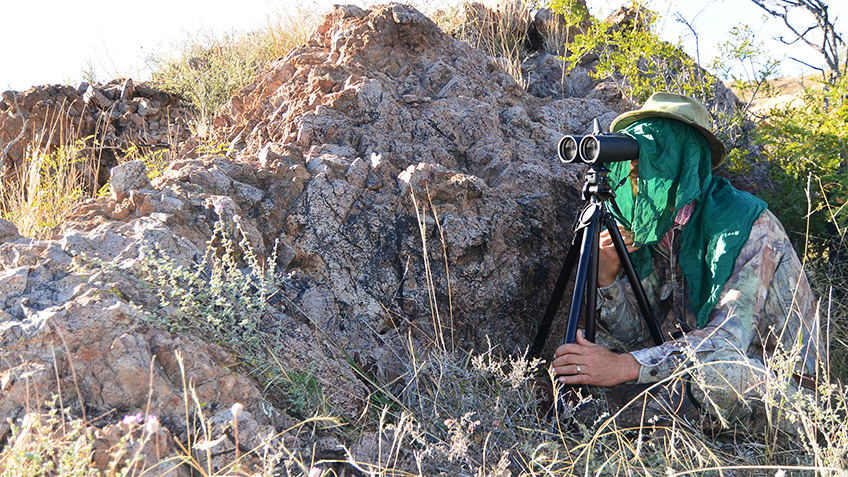
The quintessential Coues hunting optic is a large-magnification, top-quality binocular mounted atop a super-light tripod. This setup enables you to sit comfortably on a vantage point and dissect the surrounding terrain with the precision of a neurosurgeon. There is no better way to spot the “Grey Ghost.” I like to bivy camp near a good glassing point and spend most of the day looking through my binocular. A lightweight foam sitting-pad makes life more pleasant, as does a wide-brimmed hat and a head net or silk “Wild Rag” to keep gnats out of your ears and eyes. Early morning and late evening are key times to glass, but it’s common to see bucks up and feeding in midafternoon as well. Watch grassy saddles and benches, old acorn-bearing oak trees and the base of cliffs. Look in places you wouldn’t expect a buck to be—often that’s exactly where you’ll find them. Be as stealthy as possible at all times, because Coues deer are vigilant and smart; if they see you they’ll leave the area. Set up in cover while you glass, stay in the shadows and don’t skyline yourself.
Be Aggressive
Once you’ve shouldered your pack, pushed into remote backcountry Coues territory and glassed up a good buck, the last ingredient you need is aggression. Each of my bucks have demanded a hardcore push to get within shooting range. Don’t expose yourself, but stalk rapidly and aggressively into position for a shot. Once there, set up for the shot, wait for a good opportunity and squeeze the trigger.