Back when life was mellow, I read a book by Robert Ruark called “Use Enough Gun,” which pretty much describes it. Ruark also wrote “The Old Man and the Boy,” which should be required reading for every young person. It conveys a lot of wisdom about people, guns, hunting and dogs. Once, when the old man was warming a park bench and was asked why he wasn’t doing anything, he replied, “I’m storing up for the future.” That’s a nice all-purpose answer that fits many situations.
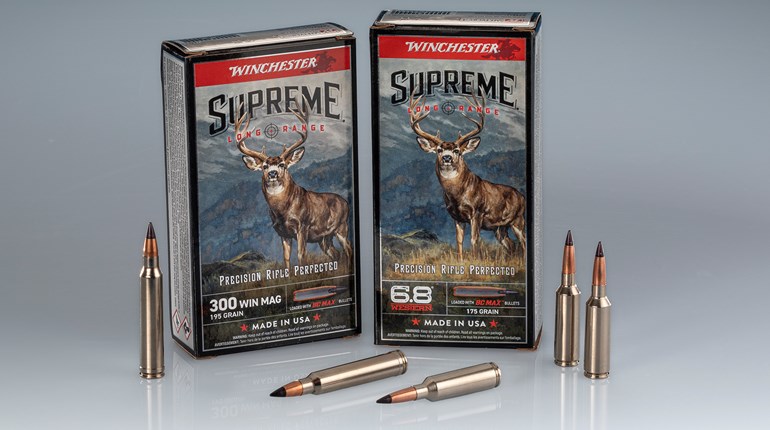
These days you hear a lot about shooting medium and large-sized game like deer and elk with smaller calibers, say a .243 instead of a .308. This often neutralizes the problem of flinching, but assumes a well-placed shot. Yet in the field, the wind may be blowing, the rest may not be steady, and the distance may not be precise. Suddenly you wish that piece of lead was carrying a few more foot-pounds of energy.
It’s not that you can’t wound game with a bigger bullet. A gut shot is a gut shot. But a more powerful gun will mean fewer hurt animals and usually more clean kills. As for flinching, I admit it can be embarrassing. I once missed a coyote at 30 yards with a scoped .30-06 because of the anticipated “kick.” Let the record show that my shoulder was already sore from sighting-in the rifle and that it had a thin recoil pad. And, yes, I would have nailed the coyote with the smaller .223.
Still, if you want to use enough gun, why not go all the way? And if you’re going to dream, why not imagine yourself on a safari being charged by an old, bad-tempered Cape buffalo bull? Actually, I’m not sure what I was thinking when I sauntered into Cabela’s Gun Library to salivate over the engraved Belgian Browning side-by-sides and the double-barreled .470 elephant busters. (By the way, if this is a gun library, I’d sure like to know what they read in the gun vault).
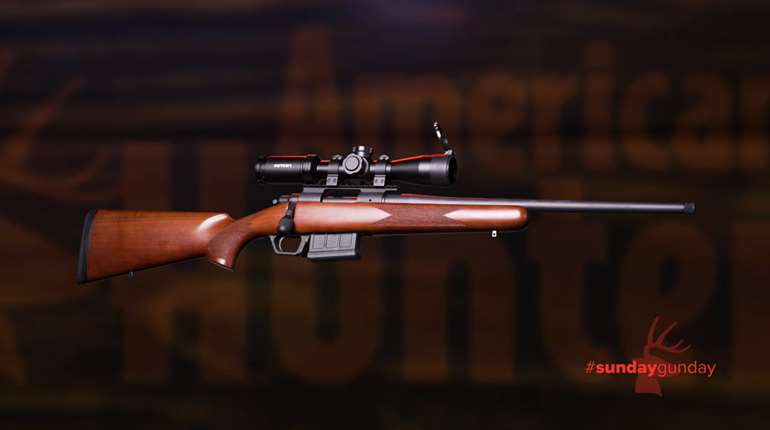
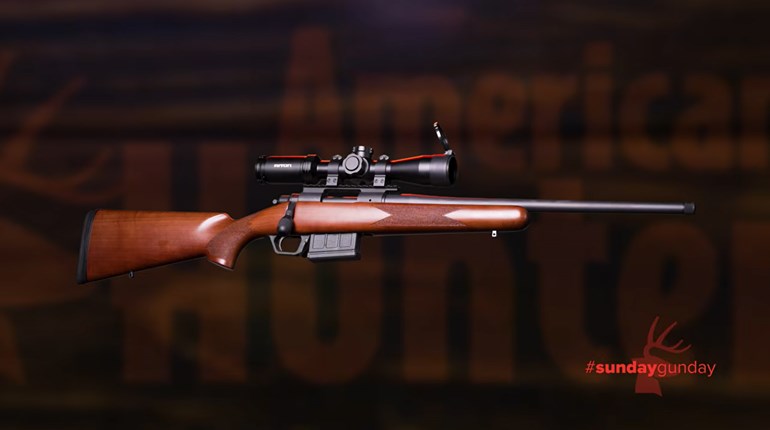
Most of the firearms were behind locked glass panels. They were out of my financial range. But there was a wooden rack of half a dozen rifles out in the open ready for personal inspection. One of them was the first .375 H&H Magnum I had ever seen, complete with muzzle brake and a Leupold scope. For $1,150. Hardly used. It had me before I picked it up.
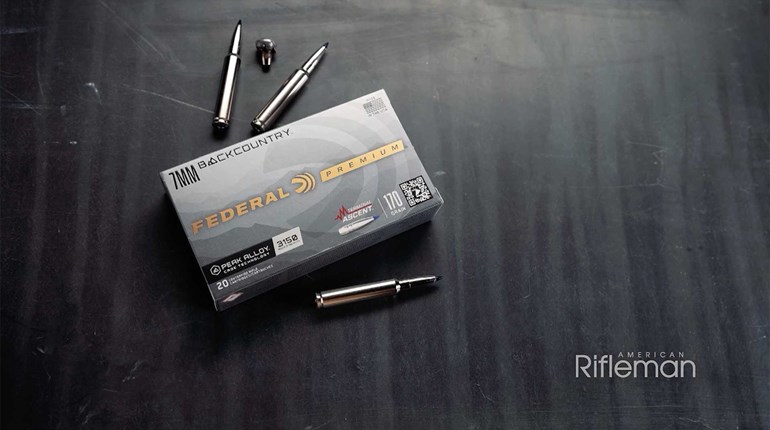
I already knew about the .375, which was developed by the English firm Holland and Holland in 1912. What’s often said about the .375 has become a cliché: “If you only take one gun to Africa, this is it.” Apparently, it’s earned its reputation as the all-around rifle suitable for antelope to lion to elephant, reliable and accurate. You can choose between a 270- and 300-grain projectile, with the 270-grain bullet hitting with 3,500 ft.-lbs. of energy at 100 yards. So the .375 can produce about 50 percent more energy that a .30-06 and 25 percent more energy than the .300 Win. Mag.
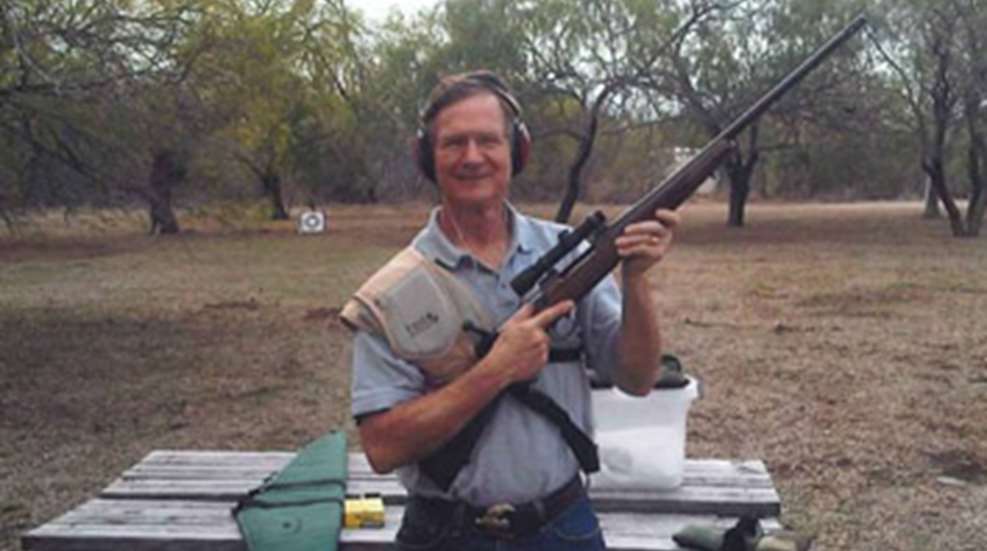
When I went to shoot the .375, I was prepared for the worst. A friend told me when he shot one it left his arm numb for hours. So I was expecting the muzzle blast to break nearby windows and the recoil to throw me on my back. I sat at a picnic table, resting the barrel on a plastic box, and held the stock tight against a thick shoulder pad. The target was 50 yards away. Thanks to the muzzle brake and the pad it felt like a .30-06. No harm done. While sighting it in, I punched a one-inch group. With a steadier rest and a steadier trigger finger, I felt it would have performed beautifully at longer distances.
This is not to recommend a .375 for whitetails. It’s just to say that you can use a larger caliber than you might expect for game animals, and it may give you more confidence in your ability to bring them down and not have to embark on a tracking expedition. After all, when the crosshairs are on hide, you seldom notice the recoil—and you’re unlikely to shoot more than once anyway.
So put your pride in your back pocket and strap on a shoulder pad, leave the varmint rifle at home, and take a rifle that respects the size and strength of that game animal.