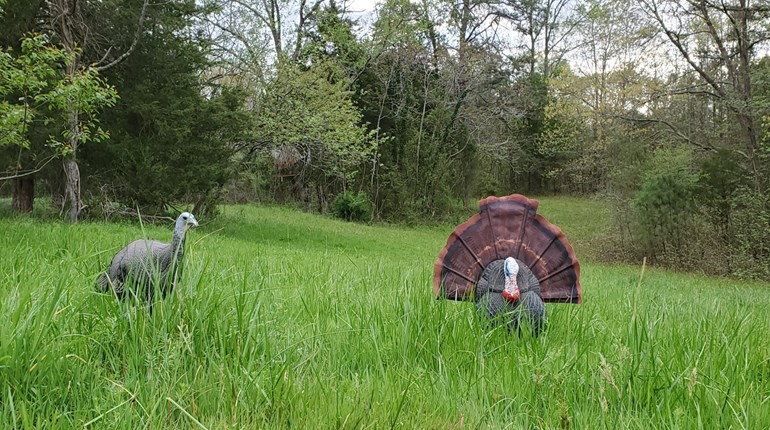
As I type this, NRA President Jim Porter and I are in the rental car driving south from the Colorado Springs, Colo., airport to the Vermejo Park Ranch near Raton, N.M. Greeting us as we cross the border into the “Land of Enchantment” are a couple Merriam’s turkeys in the distance appearing to be strutting their way north. Good move if you’re a turkey and Porter is in town!
This is one of the most significant hunts in Porter’s life as he closes in on a grand slam on turkeys. As you know from previous “Porter’s Pursuit” blogs, his quest began on the opening day of Florida’s Osceola turkey season on Sat., Mar. 15. After dropping three of the four subspecies—the Osceola, Eastern and Rio Grande—in a mere five days, he left the woods to cover the work-related bases and will be back at it in the morning. If he drops his Merriam’s tomorrow, Apr. 15, that will mark one month to the date when it all began. Anticipation is running high considering Vermejo Park Ranch has more Merriam’s than we can count—and few places are more beautiful to hunt. In addition to being a premier hunting, fishing and nature resort, it is the largest tract of privately owned property in the entire West, spanning 923 square miles of everything from vast grassland prairies to alpine tundra and high-mountain peaks!
For some background, Vermejo Park Ranch occupies the south-central portion of the Park Plateau between the headwaters of the Arkansas and Canadian Rivers is a natural passageway between the Southwest and the Great Plains. The first real settlement began between 600 and 700 A.D. and persisted until the Great Drought (1276 to 1299) when native tribes left in search of water for their beans and maize. Athapaskans (better known as the Apache and Navajo) migrated into northern New Mexico in the late 15th century, and Jicarilla Apache established rancherías along the plateau’s eastern edge. Pressure from Comanche and Ute raiders caused the Jicarilla Apache to abandon the plateau in the 19th century. In the years that followed, numerous forestry and wildlife management programs were initiated on the land that continue today. Click here to learn more.