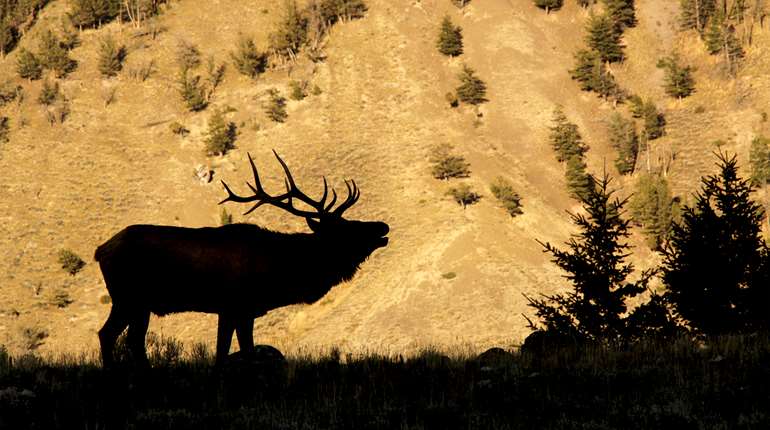
Maybe you have a sure-thing rut stand, a place of your own where pleasant memories of big bucks tagged play in your head like a deer-hunting show marathon. Good for you. Now go away; this is for the rest of us who must constantly scout, look for new properties and put in the time for our dream bucks.
Like many who don’t own their hunting grounds, every year I see some of my best stands fall to other hunters, to land developers and, most recently, to a retired school teacher who moved from Brooklyn and now calls the deer on her property “my merry forest creatures.” Before she shooed me off I saw that she was planting a sprawling garden with nary a fence betwixt it and nature’s mouths to feed, so her Disney view of deer is sure to change. But until then, I’ve lost another option. It’s hard to replace solid rut-funnel options, places where mature bucks can be waylaid as they search for estrous does in daylight.
Now, because a writer should shake the experts for wisdom, I asked savvy whitetail outfitters and deer biologists what an enterprising deer hunter who can’t afford to buy or lease his dream property should look for. Their advice was as wide-ranging as you’d expect, but they all kept coming back to three points. Being a writer, I dubbed it “The Rut Hunter’s Trifecta.” All hype aside, this will help you narrow your search for your own sure-thing rut stand.
Buck Excursions
“Deer take short vacations,” said Brian Murphy, president of the Quality Deer Management Association (QDMA). I guess even deer deserve a break, I thought, but then he got to the point: “A buck on vacation could pass through your back 40.”
He could even stay for keeps. Here’s the science you can use to your advantage. Biologists have strapped GPS collars on bucks to see where they go. Many have found that deer take trips. Their wanderlust will even take them off properties that have plenty of food and cover. Biologist Mark Conner, for example, spent two years using GPS tracking collars to study buck movements on Chesapeake Farms, a 3,300-acre wildlife research facility on Maryland’s Eastern Shore. The locations of the bucks were recorded every 20 minutes from August through December. He found that many of the bucks would just suddenly go on a walkabout. Bucks do this most often during the rut.
To see the big picture realize that Conner defined “home range” as the area where a buck spent 95 percent of its time. On this Maryland property he found that the average home range of a buck was about 600 acres. (For context, realize that a similar study in Texas determined that a buck’s home range in that more arid region was about 3,000 acres.) He defined “core areas” as the smaller zones within a home range where a buck spent the majority of its daylight hours. These core areas were usually around 90 acres. Typically, they included cover so dense a man would have to crawl into them. Conner even found that one buck’s core area was in the middle of a waterfowl refuge—a place off-limits to people. So aerial photos of the region you hunt (use Google Earth, it’s free) should show you where to find these buck hideouts.
Now get this: Conner found that many of the mature bucks in his study went on excursions during daylight. So if you can get access to even a small property between larger, thick or un-hunted properties in the checkerboard of habitat among suburbia or farm country, then you up your odds at ambushing such a buck. But you will have to put in the time on stand to do it.
The Moon and the Weather
How the moon affects the rut gets some hunters worked up, but the thing is study after study hasn’t been able to find a correlation between the moon and the timing of the rut. Weather also doesn’t appear to affect the timing of the rut. Days where the temperature is well above average typically only reduce daytime deer activity.
Murphy said, “Studies show that, regardless of weather, bucks move most at dawn and dusk. … One three-year study that produced almost half a million GPS data points from over 40 bucks attempted to correlate weather variables with the rut and found no correlation whatsoever.”
Grant Woods, a wildlife biologist (growingdeer.tv), says he was part of a large group of scientists who backdated conception based on the birth dates of fawns. They did this for thousands of deer from several regions and found no connection between the moon phase and the timing of the rut.
The takeaway for hunters: Don’t stay at home when the rut is humming but a warm front has blown in or a full moon is out at night. When the rut is on, it’s on.
Hunting Pressure
A lot of studies have determined that, duh, bucks move less in daylight when hunting pressure gets heavy, but how much hunting pressure does it take to shut down a buck? Murphy says studies indicate that one hunter per 250 acres has only a little effect on where and when bucks move, but when this ratio reaches one hunter per 75 acres, bucks shift to thicker cover and travel less in daylight. Once the season opens, it takes about three days for bucks to change their behavior.
Still, even as hunting pressure gets intense, GPS-collar studies repeatedly show that bucks basically stay put. They just wait until dark to move outside their core areas. Also, though a buck’s home range can shift and grow seasonally, research indicates that as bucks age, they are actually less likely to leave or change where they live.
So in how small of an area are they hiding?
Murphy said, “Every project I looked at estimated a buck’s core area is only 5 to 10 percent of its home range, which is about 60 to 90 acres.”
To get such a buck you’ll need access to its core area. Hunting in those dense places can be difficult. But if you can get the right stand location and hunt low-impact, you have a chance of seeing a buck on its feet in daylight.