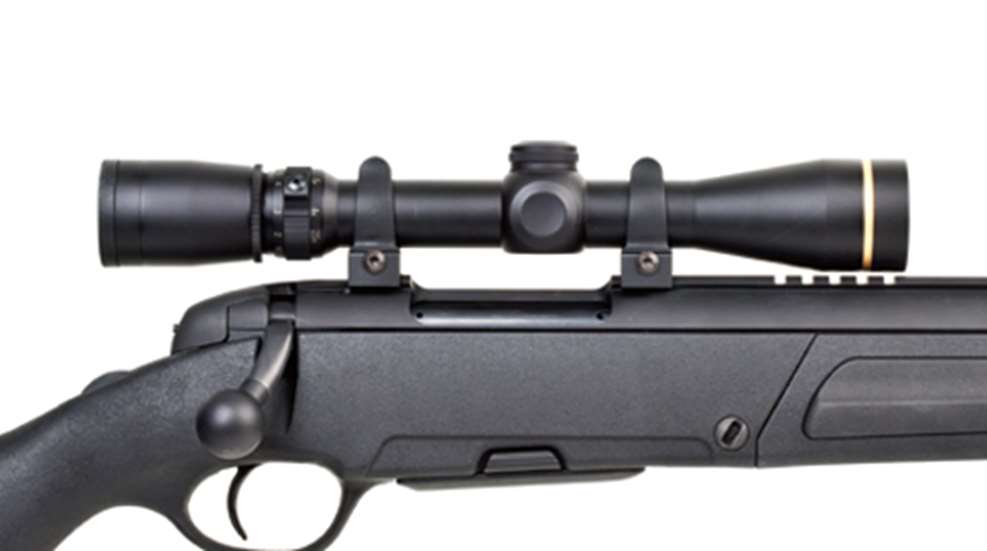
The flagship hunting riflescope from Leupold has long been the VX-III. Like the Nosler Partition and the Winchester Pre-'64 model 70, the VX-III has become the standard by which other scopes are judged. But to maintain its competitive edge with more expensive European riflescopes and the increasing quality and value offered by Japanese glass, Leupold has enhanced and renamed the VX-III line.
The VX-III line is now called VX-3. Its upgrades include: an Extended Twilight Lens System, Diamond Coat 2 lens coating, blackened lens edges, second generation waterproofing, a twin bias spring erector system, cryogenically treated adjustments and a 24-karat gold-plated ring and medallion.
The Extended Twilight Lens System uses lens coatings that optimize the transmission of low-light wavelengths, specifically colors in the blue/violet spectrum where the human eye is challenged. The blackened lens edges help in low light, too, by reducing light diffusion. Don't confuse this with the crisp looking, black frame that you see around the edge of the field of view when you look through some riflescopes. That is a "light stop" that is sometimes used to compensate for an optical deficiency like edge distortion. On the VX-3, Leupold blackens the circumference edge of the lens to reduce glare and internal reflection. I know of no other manufacturer doing this.
The second generation waterproofing is nothing more than Leupold's switch from purging the scope with nitrogen gas to an argon and krypton gas mix. Leupold says this mixture will take longer to dissipate than nitrogen gas. Does it work? Only time will tell. I can tell you that I totally submerged a 4.5x-14x-40mm VX-3 with an adjustable objective in my 102-degree hot tub for an hour with the adjustment caps removed. It did not leak.
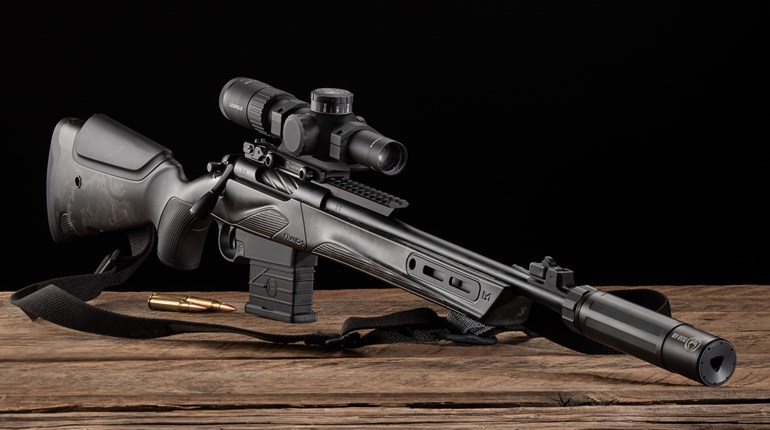
The twin bias spring erector system increases the pressure applied to the erector tube to help with adjustment repeatability and to guard against point-of-impact shift. Using a target with four aiming points arranged in a square and positioned 7.5 inches (30 quarter-inch clicks) apart, I "shot the square" with the VX-3 mounted on an accurate custom rifle in .22-250 Rem. I fired three shots, adjusted 30 clicks right, fired three shots, adjusted 30 clicks down, and so on. Group centers were less than half an inch from the center of each aiming point and the final group overlapped the first, proving that the VX-3's adjustments are precise and repeatable.
As for the cryogenic treating of the adjustment mechanism, the idea was to harden the metal surfaces of these components so they will provide longer life. Does it work? Theoretically yes, and other than increasing cost to manufacture, it has no negatives. Again, time will tell.
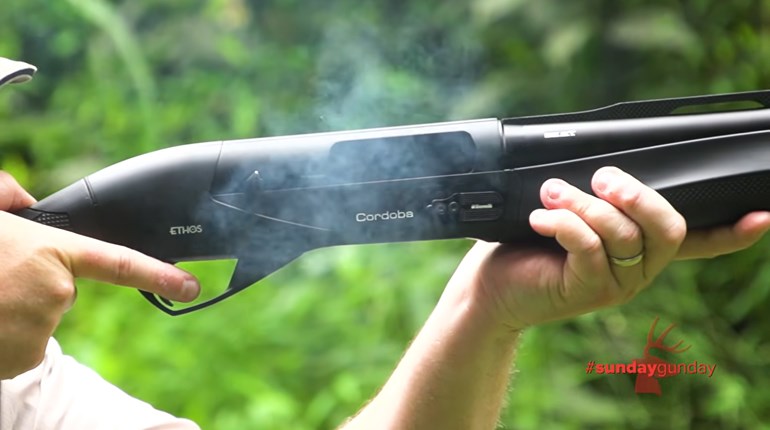
My final test was to let my 9-year-old use the VX-3 with the adjustment caps removed while he played pirate in his sand pile, or "the toy graveyard" as we call it. I examined the lenses that evening and found no evidence of scratching that leads me to believe the Diamond Coat 2 coating works. Obviously this is a subjective test, but it convinced me. The next day I mounted the VX-3 on Remington's new 12-gauge SuperSlug shotgun and fired a 20-round volley of 3-inch slugs. The only shifting that occurred was in my shoulder joint.
Testing one riflescope proves little so I called Randy Ducaett with Bear Basin Outfitters. Bear Basin is one of the largest online optic retailers. Ducaett said there is a definite improvement in the low-light performance over the VX-III. He also considered the twin bias spring erector system a worthwhile innovation, especially if you shoot hard-kicking rifles. He said complaints and returns are nil.
I also discussed the new scope with John Barsness, who authored the book Optics for the Hunter. John recently tested a VX-3 side by side with a new Swarovski Z6 and found them to be a virtual tie in regard to low-light performance. That's quite impressive considering a VX-3 costs about a third of a comparable Z6.
There's strong competition in the riflescope market. The dilemma is determining the features we need and calculating if they're worth the price. The VX-III has carried the Leupold banner for a long time and set the bar with regard to riflescopes. The VX-3 has raised that bar and the torch has been passed to the tune of about a 10 percent price increase. Should you sell your VX-III to buy the newer VX-3? I won't. I've yet to be in a low-light situation where one of my VX-IIIs let me down, and after years of twisting and turning on the adjustments, the clicks are still crisp and accurate. However, I have a few new rifles looking for an optical partner, and I'm sure a VX-3 will end up on at least one of them.
The VX-3 series features 18 models from a 1.5x-5x-20mm scope to an 8.5x-25x-50mm version with 1-inch or 30mm tubes. The line includes two illuminated reticle models, two adjustable objective models, six Long Range models (with side focus) and an EFR (extended focus range) target model.
Specs:
800-538-7653 ■ www.leupold.com
Type: variable-power riflescope
Focusing Range: 30'-infinity
Eye Relief: 4.4" @ 4.5X - 3.7"@ 14X
Exit Pupil: 8.8mm @ 4.5X - 2.8mm @ 14X
Field of View @ 100 yards: 23' @ 4.5X - 7.4' @ 14X
Adjustment Range: 116 MOA windage and elevation
Coatings: fully multi-coated w/Diamond Coat 2
Length: 12.6"
Weight: 15.1 ozs. (actual tested weight: 14.1 ozs.)
Mounting Space: 5.4"
Finish: anodized matte black
MSRP: $785