The whitetail rut should have been firing on all cylinders. It wasn’t. Five days of hunting high-elevation whitetails in Idaho’s panhandle and I’d only seen one buck.
On day six an afternoon storm front rolled in. Temperatures dropped more than 20 degrees. Heavy rain fell. By nightfall does were feeding in mountain meadows and small bucks skirted around them. Then the clouds opened up, and temperatures plunged into the mid-20s under starlit skies.
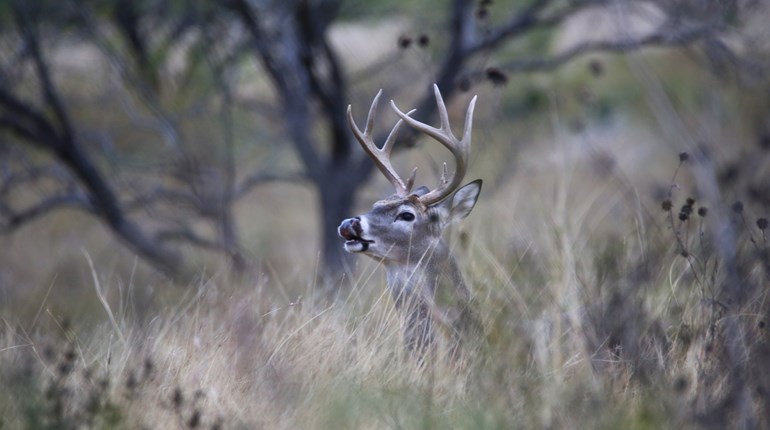
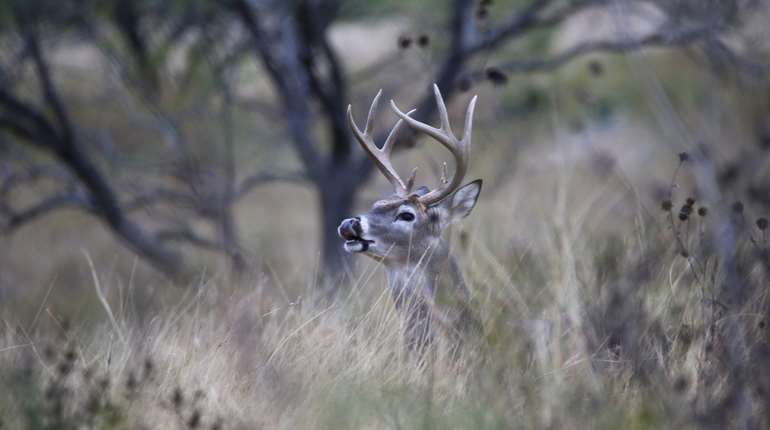
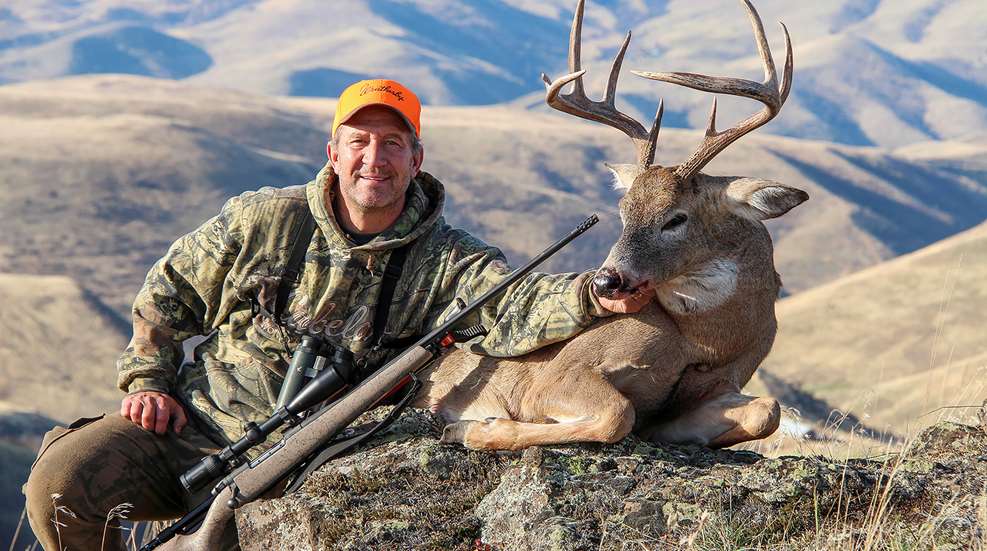
By sunup on day seven I was sitting just below 3,000 feet. The air was crisp. A frost blanketed the mountains and bucks were on the move. I shot a dandy that was stuck to a doe on a steep mountainside. It was the third mature buck I saw in the first hour.
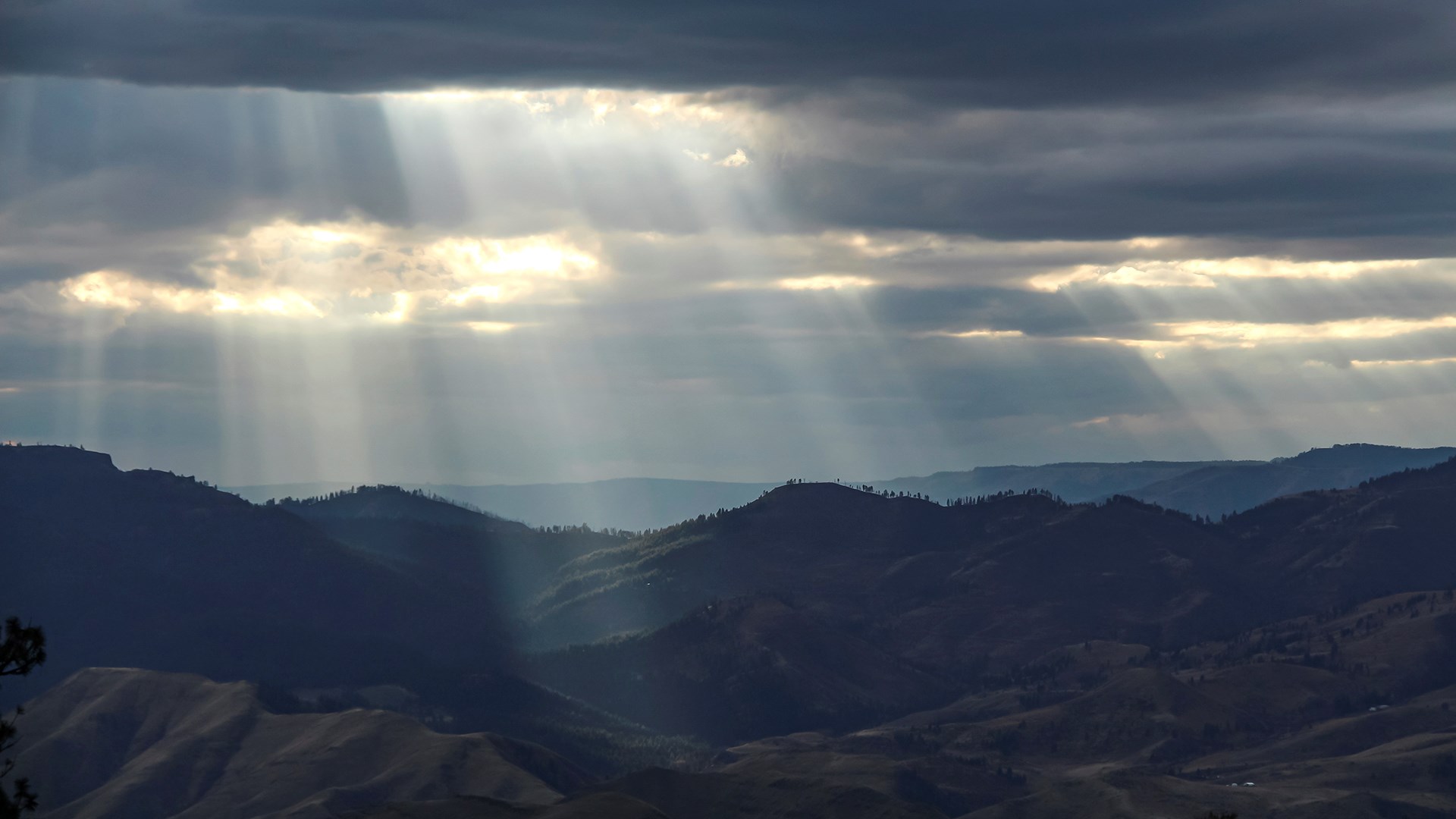
I’ve seen this scenario play out many times in Western states when hunting white-tailed deer in late October and early November. Does are present, you know bucks are near, but they’re secretive. Then, in one night, cold weather hits and bucks materialize in the precise places you’ve been searching for them.
The science teacher in me wants to fully credit photoperiodism with the onset of the rut. But the hunter in me, having witnessed instant shifts so many times over the decades, keeps praising cold weather.
While shortening daylight hours largely trigger does entering estrus, I’m convinced cold temperatures trigger mature buck movement. A cold snap drops the ambient temperature enough that big bucks can aggressively cover ground without overheating. In the rugged mountains, that search is even more taxing on bucks. Early mornings and late evenings are prime times to be afield when temperatures are at their lowest and buck movement is most evident. If temperatures remain cold, hunt all day.
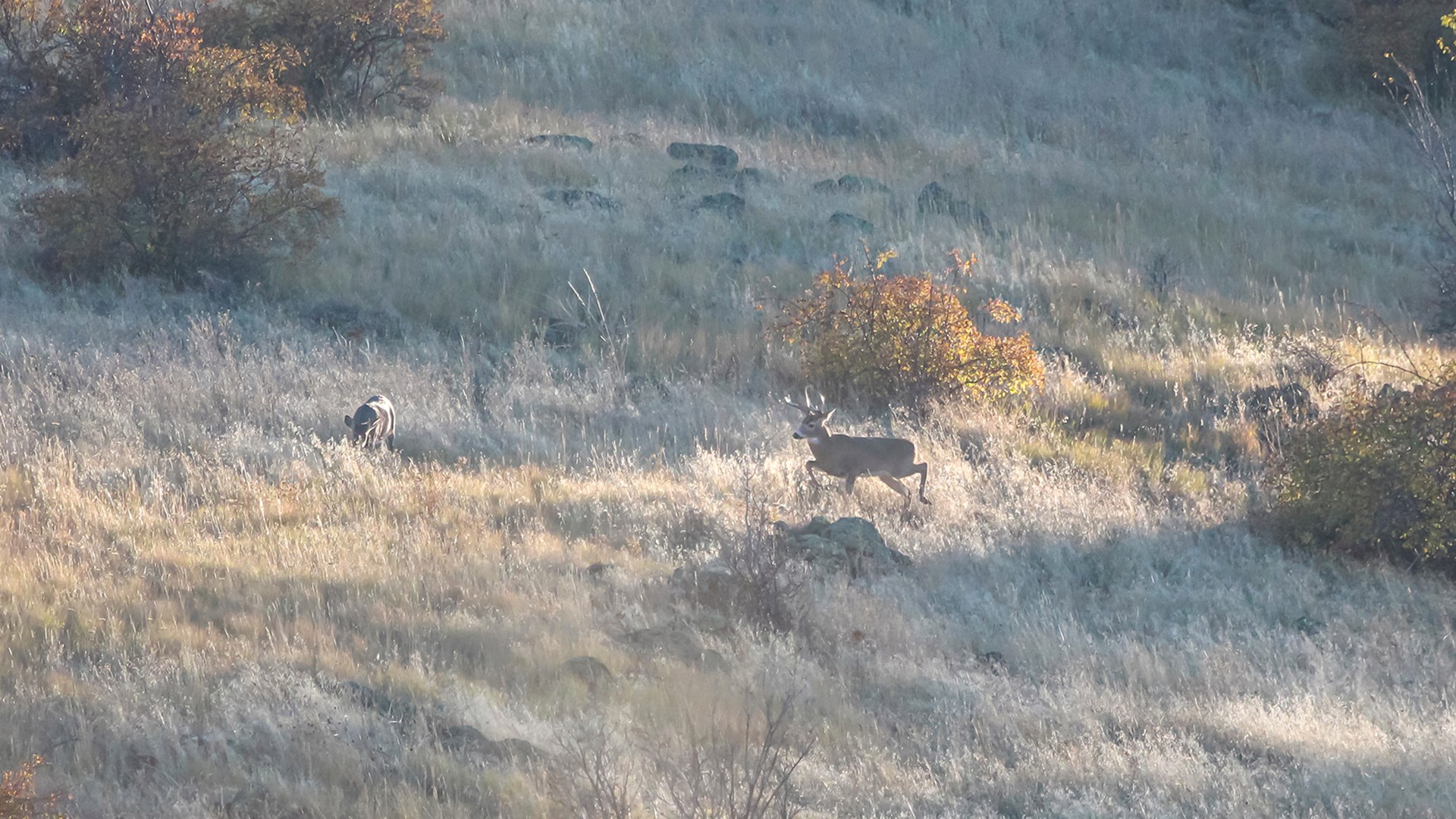 A cold snap quickly drops the ambient temperature to the point fat, mature bucks become active in their search for does. When it comes to hunting whitetails out West, spend all day afield when bad weather hits and temperatures drop.
Cold snaps affect low-elevation whitetail bucks, too. One November I hunted for three days in a Montana river bottom and saw only small bucks. Overnight, temperatures dropped into the teens and 6 inches of snow blanketed the ground. I didn’t even make it to the treestand before tagging a dandy 10-point that was love-struck and oblivious.
A shift from pre-rut to peak-rut behaviors can happen in a matter of hours when cold strikes. The more does you have located, the better the odds of bucks showing up.
Late in October I hunted a river bottom. Does were like ants, crawling out of every surrounding draw and willow thicket. I watched dozens of them every morning and evening. I never saw a mature buck. On Nov. 2 the temperature dropped to 16 degrees. At daybreak the next morning the river bottom was white with a heavy frost. I sat in one place over two hours and glassed 11 mature bucks, ones I’d not seen. I’m sure some were locals living on the river bottom. Others, I’m confident, dropped over 3,500 feet in elevation from the timbered mountains above to inspect the high density of does in the lowlands. I watched a heavy-racked buck descend 1,500 feet down a draw, nonstop. I made a move, got in front of it and shot the big buck as it dogged a doe, 150 yards away.
Not long ago I took my father on his first mountain whitetail hunt. The late-October days were unseasonably warm. We saw only a handful of bucks, none were big. Dad decided to shoot a little 8-point. He was happy with it. It was in a steep drainage and we didn’t get out until after dark. As we packed out, temperatures fell into the low 20s. Driving out of camp the next morning, we saw a big buck chase a doe across a gravel logging road in front of us. Since Dad was the priority, I didn’t plan on hunting, until now. I drove to the nearest town, bought a license and tag and headed back into the hills. Three hours later I found the buck 200 yards from where we’d seen it, standing over the bedded doe. The shot was simple, the buck every bit as big as I’d thought.
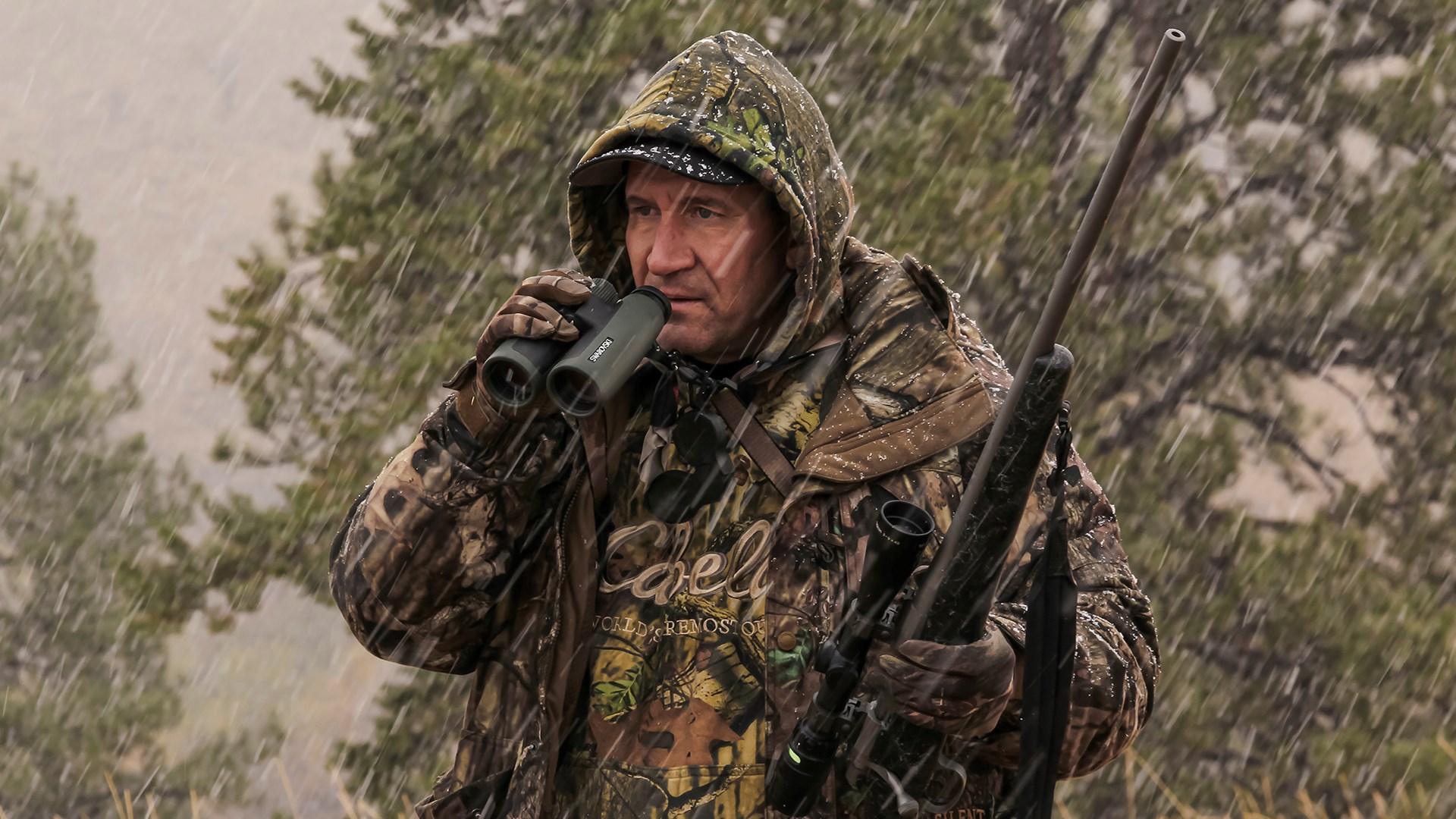
While waning daylight boosts testosterone production in bucks, it’s the cold temperatures that spike buck movement, and from what I’ve seen it appears more pronounced in whitetails throughout the West than with mule deer or Columbia blacktails. Maybe it’s because whitetail numbers are higher, or because their population densities and buck-to-doe ratios are greater. Whatever the reason, after five decades of deer hunting the West, I have no doubt that cold temperatures motivate mature bucks to become more active, no matter the habitat or elevation.
Many hunters talk about snowfall moving bucks. It takes a lot of snow to force a buck out of its core area. Mountain-dwelling whitetails can easily endure 2 feet or more of snow. Many of these bucks will drop mind-boggling distances in elevation to breed, then ascend to their core areas when done. I credit the drop in temperature, not snow accumulation, for the reason these bucks move.
Since summer, bucks have been gorging themselves in preparation for the rut. At the start of the rut they’re covered in thick fat. The more they move, the more they overheat. When that first heavy freeze hits, cooler air temperatures allow bucks to more comfortably cover ground and more quickly recover from sudden bursts of energy. The faster body heat dissipates, the more ground bucks will cover in search of does. This is the time Western whitetail hunters want to be in the field.
* Looking for ways to break down and cape a deer? Order Scott Haugen’s comprehensive DVD, “Field Dressing, Skinning & Caping Big Game,” at scotthaugen.com.