Metric cartridges took a while to catch on here in the United States—what with the 7x57mm and 8x57mm Mausers, and the 7mm Remington Magnum being the few exceptions—until the recent boom in popularity of the 6.5mm bore diameter. It seems that we as a nation sort of missed out on a gem for quite some time, while the Scandinavians enjoyed the 6.5x55, and the 6.5x54 Mannlicher-Schoenauer had much success across East Africa. The long, heavy-for-caliber round-nosed bullets gave deep, straight-line penetration, to the point where Blayney Percival—the brother of the famous professional hunter Philip Percival—used his 6.5x54 for lion control work, taking around 40 of the great cats with the little rifle.
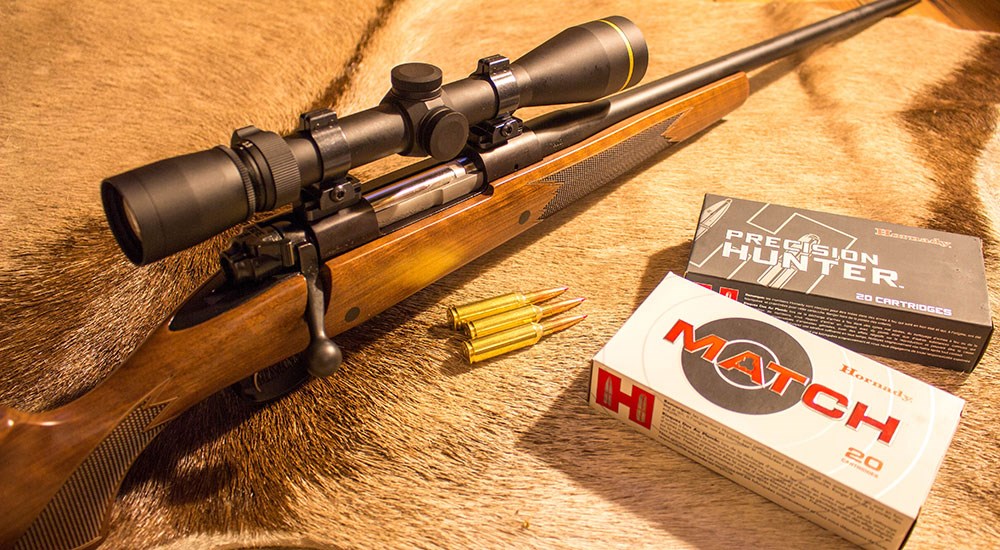
The .264 Winchester Magnum and the 6.5 Remington Magnum were released in 1958 and 1966, respectively, though the .264 Winchester was pummeled by the 7mm Remington Magnum, and the 6.5 Remington Magnum just never took off. But the 6.5 resurgence began when Remington released the .260 Remington—based on the .308 Winchester case—in 1997, and it did quite well for a while. The 6.5mm bullets gave a flat trajectory and performed well in windy conditions, but it was Hornady’s engineers who took things a step further. Where the .260 Remington fit nicely in a short-action receiver, the case length was simply too long to handle those bullets which made the best choices for long range work; the case mouth would be positioned on the ogive if the overall cartridge length were adhered to. Hornady devised a target cartridge, based on their previous design of the .30 T/C, which would see the case shortened to 1.920 inches—compared to the .260’s 2.035-inch case—in order to combat the bullet seating issue.
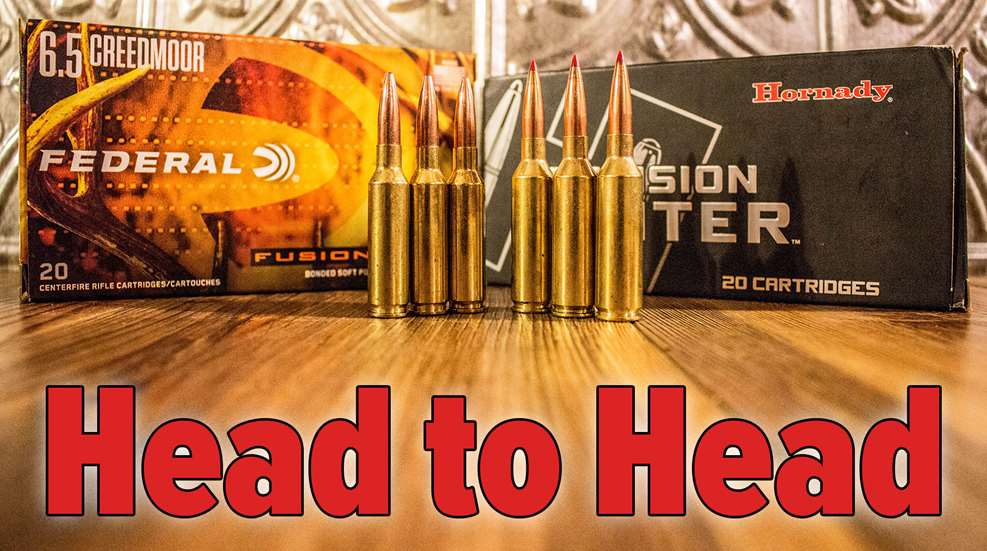
6.5 Creedmoor
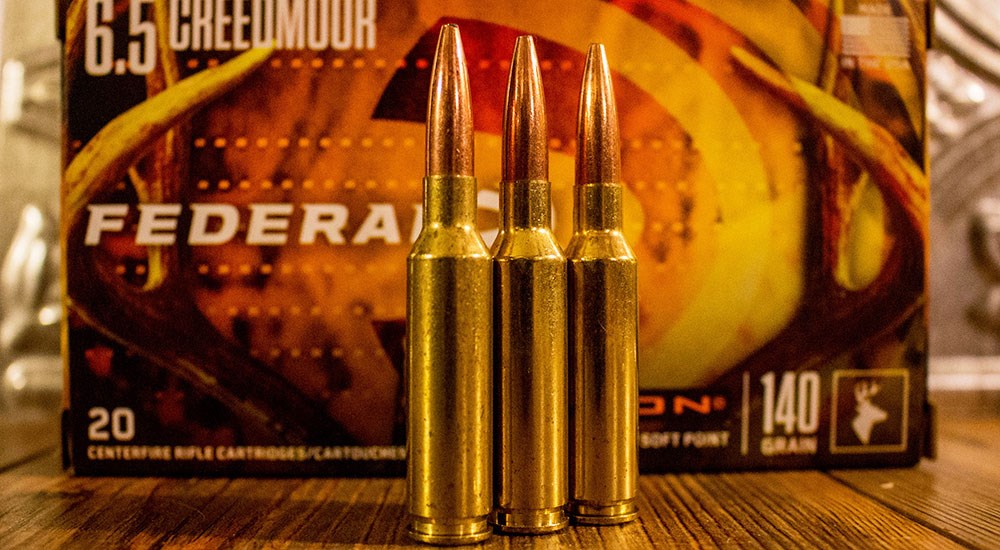
The 6.5 Creedmoor was released in 2007, and was named after the farm in Queens, New York where the NRA and the New York legislature combined to acquire a shooting range for International Competitions. The 6.5 Creedmoor is a rimless cartridge which headspaces off the 30-degree shoulder, and has a well-earned reputation for its accuracy and long-range capabilities. While there are those who put it on a pedestal as a miracle-wrought-in-brass, and others who downright despise that popularity, the fact remains that it is an excellent choice for long range shooting.
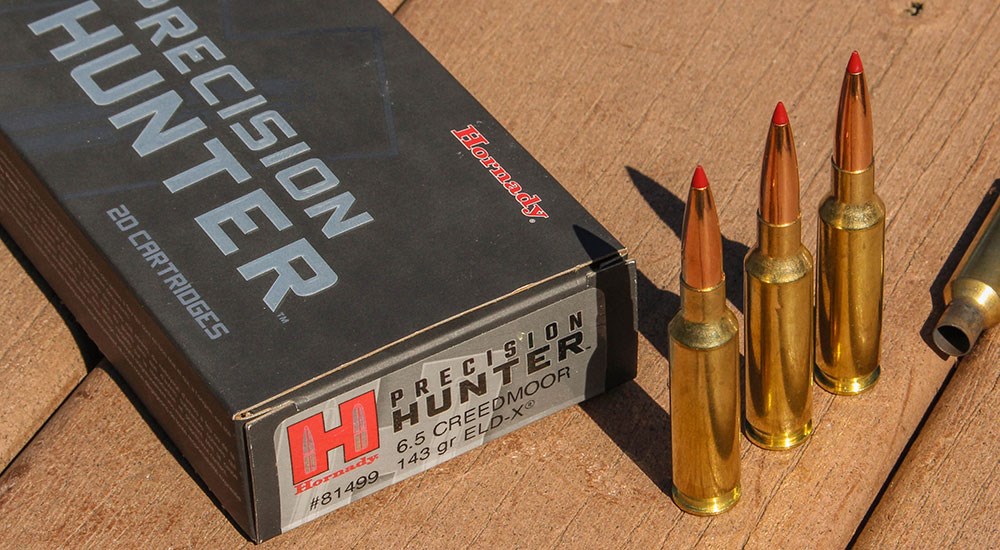
Its most common bullet weight is 140 grains, leaving the muzzle at right around 2700 fps, depending on your barrel. This equates to mild recoil, yet delivers a formula which makes the Creedmoor a perfectly viable 1,500-yard target cartridge, and even beyond that distance. The Creedmoor, like it or hate it, played an important role in the recent popularity in long-range shooting and the various competitions which have risen of late. Hornady once again came to the table with a cartridge designed to take things out a bit, if you will, giving a velocity increase over their Creedmoor design while still delivering the same excellent accuracy.
6.5 PRC
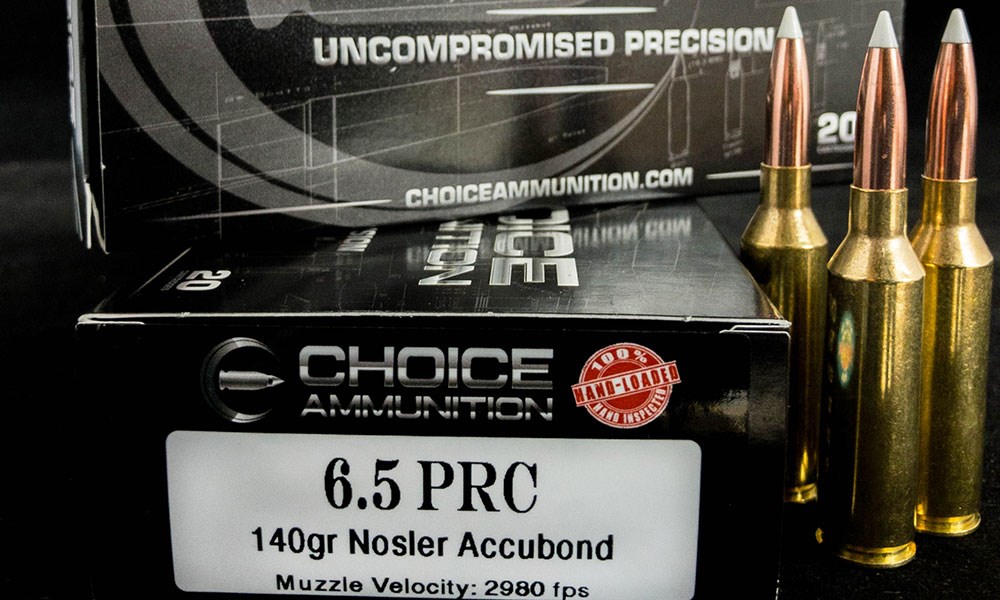
The 6.5 PRC (Precision Rifle Cartridge) mildly resembles the short magnums of the turn of the century, using the Holland & Holland base diameter of 0.532 inches, minimal body taper and the same 30-degree shoulder of the Creedmoor. With a case length of 2.030 inches and an overall length of 2.955 inches, the 6.5 PRC can be crammed into a short-action receiver, and in its factory guise will better the velocity of the Creedmoor by 250 fps or so. It does deliver the accuracy, and the beefed-up velocity makes a substantial difference in trajectory and wind deflection at longer ranges, in fact the 6.5 PRC hits roughly eight inches higher at 500 yards. That performance does come at the cost of higher recoil, but I haven’t found the 6.5 PRC to be in any way unmanageable.
We could debate the effectiveness of this pair for the long-range games, but this is American Hunter after all, so I want to keep the comparison to the uses in the hunting fields. I’d feel pretty comfortable saying that the vast majority of us should keep our shots within 500 yards of unwounded game, or even closer. Looking at the two of these cartridges in a hunting situation, both will probably be zeroed at 200 yards, and I’ll use the Hornady factory ammunition featuring the 143-grain ELD-X bullet for the comparison. The Creedmoor will strike 8 inches low at 300 yards, 22 inches low at 400 yards and 44 inches low at 500 yards, while the PRC strikes 6 inches low at 300 yards, 18 inches low at 400 yards and 36 inches low at 500 yards. This trajectory difference is very similar to the difference between the .30-06 Springfield and the .300 Winchester Magnum, and it isn’t wrong to look at the Creedmoor and PRC as smaller versions of that famous pair of .30s.
Because of the higher velocity, the 6.5 PRC has a definite advantage in the energy department, delivering 300 to 400 ft-lbs. more than the Creedmoor at any given range. If you want to use a 6.5mm cartridge for larger species like elk in addition to deer and antelope, the PRC makes perfect sense. If you want a cartridge for whitetails and mule deer, there are no flies on the Creedmoor, though I feel that its lower velocity makes it marginal for longer shots on larger-bodied species. The 6.5 Creedmoor has many more factory loads to choose from, and is a bit more affordable to feed, though the 6.5 PRC is gaining a head of steam, with more companies offering a factory load each year. Yes, you can get an additional Creedmoor cartridge in the magazine in comparison to the PRC, but then again, neither cartridge is designed to be used against dangerous game, where multiple shots are needed to save a hunter’s life.
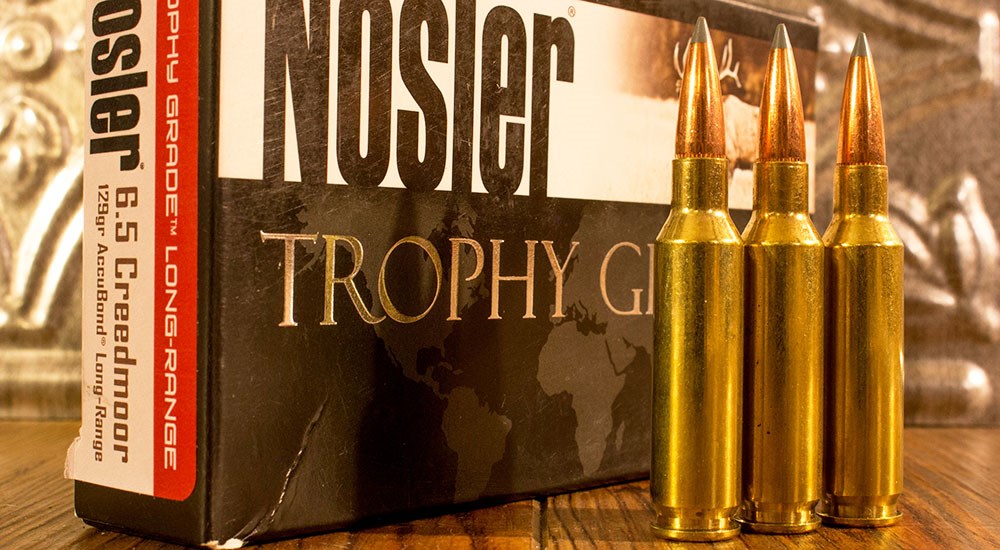
Which would I prefer for a hunter? If you want a deer rifle which will do double-duty as a target rifle, and prefer a 7mm or .30-caliber for the larger species, the Creedmoor makes perfect sense. If you’re looking for an all-around choice for hunting the majority of North American species and want it to be a 6.5mm bore, the 6.5 PRC is a fantastic choice to fill that role. I feel the 6.5 PRC cartridge will continue to grow in popularity among the hunting community, and while it isn’t as easy on the shoulder as the smaller Creedmoor, I feel it is more effective on larger game species.
Looking for previous installments of our "Head to Head" series? We've got you covered.
• .22 LR vs. .22 WMR
• .30-06 Springfield vs. .300 Winchester Magnum
• .300 Wby. Mag. vs. 8mm Rem. Mag.
• 7mm Remington Magnum vs. 27 Nosler
• .257 Roberts vs. .25-06 Remington
• .300 H&H Magnum vs. .300 Winchester Magnum
• .308 Winchester vs. .338 Federal
• .222 Remington vs. .223 Remington
• .270 WSM vs. 7mm Rem. Mag.
• .22-250 Remington vs. .204 Ruger
• .25-06 Remington vs. 6.5 Creedmoor
• .444 Marlin vs. .45-70 Government
• 7x57mm Mauser vs. .280 Remington
• .300 Win. Mag. vs. .300 Wby. Mag.
• .375 Ruger vs. .375 H&H Magnum
• 7mm-08 Remington vs. .280 Remington
• .280 Remington vs. .280 Ackley Improved
• 7mm vs. .30 Caliber
• 6.5 Weatherby RPM vs. 6.5 PRC
• .338 Win. Mag. vs. .340 Wby. Mag.
• .300 RSAUM vs. .300 WSM
• .500 Jeffrey vs. .505 Gibbs
• 7mm RUM vs. .300 RUM
• .308 Winchester vs. 7mm-08 Remington
• 6.5 Creedmoor vs. .260 Remington
• .303 British vs. 8x57 Mauser
• .30-06 Springfield vs. All Other .30s
• .17 HMR vs. .17 WSM
• .450 Nitro Express vs. .470 Nitro Express
• 350 Legend vs. .35 Remington
• .280 Ackley Improved vs. 7mm Rem. Mag.
• .404 Jeffery vs. .416 Rigby
• .243 Winchester vs. 6mm Creedmoor
• .300 PRC vs. .300 Win. Mag.
• .30-06 Springfield vs. .270 Winchester
• 6.5 Creedmoor vs. 7mm-08 Remington
• 8x57 Mauser vs. .318 Westley Richards
• .358 Winchester vs. .350 Remington Magnum
• .22-250 Remington vs. .220 Swift
• .270 Winchester vs. .270 WSM
• .26 Nosler vs. 6.5-300 Weatherby Magnum
• .458 Win. Mag. vs. .458 Lott
• 7mm Rem. Mag. vs. .300 Win. Mag.
• .243 Winchester vs. 6mm Remington
• 7x57mm Mauser vs. 7mm-08 Remington
• .25-06 Remington vs. .257 Weatherby Magnum
• .338 Winchester vs. .375 H&H Magnum
• .30-30 Winchester vs. .35 Remington
• .257 Roberts vs. .250-3000 Savage
• .270 Winchester vs. .280 Remington
• .35 Whelen vs. 9.3x62mm Mauser
• .416 Rigby vs. .416 Remington Magnum
• .308 Winchester vs. .30-06 Springfield
• .22 Nosler vs. .224 Valkyrie
• .300 Win. Mag. vs. .300 WSM
• .223 Remington vs. .22-250 Remington