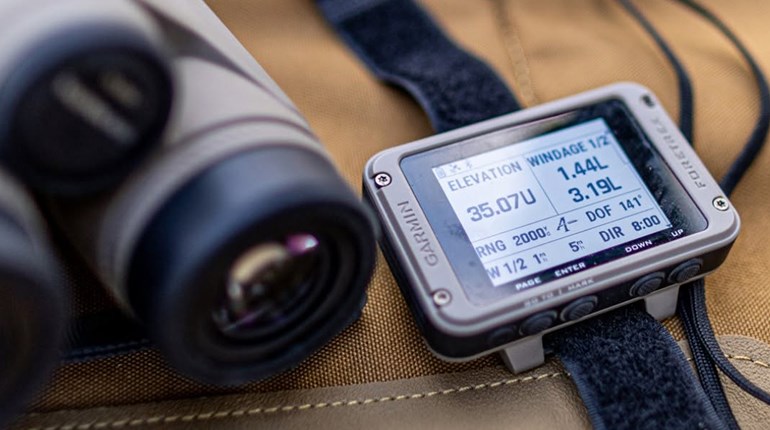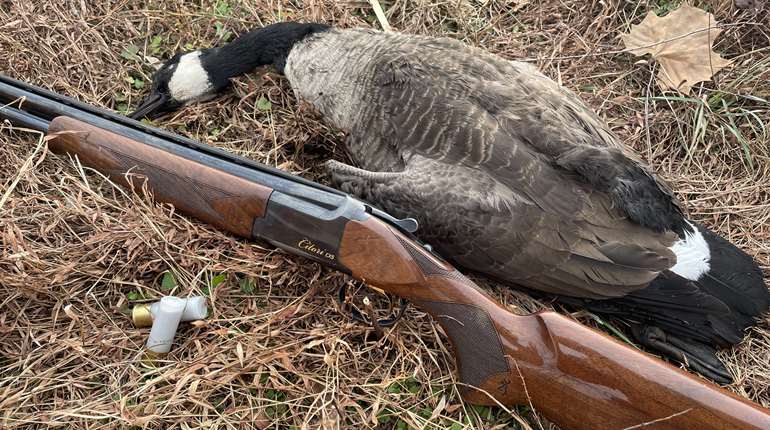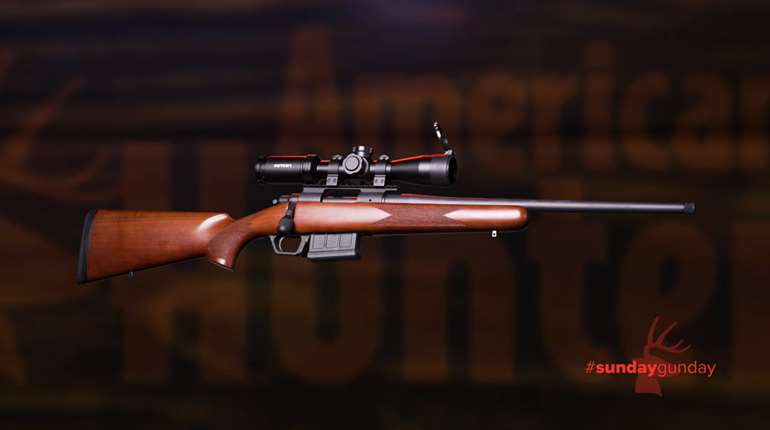
My rangefinder binocular came back with a solid reading of 603 yards after the third click. An ever-so-soft breath of wind glided across my left cheek, but not enough to drift the 180-grain CX bullet (hornady.com) I was about to send. I was convinced by the multiple readings and calmed my breathing as my reticle settled for the confirmed range. At the bottom of my exhale, I paused fleetingly and brushed the trigger just enough to fire the rifle. An instant later the clear clang of metal reverberated back to me from across my horse pasture. That shot concluded a half box of substantiation that any elk out to 600 yards was in trouble … unless hurricane winds were present of course.
Long range varies for individual shooters depending on your ZIP code, experience and equipment portfolio. For someone from the forests of Appalachia, long range could be 200 yards. For someone from the Great Plains of Oklahoma, it could extend well past 500 yards. Forget about everyone else and worry about you. What’s your long-range limit?
The Ethics of Long Range
The main purpose to determine your accurate long-range shooting ability involves ethical reasons. Game requires your best shot at a clean, ethical, lawful and speedy end. By hitting the shooting range you establish where you can consistently land a bullet beyond the norm. You also need to take into consideration the energy delivered at long range. A common calculation accepted by most is that a bullet should deliver a minimum of about 1,000 ft.-lbs. of energy when it meets up with its quarry. As a bullet flies longer distances it slows, and when it slows it lessens in the amount of foot-pounds it can deliver. Smaller calibers and lighter bullets generally cannot meet this requirement. Just compare a .243 Winchester shooting a 95-grain bullet to a .300 Winchester Magnum shooting a 180-grain bullet. At 500 yards the latter still hits with more than 1,600 ft.-lbs. while the .243 barely exceeds 800 ft.-lbs. So just because you hear the metal clang at 500 yards does not equal an efficient kill at 500 yards. Do the math.
The long-range shooting trend even has state legislatures talking—more reason to determine your ethical shooting distance. A year ago, members of the Wyoming legislature’s Travel, Recreation, Wildlife and Cultural Resources Committee discussed long-range shooting and noted growing concerns due to a handful of reports coming from the field of more and more hunters taking extended-range shots, some of which were questionable.
Starter Kit
With a rifle zeroed at 100 or 200 yards, your choice, it’s time to hit the range. For most hunters that equals researching shooting ranges nearby that offer targets beyond the average 100- to 300-yard distances. Luckily, many shooting ranges have seen the need to expand their distances not only for members hoping to push the limits with technological upgrades to their rifles but also for long-range shooting competitions. A community of shooters has sprung up to gather for scheduled shooting matches along with the camaraderie.
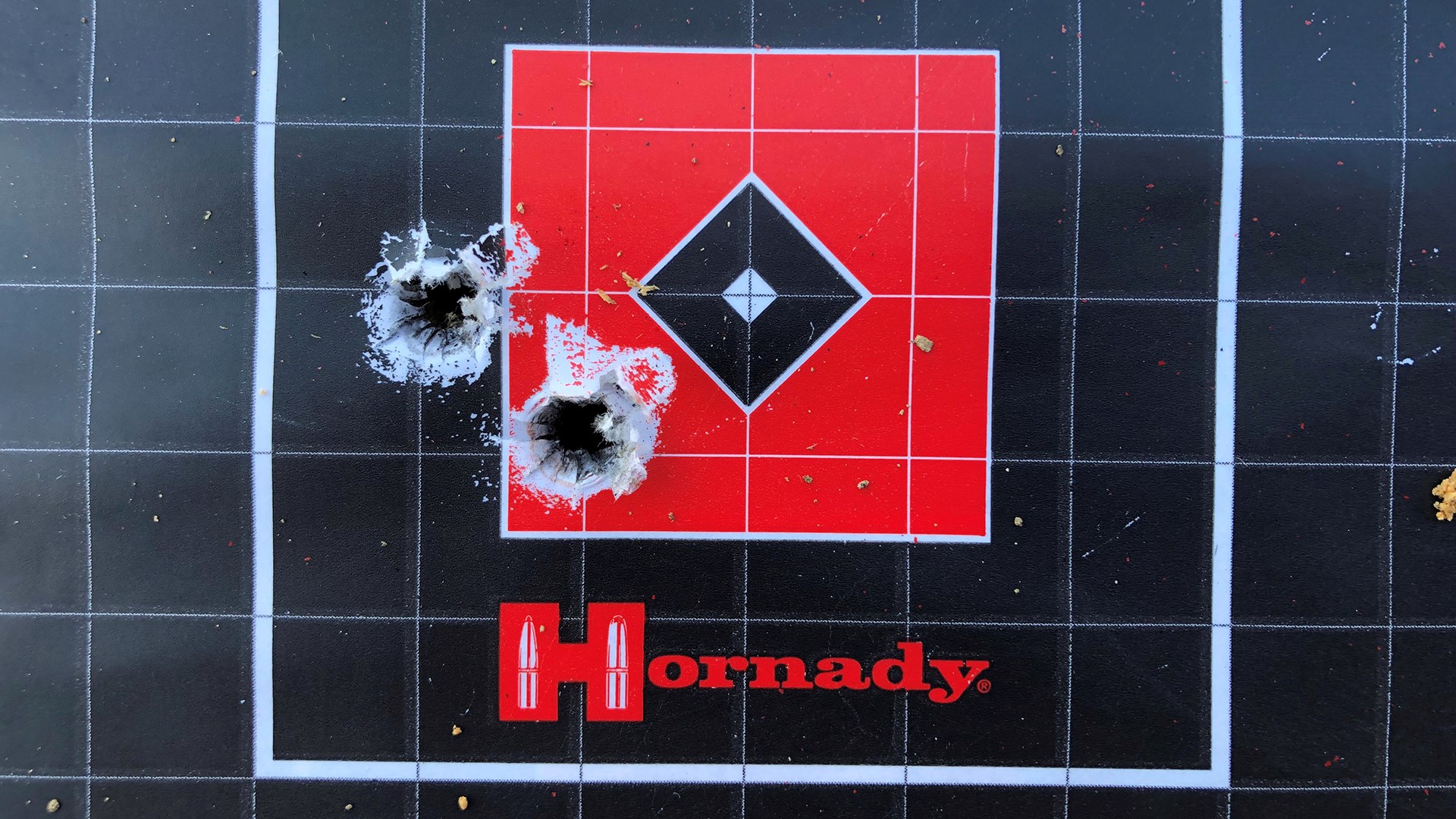
Before you join the tribe, you need to test your skills. Begin with testing groups at your comfortable shooting distance, whether it be 200 or 400 yards, and then expand. You can measure success in inches or by landing your bullets in the estimated vital zone of your target. As a rule of thumb, a rifle grouping its bullets at 1 inch or less at 100 yards should expand that group with a basic formula. In general, that same rifle should group 2 inches at 200 yards and 3 inches at 300 yards, and so forth. If you can maintain that statistical accuracy out to 600 yards or beyond, you’re on the way to determining your long-range limit.
As noted, you can also use targets that replicate the vital size of your game species. Pie-plate-sized targets work well for deer while an oblong cutout of approximately 24 inches approximates the vital zone of an elk. For coyotes, trim down that vital zone considerably to an oblong shape of roughly 5 inches.
After a few confidence-building sessions at the manicured range, it never hurts to leave the shooting bench behind and visit the real world. A friend’s pasture or public land that allows recreational shooting both offer landscapes for responsible shooting tests. Set out your targets at random ranges, some barely visible, and test yourself. Brisk winds, uncomfortable positions, impromptu shooting rests (over a backpack) and your buddy panickily faking that the trophy is about to escape all help you refine and finalize the distance where you need to stop shooting at a live target. Police the area afterwards for any litter.
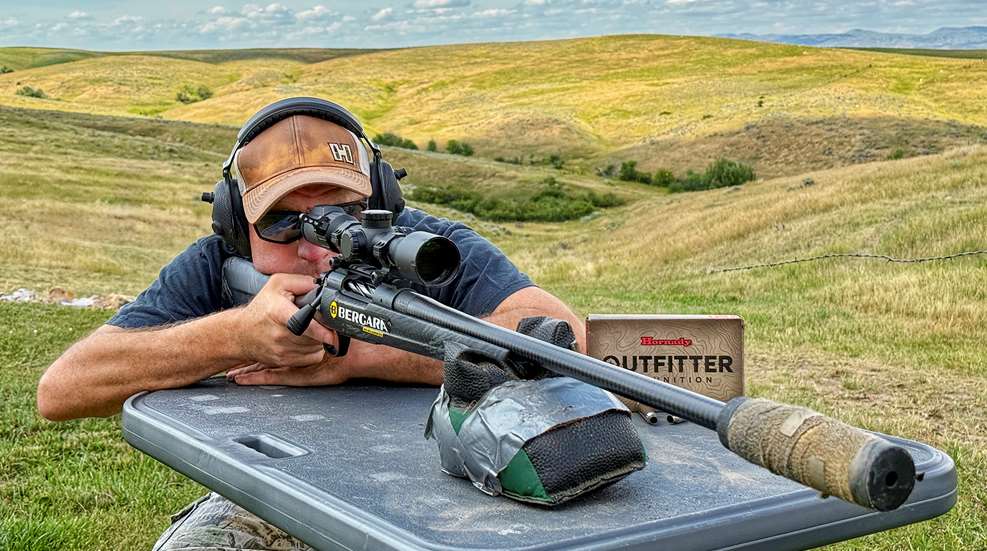
My real-world shooting range is my horse pasture strewn with vital-sized metal targets ranging from 200 yards to slightly beyond 600 yards. A Caldwell shooting bench offers footing with a tabletop setting of sandbags, or I may improvise prone right next to it. A fence post a few steps away gives me a backrest to work on solid sitting shooting foundations. Few sounds are as gratifying as the ringing of metal beyond 400 yards.
Hone that Skill
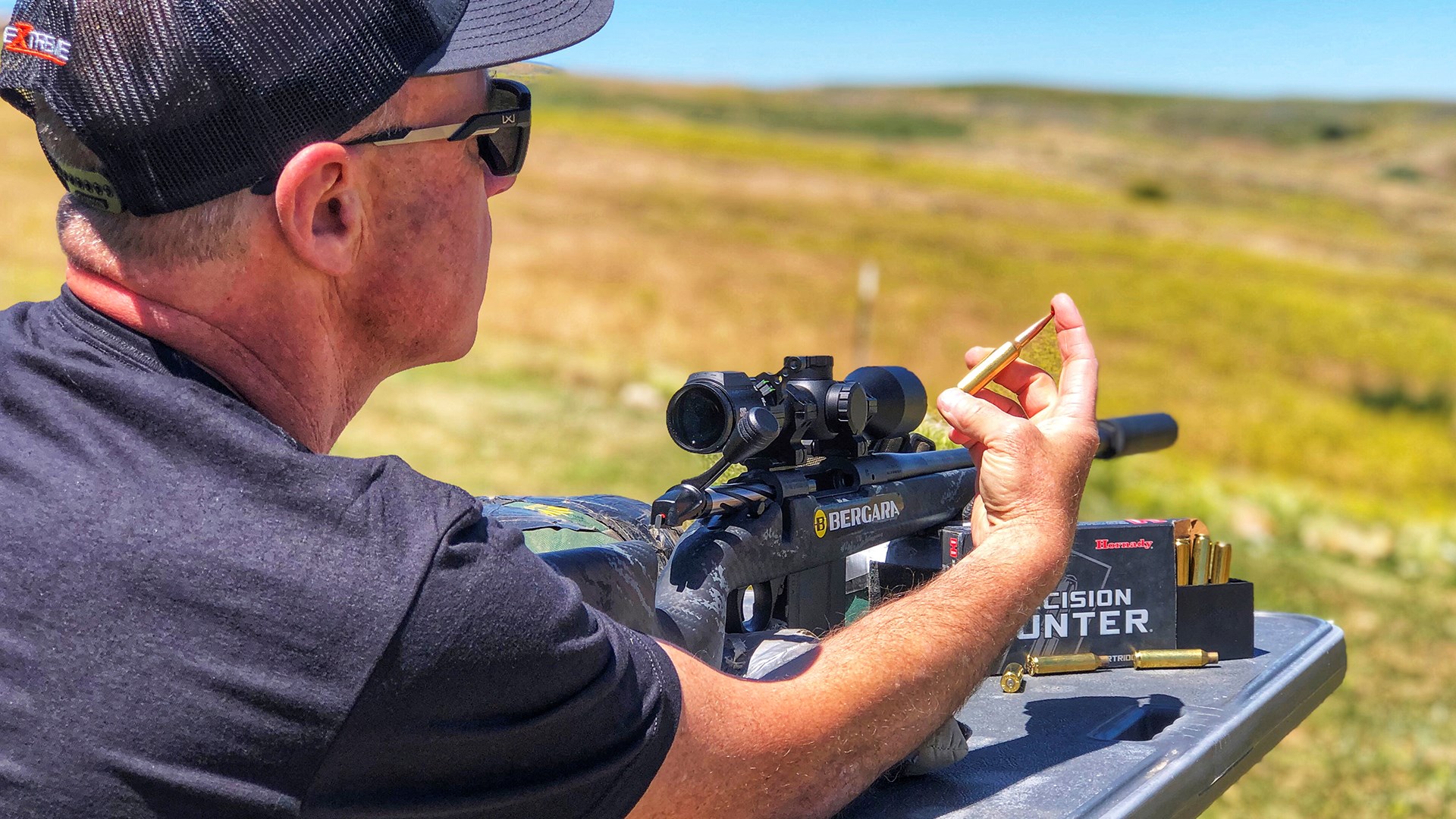
If the long-range bug really bites, you may want to consider summer school. Long-range educational shooting courses have sprung up from coast to coast. Some are taught by retired military service members. Others are taught by connoisseurs of the crosshairs who have perfected their skills. Several years ago, I attended the Bergara Academy in central Montana that provides classroom and field training to extend your shooting distance with the proper skills. To this day I put many of the principles I learned to use there while I focus on targets downrange.
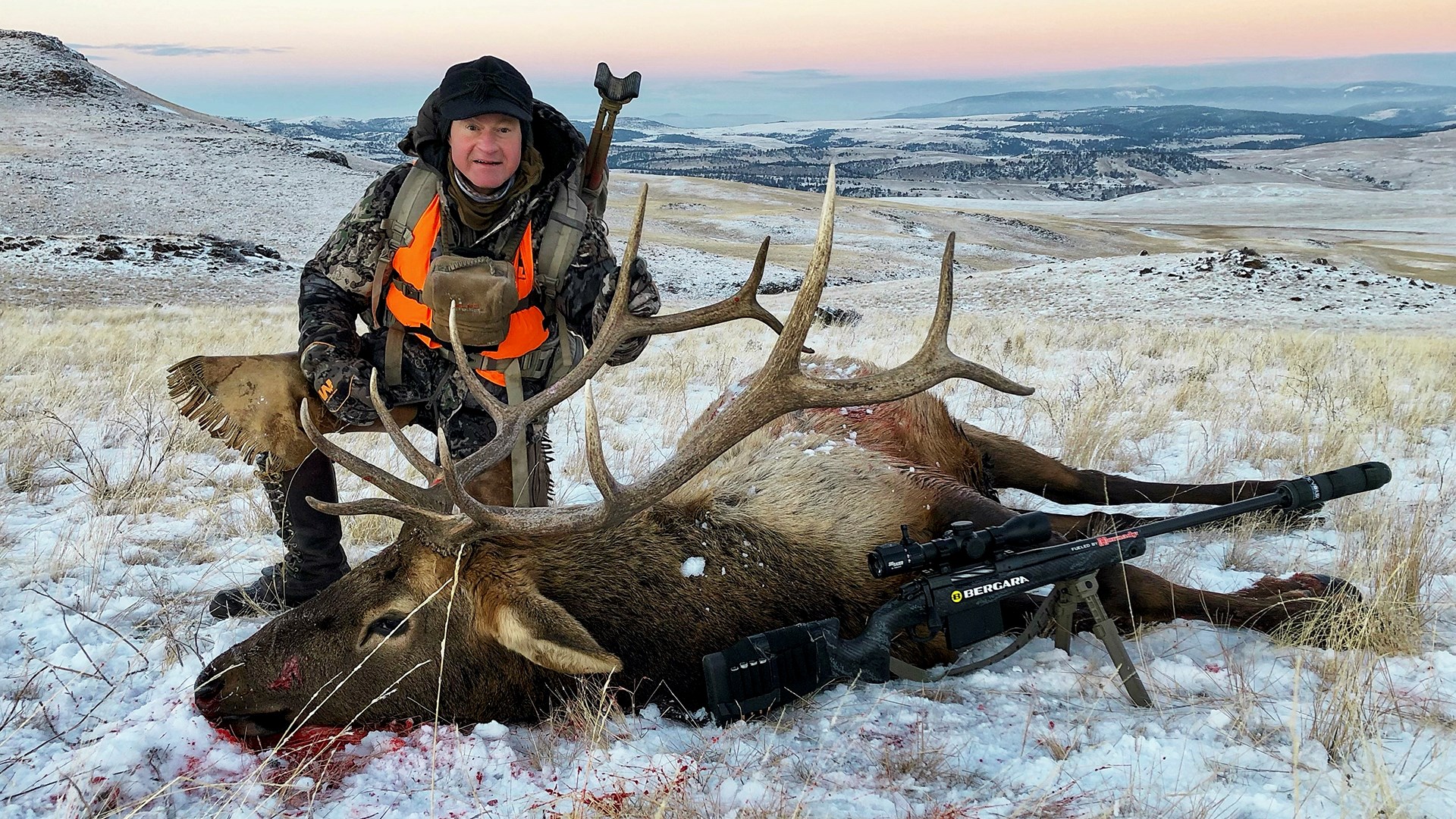 The author shot this bull elk, right, at more than 500 yards, but only after building long-range confidence by practicing in his pasture back home. When hunting at longer ranges, larger calibers with heavier bullets, like the .300 Win. Mag., will deliver the energy needed for ethical kills.
Now Use Common Sense
Lastly, follow a credo: a little common sense goes a long way. Even though a bullet gets to its target exponentially faster than an arrow, it still does not arrive immediately. Animals may take a step, twist or even begin bedding by the time a bullet leaves the end of your barrel and rockets to 500 yards. Yes, the time to impact may be a second or less. With that in mind, reach for something on your desk and you will see how much movement you can get away with in the blink of an eye.
And if the weather turns windy or visibility fades, long-range efforts may be hampered despite your personal distance restrictions. Fog, rain or snow can make acquiring a defined target next to impossible. Wind, especially erratic gusts, throw all your calculations out the window. Attempting to judge wind drift with a steady breeze is doable, and hunting apps like HuntStand can help you with hourly wind forecasts. But trying to shoot through gusts blowing across a wide canyon expanse is like pulling the handle of a Vegas slot machine. The odds decrease for clean hits and increase dramatically for wounding. Hold off on the shot. It’s common sense that will keep those aforementioned legislators or game commissioners out of your hunt as well.
A dedicated summer shooting schedule to find your consistent long-range shooting limit makes sense. You do not want to guess-and-by-golly it when the buck or bull of a lifetime steps into the clear this fall.