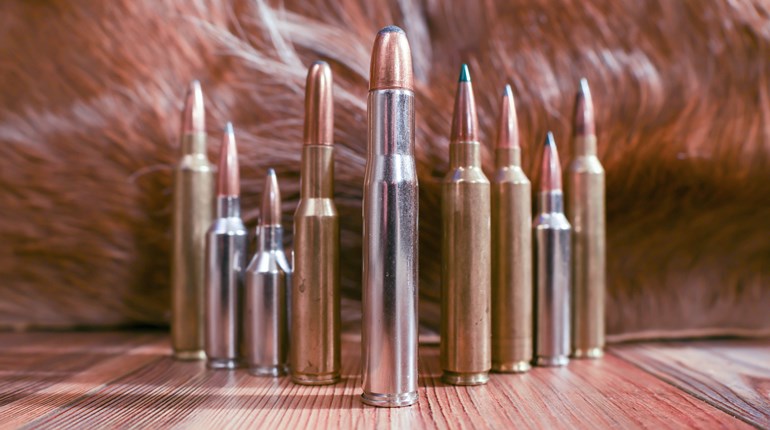
I don’t think any bore diameter is as American as our beloved .30 caliber, and the magnum-class .30-caliber cartridges seem to be especially endeared. The bore diameter neatly handles almost all of our game animals here in North America, and with bullets of modern design, the .30-caliber magnums are certainly capable of excellent long-range performance as a target cartridge.
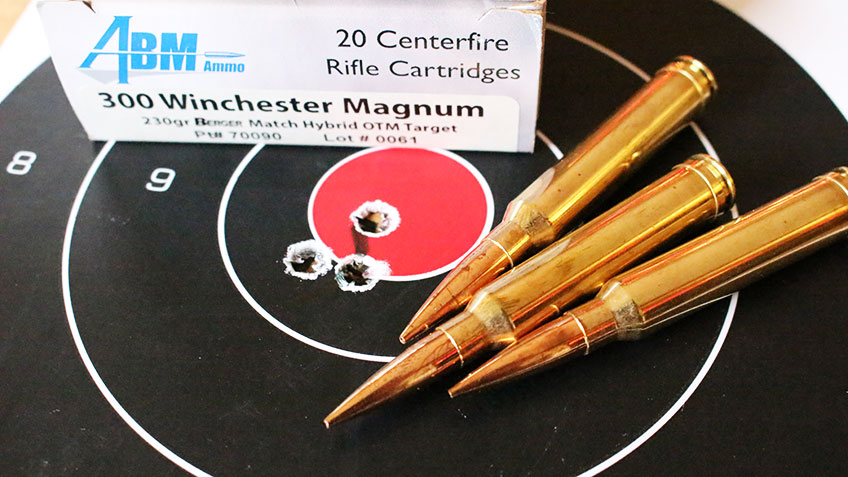
Not that the concept of a magnum-class .30-caliber is new or unique; in fact, we have over a dozen .30-caliber magnums on the market before Hornady announced the release of the .300 PRC, or Precision Rifle Cartridge. We’ve got short magnums, long magnums and everything in between, but at the top of the heap—as far as sales are concerned—is the .300 Winchester Magnum; it has been adopted by military snipers, it has been all over the globe in the hands of hunters (including this author), and it makes an excellent choice for those wishing to ring distant steel. Let’s compare the two, in order to gauge how the .300 PRC will stack up against the best-known .300 Magnum.
The .300 PRC is based on the beltless .375 Ruger, itself a sound design. This one is a bit different, as the goal with the .300 PRC is to be able to maintain case capacity while loading the sleek, long-ogive bullets. At 2.58 inches long, with a .532-inch case head diameter—the standard Holland & Holland Magnum case head dimension—there is plenty of case capacity, but with an overall length of between 3.575 inches and 3.700 inches, the cartridge is going to call for a magnum-length receiver. And while the .300 PRC factory loads from Hornady indicate that the new cartridge will nearly equal the performance of the .300 Weatherby Magnum, the fact that the powder column is not compromised by a longer bullet seated well into the case was a big part of Hornady’s design.
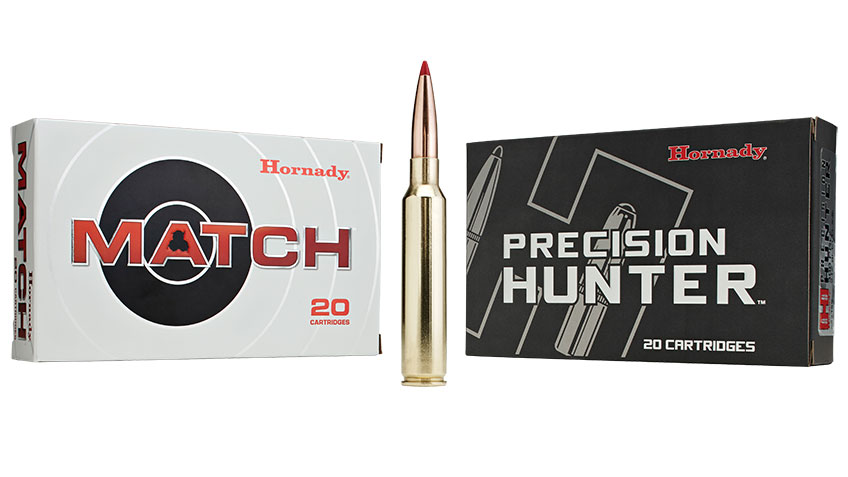
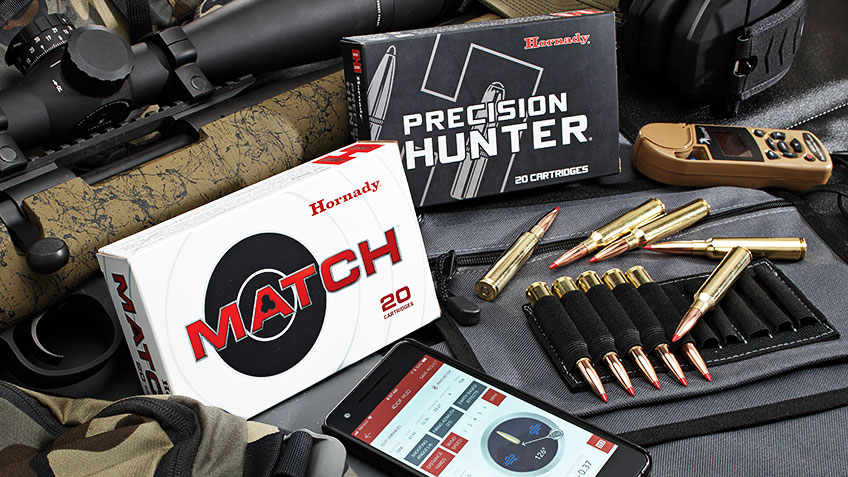
They’ve used a 30-degree shoulder for headspacing, which according to Hornady aids in improved chamber alignment and feeding from a fixed box magazine. Hornady has two loads on the market for the .300 PRC: a 225-grain ELD Match load at a muzzle velocity of 2810 fps and a 212-grain ELD X hunting load at a muzzle velocity of 2860 fps; this pair will handle both long-range target shooting and hunting duties for all game up to brown bear, Cape buffalo, hippopotamus and elephant. This pair of bullets have very high B.C. values—a G1 .777 and a G7 .391 for the 225-grain ELD Match and a G1 .673 and G7 .336 for the 212-grain ELD X—and a corresponding long ogive. While these attributes are crucial to downrange performance, seating them properly in a cartridge case requires a bit of room; they’re so long that they’re not offered in the .300 Winchester Magnum case.
That .300 Winchester Magnum—which has accompanied me on more hunts than I can remember, in a number of countries—is designed for use in a long-action receiver, and as Winchester pushed the shoulder forward and shortened the neck in order to increase case capacity, the overall length limits bullet length outside the case. While the classic, belted .300 Winchester has certainly proved itself on the target range, in the hunting fields and on the battlefield, for what defines our modern idea of long-range shooting, it does have a bit of a handicap. As the ogive of a bullet gets longer, it must be seated further into the .300’s case, and if the case mouth isn’t positioned on the shank of the bullet, things simply won’t work out. If the .300 Winchester were given a magnum-length receiver, where a longer bullet could be seated properly, it could utilize these longer bullets without issue.
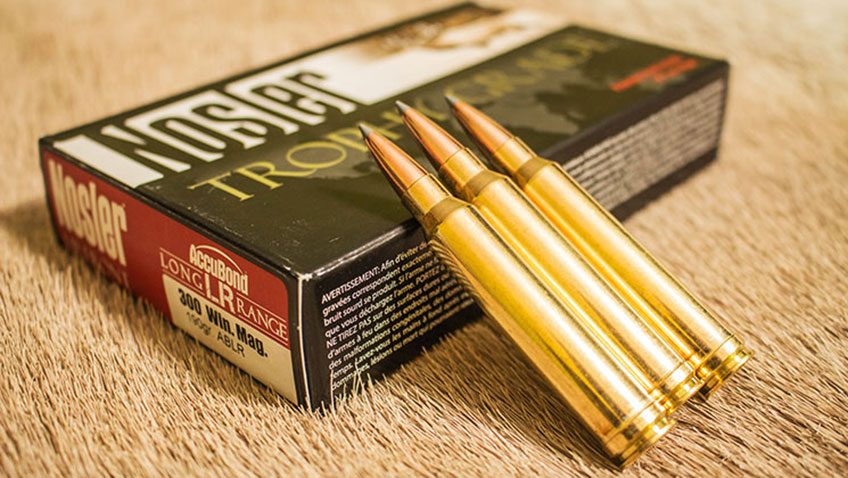
So, it begs to question whether or not the new .300 PRC will steal the thunder of the .300 Win. Mag., or become just another .300 magnum in the herd. Personally, I think only time will tell. The .300 Win. Mag.—which has been with us since 1963—has as a firm hold on the market, and in all sincerity it handles a good number of situations very well. The .300 Norma Magnum is also another cartridge which offers some excellent long-range ballistics, and has grabbed the attention of the U.S. Army. Is the 300 PRC unique enough to establish itself? I think that Hornady and its highly experienced team of ballisticians know well enough how saturated the market is, as well as understanding the needs of the long-range community.
I believe there is room for both cartridges, as I can confidently say that the .300 Winchester Magnum isn’t going anywhere in the near future, but the long-range trajectory of the higher B.C. .30-caliber bullets is definitely attractive. I feel that those long-range shooters who want to employ that level of performance will have to embrace a cartridge like the .300 PRC or the .300 Norma Magnum, so it may very well come down to a battle of marketing. For the hunter—within sane hunting ranges—the benefits of the higher velocity and higher B.C. bullets of the .300 PRC design may not show a dramatic increase in performance, but certainly will for those interested in long-range targets.
In the end, I think that the .300 Winchester will maintain its edge among hunters, based on 55 years of smiling hunters alone. There are many .300 magnums on the market, and while I definitely see the wisdom of the PRC concept, it’s going to be very difficult to change the mind of a generation that has embraced the term “.300 Magnum” to mean the Winchester design. However, Hornady has changed minds in the past—think about the 6.5 Creedmoor—and may just do so again. The Department of Defense has just ordered a number of Barrett rifles chambered for the .300 PRC, so someone at the top certainly agrees with the potential of the new cartridge, but whether or not the hunting community will follow suit shall remain to be seen.
Looking for previous installments of our "Head to Head" series? We've got you covered.
• .30-06 Springfield vs. .270 Winchester
• 6.5 Creedmoor vs. 7mm-08 Remington
• 8x57 Mauser vs. .318 Westley Richards
• .358 Winchester vs. .350 Remington Magnum
• .22-250 Remington vs. .220 Swift
• .270 Winchester vs. .270 WSM
• .26 Nosler vs. 6.5-300 Weatherby Magnum
• .458 Win. Mag. vs. .458 Lott
• 7mm Rem. Mag. vs. .300 Win. Mag.
• .243 Winchester vs. 6mm Remington
• 7x57mm Mauser vs. 7mm-08 Remington
• .25-06 Remington vs. .257 Weatherby Magnum
• .338 Winchester vs. .375 H&H Magnum
• .30-30 Winchester vs. .35 Remington
• .257 Roberts vs. .250-3000 Savage
• .270 Winchester vs. .280 Remington
• .35 Whelen vs. 9.3x62mm Mauser
• .416 Rigby vs. .416 Remington Magnum
• .308 Winchester vs. .30-06 Springfield
• .22 Nosler vs. .224 Valkyrie
• .300 Win. Mag. vs. .300 WSM
• .223 Remington vs. .22-250 Remington