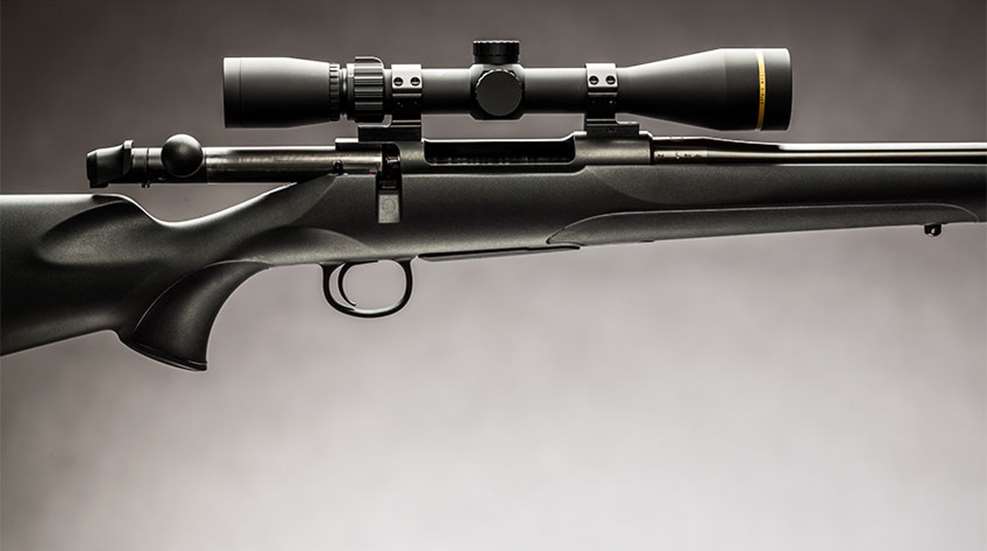
Funny. When Ruger introduced its American Rifle a few years ago, I didn’t hear complaints that “this isn’t a Ruger.” But Mauser’s new M18 bolt-action brought immediate howls from several quarters: “This is not—not—a Mauser! Plastic abomination! Foul!”

What the howlers meant, of course, was the rifle isn’t a Mauser M98.
Of course it isn’t. The 2018 Ford Mustang isn’t a Ford Model A of 1903, either.
Good as the M98 was and still is, it remains and always will remain an 1898 state-of-the-art mechanical tool. In the eyes of fans, it might be the perfect bolt-action rifle, but that doesn’t mean rifle design, engineering and evolution must stop. That’s just not the way human tool-making works. We are creative, inventive people, always trying new designs, new materials, and new applications of those designs and materials. The result, in the case of the Mauser M18, is a functional, reliable, accurate bolt-action rifle with an MSRP of $699—about 10 times less than a current-production M98.
Who’s going to howl about that? You must admit, the M18 at this price with an MOA accuracy guarantee is at least as remarkable an achievement as Paul Mauser’s perfection of the M98.
We don’t get controlled-round feeding with the M18, but how many of us are hunting man-eating lions on a regular basis? For that matter, how many of us have suffered the “horrors” of a push-feed action failing? I’ve run them, the M18 included, upside down, sideways, fast and slow, and have yet to have one fail to feed. Yes, if I don’t close the bolt before pulling it back, the round will remain in the chamber because the extractor hook hasn’t engaged. That’s the nature of the push feed, and it’s been functioning smoothly, taking game and winning precision shooting competitions since at least 1860, when the push-feed Henry repeating rifle hit the market.
Of course, if you insist on controlled-round feeding or a heavy, classic, walnut-stocked rifle with all the safety features incorporated in the Mauser M98, unlimber your bank account and buy one. If you want a Mauser that’s more affordable, look to the M18, what Mauser calls the “Volksrifle”—the People’s Rifle—priced within reach of the typical working man and woman.
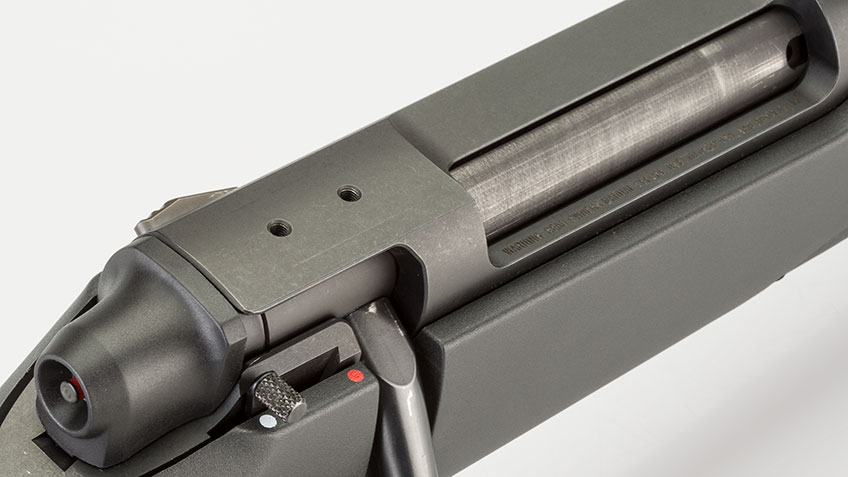
Mauser kept the price down on this rifle by incorporating “circle of concentricity” manufacturing techniques. (Remington used this to good effect when it introduced its round-bottom action, the Model 721, in 1948. It continues in the Model 700.) The M18 action is turned on a lathe rather than milled, a less time-consuming and less expensive operation. Keeping the action, barrel and bolt concentric is more quickly accomplished on lathes, too.
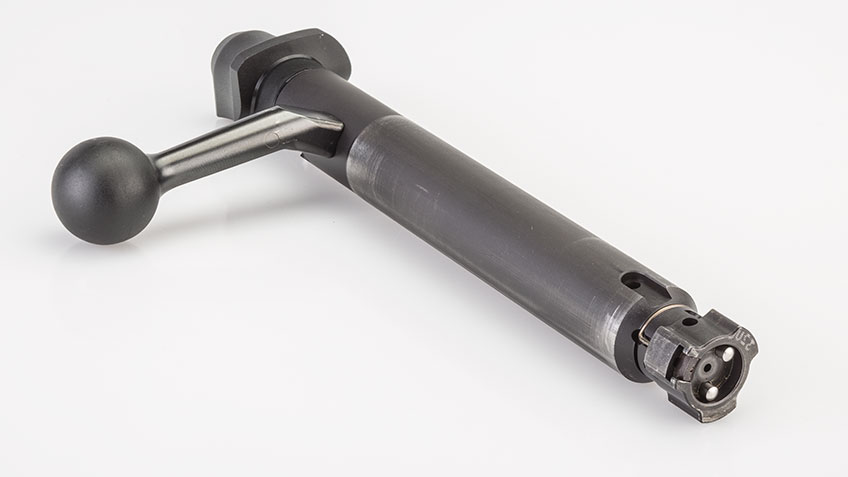
In addition to a round receiver, the M18 reduces manufacturing costs by using a full-diameter bolt body pushing three integral locking lugs. This eliminates the need to mill guide rails in the receiver body. It also results in a short, 60-degree lift. Common Remington Model 700 scope bases mount to the M18 receiver rings. The receiver is the same diameter in both standard and magnum chamberings, too, and all barrels come without sights—more cost savings.
Instead of adding a recoil lug between the barrel and stock ala the Model 700, Mauser seats a steel bar within the polymer stock and mates it to a simple groove milled into the bottom of the front receiver ring. Both the forward bedding screw and the rear tang screw are captured in the receiver, and they tighten to the stock within countersunk, round-bodied nuts.
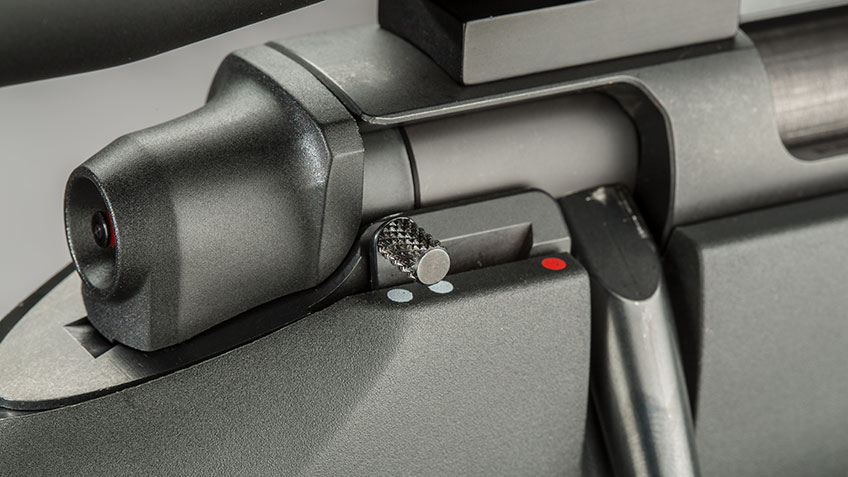
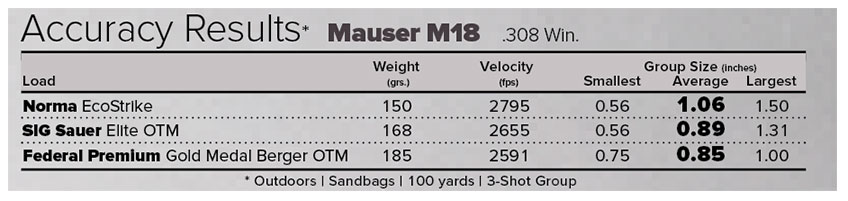
The rifle’s three-position safety blocks the trigger and locks the bolt handle when fully engaged, frees the handle for cycling rounds while still blocking the trigger in the middle position, and frees everything up for shooting when fully forward. The trigger of my test rifle broke between 2 and 2.5 pounds of pull with just a glimmer of creep before the break. This didn’t seem to interfere with the rifle’s ability to direct bullet after bullet inside 1 MOA with virtually any factory load I tried. My first three shots fell inside .5 MOA.
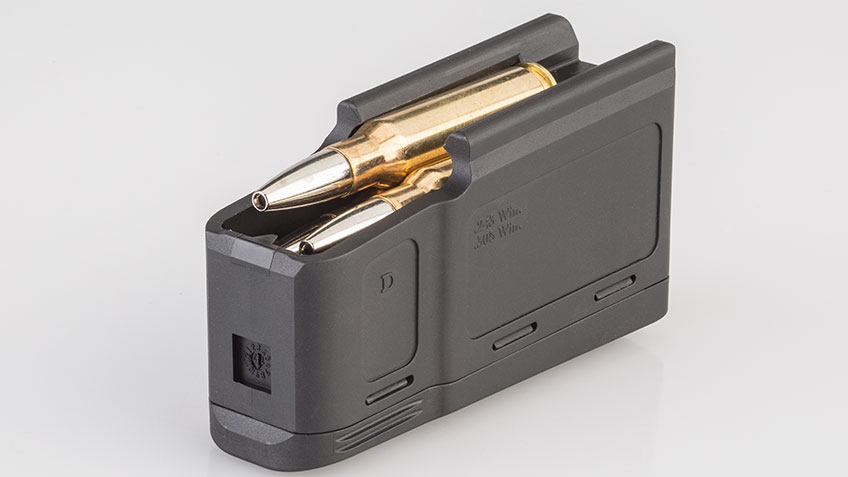
The M18 is currently offered in short- and standard-action chamberings, but again, they’re all in the same diameter and same length action. Drop-out polymer magazines hold five rounds in all chamberings, snap in and out with authority, function smoothly and precisely, and are blocked to hold .308 Win.-length cartridges. Cold-hammer-forged barrels are 22 inches long in standard chamberings, and 24.4 inches long in 7mm Rem. Mag. and .300 Win. Mag. rifles.
My test rifle in .308 Win. was one of the first on American shores. I fitted it with a Swarovski Z5 3.5X-18X-44mm scope in Talley rings. Quickly zeroed, the M18 immediately dropped three 170-grain Norma TipStrike bullets into a .5-MOA huddle. This precision didn’t seem to change in the muddy ex-pineapple fields of Lanai where rifle, scope and cartridges accounted for five spotted axis deer out to 310 yards.
A small thing I found objectionable in the M18 is what I call its zip sound. The bolt sliding in the action makes a distinctive zipping noise. My fingers sliding down the outside of the barrel make a similar, but softer, zip. I’m guessing the blued barrel was left unpolished to minimize glare, thus the slightly rough-feeling, zip-producing surface. The source of the bolt zip I’ve not been able to pinpoint.
A more serious complaint revolves around the bolt’s tendency to bind if I run it in panic mode, less than perfectly in-line with the action. With cartridges on board, the bolt has a tendency to balk or stop just as I’m turning it down for lockup. At first I thought headspace was a bit tight, but on further examination I suspect the dual, strong, spring-powered ejectors in the bolt face provide the resistance. Smoothly closing the action on a chambered round requires a strong hand and concentration.
For a black, polymer stock, the one on the M18 is stiffer than most. It’s nicely shaped in the American style with a straight comb, dual palm swell on the open-radius grip, and fairly slim, forward-tapering fore-end with a touch of tumblehome. Inserts under the fore-end and on the grip are neither the advertised “soft” nor tacky, yet they subtly and effectively enhance purchase, dry or wet. This was most welcomed during my hunt with High Adventure Company on Lanai, where rains were almost as common as deer. The 1-inch, black recoil pad snaps in and out of the hollow butt, opening storage space and suggesting length-of-pull options may become available.
This so-called plastic abomination stock, combined with the 8-pound rifle’s between-the-hands balance, makes the M18 handle and shoot like, well, like one heck of a well-built, affordable, 21st century Mauser.
Technical Specifications
• Type: bolt-action centerfire rifle
• Caliber: .243 Win., .308 Win. (tested), .270 Win., .30-06 Sprg., 7mm Rem. Mag., .300 Win. Mag.
• Barrel: 22″; cold-hammer-forged chrome-moly steel; 4 grooves, 1:11″ RH twist
• Magazine: detachable box; 5-rnd. capacity
• Trigger: single-stage, adjustable; 3.25-lb. pull weight
• Safety: three-position toggle
• Sights: none; receiver drilled and tapped for Remington Model 700-style bases
• Stock: straight-comb synthetic; LOP 14″; matte-black finish
• Metal Finish: gloss black
• Overall Length: 41.75″
• Weight: 6.4 lbs.
• MSRP: $699; mauser.com