“History repeats itself.” “Those who don’t study history are doomed to repeat it.” “History doesn’t repeat itself, but it rhymes.” These maxims reiterate a warning—the past serves to accurately predict the future. For anyone enamored by history, as well as drawing parallels, the similarities between past and present are often uncanny.
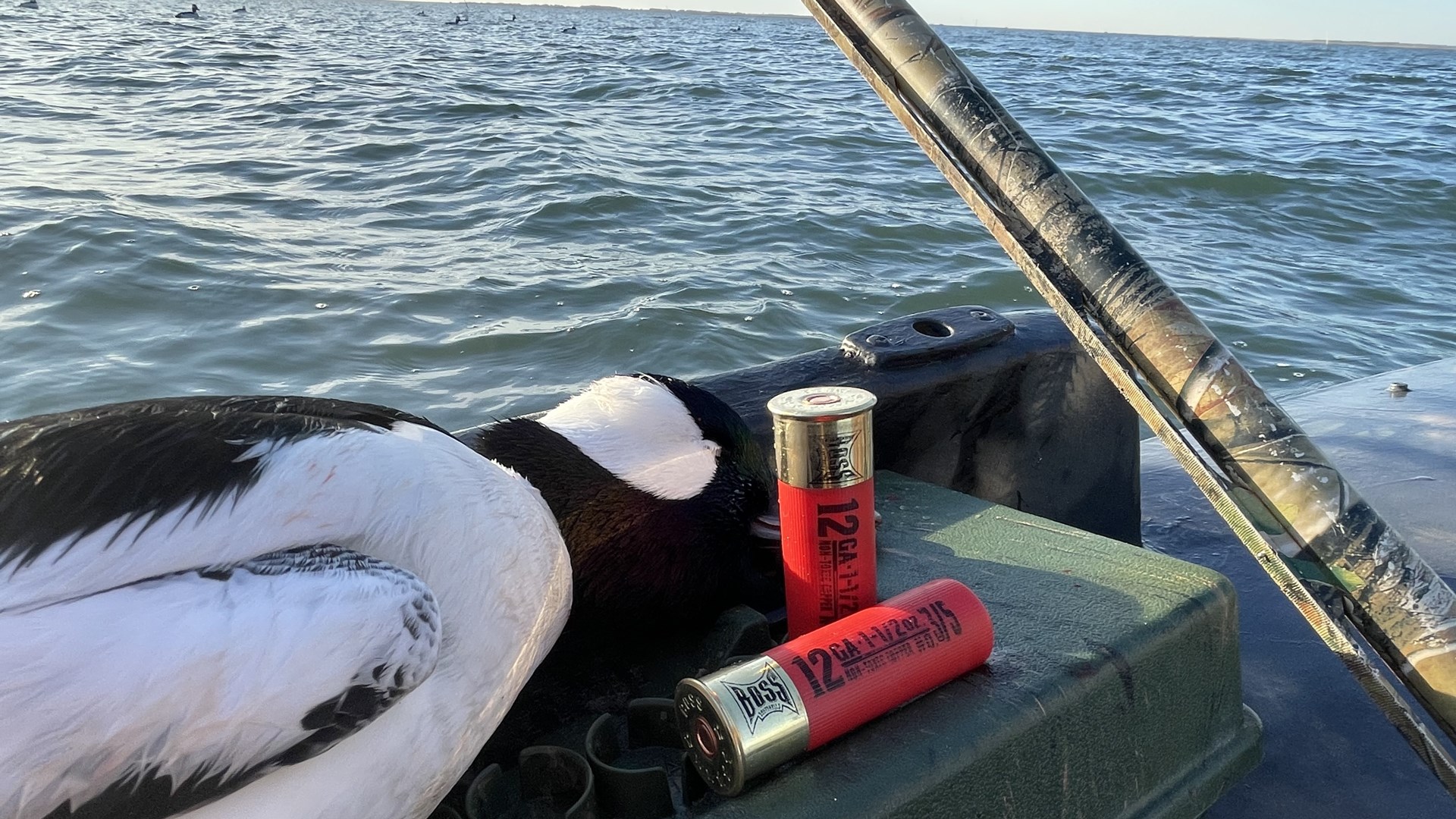
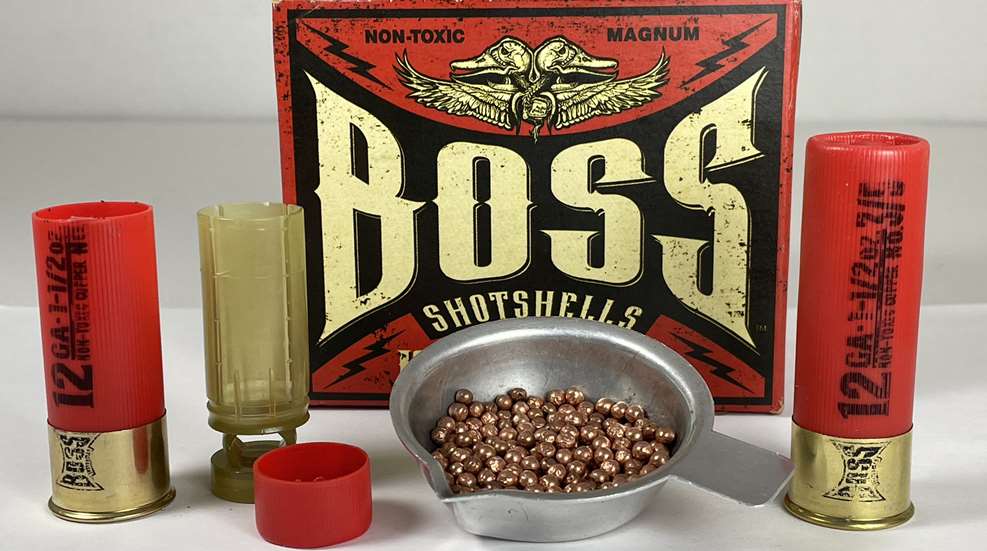
BOSS Shotshells is a perfect example. Founded in the late 2010s, BOSS’s founding shtick was direct-to-consumer, hard-hitting, copper-plated bismuth loads—a fruitful pairing. But, as history has shown, bismuth is an enchanting assassin. A siren song. It’s on-game performance is superb, but the brittle, non-toxic metal fluctuates wildly in price and availability. As did ammunition makers in the 1990s, these realities recently required BOSS to pivot, which it did nicely. As BOSS mentions on its website, “Bismuth is out. Copper is in.”
Before delving into the specifics of the company’s new offering, BOSS Copper, let’s reminisce about the end of the lead era, and what immediately followed it. After all, that’s where BOSS’s story really begins.
Finding a Suitable Alternative
As cited on the U.S. Fish & Wildlife Service’s website, fws.gov, “The ban on the use of lead shot for hunting waterfowl was phased-in starting with the 1987-1988 season.” In 1991, it became nationwide. Understandably, this left ammunition manufacturers scrambling to identify an alternative to the time-tested, pellet-making material. Given lead’s density of 11.34 g/cc, as well as its barrel-friendly malleability, safe substitutes were few, and none equal.
An early emergent was steel. Inexpensive and abundantly available, it seemed like an attractive alternative. Waterfowlers soon found otherwise. Steel’s relatively low density—about 7.85 g/cc—and the overladen, slow-moving payloads first on-scene proved to be cripplers—nothing more. As former slave, abolitionist, and civil right champion, Frederick Douglass, once wrote, “I never shall forget it whilst I remember any thing.” Perfectly said.
Companies would, in time, refine—via lighter, faster-moving loads, higher quality shot of suitable size and/or paired, and innovative wads—their steel loads to achieve the tolerable performance we have today. But immediately post-ban, that feat was far, far off. Waterfowlers were in a predicament.
Bismuth also came to light. This isn’t surprising, as bismuth is next to lead in the periodic table of elements. With a density of 9.78 g/cc, or about 86-percent as dense as lead, pellets made from the post-transition metal naturally approach the weight of those fashioned from lead—when diameter is identical, of course. What’s more, the metal’s “softness” made it safe for use in older, non-lined and fixed-choke barrels. Problem solved, right? Wrong.
Bismuth wasn’t without drawbacks. First, non-alloyed (or improperly proportioned) pellets tended to fracture during setback, while traversing the bore and choke, and/or when striking bone, thereby limiting penetration and opening patterns. Like early steel loads, those featuring bismuth pellets weren’t good, either.
What’s more, bismuth is pricey. As the 2015 Ballistic Products, Inc. The Advantages Manual, 9th Ed, stated, “The feasibility of bismuth as a shotshell pellet has slowly come to an economic halt. You will find that bismuth is harder hitting than steel. However, the economic realities of this material make it very difficult to make shotshell pellets.” Within a few years’ time of that statement, though, BOSS Shotshells would invalidate it.
Since the outset of the 1990s, there has been an unending attempt to approximate, then exceed, the downrange performance of lead. Tungsten was the key breakthrough. Its 19.3 g/cc density greatly exceeds that of lead, and thus extends a shotgunner’s reach. In recent decades, the extra-hard metal, which has the highest melting temperature, has been coupled with a witch’s brew of metals and/or polymers to fashion bird-dropping pellets. Here are a few: iron; nickel; bronze; copper; tin; polymer; fluoropolymer; and Nylon. Tungsten Super Shot, or TSS, offers the greatest density to-date; with a target density of 18.0-18.1 g/cc; it’s the most lethal pellet type, bar none.
Economic Realities
Early last year, I wrote an article titled, “Circling Back to Steel: Finding Lethality in Economical Shot,” which went live on this site on September 24, 2025. In it I detailed the quandary that beset ammunition makers and handloaders, such as myself, accustomed to using bismuth and tungsten-based shot. The signs were there.
Borrowing from that article, I revealed, “According to the U.S. Geological Survey’s ‘Mineral Commodity Summaries, January 2024,’ ‘The U.S. ceased production of primary refined bismuth in 1997 and is highly import reliant. Bismuth is contained in some lead ores mined domestically. However, the last domestic primary lead smelter closed yearend 2013; since then, all lead concentrates have been exported for smelting.’”
Why does this matter? The overwhelming majority of the world’s tungsten and bismuth exports come from China. It’s widely reported that China produces more than 80-percent of the worldwide supplies of both metals, and between a deteriorating relationship, tariffs and China’s strict, self-imposed export restrictions (as of early 2025), prices have spiked. Obviously this negatively affected companies such as BOSS Shotshells, which relied on bismuth.
Sure, BOSS had Steel Reserve, a line of shotshells featuring copper-plated steel shot, but it understands—and even openly acknowledge—its limitations. In fact, on its website the company states, “Steel always has been and always will be range limited. Steel Reserve by BOSS has been specifically engineered to suit not only the budget minded hunter but also those that seldom shoot beyond 30 yards.” Clearly, a ballistically superior counterpart was needed, and the company understood in early 2025, tungsten and bismuth were now off the table. For a company that reportedly consumed 50 percent of the total bismuth available in the U.S., that was a crushing blow.
BOSS Copper
When it comes to shot-making, copper has long been alloyed with other metals, as well as used to plate them for enhanced hardness and penetration. But, as a standalone material, I’m unaware of it previously being used in the United States in such a manner. In Europe, yes, but on a small scale. That being said, it’s a logical choice. Why?
Found between nickel and zinc in the periodic table, non-toxic copper has a density of 8.93 to 8.96 g/cc, depending on the source consulted. That places its density about halfway between steel and lead, as well as splits the difference between those steel and bismuth, too, though it’s close to the latter. BOSS reports it’s 94-percent as dense. Therefore, it maintains its energy better (and further) than steel, and is practically on-par with bismuth.
BOSS’s American-sourced, corrosion-inhibited copper pellets sidesteps China’s influence, is tariff-free and supply stable, and the malleable shot—said to be three times harder than bismuth—is safe for use in older shotguns and those featuring fixed chokes. Fragmentation is a non-concern with copper, thus leading to deep penetration during testing. Audiovisual evidence of this can be found in BOSS’s YouTube video entitled, “BOSS Shotshells-BOSS Copper Shot Ballistic Gel.” When fired from 40 yards, No. 5 copper shot penetrated three inches in the clear ballistics gel substitute, and No. 3s went one inch deeper. Said performance mimicked that from bismuth, which was fired concurrently.
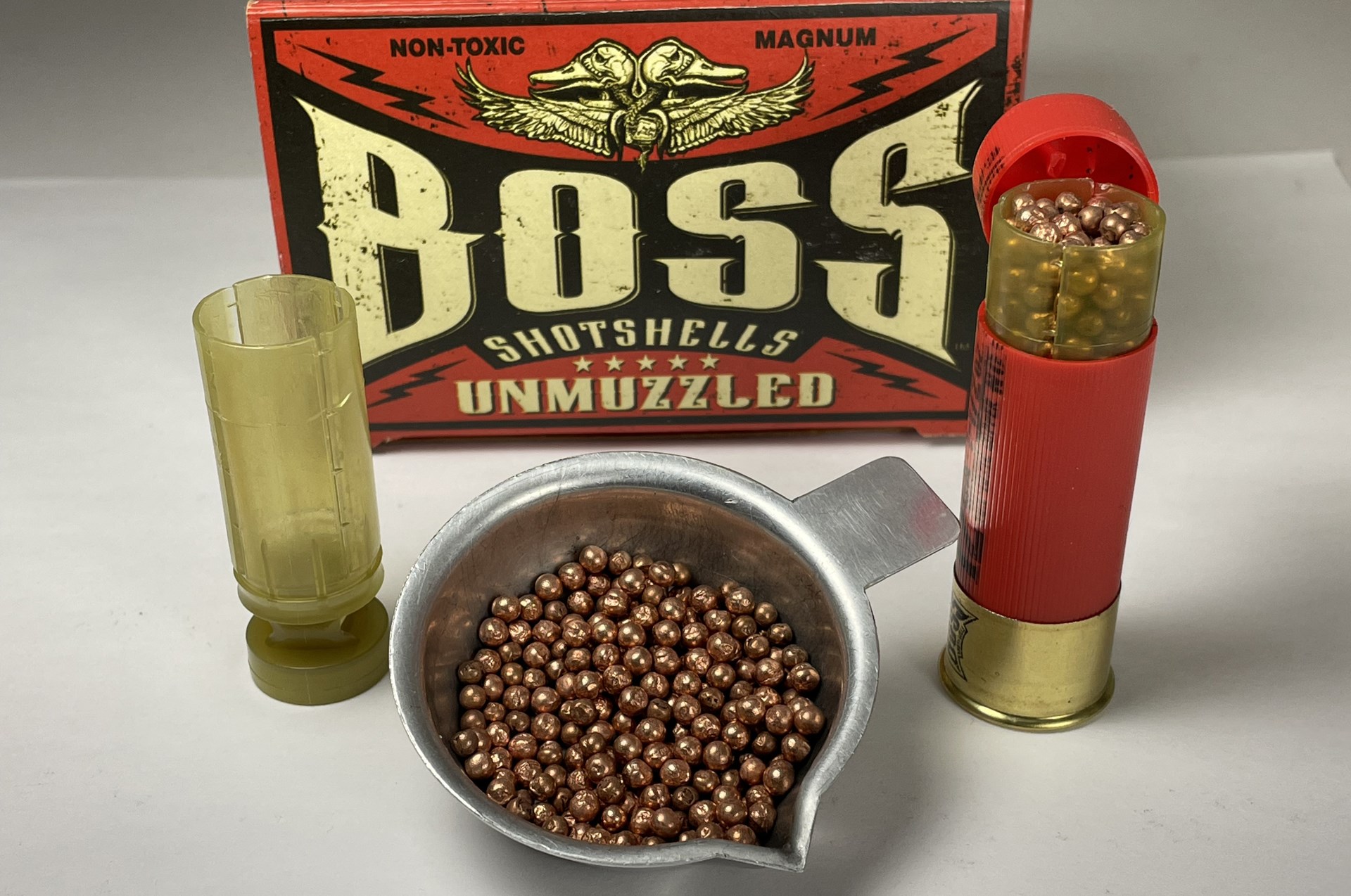
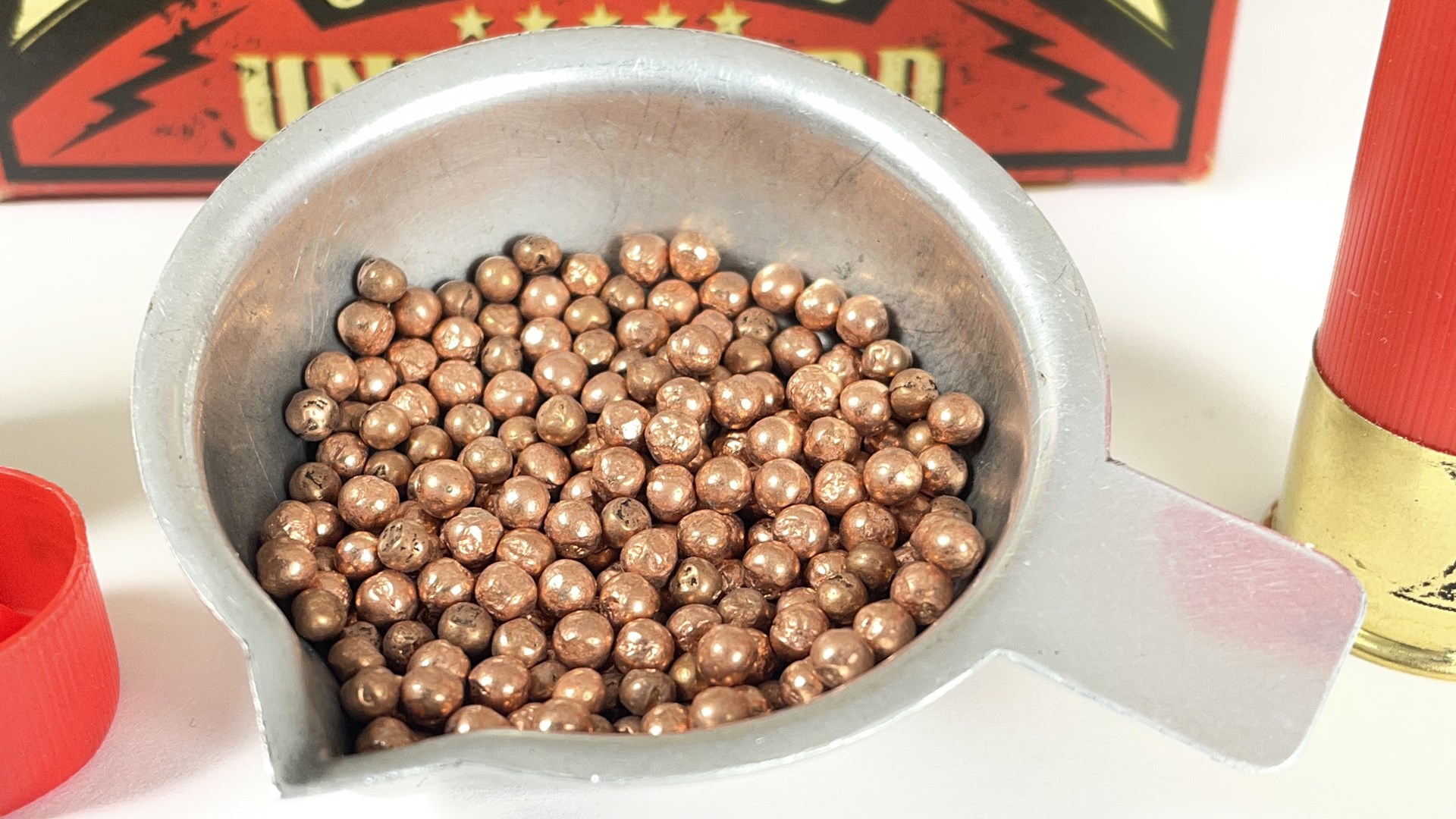
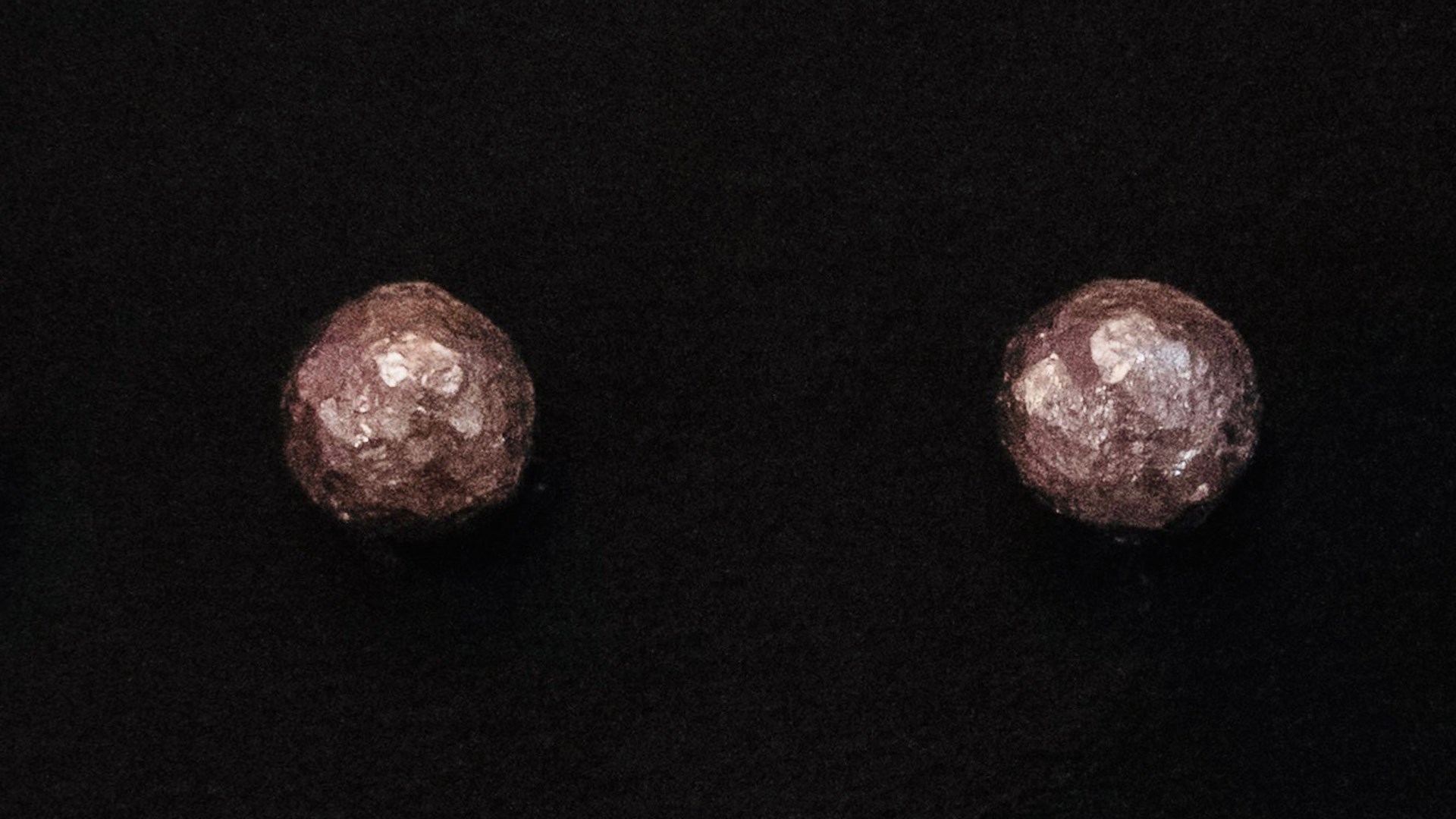
Manufactured in accordance with USFWS Non-Toxic Shots requirements, dissecting several BOSS Copper 3-inch, 1½-ounce shells chock full of No. 3 and 5s revealed that the copper shot isn’t as spherical or refined as was the company’s plated bismuth pellets; in fact, they’re reminiscent of those found in early bismuth loads. Indentions, flat-sections, and general roughness are omnipresent. Why? It’s the result of the unique, pellet-making method that BOSS employs. But, if we’ve learned anything about pellet shape, particularly from odd-shaped tungsten, it’s that excellent patterns can still be experienced.
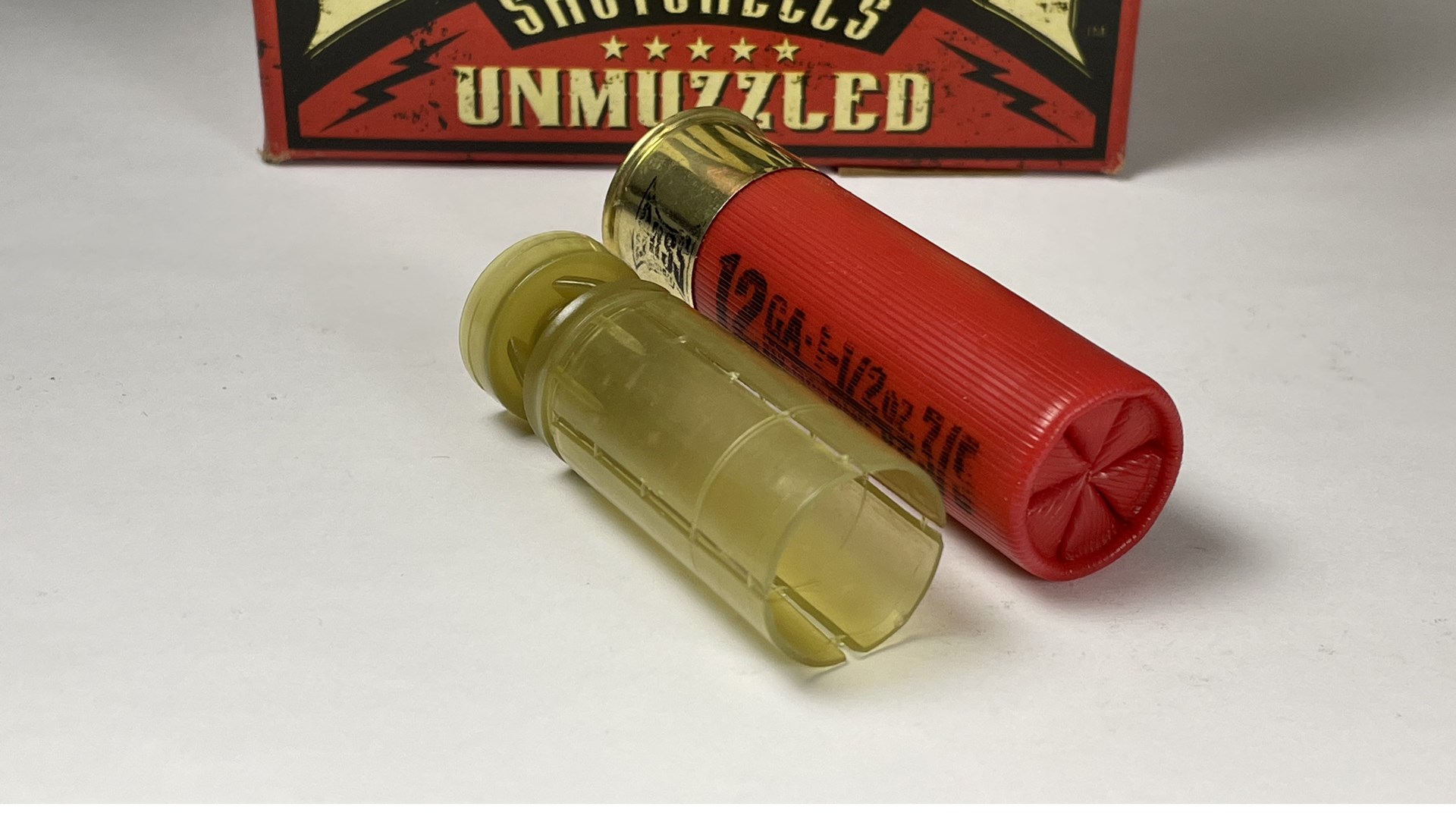
At least in the load evaluated, BOSS loads its copper shot in stitched, flexible, semi-transparent, bio-engineered wads. It has four petals and a crush section. Outside of .410-bore and 10-gauge wads, the rest are made in-house. Par for the course, the fold crimps are flawless.
Evaluating BOSS Copper
Unfortunately, my BOSS Copper shells arrived after Virginia’s September Canada Goose season, and between travel, an-ongoing drought (which practically drained the impoundment that I hunt), and other commitments, my first opportunity to evaluate them on game came in the days preceding Christmas. But first came some range work.
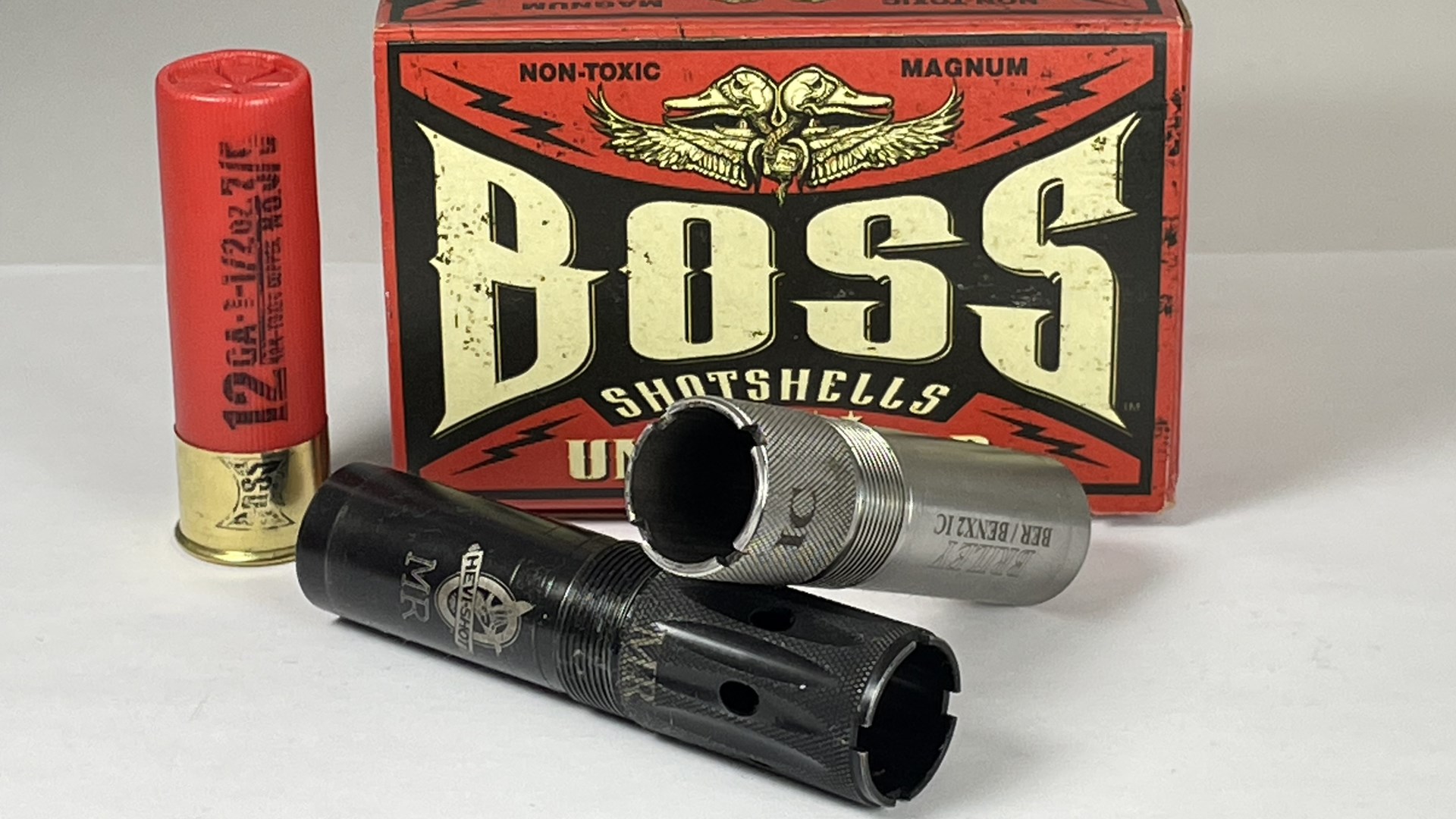
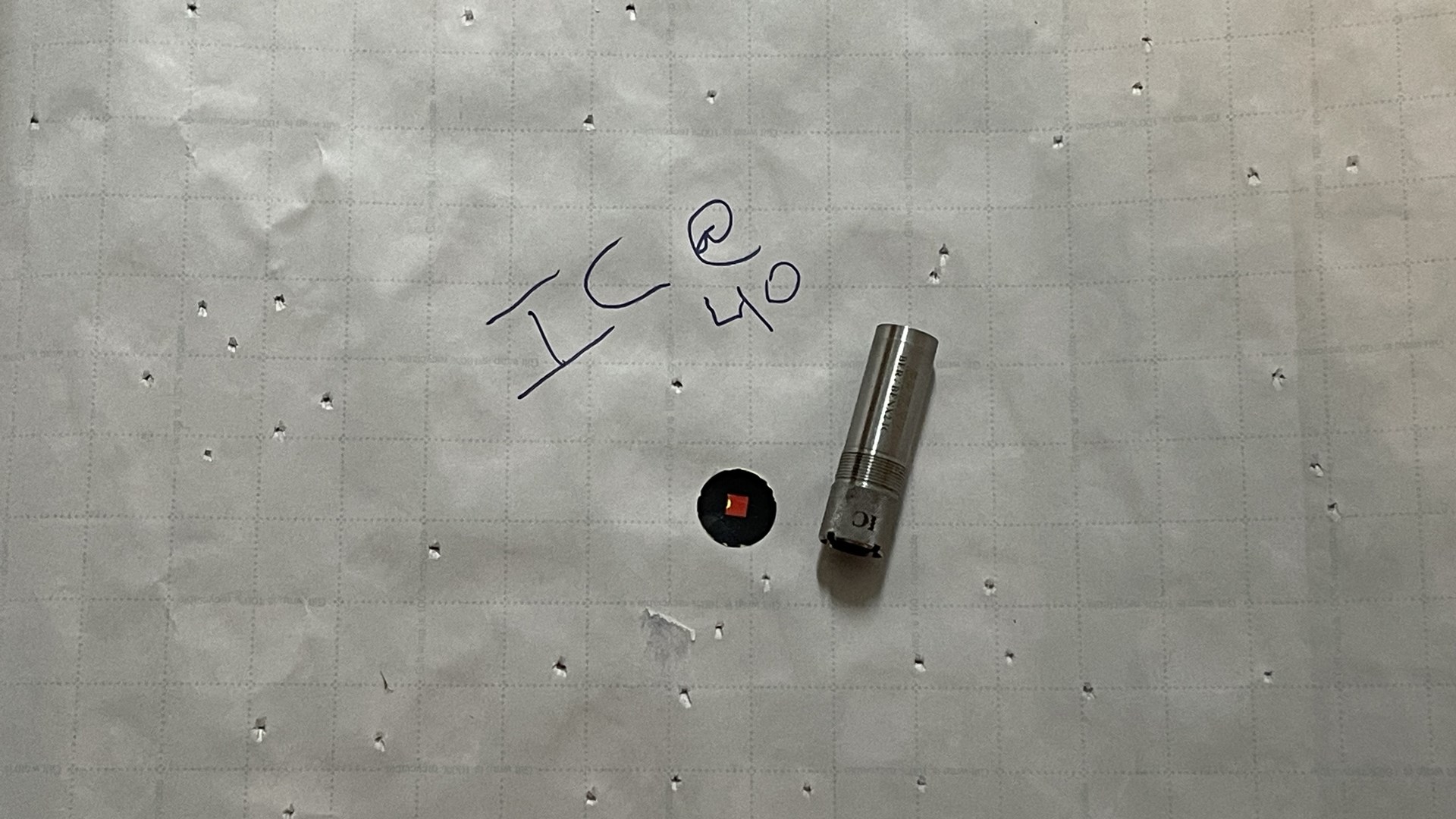
It wasn’t meant to be an exhaustive test, but rather what to expect when engaging divers and sea ducks. Sticking to BOSS’s 40-yard distance, I fired a representative test pattern with my Franchi Affinity 3 using two chokes that I use for everything from steel and steel/TSS “Duplex” loads to bismuth and myriad, tungsten-based concoctions—these are do-all chokes. What I discovered was BOSS Copper produced excellent patterns, even with less constriction; in fact, my extended, non-ported Briley improved-cylinder choke created a beautifully uniform pattern, and the extended, ported, mid-range HEVI-Shot choke—with its wad-retarding rings—was only marginally less impressive.
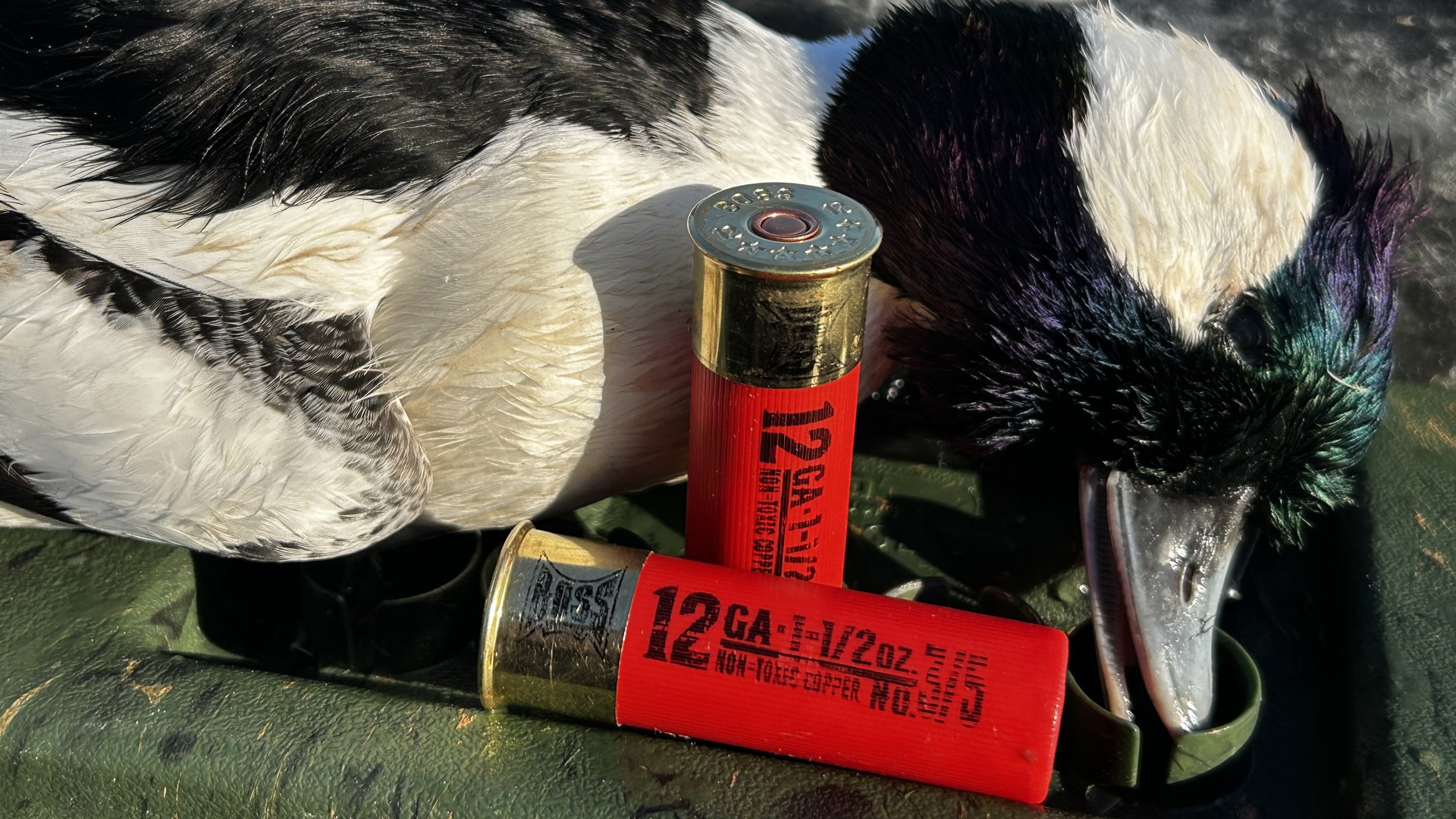
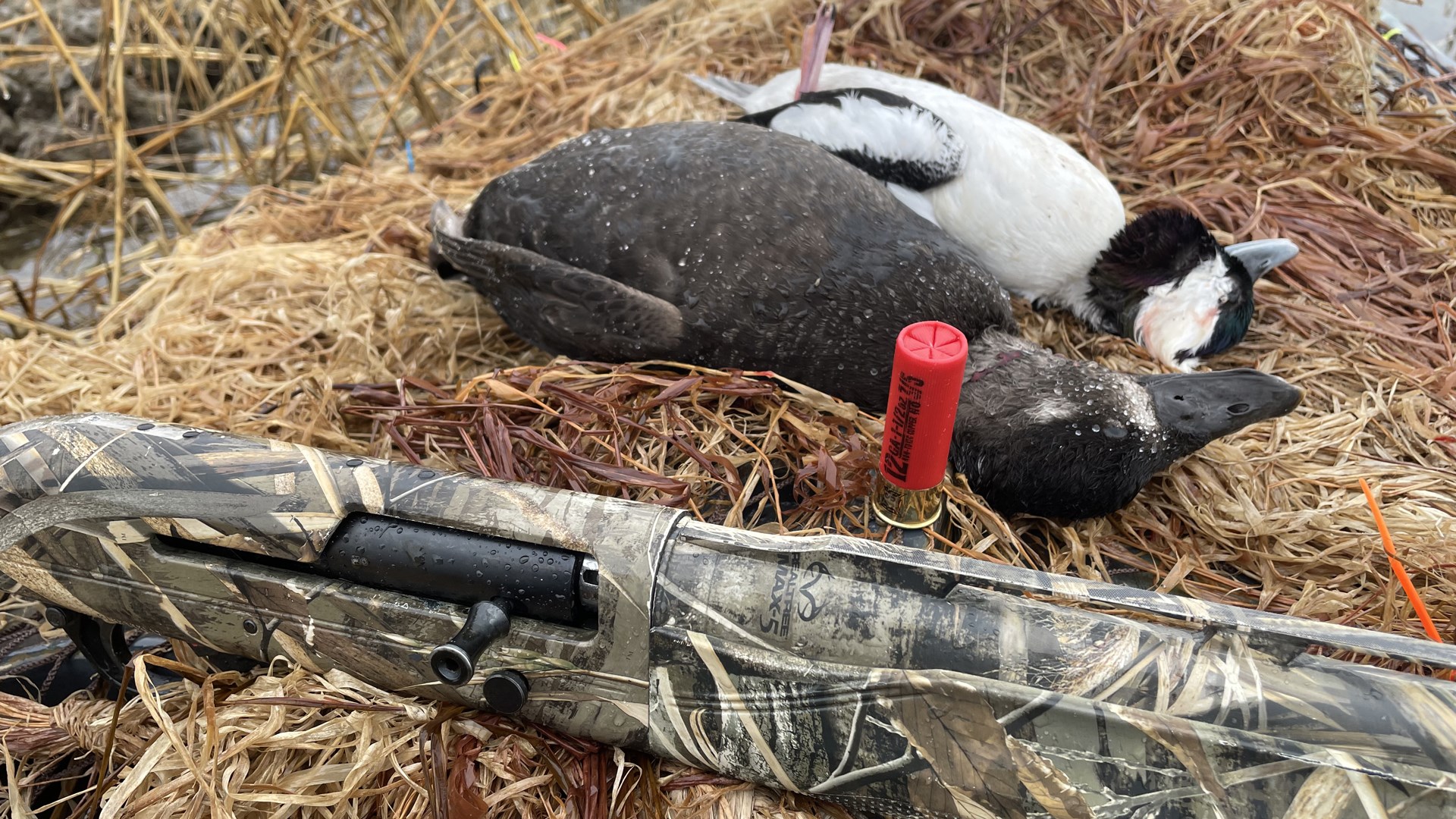
Heading to Virginia’s Eastern Shore with my oldest son, Gabriel, my hopes for the typical overabundance of varied fowl—on several large bays—were dashed. The long tailed ducks simply weren’t around, and surf scoters were few in number, too—appearing only on the final outing. Moreover, the timing of the tides, which seemed extra-low, prevented my son and I from reaching much of where the puddle ducks could be hunted. The single-bird Canada goose and brant season had yet to open. A perfect storm, indeed. Therefore, the bulk of the bag limit consisted of the innumerable buffleheads. As can be expected, the BOSS Copper loads did a number on the smallest diver.
A subsequent trip proved more fruitful. The rapidly dropping temperatures and an impending, widespread winter storm worked together to bring the waterbirds to the Chesapeake Bay and myriad bays protected by Virginia’s barrier islands. Sure, the shallows were rife with buffleheads (and other divers), but other species were abundant, too. BOSS Copper proved effective on everything from diminutive “dippers” to tough surf scoters—a true test.
We found that the copper pellets hit with authority and killed straightaway; follow-up shots and pursuing wounded birds—fairly hit, of course—in the turbulent currents and whitecaps was generally unnecessary. Having steel and bismuth ammunition on-hand as well, I saw no real-world difference between the copper and bismuth shot on waterfowl. It’s nice too that, should I want to use a fixed-choke or vintage (yet safe for modern loads) shotgun, I can do so with BOSS Copper. I ended season with absolute confidence in the new shot type.
But, that’s not the end of the BOSS story. The company recently—within a week of penning this piece—unveiled a new type of copper shot, and it’s patented, too. Created via grinding, though several other manufacturing methods can achieve the result, the shot has flat spots/divots covering the surface. Why? One word: performance.
Through extensive testing, including field-testing six generations on waterfowl of various sizes by select hunters, the company realized gains such as 17-percent more pellets in the pattern at 40 yards, as well as upward of an 11-percent increase in retained velocity. And many, many birds brought to bag. How is this possible? Science. According to BOSS, it’s the deflection of air and reduced negative pressure—hence less drag—made possible by the shot’s unsmooth surface. This is obviously an oversimplified answer, but the statistics and birds in hand don’t lie. It patterns tight and hits hard.Because the new shot is superior to its predecessor, production of the original version will cease. As of this writing, the new BOSS Copper is available, at the same price. All gauges (and .410 bore) currently within in the BOSS Copper line will remain. Standard loads will reach 1,350 fps, while Warchief will hit 1,500 fps. Cost is $39 to $40 per 20-count box, depending on gauge.
BOSS’s strategy for bringing a superior waterfowl load direct to consumers, and thus saving them money, as well as using bismuth, was ingenious. After a successful, half-decade stint, though, market forces recently mandated that it swivel to survive. Transitioning to copper shot not only helped them do that, but could be a landmark moment for ammunition—just like the company’s newest shot shape. That’s small company flexibility and ingenuity for you.