The charter plane’s tires roiled dust from the Zimbabwean dirt strip as they shed speed. The plane cut left and rumbled to a stop mere yards from where professional hunter Dylan Cloete and I leaned against his Land Cruiser, waiting for our tardy companion. I was so focused on the female bush pilot whose long sandy hair was blowing out of the open cockpit window that I almost didn’t notice 6-foot-4-inch Tim Lesser as he strode over in his “size boat” Nikes.
Tim was a day late, so Dylan truncated the usual welcoming formalities by tossing Tim’s bags in the truck and cranking the engine—a very effective, universal way of communicating that daylight was burning and buffalo were getting away.
“Let’s quickly check your zero then drop by camp so you can change. Then we’ll get to hunting,” said Dylan in English backed by a baritone British/Rhodesian accent. Tim was still wearing his airline comfort clothes and he was jet lagged as hell, but not so much that he couldn’t send two consecutive .416-caliber bullets through the center of a makeshift cardboard target at about 75 paces. But the changing clothes part would have to wait, because we didn’t make it to camp.
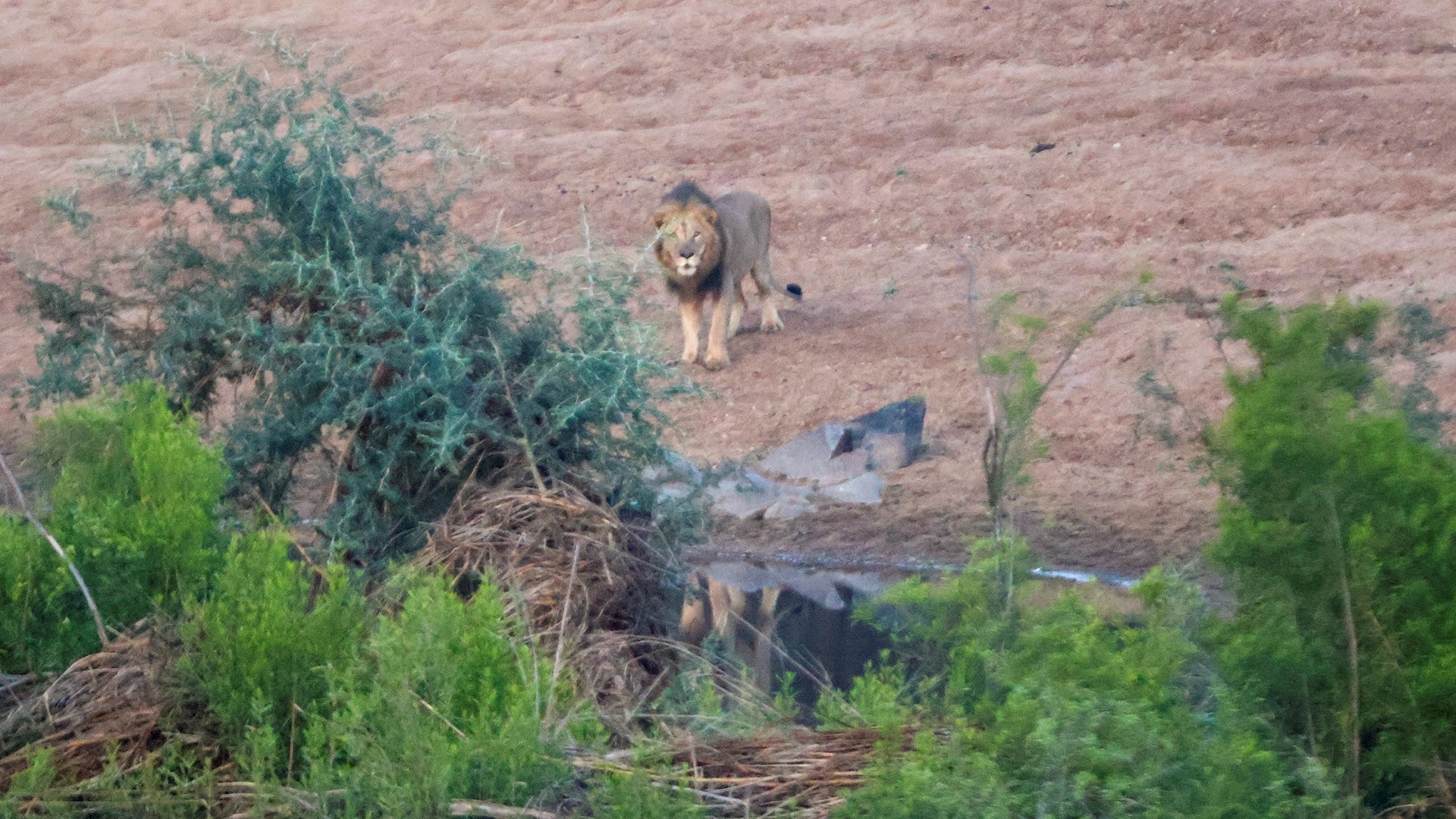
A few miles from the airstrip we crossed sign that Cape buffalo hunters seek: tracks of a group of duggabulls (spelled and pronounced dugga bulls, dagga bulls, duggaboys or some combination of; loosely translated to a rogue group of old dirty bachelor bulls) that were fresh enough to stir chatter among Jevas and Mike, our trackers. So Dylan killed the Toyota’s engine just before Tim and I dropped down from the high rack and directly onto the tracks of a male lion. Not a few feet farther, amid the buffalo spoor, Dylan pointed to the pizza-size print of a bull elephant. Tim and I shared a quick glance at each other in what was a brief hunter’s understanding. It was as if Africa herself shoved smelling salts under our noses and said, “I told you the journey would be worth it, boys. Now wake up; it’s time to get serious. P.S. Texas is lame.”
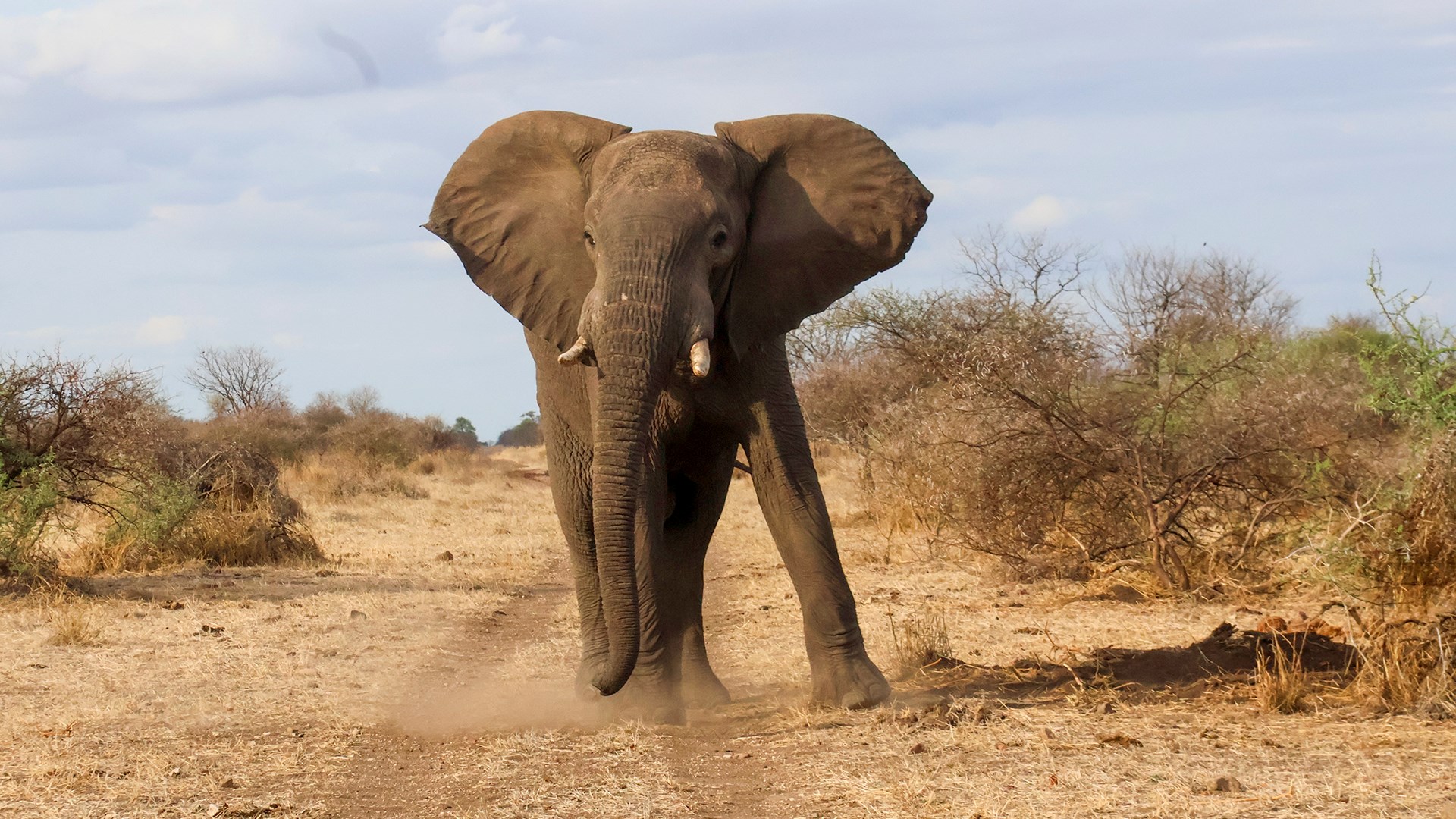
Personally, I’ve become somewhat of a hermit in my middle age, often preferring to hole up in the garage with power tools or to wait for a whitetail on the back 40 rather than to navigate more perpetually overfilled parking lots, power-tripping customs agents, tip extortioners, gun law pitfalls and all the other anxiety producers that are synonymous with hunting overseas. I realize I’m talking about First World problems here and sounding awfully spoiled, but the fact remains: An Africa safari taken about anywhere except South Africa means roughly 100 hours of travel from front door to the hunting field and back again. So merely stepping into the middle of these wild tracks left by animals that could kill us and racking a round into the chamber of a large-caliber rifle brought the purpose of the journey—the quest for adventure—back into keen focus.
After the frenetic, whispered conversation in Zimbabwe’s tribal Ndebele language during which a rough plan was sketched, Tim and I danced in single file behind Dillon’s shadow as we followed the tracks into the darkening jesse-bush, with Jevas doing the bird-dogging. I just tried to keep from tripping, sneezing or doing anything that might blow the stalk and lead to jokes around the campfire in the days ahead.
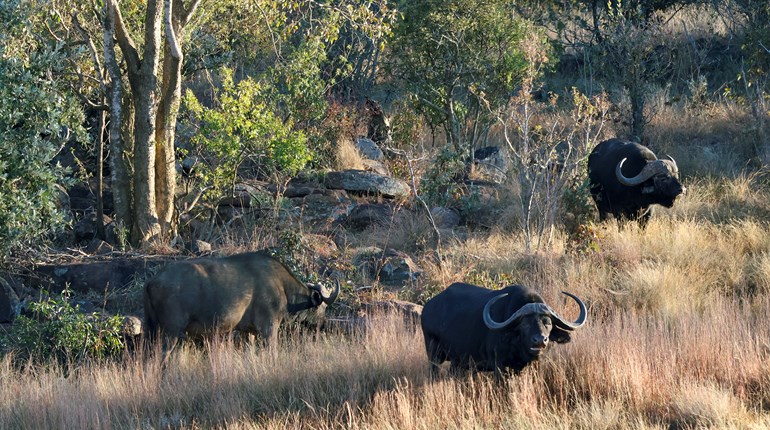
Twenty-five minutes later, and by no coincidence, Dylan dropped an open palm to the side of his hip, Vietnam style: stop now. I extrapolated where he was looking based on the angle of his bino, and was extremely surprised to learn that we were 35 yards from eight enormous buffalo bulls; they were feeding into us, completely unaware thanks to the breeze on our faces. How we went from following their tracks one moment to ahead of them in perfect position for a shot can only be chalked up to the almost-supernatural skill of the trackers that I believe must be witnessed firsthand to truly appreciate.
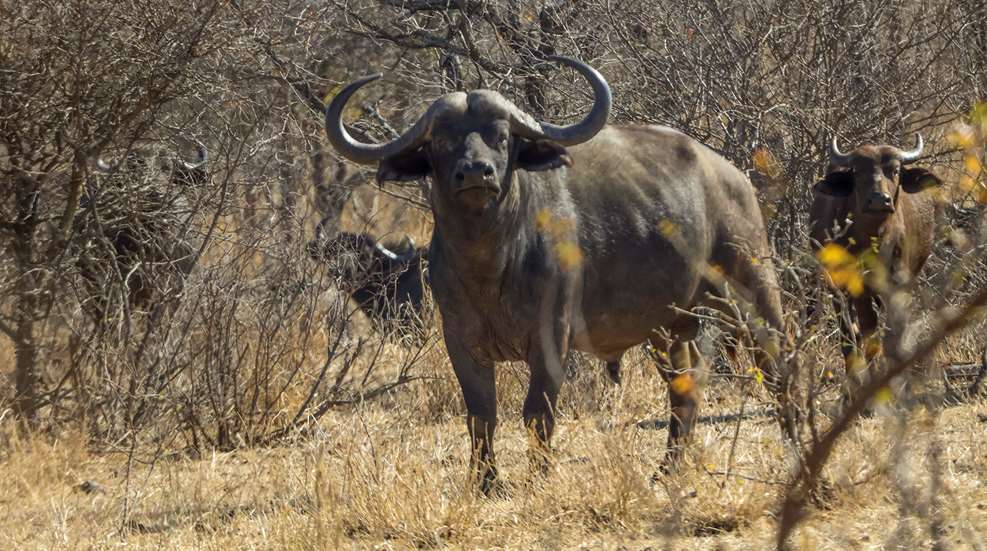
Dylan eased open the shooting sticks and planted them in slow motion in front of me—the African safari sign language for “get ready to shoot.” Seconds later the Ruger was relatively steady as I tried my best to discern buffalo vitals from tree bark and the instructions of my PH who studied each set of horns through the glass like a pawnbroker buying gems. If he was stressed at all, I couldn’t tell it; he actually looked gleeful to me. Likewise, all the bulls looked giant to my uncalibrated, magnified eye; old, mature bulls with hard bosses, the lead one now just 20 yards away and closing. I pinned the Leupold’s red dot in the crease of the biggest one’s chest, and I was about to squeeze when Dylan looked under his binocular at me.
“Great bulls,” he whispered, big-eyed and smiling.
“Which one?” I whispered back. I felt the breeze hit the nape of my neck.
“None of them. We can do better,” he said aloud. Moments later the nearest two bulls raised their heads, finally giving me my first real look at them. I heard one snort so I clamped back down on the rifle. Moments later I heard a few swishes and muffled thunder as I saw the last of the black rumps disappear deeper into the tangle and out of this story for good. “But wasn’t that awesome?” asked Dylan, laughing.
I nodded yes as I came off the gun, stretched my neck out and relaxed my hands, allowing pink to replace the whiteness. I noticed the Ruger’s grip and safety lever were streaked with sweat. It was not that hot out.
“Not a bad warmup,” said Tim, who looked like he needed a Nike sweatband to match his sneakers.
At that moment I knew we were all going to get along just fine.
I’m no expert when it comes to hunting one of Africa’s big five dangerous game animals—Cape buffalo—but I understand why there are men—obviously men of great means—who embark on a Cape buffalo hunt every year regardless of what’s going on with their businesses and personal lives. Barring an untimely death of an immediate family member, don’t even try to call them in late August. They go on a buffalo hunt each year when they could just as easily do something different. They do so because it’s cathartic; some need it to recharge their city-driving, cell-phone-prison souls; others need it to make them feel alive, however cliché it might sound. Plentiful, dangerous, individually unique and challenging but seldom portrayed as a human-like character in Disney movies, Cape buffalo—Syncerus caffer caffer—is the ultimate game.
In a way, you know what you’re going to get on a wild buffalo hunt, and that is to say you know you’ll never know what you’re going to get. No two buffalo are the same, and each hunt takes on its own personality, problems and charm. The individual buff is awesome in his own right, each one worthy of a story, but let’s face it: he’s not Cecil the Lion or a 90-year old elephant that will easily send the idiots back home into a murderous pitch fork frenzy if they get wind of one’s killing. A good buffalo hunt means getting in close to the bulls—I’m talking traditional archery range, many times 15 yards or less—so you can see the ticks on their underparts and judge the horns down to the half-inch. It’s staying calm under pressure, but welcoming the pressure and in fact enjoying it. While some may not understand why a father of three might go on another dangerous game hunt when he has multiple trophies on his wall and may even deem it a selfish act, rest assured the trophy portion of the hunt has little to do with it. So while I can’t afford an annual buffalo nor will I ever be able to, I understand the desire and embrace the envy.
So whenever I am allowed such a fantastic luxury, which up to this point has been about once every quarter century on average, my biggest fear has nothing to do with being robbed outside the Jo-burg airport, getting gored by a buff, mauled or tagged by a mamba along the trail. No, it’s my fear that the adventure—the rare time spent actually hunting in the field—will all pass too quickly. Mainly, that’s because I like the hunt more than the kill. It only took one evening, one stalk, to discover that my guide and my hunting partner shared the same view.
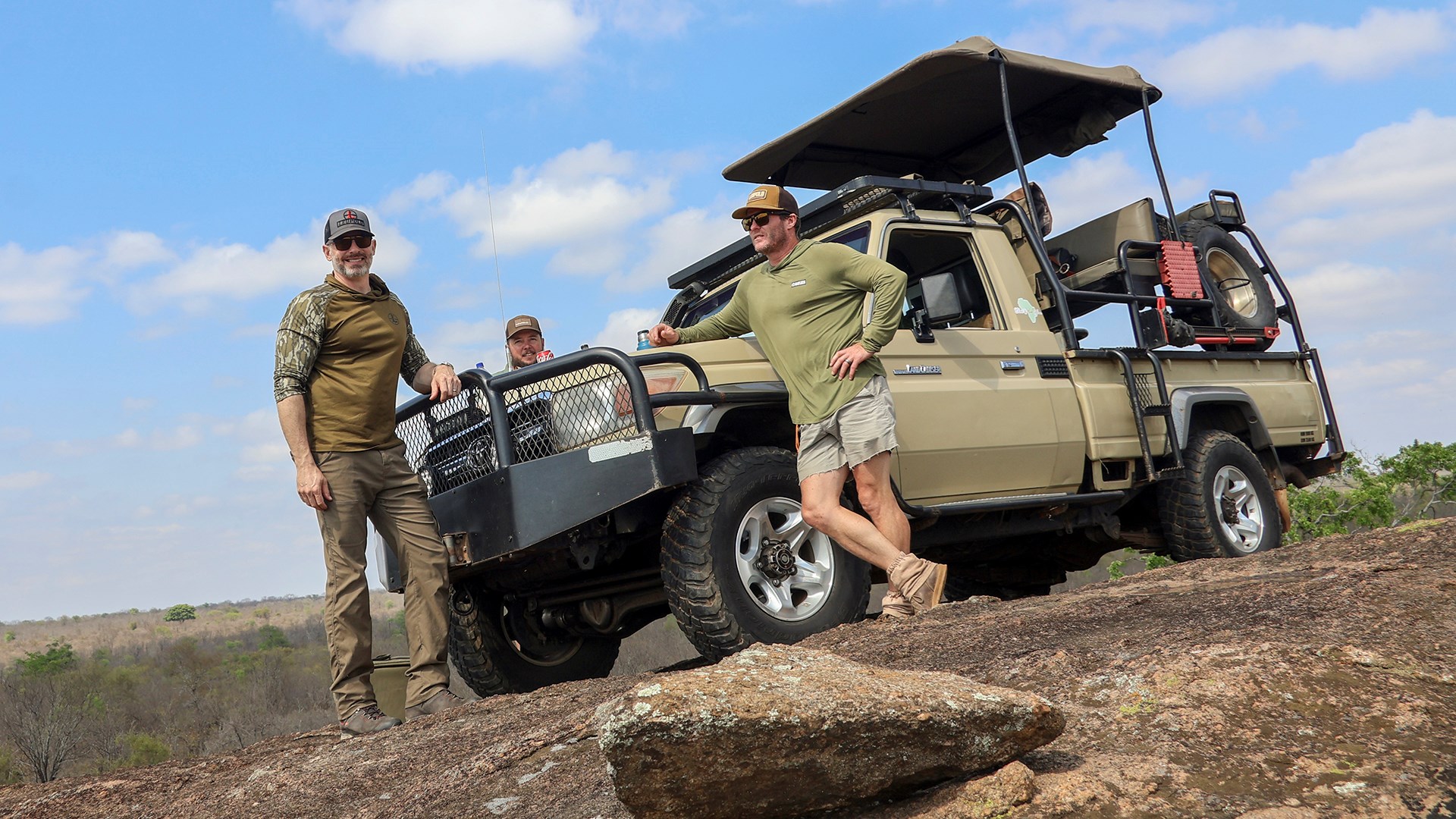
Historically, I haven’t viewed myself as being a particularly lucky hunter, but after we rolled back into camp to find the other half of our hunting party, Mark Bailey and Joe Theilen, having a post-sundowner and reliving the beautiful shot Mark made on an impala, I was forced to reevaluate my unwarranted pessimism. You see, holding out for a larger buffalo—not for the pure trophy factor, but to prolong the hunt—is only possible if the hunting area affords it. And come to find out we’d hit the jackpot in that regard. According to Dylan, we were supposed to have hunted the Makuti area near Zimbabwe’s Lake Kariba. I have hunted near there before, and while there are buffalo to be sure it typically goes like this: If you happen across the tracks of duggabulls you follow them until you actually see the bulls—which might take several days—and you typically shoot the biggest bull from the group if it’s mature and passable as a trophy. In a week of hunting, you might experience several failed stalks and a couple of shot opportunities, and when you kill any mature bull you are happy.
But just three weeks before we arrived in Zimbabwe, the Makuti concession burned completely from an uncontrolled wildfire, which pushed all its game to neighboring areas. Rather than cancelling our hunt, our outfitter, Charlton McCallum, made a few contingency phone calls and somehow lined us up to hunt in one of the most amazing, game-rich areas in the country—an area that’s independently funded by its own operations and running so well as a conservation model, in fact, that its managers do not want any attention drawn to it. Sad if you ask me, but that’s the reality. The big five, including rhino, lion and elephant, thrive here, along with dozens of other game species. Buffalo are wild and wary because they are hunted by humans and big cats, but they are carefully managed and thus plentiful; hunters here have the luxury of stalking and passing many mature bulls until they find one that trips their trigger.
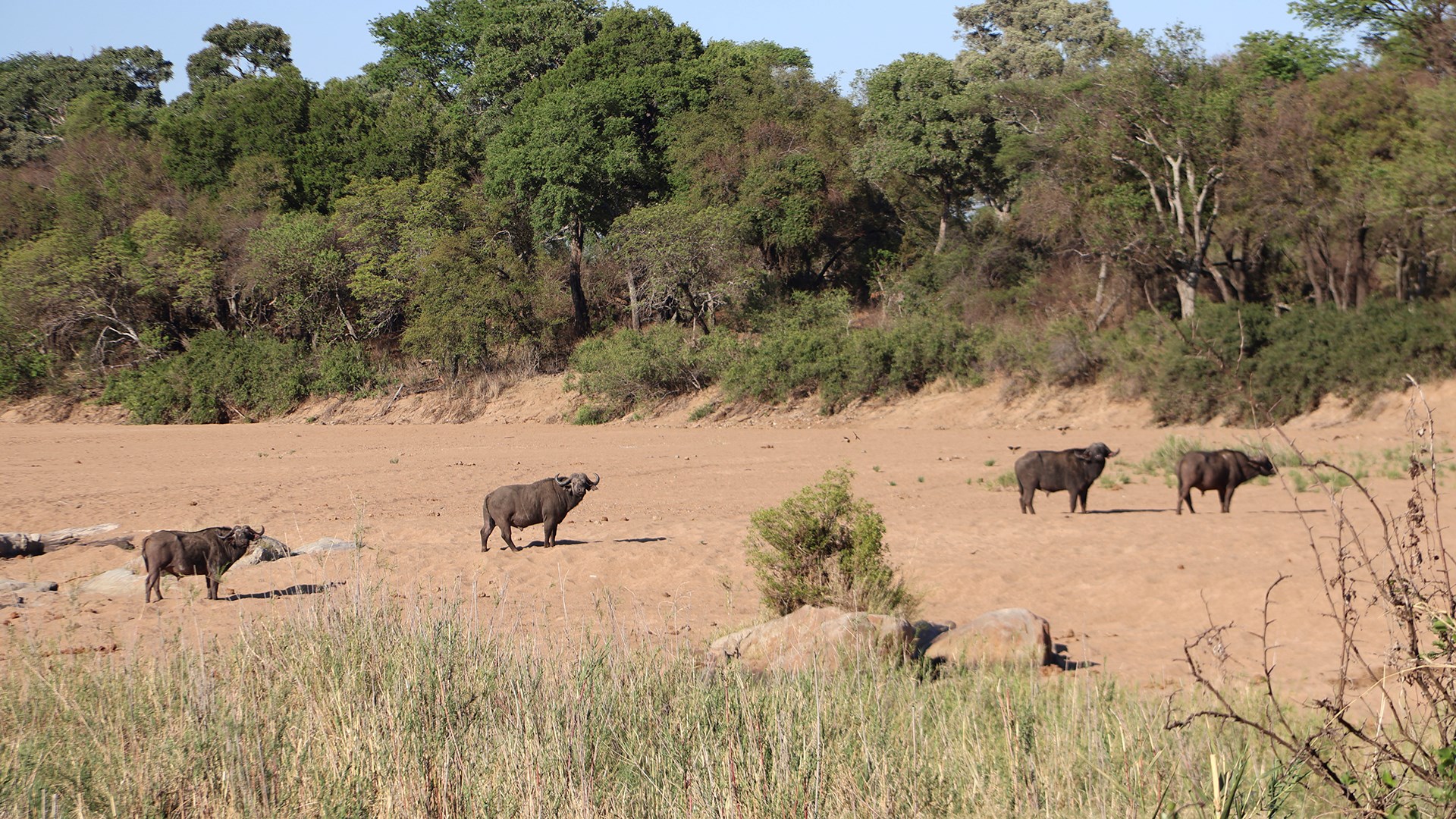
By the fifth or sixth day of hunting, both Tim and I had looked over enough buffalo and experienced enough sweaty-handed, up-close-and-personal stalks to feel like we now knew what we were looking for and to feel like we’d earned the chance if one came. Tim’s chance came as we were riding by a pan—one of many waterholes—on the concession.
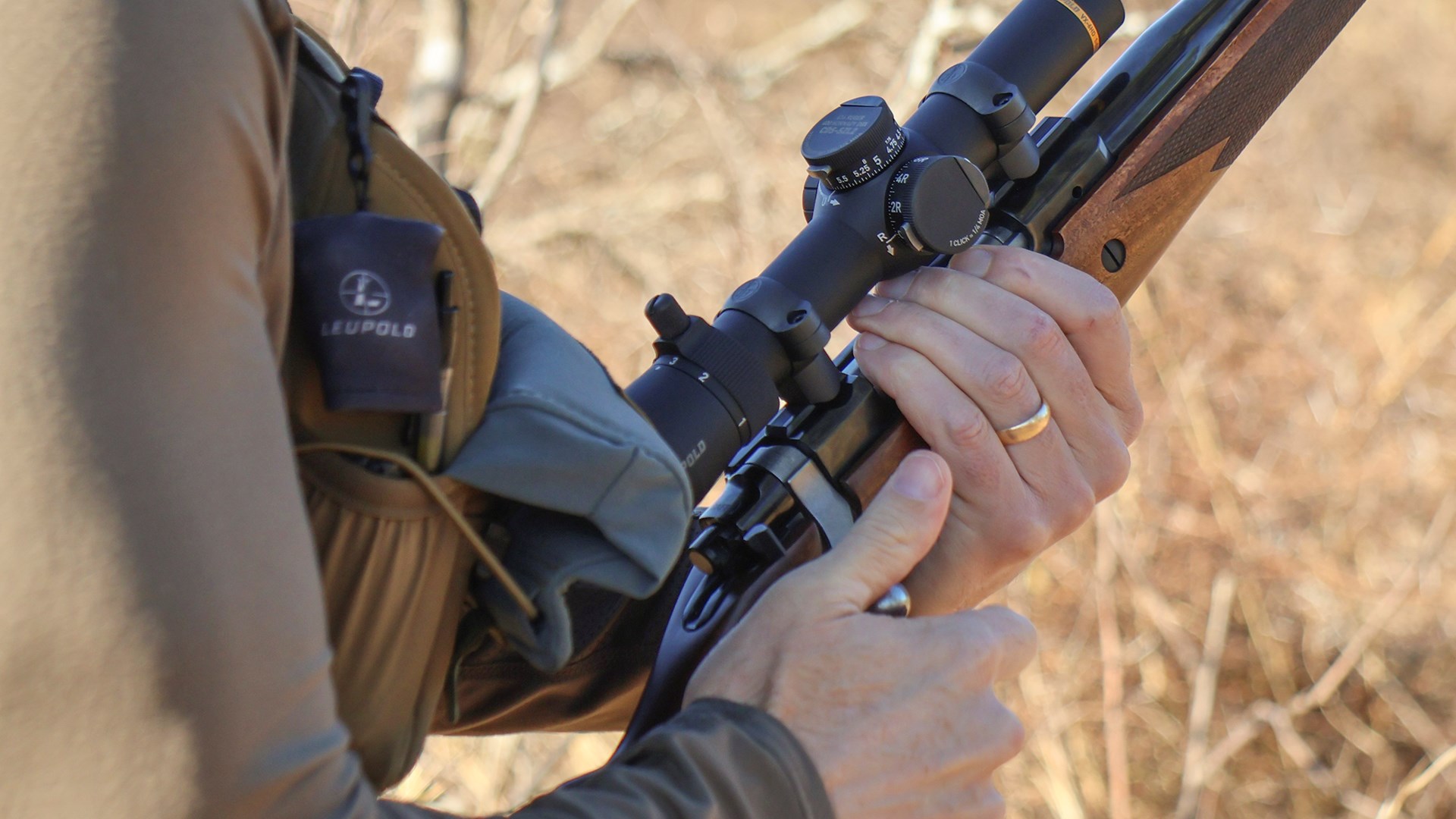
“Great bull,” hissed Dylan from the driver’s seat. By now, we had the routine down like firefighters on the midnight shift. Dylan killed the engine and coasted well past the group of duggabulls. Tim snaked out of the truck on the opposite side, and I quickly unsheathed his rifle and handed it to him. He racked a round and double-checked the illumination and magnification settings on his VX-6. Within seconds we were in single file, using the mopane trees as cover from the suspicious, bovine eyes.
Suddenly Dylan planted the sticks and spread them. Tim understood the mission.
“Third from the left,” whispered the PH. “He should come through that opening any second.”
But by now Dylan’s instruction was unnecessary; Tim had identified the bull, anticipated the shot opportunity and wasted no time when the giant animal exposed its shoulder.
The Ruger roared, and bulls thundered everywhere. None were visibly down, but one in particular was leaking blood.
We took a few minutes to survey the situation, at which time I reviewed the video I took of the shot. Everything looked pretty good; the 400-grain Hornady definitely hit the bull in the shoulder. But if a buffalo somehow survives the first shot and gets a massive injection of adrenaline all bets are off, regardless of caliber.
We followed the blood for about 125 yards through brush before we heard him; not a death bellow, but more like some shuffling and grunting, proving to us that he was indeed wounded. Moving forward with guns at the low ready, we tiptoed toward the sounds and noticed the blood trail curved around a little. Just then the sounds stopped, and all became deathly quiet.
“There,” said Dylan, pointing. The bull was leaning against a tree, facing us. Looking for us. Waiting for us. “Shoot him now,” implored the professional.
Tim hammered the gargantuan bull again, dropping it to its knees. But still it wasn’t dead. Two more successive shots through the bull’s spine, down through the heart, finished it.
Tim approached the bull and I paid his thanks. I grabbed Tim’s rifle to place it for the photo and immediately noticed the streaks of sweat along the grip and safety switch. Did I tell you why buffalo hunting is so addicting?
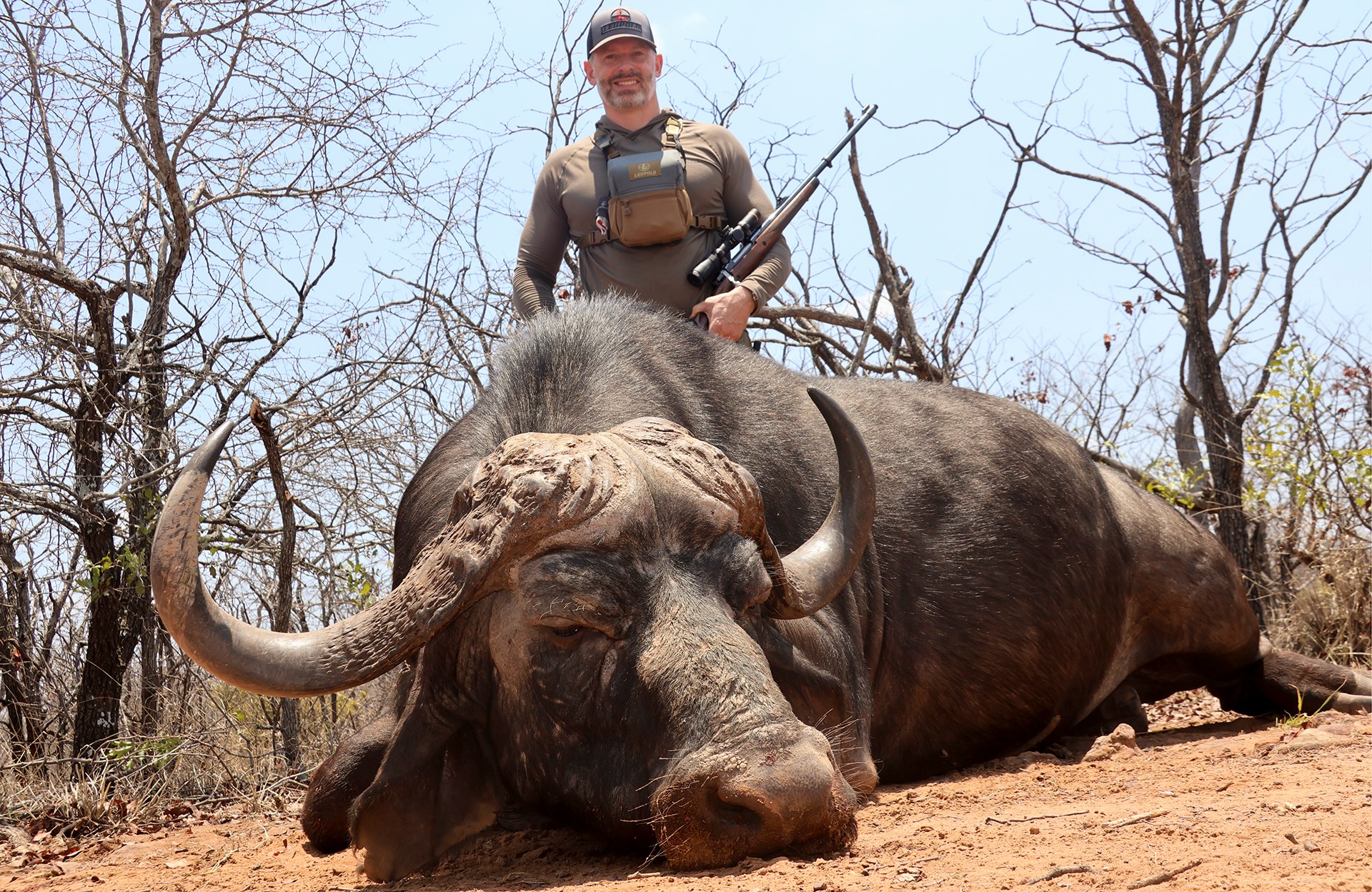
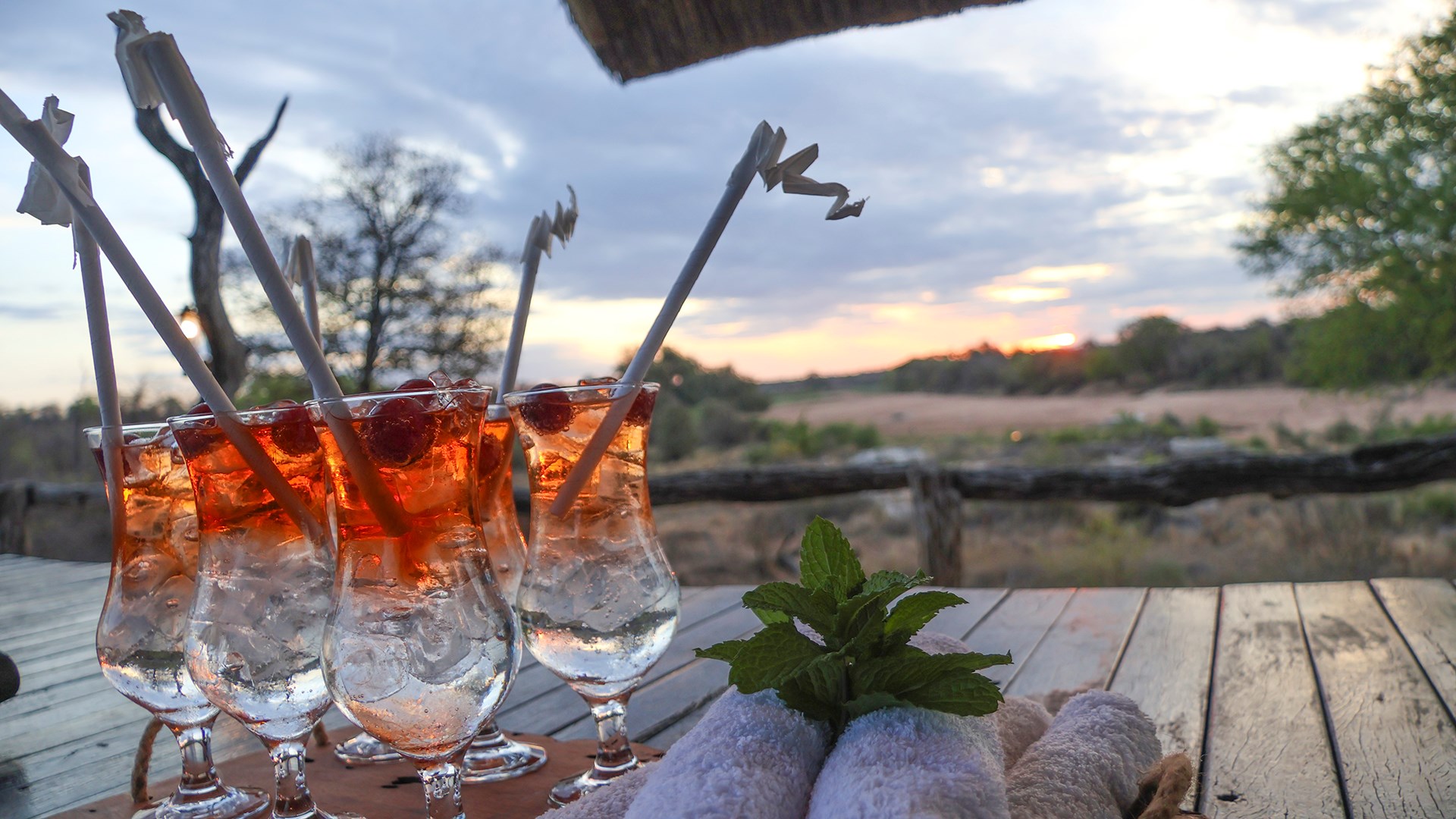
Back at camp, over sundowners, we learned Joe had made a fantastic shot on his old bull, just as Mark had done a couple days before. Almost everyone was now in the clubhouse. Almost.
By now, dear reader, you have likely noticed that I have spent copious words talking about how looking over buffalo in order to find the right one is great and all. The experience is heightened, while experience is gained; it’s not the kill but the thrill and bla bla bla. While there is normally no shame in coming home from a hunt without an animal in hand, that would not be the case in this instance. You see, being choosy is fine, but there’s a fine line between being choosy and being too choosy, otherwise known as being an idiot. So just how did I get to the last day of a nine-day buffalo hunt amid hundreds of shootable buffalo without taking one yet?
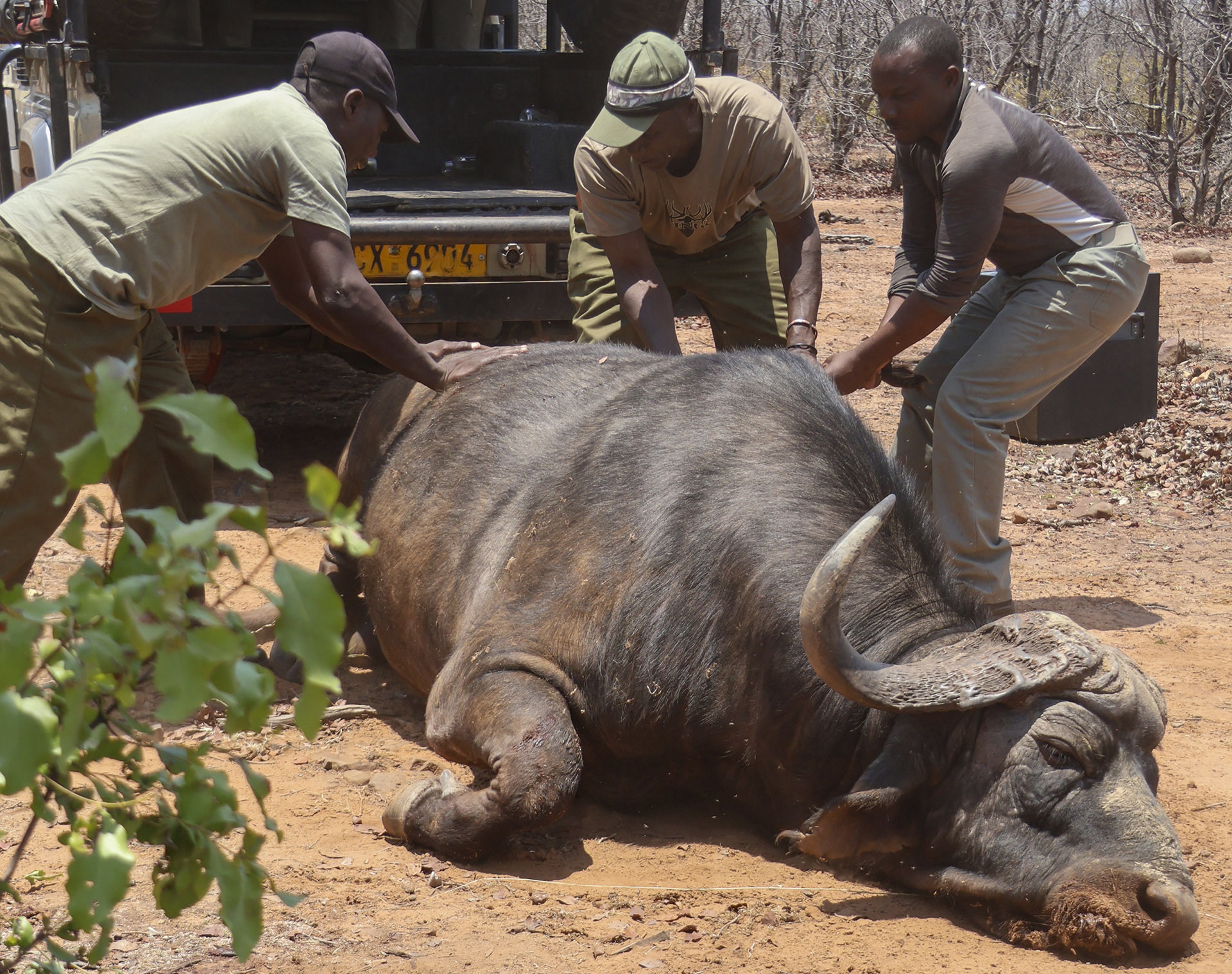
Let me tell you; it’s actually easy to do: You blow a stalk here and wind up passing one there; then you go on a tangent hunt for a kudu that, while awesome in itself, takes most of a day. Then it rains for a day or two and those days are gone. You dodge a couple elephants here, take time out for photographing a maned lion there, then you spend a day or two watching your hunting buddy kill some stuff, then you have a day of bad luck and suddenly it’s day nine and you nearly start to panic. Or at least I did. Most times while hunting around home I come back with nothing. But I’m not sure how I’d explain this one to my wife, my boy and friends back home—that I never even fired a shot due to a missing inch or two of buffalo horn that nobody, including me, would ever measure, notice or otherwise care about. Earlier I told you that my greatest fear was that the hunt would pass too swiftly. Here’s a newsflash: They always do! But at this point in the safari my greatest fear was going home buffalo-less.
If Dylan was stressed he didn’t show it. And that’s what I love about the guy.
So here we were, cruising around on the last day when we passed a copse of trees not 50 yards from the two-track and Dylan cut the engine.
“There’s your bull,” he said calmly.
Now with my Leupold on him, and having the benefit of studying hundreds of buffalo during the past nine days, I asked, as if it mattered, “Is he a good one?” Dylan shot me a look like I was his dumb little brother. “He’s the best bull we’ve seen all week.”
Tim handed me my rifle just as we filed into line and tiptoed into the shadows of the jesse-bush.
It took some maneuvering, but by this time the five of us (Dylan, Tim, Jevas, Mike and I) were a well-oiled stalking machine. When Dylan finally spread the sticks, the giant bull was laying down in cover, just 25 yards away. I felt my hands get slippery as I used two fingers to sweep the rifle’s wing safety forward silently and readied the red dot on the bull’s backline. Perhaps the moment only lasted for 10 seconds, or maybe it was an hour and a half, but I’ll never forget it.
Suddenly I felt the wind wisp the back of my neck; moments later the bull rose to his feet.
“Can you see his shoulder n—”
Boom replied the Ruger, followed by the muffled thunder of hooves.
“It felt good,” I said.
“It should have!” yelled Dylan as he pounded me on the back. “I see him down!”
I have never laid a tape measure on the bull and I never will. It doesn’t matter in the least. But if I could measure memories, for me this one was SCI gold medal stuff. Sure we had to leave the next day; and sure I might never hunt buffalo again. But for me, right then, with all my flaws and shortcomings and mess-ups and regrets, buffalo or no buffalo, I’d never felt so lucky.
I looked over at Tim, who nodded to me in a wordless understanding between hunters. It was as if Africa was speaking again. And in a seductive accent she said, “Oh, you’ll be back.”
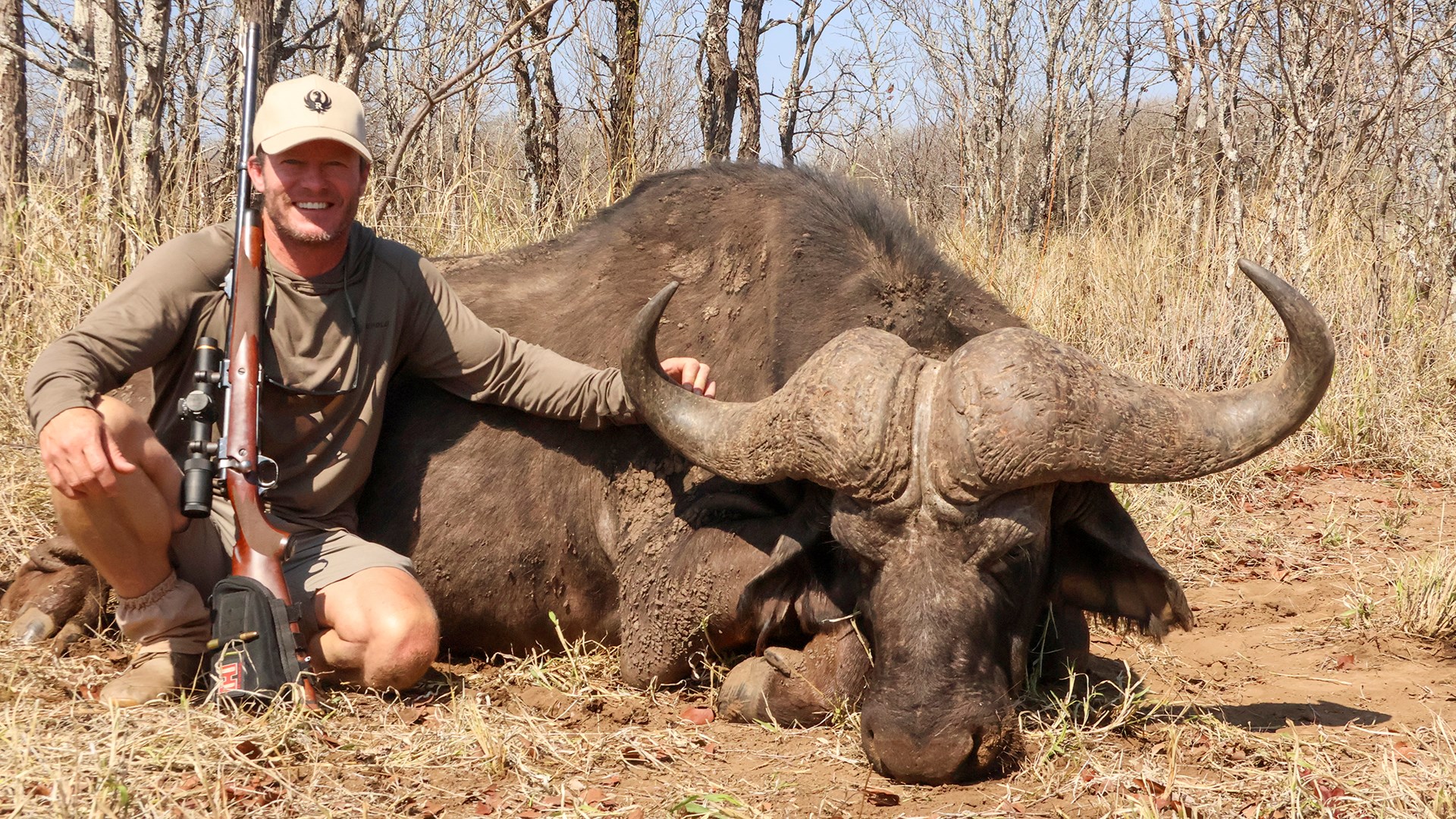
Guns, Bullets and Glass for Buff
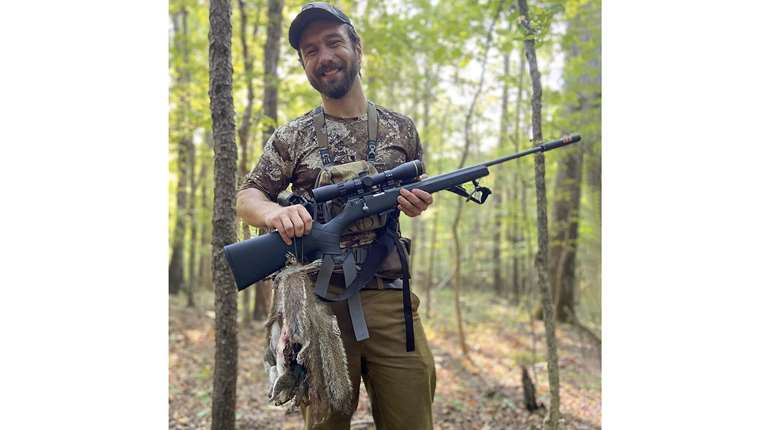
Rifle—I chose a tried-and-true Ruger Hawkeye African bolt-action rifle chambered in .375 Ruger. It features M70-like controlled-round feeding to maximize reliability. It looks the part with its rich walnut furniture, but more important than looks it has everything I want in a dangerous game rifle, with nothing I don’t so that it’s simple, relatively light (for a big-bore caliber) at 8 pounds and, most importantly, is accurate and reliable. I shot 1.1-inch groups with it during practice sessions, and thanks to a great recoil pad and a removable muzzle brake (that I used for practice but not for hunting) it didn’t beat me up. Although I mounted a top-end Leupold VX-6 scope on it, a must-have is the rifle’s express-style open sights that guard against Murphy’s Law. While the other guys chose .416 Ruger, I chose the .375 Ruger and shot everything with it from 75-pound impala to 500-pound zebra to my 1,800-pound Cape buffalo. Now the rifle is dear to my heart. ruger.com
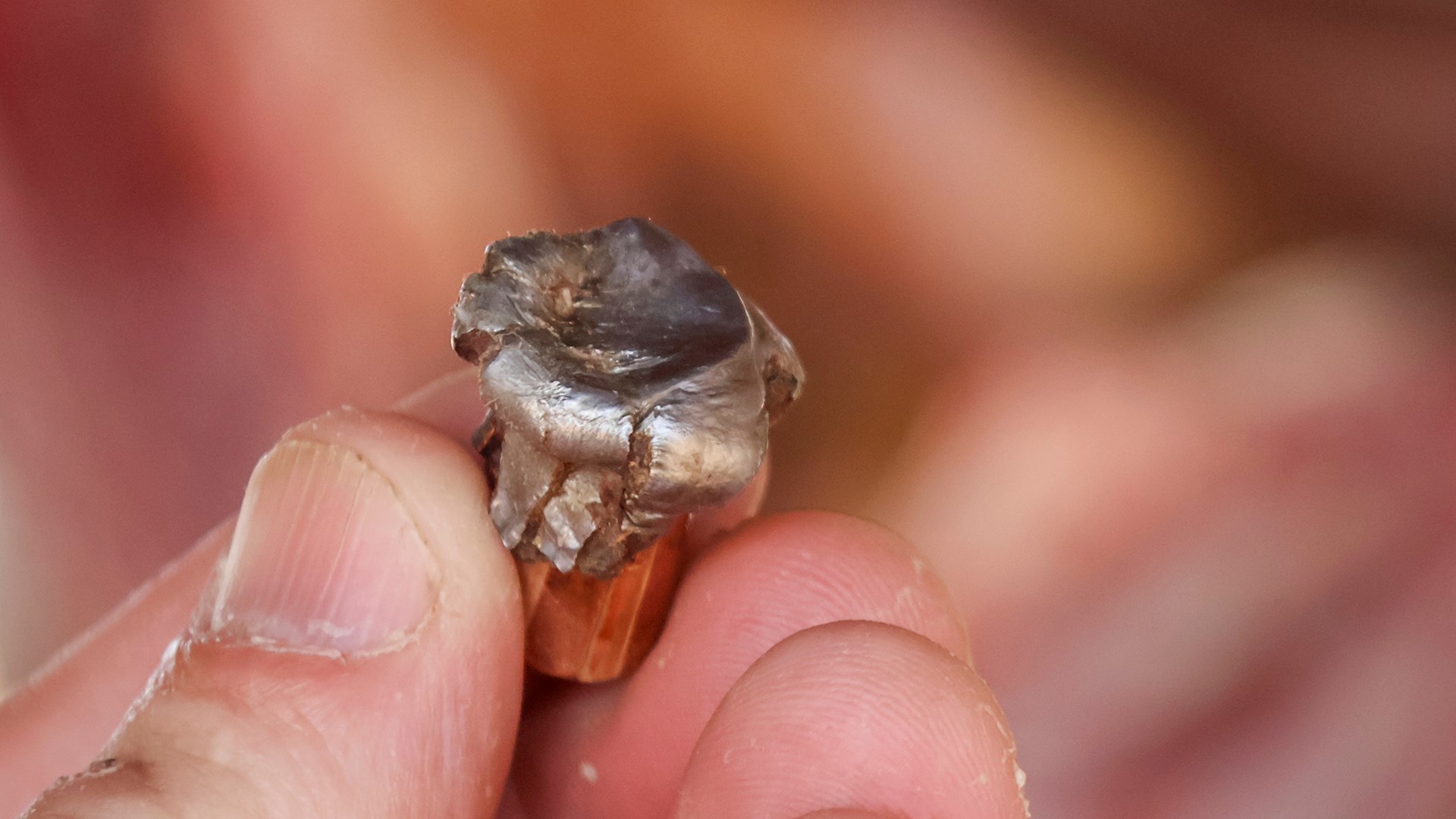
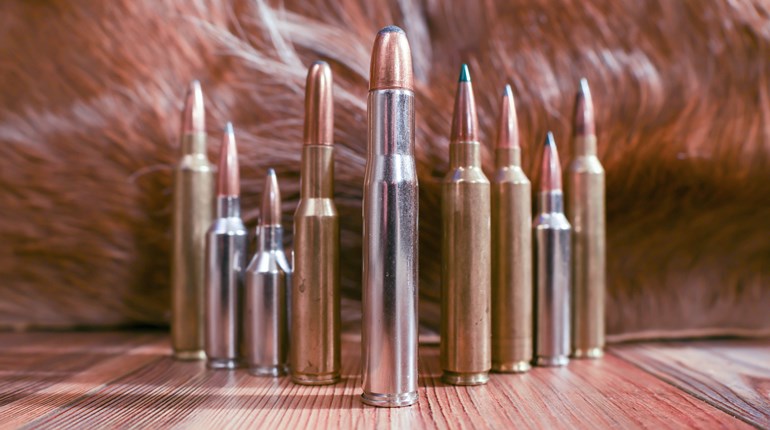
Ammo—There’s a reason most African countries require a minimum caliber of .375 H&H Mag. for dangerous game. That’s because these animals can soak up lead. Massive amounts of energy are required to smash through bones and reach vitals once the animal’s adrenaline starts pumping. I chose Hornady’s Dangerous Game load in .375 Ruger because it meets the minimum requirements, yet is also pleasant enough (and flat enough) to shoot so that I didn’t need another rifle to hunt plains game such as kudu. The .375 Ruger sends a 300-grain bullet at 2660 fps to produce 4,700 ft.-lbs. at the muzzle, or 3,660 at 100 yards. I chose Hornady’s DGX Bonded bullet because it is tough–as proven on the four buffalo bulls that were killed with it on our safari—yet expands to roughly 1.75-times its original diameter for maximum destruction, leading to quicker kills. The round as a whole proved accurate, and the bullet worked as advertised. My buffalo traveled less than 20 yards and died in seconds after one .375-caliber DGX behind the shoulder and through both lungs. During my kudu hunt, the last shot opportunity I had was a “Texas heart shot” at around 200 yards. I took it, and the kudu piled up. I was glad to have the extra horsepower of the .375, and the bonded bullet that stayed together to penetrate deeply. hornady.com
Scope—I’m a huge Leupold fan because their scopes are built for hunters, have features that set them apart, are clear, tough and the adjustments always work. Its VX-6 line, I think, is one of the best all-around riflescopes for hunters, period. I chose the 1-6X-24mm for the Ruger and I was completely happy with it. First off, for dangerous-game hunting, I love illumination. Most times buffalo are stone-throwing distance away and in the shadowy, thick stuff. Placed on 1X and with the illumination turned on, the scope acts like a red-dot sight, and as such there is nothing quicker. The dot also functions as a reticle level. It’s genius. I love the VX-6’s elevation turret that is like a target turret in function, but has a one-touch locking lever so the turret won’t move inadvertently during a hunt. A throw lever on the magnification ring makes zooming easy without looking. The 24mm objective allows mounting the scope low to the bore for maximum recoil mitigation, yet provides ample brightness for hunting at dusk thanks to Leupold’s superior optics and coatings. Sure, it’s expensive, but so is a dangerous game hunt. I don’t skimp on my optics. leupold.com
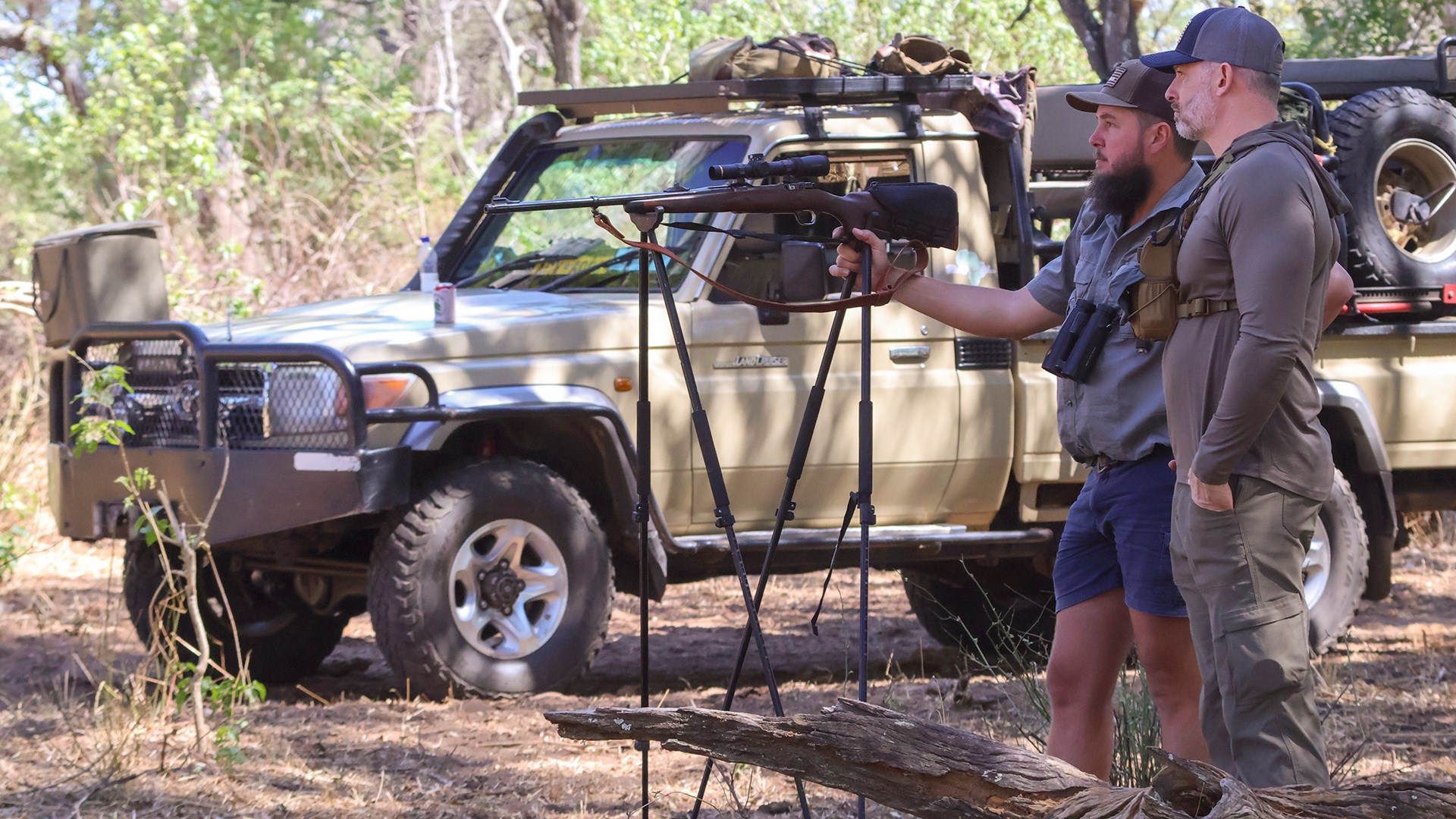
Zimbabwean Professional Hunters
There’s a reason why novice and seasoned hunters come home from a Zimbabwe safari and tell all their friends their professional hunter was the best and no PH could ever possibly be better. It’s not luck of the draw; rather, it’s due to Zimbabwe’s ridiculously rigorous PH licensing program.
The requirements are way too lengthy to list here, but in a nutshell, applicants must be physically fit, and pass a series of written and demonstrative tests–everything from plant and animal biology, first aid, weapons skills, navigation, employee management, safari economics, engine repair and survival. They also must be of upstanding, personable and affable character with absolutely no criminal record. After passing myriad exams, they then must be an apprentice to a licensed Zimbabwe PH for three years, during which time they are the whipping boy and even must pay their own way, including their automobile. The whole process costs thousands of dollars and about four years to complete. About one out of a hundred annual applicants actually get licensed. And this is why Zimbabwean professional hunters are some of the world’s best.