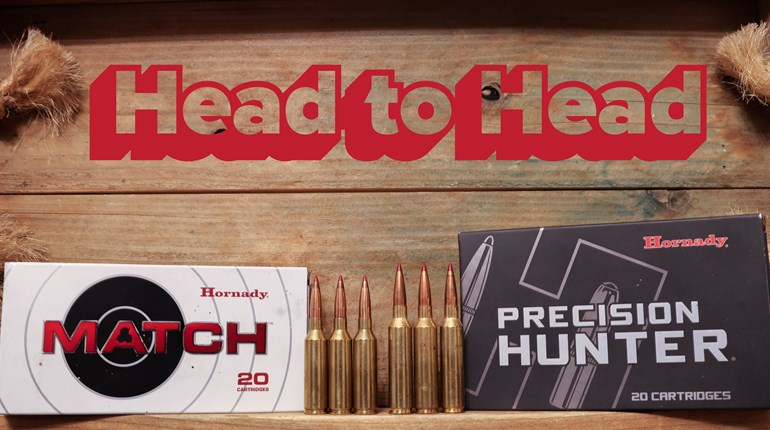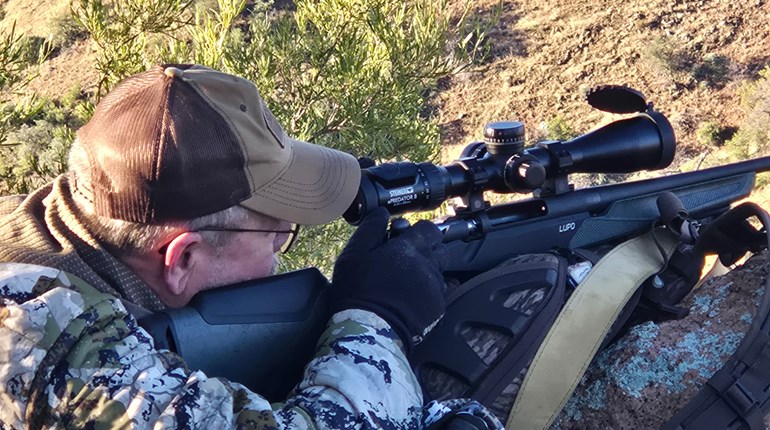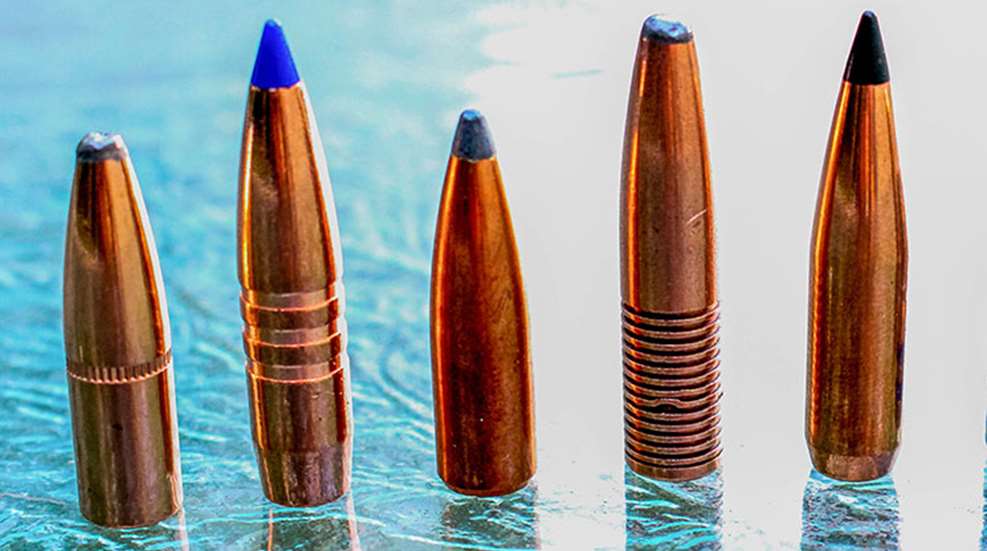
The evolution of the projectile is interesting one, and our projectiles have changed more in the last 25 years than any time in the last century. The standard lead core/copper jacket bullet is running strong, but the monometal construction, bonded cores and polymer tips have changed the way we view bullet performance. We have bullets that possess the highest ballistic coefficient values we’ve ever seen, and the terminal ballistics have done nothing but improve. This has extended the versatility of lighter calibers, allowing for cartridges that were previously considered marginal to become perfectly viable choices, and for the bigger bores to perform better than they ever have.
Sometimes we view a new feature as a necessity, when it may be inapplicable for our particular hunting scenario. A bullet’s profile can play a very important role in its long-range performance, for certain. But, if you look closer at what your shooting distances actually are, you may see that all the B.C. in the world won’t amount to a hill of beans.
Long-range shooting is a hot topic these days, and it inevitably extended itself into long-range hunting. Without getting into the ethics of it all, let’s take a look at common hunting ranges, and how the two different bullet profiles will perform, in both trajectory and wind deflection values. I’ll use a pair of 180-grain .30 caliber bullets, at .30-06 velocities—say 2,700 fps for a round number—for the comparison. One will be a flat-based spitzer, the other a boattail. Let’s also assume a 200-yard hunting zero.
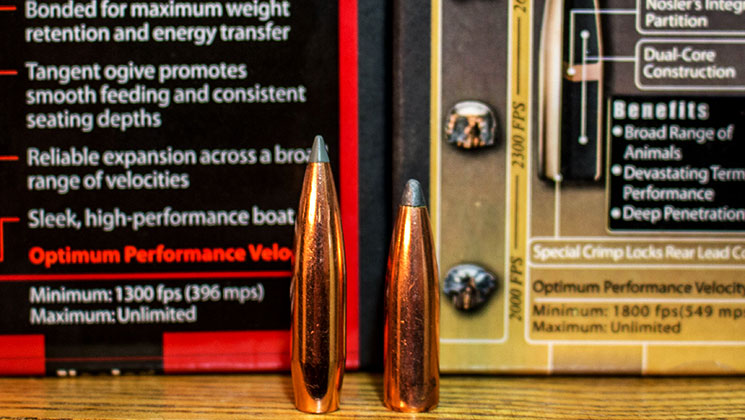
I plugged the data into the Federal Premium Ballistics Calculator, using a Nosler Partition for the flat-base bullet and a Nosler AccuBond for the boattail. Using the 200-yard zero, and looking at the trajectory in 25-yard increments, I found that the highest point above the line of sight (at 100 yards) to be equal for the two loads, at 2 inches; not an uncommon sight-in arrangement. Following the two bullets out to 250 yards, where both the trajectory and wind deflection values should start to play a part in the shot, you’ll see the flat base Partition dropping 3.4 inches and drifting 4.7 inches in a 10 mph crosswind, while the AccuBond drops 3.3 inches and drifts 4.4 inches. At 300 yards—where many hunters may find themselves in uncharted waters—you’ll see the Partition drop 8.5 inches, while the AccuBond drops 8.3 inches. The .2-inch difference is so small it is insignificant—it’s less than one bullet diameter. The wind deflection values are .5-inch apart; it would be difficult to hold that small difference at 300 yards.
At 400 yards, we see that the Partition is holding up rather well with the sleeker AccuBond. The flat-base bullet drops 24.4 inches, while the boattail drops 23.8 inches—still a miniscule distance when we’re discussing the vital zone of a big game. Taking it out another hundred yards—and 500 yards is a real poke at any unwounded game animal—you’ll find the two bullets dropping 48.7 inches and 47.4 inches, respectively, with the wind deflection values at 20.7 inches and 19 inches. I consider 500 yards to be too far for a hunting scenario, but that’s a self-imposed limit. If we were to take those two bullets out to 1,000 yards, you’ll invariably find the boattail AccuBond, with its higher ballistic coefficient, gaining a bigger advantage as the distances get longer, but I think the point has been illustrated.
For most hunting scenarios, a flat-based bullet poses no real handicap, especially if the shooter is willing to train with the particular load that features that bullet. The emphasis put on long-range shooting in the past decade or so needs to be grounded a bit, especially when you take a static wind value out of the equation, and bring it into a real world scenario, where unseen winds can wreak havoc on a shooter’s plans. Actual field training at the distances you anticipate taking a shot can be a very humbling experience, and watching your bullet drift off of the target is an education you’ll not soon forget. Apply that same idea to a deer, elk or other game animal, and you’ll quickly correlate that it can result in a complete miss at best, and a gut shot or other wound at worst.
My own self-imposed hunting limit is 350 yards under common conditions, and 400 yards if the weather is perfect. I’m not one to tell any hunter how he or she should act, but I’ve spent enough time shooting my rifles—with all sorts of bullet profiles—to find that things can go haywire quickly beyond those ranges.
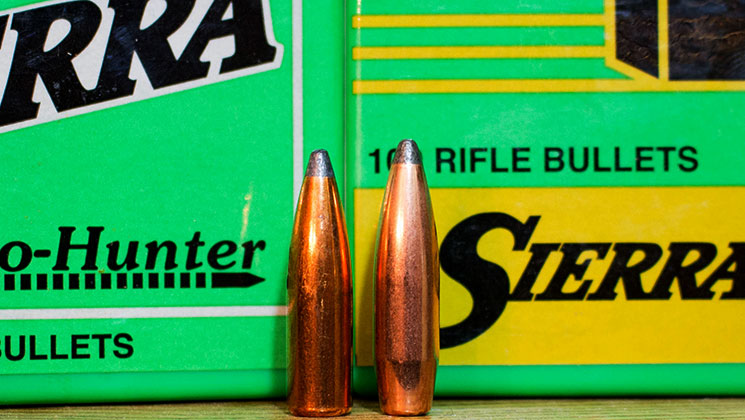
We all strive to have the best gear we can get, and that includes hunting rifles and ammunition, but becoming proficient with what you have is paramount to becoming a confident, ethical shot. The great majority of my hunting shots are within 250 yards, and I’m perfectly fine with that. I fully understand that there are times where you just simply cannot get any closer, and that scenario will force you to decide whether you put the rifle back on safe, or have the confidence to make the shot. High magnification scopes, magnum calibers and the best long-range bullets available make shooting at longer ranges a bit easier, but cannot and will not replace experience behind the trigger.
I used the .30-06 just as a common example, I encourage you to take the time to look at the trajectories and wind values for the possible bullets within your chosen cartridge. There are many good ballistic calculators available—most for free, I might add—to help you best determine what bullet profile will work for you. Take a look at them, and then get out in the field with your gear to put it into a real world scenario. You’ll be a more confident rifle shot as a result.