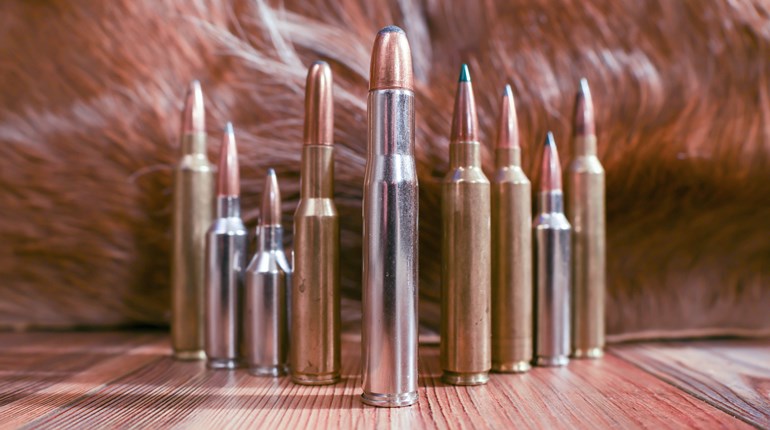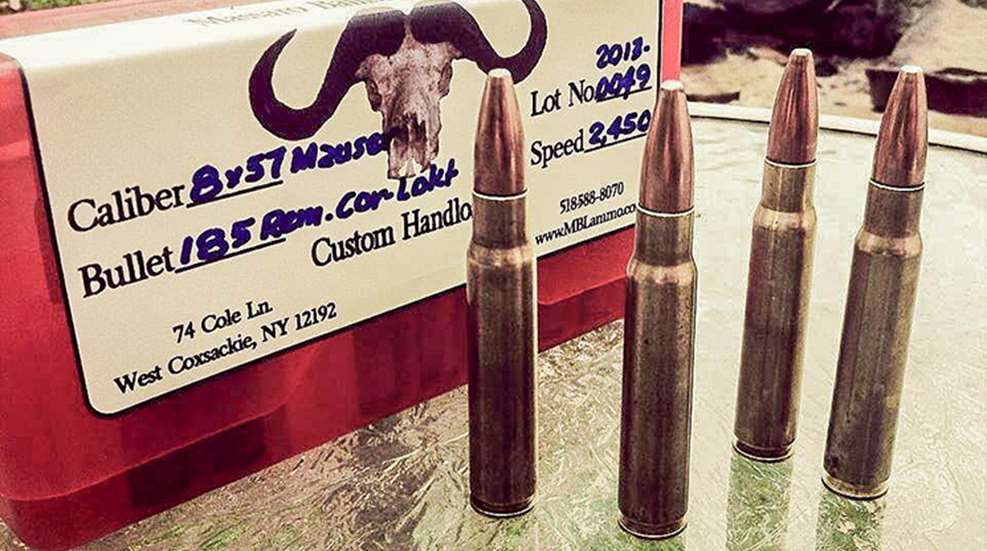
I am an aficionado of cartridge history, and I like to learn and know how things have developed over the years. When it comes to lineage, few other developments can claim the family tree that the 8x57 Mauser can. It was adopted in 1888, just 15 years after our own classic .45-70, yet remains a perfectly viable hunting cartridge, and launched a series of 57mm cartridges that were very popular in their day, with some still going strong as American developments.
 The 8x57 Mauser wasn’t initially chambered in a Mauser rifle; the Model 88 was a Mannlicher design that was slightly modified, but nonetheless it was a success. However, Peter Paul Mauser had a large hand in the development of the cartridge, and the 8x57 was the first to use the now-famous .473” rim diameter, which has transferred over to our own .30-’06 Springfield and .308 Winchester, and all of their successful offspring.
The 8x57 has gone through a couple of bore diameters as well as a few aliases. The original bore diameter for the 8x57—prior to 1905—was .318”, and it came to be known as the “J” bore. Funny enough, that “J” bore is a misnomer; the name is derived from U.S Army intelligence at the end of World War I, and an ornate letter “I”—for Infanterie—was mistaken for a “J”, but the name stuck, even throughout Europe. In 1905, the German Army adopted the “S” bore, this time indicating the lighter spitzer bullet used in the revised loading. The new bore diameter was, and still is .323”, and became the standard diameter for all 8mm cartridges to this day.
The 8x57 is also known as the 7.92x57mm J, 7.92x57mm JS, the 8x57mm Mauser or plainly as the 8mm Mauser; they are all describing the same cartridge, bullet diameter aside. We Americans often take some time to warm up to the metric designations, as we like to measure things in inches, but like its younger brother the 7x57 Mauser, the 8x57 has a fervent following to this day.
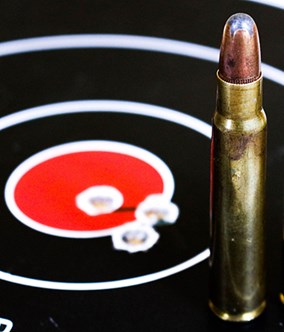 It did and does make an excellent all-around hunting cartridge, fully capable of taking almost all of the world’s game animals except the true heavyweights. The bullet choices range from 125 grains up to 220 grains, with some European option running a bit heavier, making the 8x57 a very versatile cartridge. There are the traditional cup-and-core bullets—like the Hornady InterLock and Winchester Power Point—that made the fantastic reputation the 8x57 has, and there are premium bullets available to give the 8x57 a ‘new-lease-on-life’. The 196-grain Norma Oryx as loaded in their American PH line of ammunition at just under 2600 fps is a fantastic bullet, as is the Nosler 200-grain AccuBond in the Nosler Custom ammunition line. For the handloader who wants to take advantage of the lighter bullets for deer and similar sized game, Speer, Hornady and Sierra all offer good light-for-caliber choices, should you prefer the higher velocities of the light bullets.
The 8x57 Mauser has often been described as being the full equal of the .30-’06 Springfield, and while I find the velocities to be slightly lower, the same class of game can be hunted with both calibers. In deference to some of the older rifles, whose metallurgy may not be capable of handling higher pressures, many of the factory loadings are on the anemic side. If you’ve got a good rifle in 8mm Mauser, diligent handloads may cause you to cock an eyebrow, once you realize the full potential of this cartridge.
Being a rimless design, which headspaces off the shoulder, the 8mm Mauser can be housed in a slim, trim hunting rifle. The 98 Mauser is certainly a classic, but there are many different makes and models chambered in 8x57. Because of the varying bore diameters, and because of the metallurgy concerns, it may be wise to have your rifle checked out by a competent gunsmith before trying to use modern, full-house loads. Once you’ve got the go-ahead from a gunsmith, you have a very potent cartridge in your hands, one that has worked not only as a military weapon for Germany and numerous other countries, but as a solid hunting gun in Germany and her colonies, like German East Africa (now Tanzania) and German Southwest Africa (modern day Namibia).
Oh, those children of 8x57? The 7x57 is obviously related, but there were other continental offerings, like the 9x57 and 9.3x57. Here in the United States, a gentleman by the name of Ned Roberts necked the 57mm case down to hold .257” bullets, resulting in the .257 Roberts that we all know. Likewise, that same case was necked down to 6mm, to create the .244 Remington, later renamed the 6mm Remington.
Old is not dead, and though the 8x57 has had to endure vast improvements in cartridge design, powder development and bullet performance, it remains a perfectly viable hunting cartridge, which will do its part in the game fields, if the shooter is willing to do his or hers.
Looking for previous installments of Behind the Bullet? We've got you covered.
• .38 Smith & Wesson Special
• 7x57mm Mauser
• 9 mm Luger
• .35 Whelen
• .454 Casull
• .375 H&H Magnum
• .45 Colt
• .22-250 Remington
• 10mm Auto
• .308 Winchester