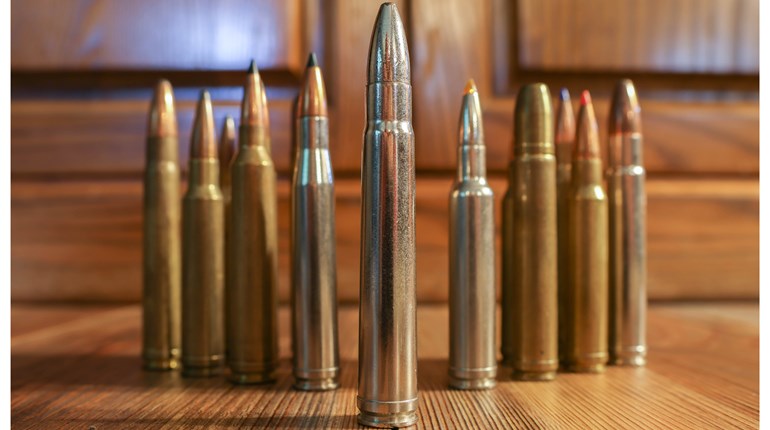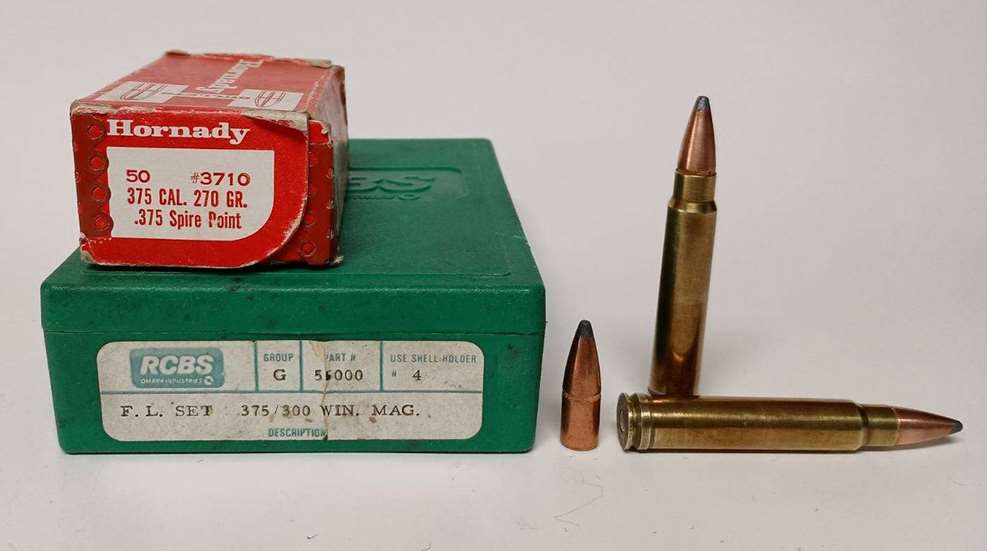
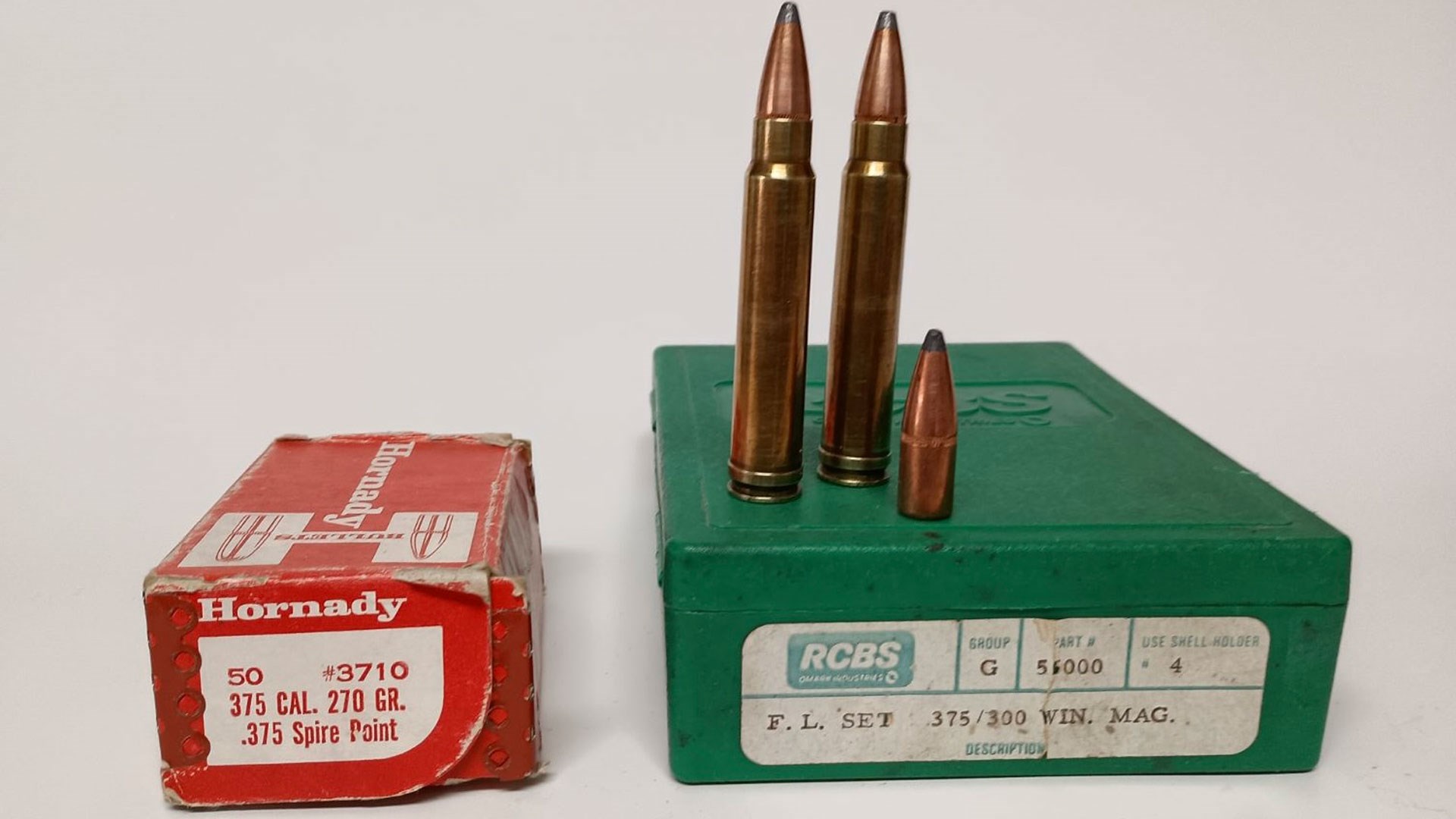
Wildcats are cool. My great grandpa and grandpa built their own wildcat-chambered rifle in the late 1980s. Built on a modified 1909 Argentine Mauser, the gun could fire a cartridge based on the .300 Winchester Magnum. The two of them were quite the ballistics wizards; realizing a .300 Win. Mag. cartridge held slightly more powder than the .375 H&H despite being shorter in length, they knew they could get the same ballistic performance—or better—than the .375 H&H, from a standard-length action. Thus, their .375-.300 Win. Mag. was born. Even then—nearly 40 years ago—my grandpa and great grandpa saw the benefits of a more modern .375-caliber magnum rifle cartridge.
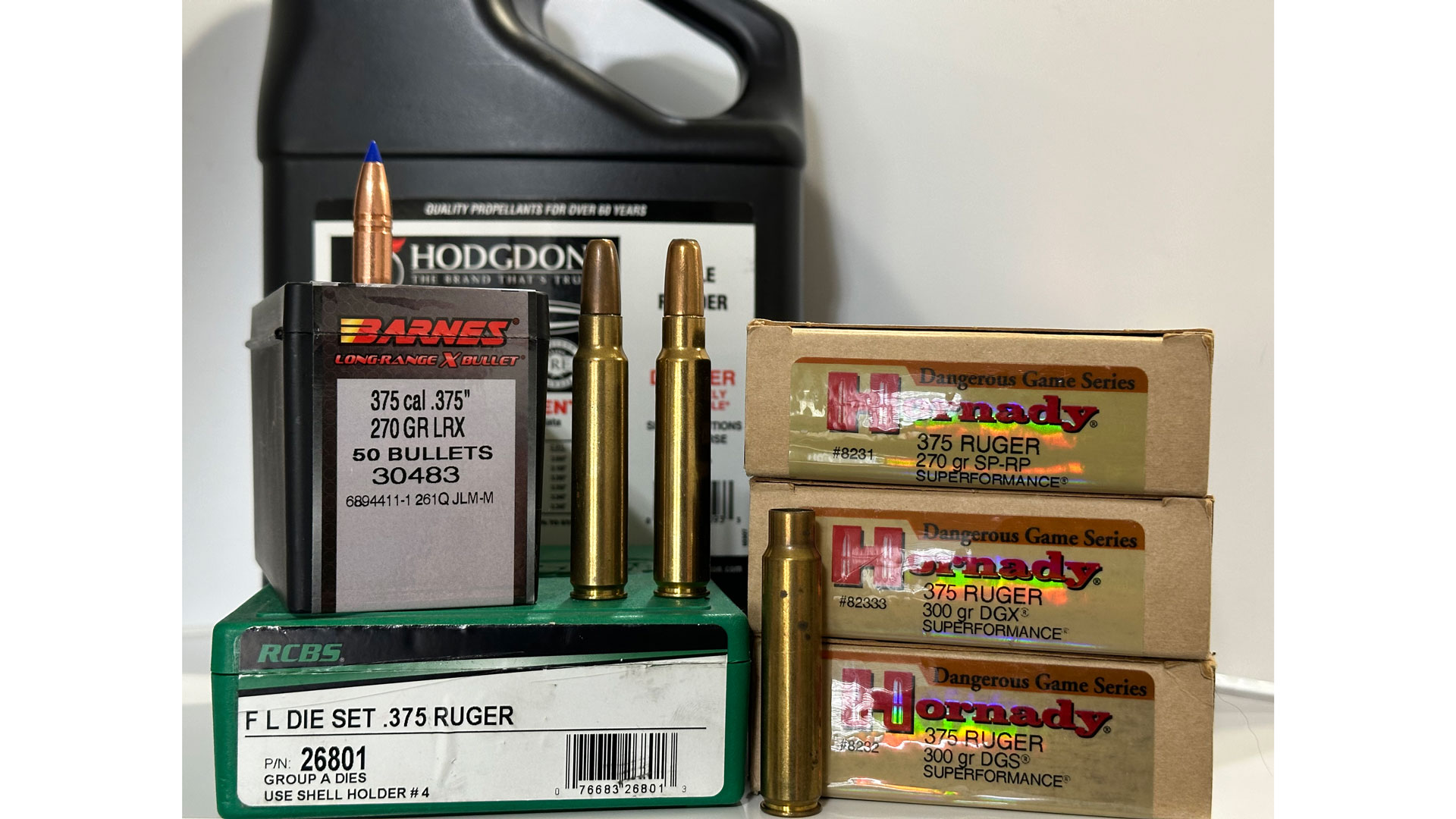
What does that wildcat story have to do with this article? Fast forward two decades, and Ruger and Hornady perfected the big-bore magnum concept with its .375 Ruger in 2007. It all started because the two companies saw the benefits of a more modern .375-caliber magnum too, with some further improvements to the concept of the ideal .375-bore magnum, venturing away from the classic .375 H&H.
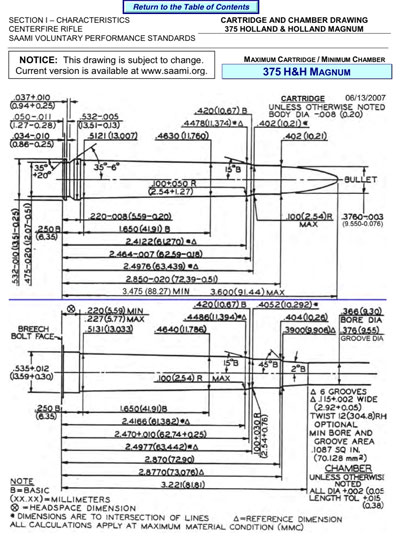
A couple problems stemmed from the H&H cartridge: the case itself is extremely long and it has a belted case, which was used for headspacing. While not a terrible idea when it was invented, our understanding of case design has come a long way and made the belt essentially obsolete.
But why are these “problems” problematic from the get-go? To paraphrase a “famous” (fictitious) scientist, we figure out problems with what we thought were “solutions”—referred to by said scientist as a “fractal curve”—to a previous problem based on a series of steps. To solve a problem, we try to “redraw” the fractal curve as a new solution to the original solution’s problems, which weren’t foreseen in the original solution’s implementation. “At the earliest drawings of the fractal curve, few clues to the underlying [problems] will be seen. With subsequent drawings of the fractal curve, sudden changes may appear. Details emerge more clearly as the fractal curve is redrawn. Inevitably, underlying instabilities begin to appear. Flaws in the system will now become severe. System recovery may prove impossible. Increasingly, the [solution’s problems] will demand the courage to face its implications.” And thus, a new cycle starts to form, creating a new solution to mitigate the problems brought about by the old solution. In short, think of cyclical tolerance stacking. The initial misstep isn’t necessarily all that noticeable, but as something gets built out, the flaws in the foundation really show where things went wrong at the start. Misread a compass by one degree, and you won’t be too far off your mark if only going 10 feet, but extrapolate that to a few miles, and you’ll be lost quick.
Now, apply this process to case design. With the former issue of length, a few concerns emerge regarding the .375 H&H cartridge. One, the longer the cartridge, the longer and heavier the gun; more steel is required to make the action longer to chamber the larger round, and a longer barrel is needed to make use of all the powder. Hunting dangerous-game animals require a minimum bullet diameter of .375 in most places. Shooting through dangerous game is tough, and because it’s a dangerous animal—like a cape buffalo—you want to do as much damage as possible to vitals while minimizing the risk of missing vitals, which ironically means the shooter needs to get close. A long gun in dense brush doesn’t bode well for handling or follow-up shots when time is of the essence.
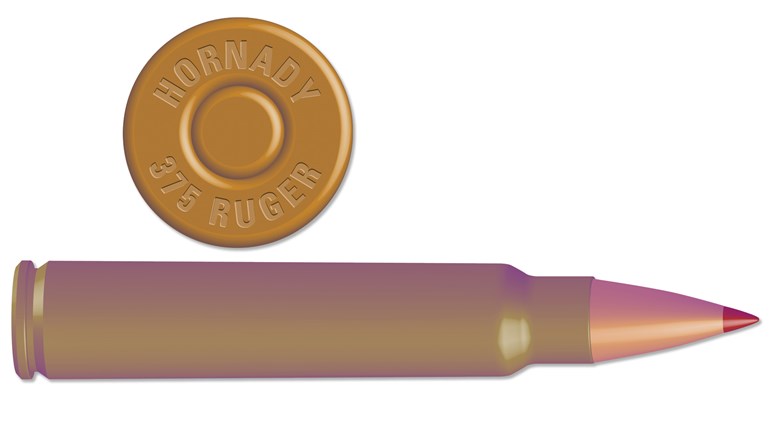
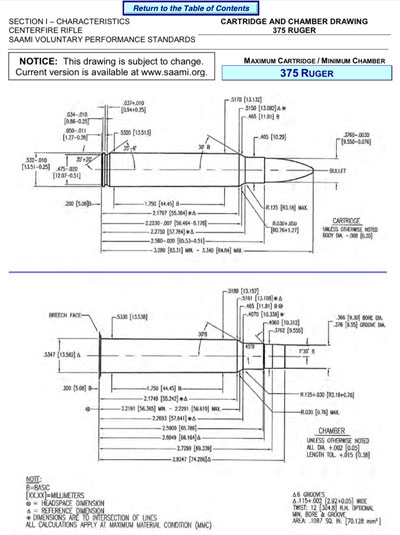
How does the .375 Ruger get more case capacity while being shorter than the .375 H&H? Two words: body taper. The .375 Ruger makes use of a wider case body profile, which opens the internal volume of the case to house more powder, even with less length.
So, what about problem number two? With the latter issue of the belt, headspacing off the shoulder typically improves accuracy due to better concentricity and alignment with the bullet to the chamber prior to firing. This contributes to a solution to the former accuracy issue; because a belted case is not as inherently accurate, it theoretically adds increased risk to an already potentially dangerous scenario. Taking these facts into account, a shorter cartridge carrying equivalent potential energy without some of the problematic nuances of old cartridge design is ideal for cartridge selection. It’s why the .375 Ruger is the optimized .375-caliber magnum for the 21st century.
Now the question is, does it really hold up ballistically to the classic .375 H&H?
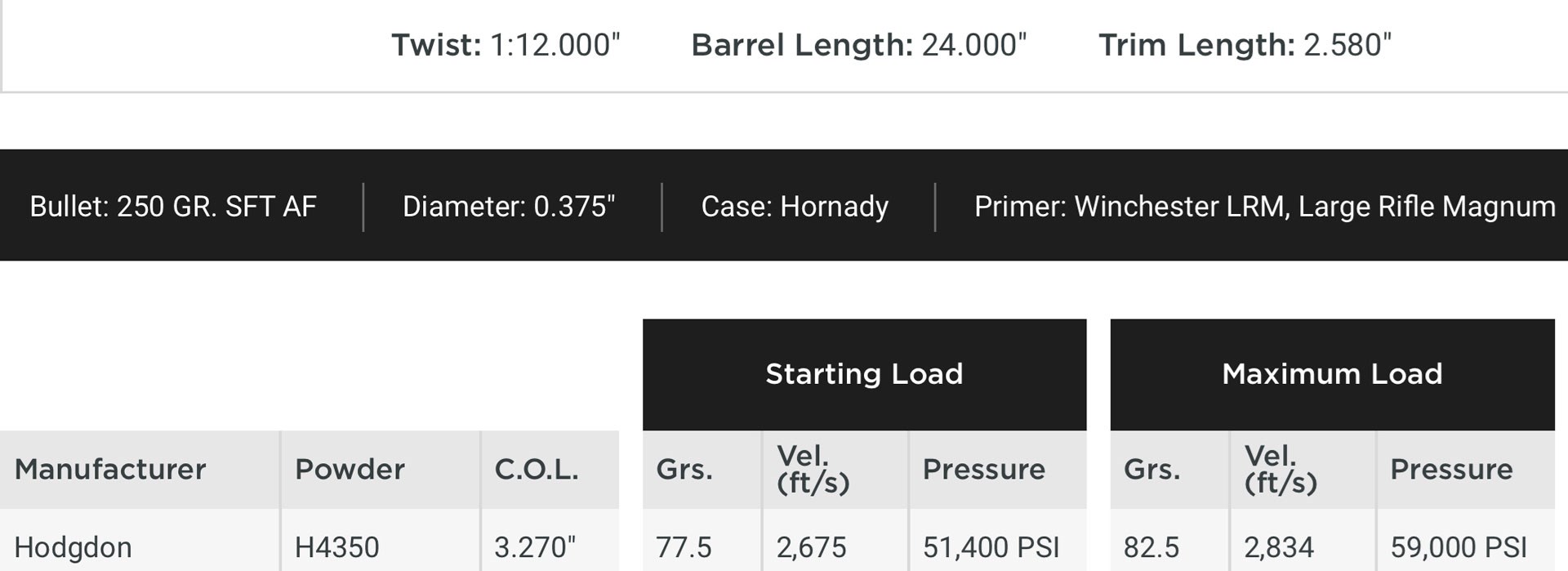
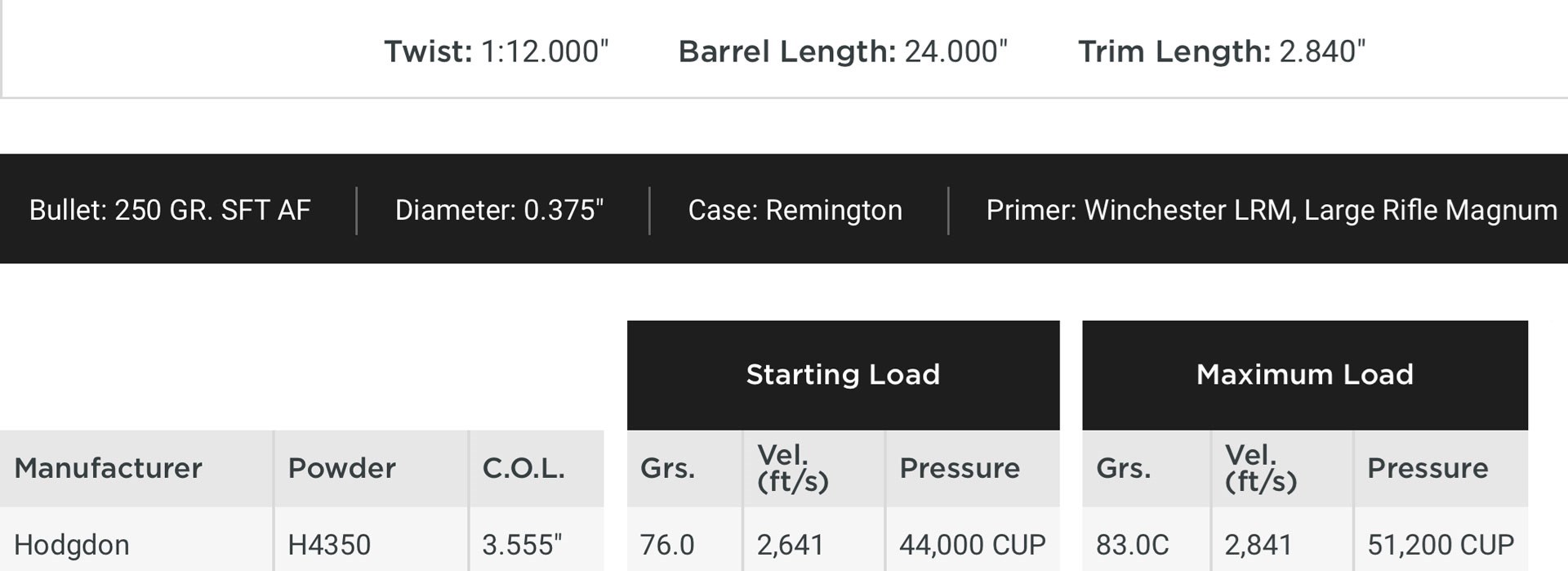
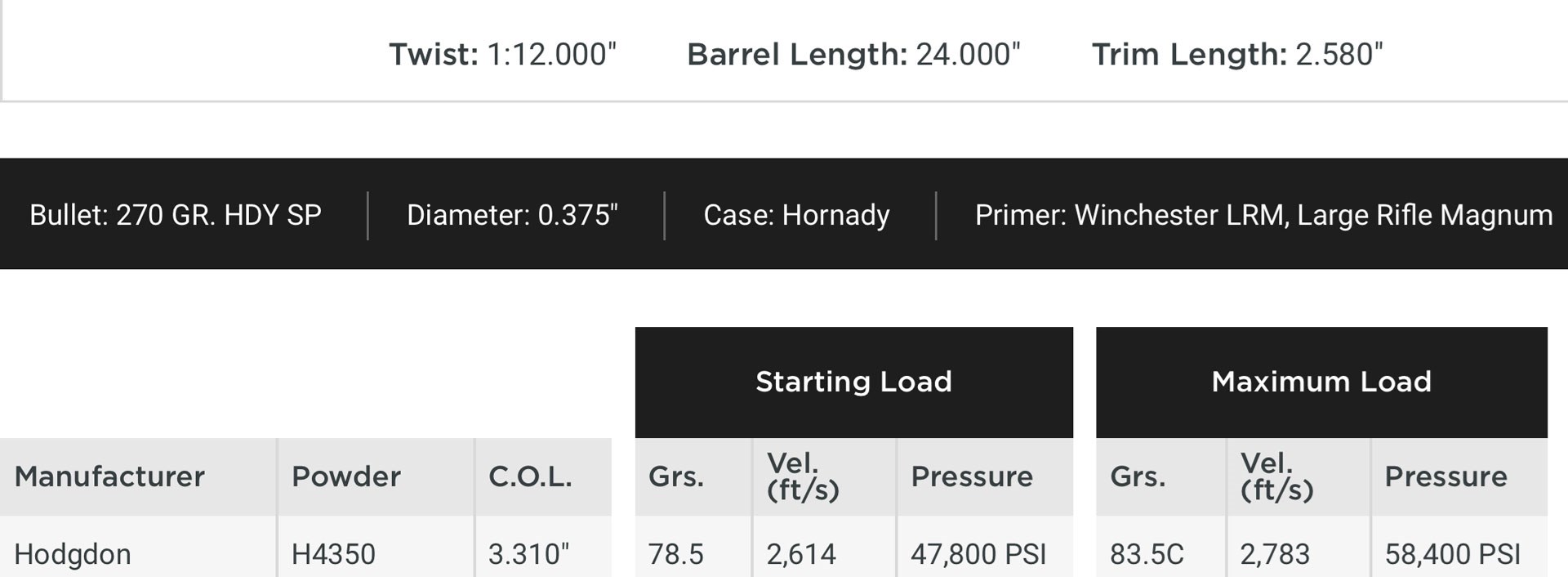
While many sources list a variety of bullet weights, there are only a few standard weights for .375-caliber hunting bullets for which both the Ruger and H&H cartridges are designed: 250, 270, and 300 grains. In each case, using the same powders (maximum H4350 reloading data from Hodgdon is used here for an example), you get the following velocity results:

As shown, the .375 Ruger generates faster velocities at higher grain weights, and case capacity doesn’t diminish because of the much straighter case wall, even though it’s about a quarter of an inch shorter than the .375 H&H based on SAAMI specs.
So, what makes the .375 Ruger superior to the .375 H&H since they’re close ballistically (though the edge goes to the Ruger variant)? This was somewhat discussed in the reference to African game-hunting rifles specifically, but in general, using shorter cartridges, rifles can be made using shorter actions which are more rigid. Barrels can be shorter, too, since powder consumption within the case is more consistent and a complete burn occurs in a shorter barrel (to better understand this set of physics and how it influences ballistics, check out the ballistic magic produced in short-mag cartridges; same effect, just on a larger scale). This also means the barrel will be more rigid for the same reason shorter actions tend to be more rigid, and therefore accurate; there is less material being flexed and that same material in shorter sections is more difficult to flex in general. This means pairing the two should give overall better accuracy. Combine that with the .375 Ruger’s headspace method, and it has far better inherent accuracy due to cartridge design than the .375 H&H; the Ruger variant gets a boost in velocity, too. Plus, all these shorter components mean a lighter, handier gun, which can be far easier fed from a magazine, making follow up shots much faster without sacrificing ammo capacity like when using a double gun. And if the goal is to get something into the dirt before it gets you underground first, it never hurts to have more rounds on hand if necessary.
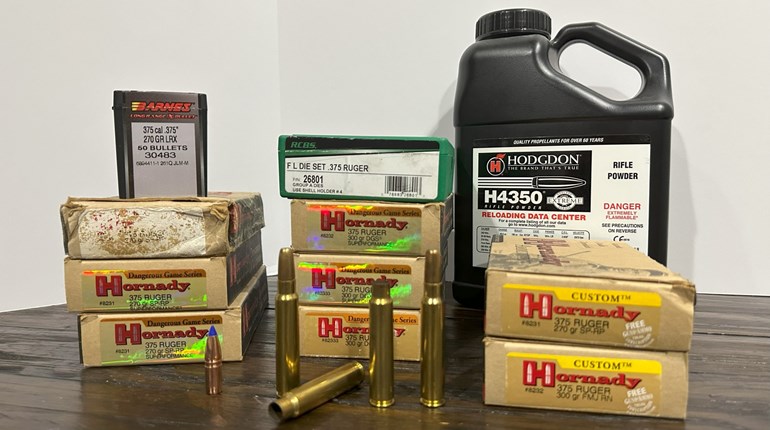
That rifle in .375-.300 Win. Mag. is still in my family; my dad has it, as well as the custom dies from RCBS his dad and grandpa ordered way back when. I’ve since obtained my own .375 Ruger rifle (a Savage Model 110 Bear Hunter). Knowing both rifles can do what the .375 H&H can do ballistically, I’ve never had a reason to get the H&H variant, especially considering both rifles have advantages over the classic .375 H&H. Don’t get me wrong: It’s respectable. But the .375 H&H is an outdated cartridge surviving on what seems to be nostalgia alone.