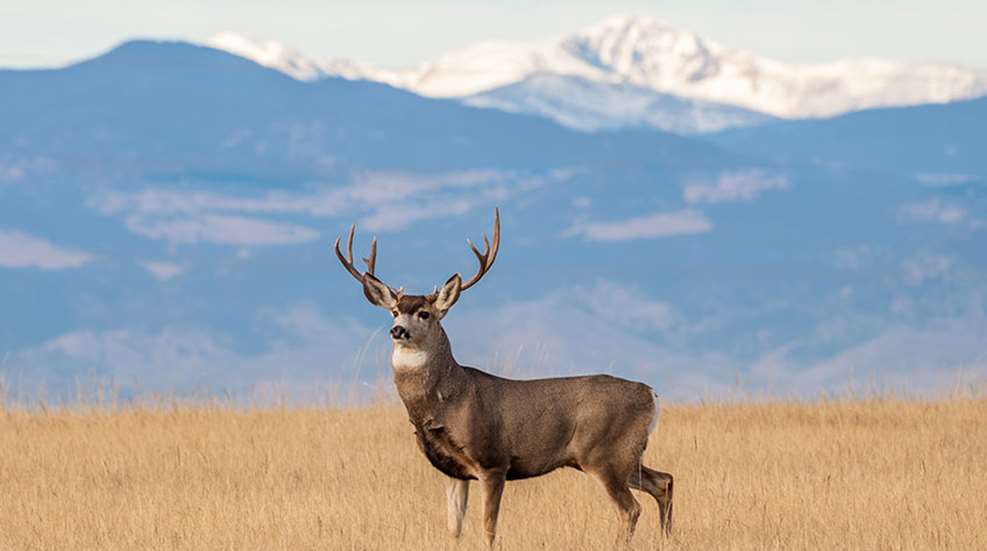
Despite what you might have heard, mule deer are not dumb. Granted, they don’t share the same level of schizophrenia their whitetail cousins possess, but I’m firmly convinced that one of the hardest—perhaps the hardest—animals to kill on the North American continent is a big ol’ public-land mule deer. Here are some tips, tactics and a few tales that will help you in your quest for your own public-land monster.
1. Shoot Long
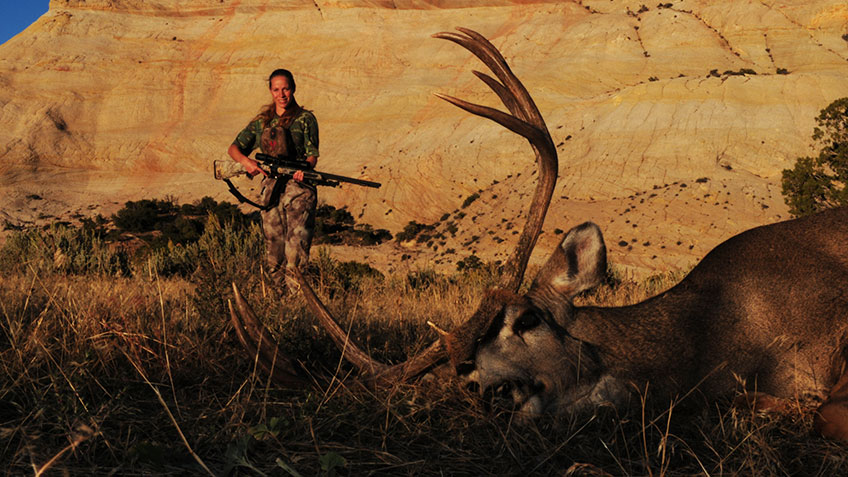
My 12-year-old daughter Cheyenne lay stretched across the top of a slick-rock butte, riflescope trained steadily on the first good buck we’d seen in four days of hunting. Industriously rubbing his gleaming brown antlers on an overhanging branch, he was 460 yards away with no possible way for us to close the distance. However, he could meander our way, which in due time he did. Intrigued by a sassy-looking doe, he stopped broadside at exactly 386 yards. Cheyenne’s bullet took him perfectly through both lungs, and four jumps later he lay still, meat awaiting transportation to the freezer.
Shot distances across much of public-land mule deer territory can be long and challenging. Set up an accurate rifle and quality scope for long-range shooting. Test precision high BC ammo to find what your rifle likes, and then zero it at 200 yards with that load.
Once your setup is complete, work it out at long distances. Learn your rifle and how it shoots, and where your ethical shot distance ends. Don’t shoot at game beyond that distance. In Cheyenne’s case, she shot all summer at distances up to 1,350 yards, including participating in a challenging long-range competition. Obviously, she would never shoot at a deer at 1,350 yards, but the long-range work made 386 yards very doable. Had she not been comfortable with long-range shooting, her buck would likely have turned into a fun encounter instead of meat in the freezer.
2. Practice Until Perfect
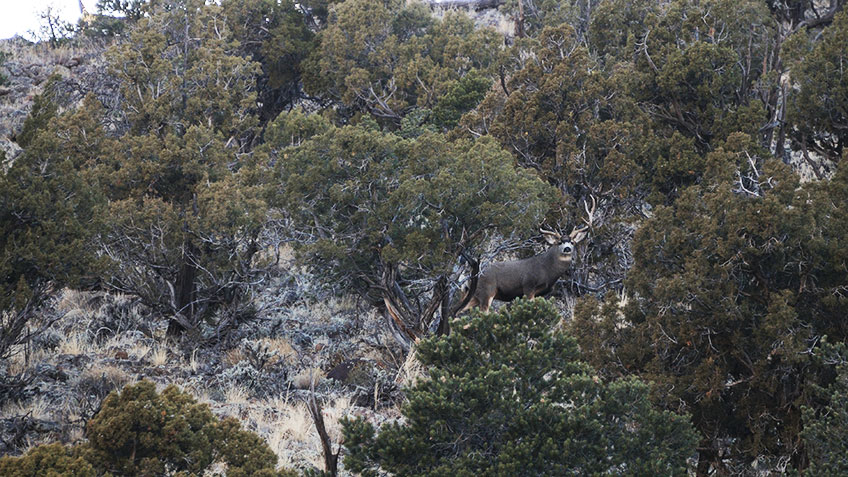
“He’s right there. Right there! He’s RIGHT THERE!” Ten minutes later, my friend, who was guiding a nice lady in pursuit of Trans Pecos mule deer, was still repeating the same mantra. Unfortunately, the biggest buck my friend had seen all year walked unaware and unscathed over the ridge and out of their lives—all because the hunter couldn’t find the deer in her scope.
Shot opportunities at big muley bucks are rare and dear, and can happen very fast. If you’re not proficient with your chosen weapon, they will escape you. Practice dry-firing your rifle extensively at a variety of targets and distances. Learn to shoot from prone, sitting and standing field positions. Always utilize any available support to make your shot as steady as possible. Keep your scope power turned all the way down while you hunt; the large field-of-view will enable you to capitalize on a close-up opportunity should one present itself. Only turn up the power if you’re preparing for a long shot.
3. Hunt Remote
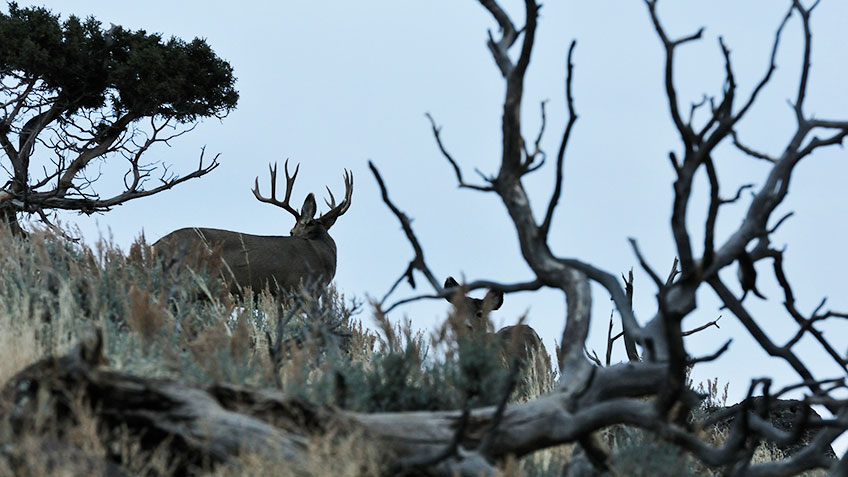
Four days of desert hunting lay behind me as I settled into position and began glassing a far ridge; four long days during which I’d seen only one buck and two does. I was in desolate, remote country though, and I still had hope of spotting a big buck—then there he was. Over 1,000 yards away in his ridge-top bed, he already had eyes on me. I rolled out of sight under a nearby log, crawled into a hidden ravine, and once out of sight, began to run, racing the falling dusk toward the buck. Fifteen minutes later, I crawled to a prone position behind a sage bush, settled my rifle atop it and dropped the old desert deer with a perfect 250-yard frontal shot. I was at least five miles from the nearest two-track.
It’s a fact that old muley bucks despise pressure. They’ll seek relief either on private land or in remote, hard-to-access territory. Search out those areas, put in the effort to access them, and if you really want an old monarch, spend your days hunting there. Unless the rut is in swing, you will not find a big muley buck in heavily-hunted areas. You have to hunt him in his stronghold.
4. Glass from a Vantage Point
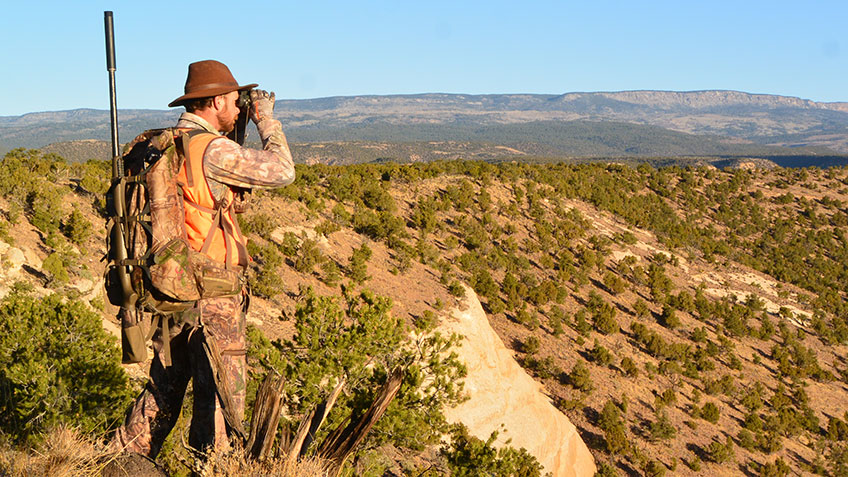
Just last fall, I climbed through pre-dawn darkness to a vantage point. Settling in behind my binoculars, I watched as dawn revealed a handful of bucks feeding across a sagebrush flat below. By the time they fed within range, shooting light had arrived. My bullet found its way to the biggest one’s vitals, putting my widest-ever buck on the ground. He taped right at 34 inches.
Elevation is a mule deer hunter’s best friend. Find a good vantage point and park your haunches on a smooth rock, your elbows on your knees and your binos on your brows. You can cover a lot more country with good glass than you ever could with your boots. Ideally, your glassing spot will also serve as a shooting position.
5. Bivy Camp
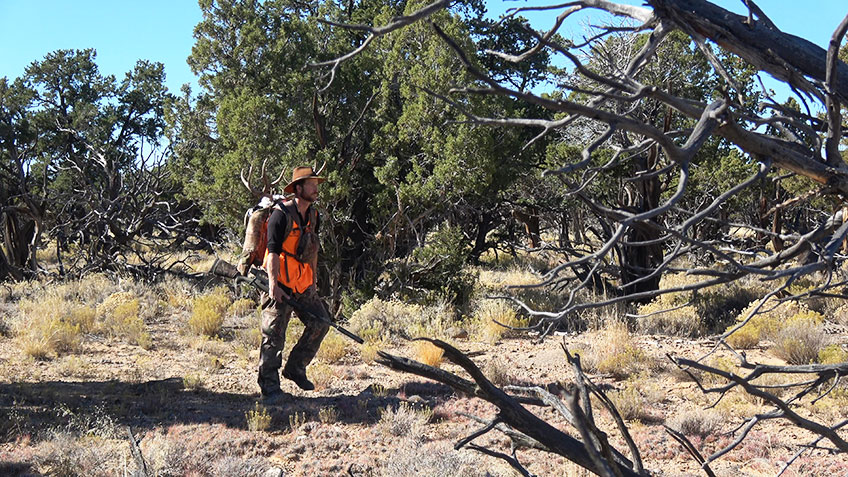
Belly to the slickrock and rifle rested over my pack, I waited until my target buck turned broadside at just over 400 yards. He dropped at the shot, so I hiked across a small canyon and processed the deer. Darkness fell as I hung the last steaming quarter from a pinyon limb to cool, gathered my gear and headed back to my bivy camp. I was a four hour hike from the road, in some of planet earth’s finest mule deer territory.
Sometimes the best—or even only—way to access a remote mule deer hidey-hole is by bivy camping nearby. I guess a guy could always hunt until dark, hike the four hours back to his truck, drive an hour into town and get a cup of coffee. Then he could hurry and drive back to the trailhead, hike four hours back into his hunting spot, and arrive just in time to start glassing at dawn. I, on the other hand, like to sleep, so I’ll opt for a snug bed in the backcountry, offering quick and easy access to my hunting area.
Quality, super-light gear is key to successful bivy hunting. You’ll want a lightweight sleeping bag, pad and an MSR PocketRocket stove. Mountain House freeze-dried food, a lightweight canteen and some water purifying drops or tabs will round out the basics. Add a tarp or one-man tent if weather threatens.
6. Track a Big Buck
If your hunting area features desert terrain with loose or sandy soil, tracking can be a solid way to lay eyes on a big buck. You’ll need to be in good shape and prepared for a lot of walking. Here’s how to do it: Drive, ride or hike typical muley habitat for a couple hours before dawn. Once you spot a fresh big buck track (they’ll be heavy, long and wide), start tracking him at dawn. If you have a hunting buddy, one of you should track while the other parallels from vantage point to vantage point, watching for the buck. Eventually you’ll catch up with him, so be ready for a fast encounter. Hopefully, one of you will get a shot. If you don’t get him, note his escape route and try again the next day. This time, post one hunter to cover a funnel along the buck’s escape route. He’s likely to make his escape the same way, giving the posted hunter a good opportunity.