Volumes have been written about the pitfalls of over-calling and about the benefits of minimalist, small-water setups. But that doesn’t apply to all ducks in all situations. Some scenarios require giving birds all you’ve got to attract their attention and coax them into places they might otherwise fly by.
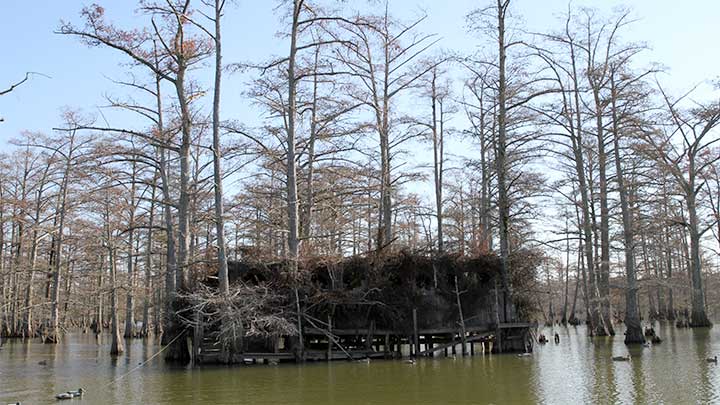
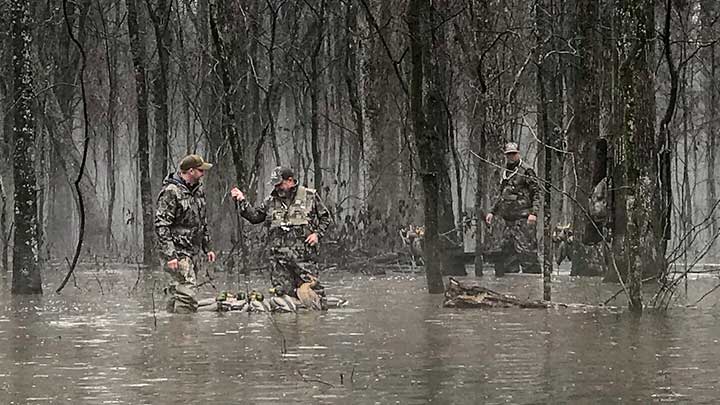
Recently I witnessed a great example of the art of decoying ducks on historic Beaverdam Lake in the heart of the Mississippi River Delta. I was amazed to witness high-flying birds that I otherwise wouldn’t have known were there had they not dropped through the treetops seemingly out of nowhere and into our hole after our guide blindly hailed them. Certainly, flooded timber hunting amid Mississippi’s blackwater swamps is specialized, but it proves successful hunters must employ tactics based on the given scenario rather than preconceived notions of how one should call ducks based on habit or tradition. Consider the following tips for scenarios with limited overhead visibility, perhaps on brush-choked ponds, wooded creeks, in flooded timber and during foggy days just about anywhere.
Give Ducks a Landing Zone
While there is truth to the fact that ducks go where they want to go, it’s also a fact birds only land where they can land. They fly overhead along their journey searching for a desirable place to feed, dabble and rest away from danger. Under vast canopies of timber, ducks may not be able to see the water or other ducks, nor do they have room amid the leaves and limbs to land if they did.
“If you are hunting private land,” says Duck Commander’s Justin Martin, who knows a thing or two about flooded-timber hunting, “cut key limbs or even a few undesirable trees such as water hickory or elm to create a small pocket of open water. Birds don’t need a big hole to be able to land, but they do need a hole. If you can’t cut trees, look for natural openings and set up there.”
Birds overhead will see this open water amid a sea of green jungle and naturally focus on it to take a better look. When they do, you must be ready to coax them both audibly and visually.
Calling
In timber, you can’t always see birds at which to call. So while you might feel a little silly in front of your buddies when you call blindly or call before you see ducks, you should do it anyway. Give random highballs, quacks and chuckles to attract high-flying birds or birds that you simply can’t see due to the trees.
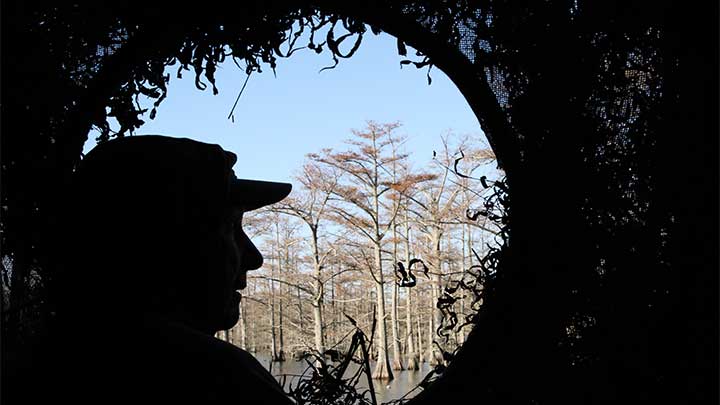
Beaverdam Hunting Services’ Lamar Boyd utilized this strategy with fantastic results, despite my skepticism while looking through the blind’s portholes at seemingly nothing but trees. Two-by-twos and three-by-threes, ducks would obviously hear the calls, drop over the trees, see the decoys and helicopter down into our hole and waiting shotguns.
“Start out calling on the soft side—unless birds aren’t responding or if you’re hunting public land and competing for birds,” says Martin. “And don’t be afraid to call often.”
If and when you find a sound and volume at least one group of birds likes, keep doing it. Chances are, others will like it too.
Decoys
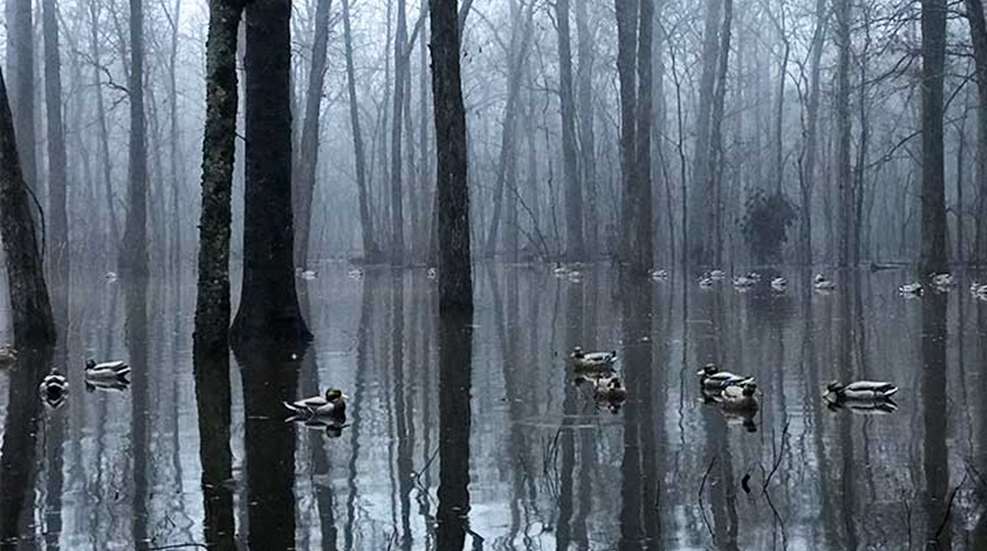
Once birds see a hole of open water and hear other ducks, they begin scanning for danger as they drop lower and circle to take a look. One indication of safety is if other ducks are already there feeding. Birds overhead will spot copious decoys easier even though many might be shielded from view by the canopy of trees. Perhaps even better than seeing the actual decoys, overhead birds lock in on motion; they can see ripples within the reflections on the water. Motion adds a giant element of realism, because living ducks are
never stark-still. Adding motion to your set is critical in low-visibility situations.
“I like to have all my decoys moving,” says Martin. “Whether jerk strings, ripplers, or splashers, I just want a bunch of commotion.”
Don’t forget about Mojos, or spinning-wing decoys; they can be deadly for deep-timber birds where lack of light and backgrounds make decoys—and ripples—tougher to see.
Although there was not an overwhelming abundance of ducks in the sky that day in Mississippi as perhaps there were during Buckingham Nash’s historic time there—or even the day before I arrived—we used great decoy placement, hole preparation, motion and aggressive calling to turn a slow day into a great one, because we made the most of the birds that flew over.
737 Duck Calls
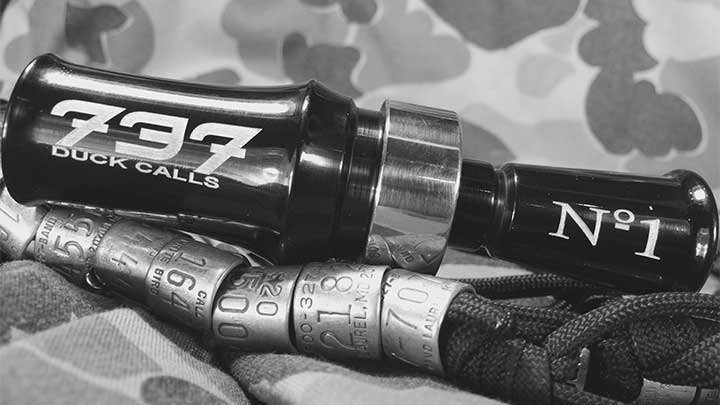
If you’re a weekend-per-year duck hunter, you probably don’t need the best duck call money can buy. But if you’re serious about calling ducks and obtaining a quality duck call with a tone that matches your style, a volume that matches your needs and with a consistency that won’t let you down in the moment of truth, you won’t regret buying a high-end call like one from 737 Duck Calls. The central Oklahoma, small-shop callmaker produces hand-tuned acrylic and wooden duck and goose calls. While it offers specialized calls for specific scenarios, its acrylic, No. 1 single reed call features a blend of range, smoothness and volume for most any situations, from low guttural chuckling to reach-out-there hailing and all quacks in between. I grew up hunting ducks with 737 proprietor Kyle Sanders, so I know just how dedicated to duck hunting and duck calling he is. Such a custom-engraved call also makes a great gift. MSRP: $150; 737duckcalls.com.