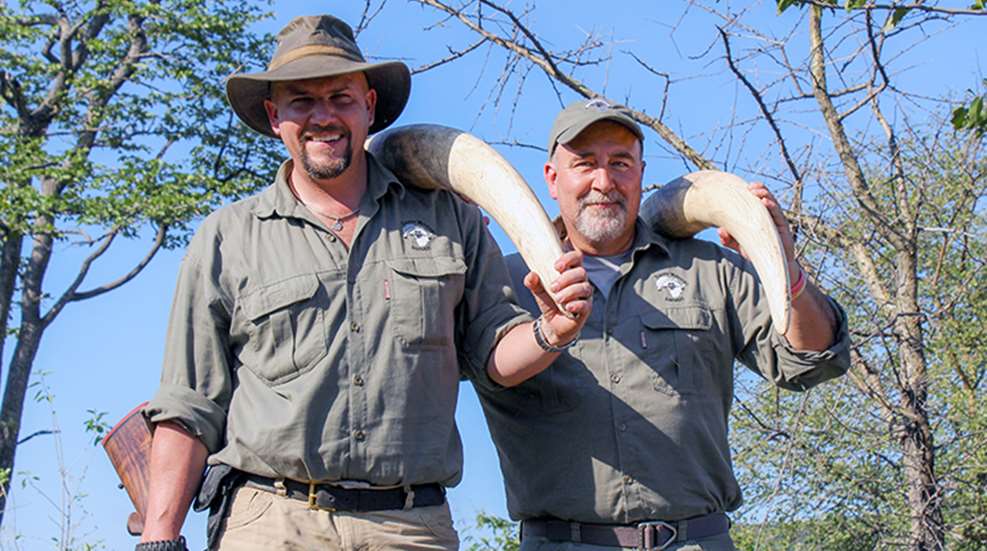
An African safari can be one of the highlights of any hunter’s career; it is a moving experience, and for me it changed my life. The prospect of heading ‘across the pond’ can be quite the undertaking, requiring some specialized gear and firearms. It pays to listen to those that hunt in Africa for a living; odds are they’ll know what they’re talking about. From rifles to optics to bullets, as well as clothing and footwear, Africa’s Professional Hunters have plenty of sage advice to share. Over the course of six safaris, I’ve been able to share a campfire with quite a few PHs and collect their opinions on several key issues. As my grandfather told me: “When you pay a man for his advice, you’d better well heed it,” and in this instance, I couldn’t agree with him more.
Let’s take a look at what some of the PHs have to offer, and how it differs from our own conceptions of what hunting Africa can be.
Rifle Calibers
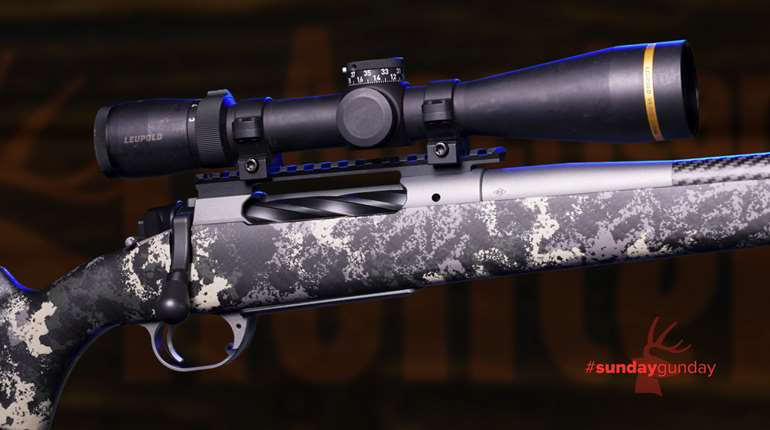
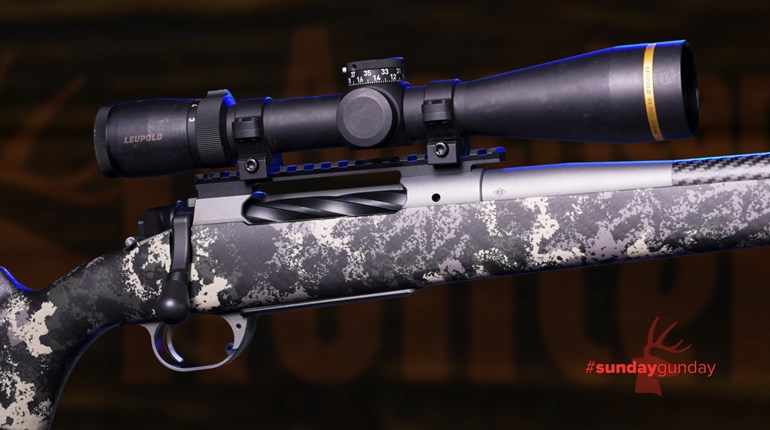
I have been guilty of the idea that you need a small cannon to shoot everything in Africa. If you’re booked on a plains game hunt, odds are a sensible deer rifle will do the trick. South African PH Nick Prinsloo has this to offer: “For plains game, here in the Limpopo especially, a good .30-’06 with a premium 180-grain bullet will take care of all of your needs. And, please make sure you’re comfortable with all of the rifle’s features, like the safety and how to load and unload it quickly and safely.” I couldn’t agree more with Nick; while I’ve used a large gun to take plains game, my last safari was handled perfectly by a .300 Winchester, and I never felt undergunned. Actually, I’d have felt just as comfy with a .308 or a 7x57 Mauser—the shots were relatively close, less than 250 yards—and anything in that power range will work just fine. Dangerous game, however, demands a different attitude. Zimbabwean PH ‘Cowboy’ Tim Schultz recommends that clients who wish to pursue the nasty beasts bring a good .375 H&H Magnum. “It will do for everything from steenbok to elephants, and should your ammo be lost, it’s one of the few calibers that is readily available in the remote camps. There’s no problem with using a bigger gun, as long as you can shoot it well, but a client who can shoot his/her .375 well is a blessing to us Professional Hunters.” I must also agree with him; I’ve heard lots of horror stories of clients that bring too heavy a caliber and can’t shoot it well. I always try to stick to that which I’m most comfortable with, be it .375, .416 or .404. Unless you can handle them with the utmost of confidence, leave the truly big sticks to the PHs.
Ammunition
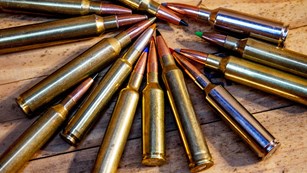
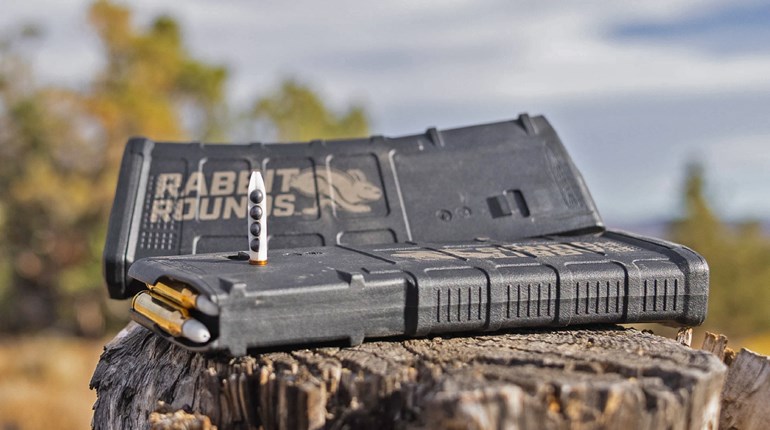
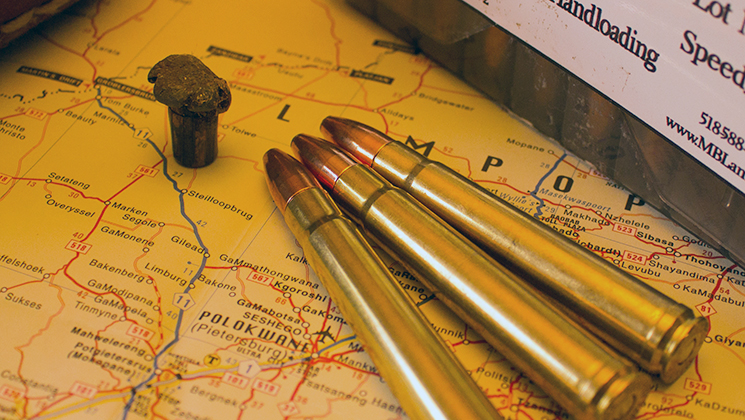
When investing the amount of time and money required for an African Safari, all of the PHs recommend using the best ammunition you can afford. Nick Prinsloo is a fan of the Nosler Partition bullet for plains game, while Danie Wingard likes the Woodleigh Weldcore softpoints. I can’t argue with either of them. Both Prinsloo and Tim Schultz like the Swift A-Frame for buffalo, and Sebastian Jonker is a huge Barnes TSX fan. Collectively, they want premium bullets to ensure a quick, humane kill. Pick the strongest bullet that shoots accurately in your rifle.
Clothing
I have been guilty of obsessing over safari clothing; I want to be comfortable in the heat of midday yet have enough gear to stay warm in the mornings and evenings. I am also guilty of over-packing—there is no need to bring four sets of clothing for any safari, as laundry service is provided on a daily basis. Three sets maximum, and you’ll greatly cut down on your baggage weight. While all the PHs opted for a neutral-green for a color, they also want your clothing to be well-worn. “New cotton clothing can be noisy in the bush, especially when scraping against thorns,” relates Prinsloo, “I advise that you wear and wash your safari clothing six or eight times so it’s well broken in.” Many of the PHs I’ve hunted with have worn good old blue jeans when hunting, and it doesn’t seem to alert the game animals at all. I wear shorts—as they do—when it gets really warm, but you need to be prepared for a scratch or two from the acacia thorns. However, they are quiet. If the thorns bother you, a lightweight cotton pant will do just fine. As far as headgear goes, most African PHs wear a baseball-style hat. They are compact, and shade your face well. I, however, am as bald as a cucumber and my head burns easily, so I prefer a wide brimmed hat to prevent sunburn. Nothing too outlandish, and certainly no zebra-pattern headband. My current favorite is made by Outback Trading Company, and has three little vents for air circulation. Tim Schultz prefers a boonie-style hat, to keep the sun off his neck and ears, and it works well.
Footwear
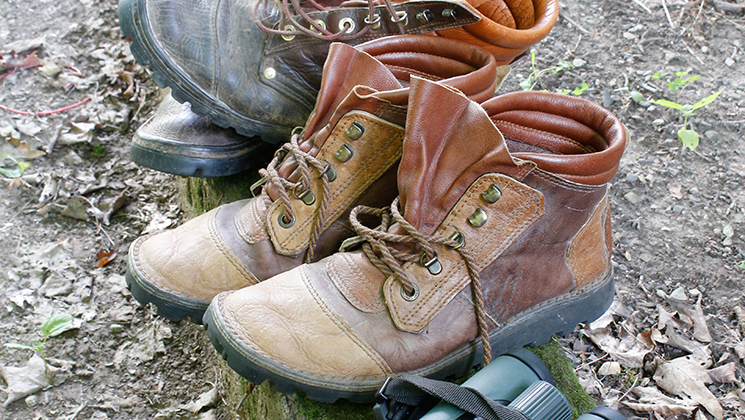
This is one point that every Professional Hunter I’ve ever spent time with agrees upon: your footwear must be broken in, and fit you well. “You’re going to put the miles on your shoes,” Danie Wingard explains, “so they need to be comfortable. Nothing too aggressive, as most of Africa has a soft soil condition, and you absolutely need to be quiet.” Tim Schultz, as a Zimbabwean, prefers the Courtney Selous boots. “They’re strong enough to turn any thorns, and the tire-tread sole is as quiet as a mouse when making a stalk.” I have to agree with Tim, I have two pairs and not only are they rugged, but they are comfortable enough to keep you going on the tracks, regardless of how many miles an elephant or buffalo will take you.
Hunt Preparation
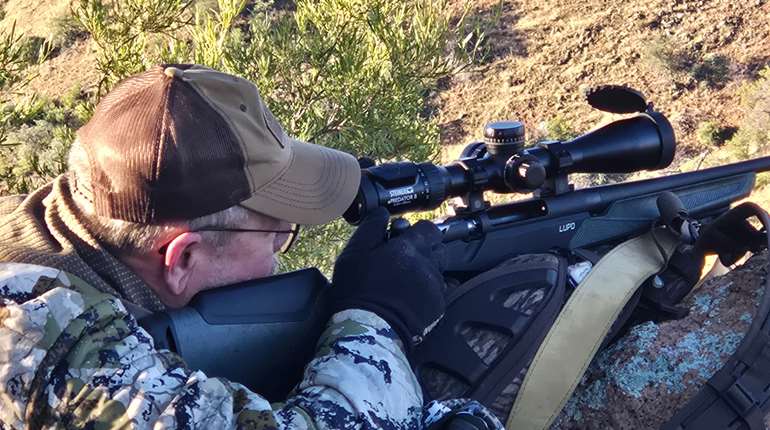
One point was central when discussing shooting. All the PHs want their clients to be able to acquire the target as quickly as possible once the shooting sticks are spread out. I remember Nick Prinsloo discussing the shot on kudu when we were driving to camp. “You’ll have three, maybe four seconds if you’re lucky. Get him in the scope and put that bullet where it belongs.” That type of shooting is where a scope with a low power on the bottom end comes in. “I like a 3-9x, as a maximum, for plains game”, Danie Wingard says, “That way you can get on an animal if he’s close in the thick stuff, yet the 9x top end is more than enough for a distant gemsbok or springbok.” I agree with his assessment. Another point brought up by all of these gentlemen was physical fitness. While an African safari isn’t the equivalent of running a marathon, you’ll need to be able to walk long distances. The ground is relatively flat in most countries, with a few exceptions, but stamina is required, especially in the heat. Be in the best shape you can be, and you’ll enjoy the hunt much more. One last point, and Mr. Prinsloo said it best: “Go with the flow when on safari. We PHs will do our best to see your dreams come true, but if you keep a positive attitude you’ll have a much better experience. Not all the game animals that you’re after are going to cooperate; so make the best of things and enjoy Africa.” I intend to do just that, Nick!