Two dozen dove hunters were scurrying away in afternoon sun. I could see their gun barrels bobbing between drooping sunflowers and could hear their dove buckets knocking against their fat thighs. Seeing the portly men race like children for the best spots was such an amusing sight I just stood alongside the outfitter. Pretty soon those hunters were in positions along the likely edges, and a garrison of them was covering a power line that ran down the center of the yellow field. So maybe they beat me there and I was destined to spend the afternoon mostly watching them shoot. Not necessarily.
Knowing local knowledge is supreme, I turned to the outfitter—a farmer in overalls who, like many in his trade, is a stoic and practical man—and asked what they’d missed. He pointed a calloused hand at the far corner of the field and said, “There is a dead tree by a pond just around that tree line. Birds come off the roost in those trees and, being doves, a lot of them like that dead tree.”
Factor in the Sun
I set up in the 2-foot-wide shadow of that dead tree. The sun was on my right and still high but shadows were already long. At about 4 o’clock the birds started to come.Doves feed until late morning on a good clear day. They then hang out just perching on power lines or in roost trees. They’ll peck up a little gravel and drink at a water’s edge midday, but the next good flight won’t begin until they go back to feed from late afternoon until the last half hour of light—at this time doves will often go for another drink before roosting.
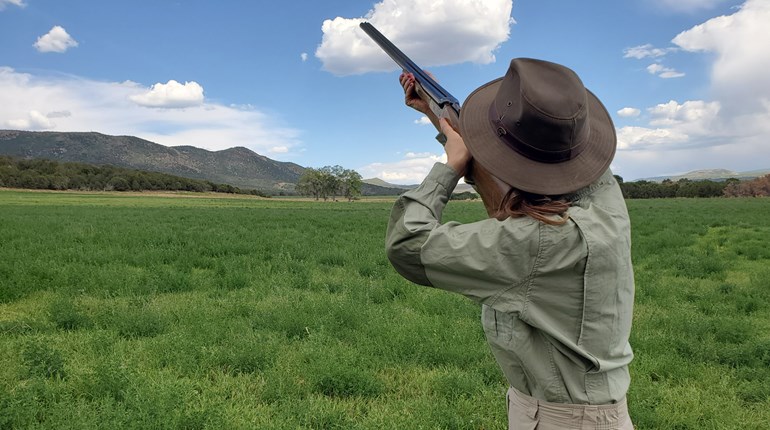
I leaned in the thin shadow of that dead tree. I could step out to pass-shoot with the shade protecting my eyes. That outfitter knew his stuff. Too many who set up for doves neglect to account for the arc of the sun. Hitting doves is difficult enough; you don’t need to shoot into the sun.
Doves are strong fliers capable of speeds up to 50 mph with the wind on their backs. If they see you they’ll dip and turn like sparrows harrying a hawk and will use the wind to jet away. Good dove shooters plan their shots like skeet shooters who know just where they’ll break a bird.
Stirring Up Doves
That outfitter’s spot had an added benefit. The field was busy with men and a few women sitting on buckets in the shadows. Many kept moving with the shadows and to adjust their positions. This pressure kept the doves moving and going back out past the dead tree.Many who read fields for doves forget to factor in other hunters. Many folks see other hunters as obstacles, friends and competition, but they can also be dove blockers and drivers.
The multitudes are, of course, part of what is so charming about dove hunting. Perhaps more than any other hunt in America, dove season brings families and friends together for a casual shoot and birds that eat like appetizers. From September and into fall, hunters will bag more than 20 million doves nationwide (some estimate more than 50 million). This take isn’t too much. A single pair of doves might rear six broods annually. In late summer, the population of mourning doves in North America is estimated to peak at about 475 million birds.
Hunt the Intersections
Doves roost in conifers and other thick woods and they feed on small grains or seeds. In September they feed in fields of millet, corn, barley, timothy hay and wheat. They also like sunflowers, foxtail and dried grasses that drop their small seeds on hard, late-summer ground.
Doves have trouble scratching for food through thick leaves or weeds and so prefer agriculture fields. With their roosting and feeding areas in mind, scout with a binocular for the cover that influences their flight patterns. Things like tree lines, drainages and barns direct dove flight patterns. When several of these structures come together in or near a feeding area, look for a spot where you can sit out of sight. Only move when it’s time to swing your shotgun.
Dove Decoys
Doves are attracted to other doves. Decoys should be positioned near where you hide. You can also place dove decoys on the top strand of a fence or as high as you can place them in brush or in a tree. Roy Wilson, one of the folks who made the cut to be a client of NRA Outdoors (nraoutdoors.com), is a Texas outfitter who has made his reputation putting his hunters in the right spots for doves. Face the decoys into the wind, he says, as that is how doves take off and land. He recommends Mojo’s dove decoy, as its spinning wings attract birds early in the season.
Less-Obvious Places
Roy says a prime location on many dove fields is an isolated patch of low sandy ground within a food source. “Doves like to fly to the low spot in a field for some reason,” he says. “They then feed in the higher areas. Those low spots often also have a washed-out spot where doves stop to find some gravel or grit for their crops.” They can be found around watering holes right after dawn, and before they go back to roost around dusk. However, doves prefer to drink from a rain puddle, says Roy. So hunting near water only works in a dry spell.
That dead tree was a less-obvious place, but my shooting attracted company. Before long my limit was lined up on the hard ground and I had the pleasure of stepping aside to watch a father and his 12-year-old boy try the spot.
Build Your Skills: Dove Guns, Loads
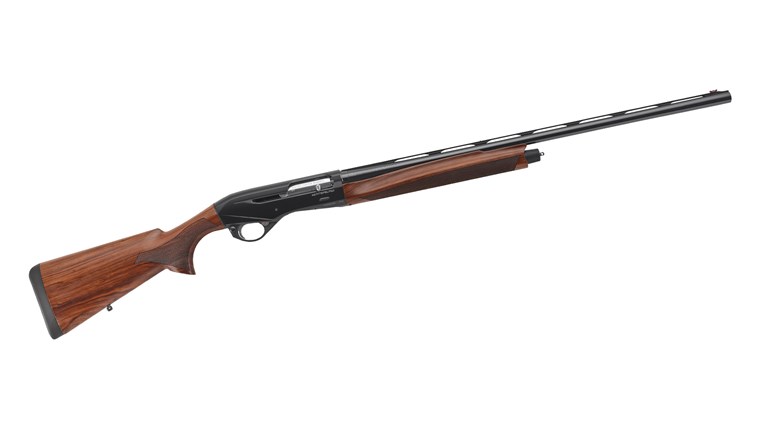
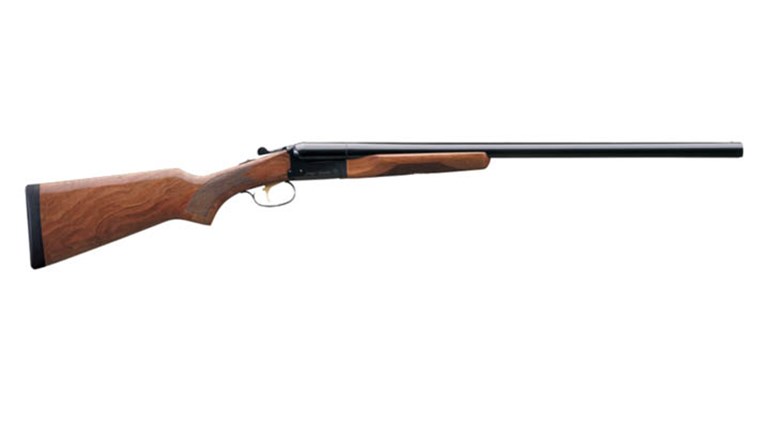
Pick a shotgun you shoot well, just remember doves are migratory birds so if you use a pump or semi-automatic the gun must be plugged to hold no more than three shells. Number 71/2 to 9 shot is the proper load for dove hunting. When you pick your spot, pace off 30 yards in several directions and mark the spots. It can be hard to estimate distances on doves flying over fields, and this will help you wait until a dove is in range and conserve ammo.