So, you want to commission a wood and metal masterpiece, or maybe try your own hand at stockmaking. If you’re going to shell out thousands of dollars to a custom gunmaker or spend hundreds of hours of your own time inletting, shaping, and finishing a stock blank, you’ll want to use the best materials available. Which wood makes for the best gunstock?
The Criteria
How do we define “best?” In this context we are dealing with something very subjective—but a few characteristics are clearly desirable. A high-grade gunstock must be strong, dense, possess appropriate grain flow, and be attractive.
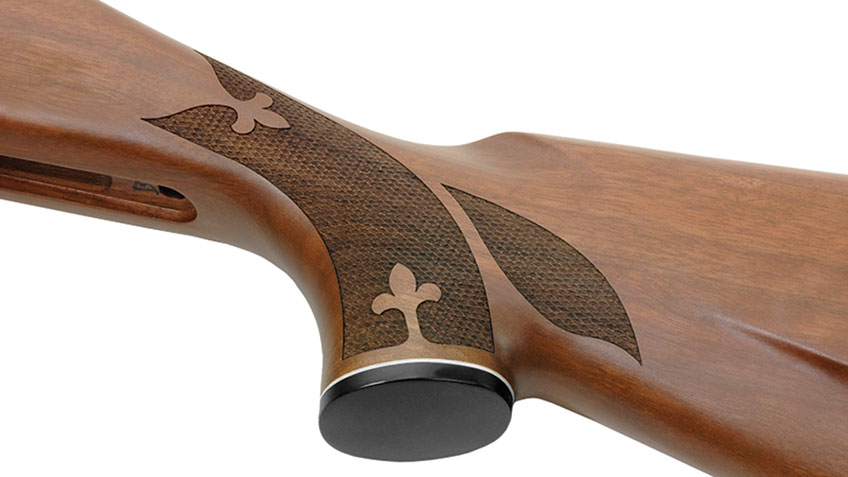
The Traditional Choice
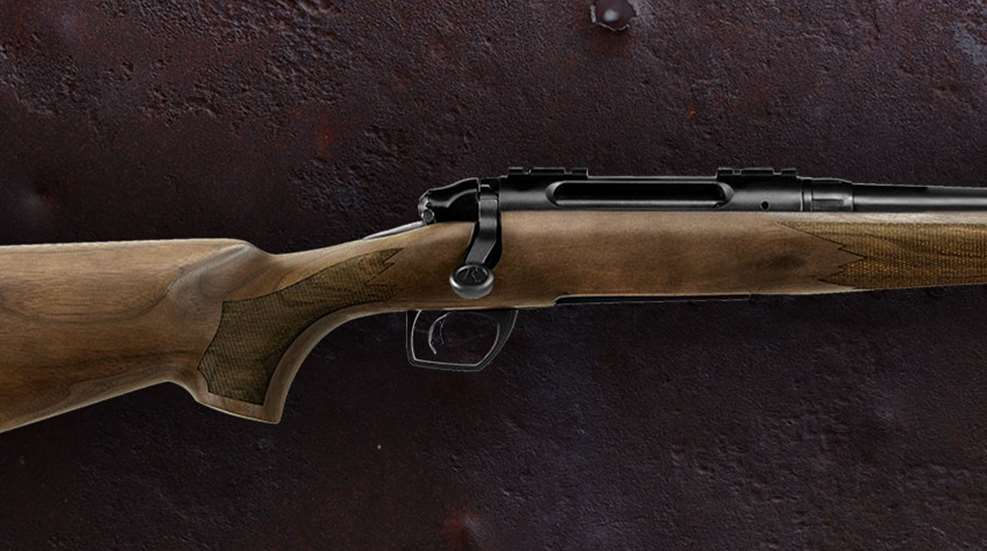
English Walnut has, for centuries, been the choice of top gunmakers when it came to using the best wood available. In the excellent 1941 book The Modern Gunsmith, author and gunmaker James Howe makes his preference clearly known:
“The wood par excellence is walnut, and there is no substitute.”
“…the forests of the whole Earth have paraded their finest growths only to have it firmly demonstrated that walnut is the king of them all.”
“…English walnut, is by far the best”
The Expert Deferral
Though I have done a bit of stock work, and I have commissioned a few custom rifles, I am hardly an expert when it comes to wood selection. I reached out to an expert in the field that I trust: custom gunmaker Duane Wiebe. Duane has spent decades hand-building some of the finest rifles that you’ve ever laid eyes on, all with wood stocks. He also doesn’t sell wood so he has no dog in this fight.
Duane’s Opinion
The premier choice for gunstock wood is known variously as Turkish, Circassian, French, English, etc., properly called Juglans Regia...literally "Royal Walnut".
I've used Juglans from Australia, Turkey, Armenia, Tazmania, China, California...the list is almost endless. Wherever walnut will grow, there's a very good chance of finding fine stock wood.
For the bolt action stock, the choice of a proper blank is far outnumbered by the availability of wood for two piece blanks and this will be reflected in cost. Any blank must be chosen with a critical eye to proper layout. That means the grip section grain should follow as close as possible the curvature of the grip and as parallel as possible to the bore.
The fore-end wood should also closely follow the bore line both vertically and horizontally; a little deviation in grain flow upwards (viewed from the side) is actually a plus. If the grain drops off (downward) the blank is simply unsuitable- at least for a bolt action. In time, the wood will drop away from the barrel...and it will happen EVERY time.
Traditionally, quarter-sawn blanks have been the most sought after, since the figure will usually be almost the same on both sides. This is not to condemn slab sawn and some feel the slab-sawn blank is a little stronger through the grip.
Of course, everyone likes pretty wood, so if you get pretty wood with proper lay out, you better buy that blank- but only if your supplier will swear that the blank is dry and seasoned. It doesn't take very long for stockmakers and customers to get wise to the money-hungry supplier that sells wet wood. Even then, allowing the blank to set around for a year or longer is a good practice. I weigh the blank with a sensitive scale when it first arrives and write the date and weight on the blank. A weigh-in again in six months or so will tell you right off if the wood was seasoned properly.
I know of two suppliers that absolutely will not sell wood that has not spent a minimum of five years being air-dried. Yes, there are other methods of speeding up the process, but usually frowned upon by the customer or stockmaker who wants the very best.
The Ruling
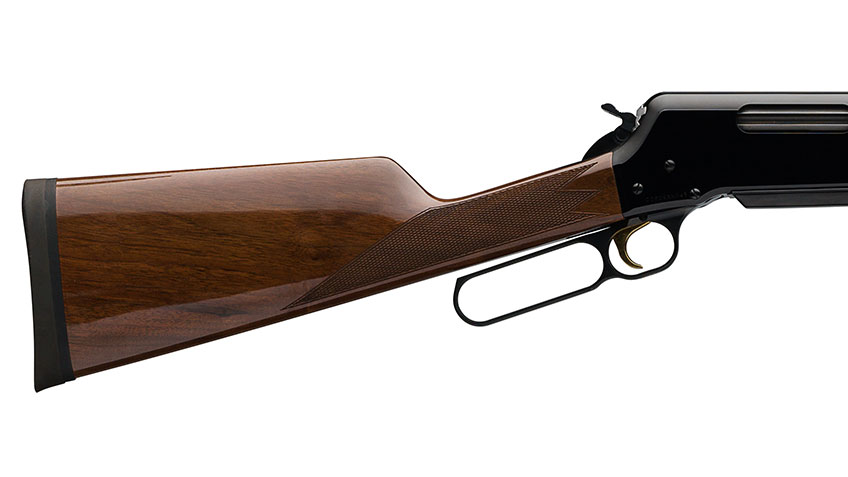
Juglans Regia a.k.a. English/Turkish/French Walnut, is the king of woods when it comes to building a rifle stock.
What about American Black Walnut (Juglans Nigra)?: Black Walnut makes for fine stocks, but if we return to the work of James Howe, we get to learn its place in the World. “With the one exception of Juglans Regia, it is the best stock wood extant.” Duane agrees: “For some firearms, a traditional choice would be Black Walnut...pretty good, but not usually in the class of Juglans [Regia].”
My Advice
Listen to your gunmaker. If you’ve done your homework and picked a great one (the American Custom Gunmakers Guild is a good place to start your search), he or she should know what the best stock blank for your needs will be. After all, they are the one that will be putting their name on it.