Turkey hunters are odd folks. I know, I am one. There are few, if any, non-chemical addictions as severe as hunting spring gobblers. And if you are fortunate enough to travel the country chasing the four subspecies, your condition may well be incurable.
Having hunted around the country a bit and having several good friends on the Grand Slam list, I can tell you that if you start comparing Rio’s to Osceola’s and Merriam’s to Eastern’s, you will be shocked at the number of different techniques required to be successful with each one.
In all cases I will look at how and where to hunt each specific bird, focusing primarily on calling. Calling is not necessarily the most important aspect of the hunt, but it can certainly be a deal breaker. I am going to start this discussion with the subspecies I believe the toughest to get by the ankles.
Osceola's Turkeys
One of the things that make Osceola’s so hard to hunt is the habitat in which they live. Florida is his home and everything in the woods down there bites, sticks or stings. The cover is lush and the humidity is stifling. Any of these can cause you to lose focus on your hunt.
This subspecies is losing its habitat at an alarming rate—much faster than the other 3 subspecies combined. This loss of ground to live and breed in also puts a ton of human pressure on these birds, making them very shy and cautious.
When calling Oceola’s, you need to be subtle, but get right to the point. By that I mean make your calls a bit more demanding or passionate, without calling too loudly. Loud calls tend to slow them down.
Light calling is what these birds do to each other so as not to attract too much unwanted attention. The human and predator pressure Oceola’s get makes them extremely timid. In human terms, you want your call to say, “Come here now” as opposed to “Come here please”.
Those folks who live there and hunt this subspecies on a regular basis prefer diaphragm calls because they can make very subtle notes, yet very clear sounds with this call. Oceola’s are tough, but success in Florida is very satisfying.
Merriam's Turkeys
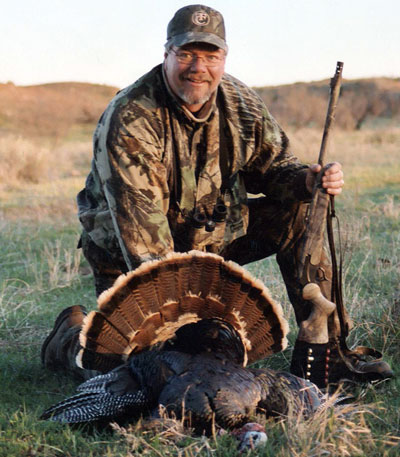
We will move now from the toughest subspecies to hunt and call to what I believe is the easiest. In most places where Merriam’s live, they exist in great numbers. It is not unusual to see 20 to 30 Merriam’s in a flock.
These birds like living in wide-open country and may move around over hundreds of acres a day. Because of their extremely open and often windy habitat, loud, high-pitched calls work very well. Overcalling Merriam’s is seldom—if ever—an issue.
I prefer box calls for these western gobblers. More specifically, I highly recommend the 4-Play box call. The Rafter, from 4-Play, can make the great high-pitched notes needed on windy days when the birds are a long way out. It can also be useful for softer, close-in calls when the Toms move in.
This may sound funny, but I think Merriam’s gobblers are hatched with a death wish. Generally, they are easy to hunt and easy to call. I do not want you to think that harvesting a Merriam’s is always cake walk, but it certainly can be.
Rio Turkeys
Our southwest subspecies is the Rio Grande. These birds most closely resemble their eastern cousins. The thing that makes hunting most Rios difficult is where they live. I hunt Rio’s near Amarillo, Texas. Down there stands of timber suitable for roosting can be few and far between.
Once the Toms fly down they begin traveling to find food, water and hens. Luckily, the hens too are seeking food and water, so they end up near the same location. Find the food and water, and you will find Rios.
Again, loud, high-pitched calls are required to fight the distance and windy conditions which are common in the southwest US. The good news is that Rios respond very well to calling. As I do with Easterns, I like to switch between hen calls and jake calls.
The attitude of adult Rio toms can be rather aggressive. They like beating up and flogging jakes in the spring. Both jake yelps and clucks with either the 4-Play box or a diaphragm work very well.
Overcalling Rios is seldom the case. These are very vocal birds, and the hens call pretty loud as they seek out Toms they desire to breed with. I have had great success using my box call to “cut” at distant Rio gobblers in both Texas and SW Kansas. Excited hens are what those southwestern gobblers are looking to hook up with.
Eastern Turkeys
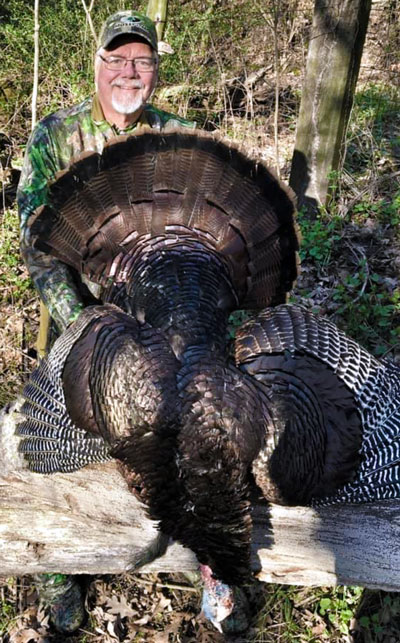
I have held off talking about the Eastern subspecies ‘til last for several logical reasons. First, they are the most complex and frustrating turkey in America to hunt. My Grandpa told me this when I first started turkey hunting; “Gobblers don’t do the same thing once in a row.” That pretty much sums it up.
The second reason is that this subspecies has, by far, the largest range across the country. Their numbers are amazing in some areas but have fallen off in others. And the absolute diversity of their habitat is daunting.
Calling Easterns to make them respond and come in can be very perplexing. My best examples are the two states I have hunted every year since 1999. I grew up in SE Missouri. Turkeys were scarce and hunting them was tough.
In Missouri the gobblers are very skittish. Overcalling is common. I find subtle, light calls work best. And I also call less often to Missouri toms. My plan remains the same. I start with light hen yelps until one answers. Then I switch to soft jake clucks. If I get no response, I switch to light jake yelps. I increase volume as needed to get a gobble. It is best to let Missouri Toms hunt you.
When I merely cross the Mississippi east into Illinois, however, the difference is unbelievable. Prairie State Eastern toms love lots of loud, aggressive calling. Here I can call birds all the way to the decoys without fear of spooking them.
I wish I had the answers as to why this is. All I know is that when you learn these differences you can use them to your advantage. In Kansas I treat Easterns like Missouri gobblers. In Iowa they react more like Illinois birds. Scouting and experience are how you discover these tendencies.
Turkey calling, regardless of the subspecies, area of the country you are hunting, or time of year, is a matter of trial and error. The more trials you persevere through, the fewer errors you will make in the future. Good luck and most of all, have fun calling those gobblers.