“Hang on,” I said, “I gotta stop and catch my breath!”
“But we are going downhill.”
“Yes, my knees are very aware of that.”
I couldn’t help but notice that everybody else stopped, and they were gasping just as much as me. My guess is there are about two molecules of oxygen per cubic yard of air at 12,000 feet above sea level. While I am not exactly a flatlander, I live at 849 feet and I needed a day or two to get acclimated. The trouble is, when the turkey hunting is this good, in a day or two it’s all over.
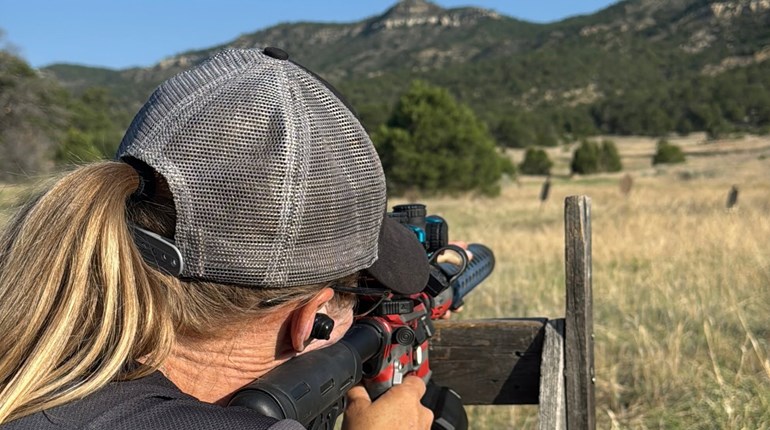
We were hunting the Vermejo Park Ranch in northern New Mexico, right on the Colorado border. The Ranch is 923 square miles, or nearly as big as Rhode Island. It’s game-rich country, and in the four days I was there I saw hundreds of elk, almost that many mule deer and a lot of Merriam’s turkeys.
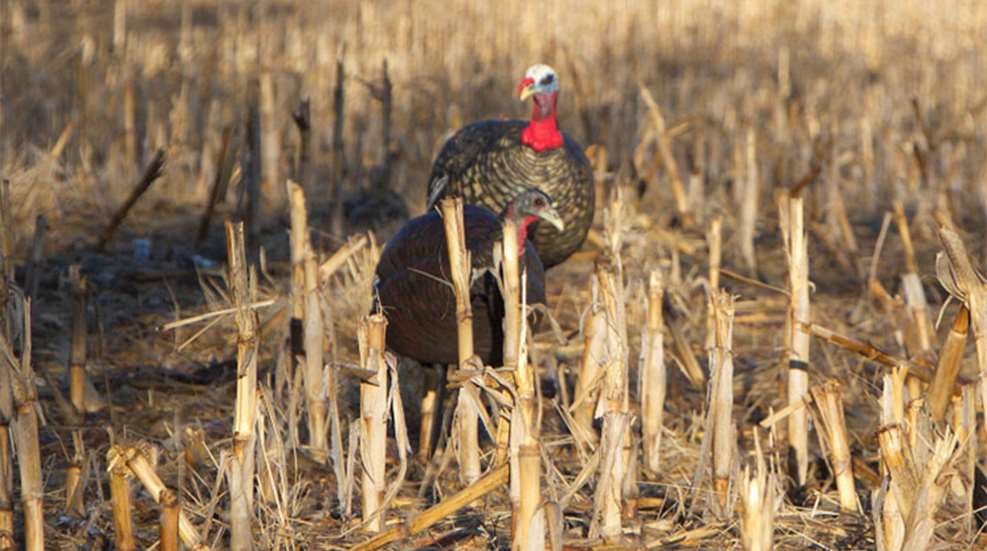
I have experience with all the turkey subspecies and I think the Merriam’s may well be my favorite to hunt.
That’s mostly because of where they live. I love hunting in the West and particularly in the Rocky Mountains where Merriam’s turkeys lurk about in some of the most beautiful country on Earth. They usually live in big country with little hunting pressure. That makes them a bit naïve about turkey calls and decoys. I like that in a turkey. Also, they are gobbling fools. Like a teenaged girl with a new cell phone, they babble on and on and never shut up. I prefer an aggressive approach to turkey hunting and I like to move in close. Loudmouth turkeys make that a lot easier. Finally, Merriam’s may not have the largest beards or the longest spurs, but their white-tipped feathers make them a candidate for the most striking of the North American turkeys.
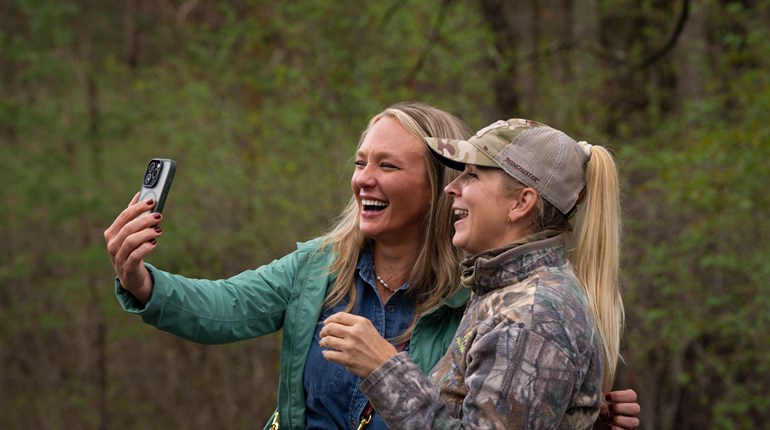
My companions were Nick Mundt of “Bone Collector” and “Realtree Road Trips” fame, and Cally Morris, who was filming for his Web show on realtree.com called “The 15-Yard Files.”
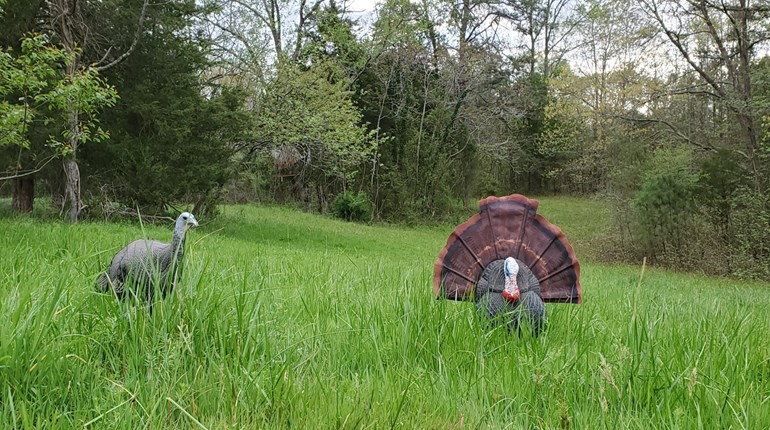
Cally is a world-champion turkey taxidermist and markets a line of lifelike mounted decoys. I have been using decoys for about as long as I have been turkey hunting, which is 42 years this spring, but I have never seen birds react to decoys like this. All six of the toms we shot—and one that we didn’t (no tags left)—broke into strut as soon as they spotted the decoys, then fixated on the male and came into it like they were on tracks. While they stole glances at the “ready hen” decoy in the breeding position, they would not leave the male. (Sometimes it was a strutting tom, other times a jake.) It was amusing to watch their reactions when they beat the hell out of the decoy and it didn’t fight back or run away. They were very confused turkeys. When the decoy would spin to turn his back to the aggressor, it drove them mad. They would attack, purr, putt and chatter what I am sure was turkey trash talk, all the while pecking and spurring the snot out of the decoy. This would probably still be going on if we didn’t shoot them, as they showed no inclination to stop.
“We have some fantastic decoys on the market right now,” Cally said during a lull in the action, “very realistic-looking, no matter if they are taxidermy like mine or manufactured. I think their use should be a big part of any turkey-hunting strategy.”
We saw the reasons why in real time. With every setup where we called in birds they reacted the same way. Singles or doubles, it was the same behavior. The toms would come in because they wanted to breed the hen. But that male decoy was a problem they believed needed to be dealt with first. I guess they didn’t want to start breeding the hen only to be blindsided by the tom. So they went to the male decoy first with a plan to run him off. When the decoy didn’t run away, the gobblers become furious. The more they beat up on the decoy without any real reaction, the madder they would get. This, of course, kept the focus on the decoys and not the hunter—and it made for great video footage.
It’s still turkey hunting, and sooner or later you have to shoot. Of course there is always some guy (me) who gets fixated on the gobbler and shoots when he is too close so the decoy takes some pellets! This was a two-bird hunt, and I shot my first bird … and the decoy … early on the first morning of hunting.
That afternoon it was Nick’s turn. But the agreement was if there were two gobblers, I was free to shoot after he did. It wasn’t long before we had two gobblers trashing the decoy, pecking pieces out of its head and tearing feathers off its body. I was tracking the one on the left because I was sitting on the left and because where I am from that’s how we do it.
I heard “shoot ’em” and watched “my” turkey’s head turn to mist. I reacted fast and picked up his brother, who was doing the boot-scootin’ boogie or turkey trot or some kind of “getting the hell out of here” dance. I tracked his head, adding a little lead, and just as I shot he disappeared behind his flopping littermate and the decoy as they all lined up in perfect unison with the storm of pellets. Later analysis of the video will show that I got both the decoy and the flopping turkey, but missed the running turkey due to his shields being deployed. It’s pretty embarrassing to shoot the decoy twice in the same day. At that moment though, my focus stayed with the turkey. After that duck-and-dive maneuver, it wasn’t just about filling a tag, it was personal.
I picked him up in the scope again and this time he caught the full effect of the Federal No. 6 Heavyweight payload. While it seemed slow to me, the time between the shots on the video when we checked later was less than a second, so I guess all that 3-gun competition paid off.
It was about an hour before dark on the very first day of a four-day hunt and I was done. No complaints. After several crud-encrusted hunts in a row, it was about time a trip went right.
Nick explained later that when filming, they always shoot the bird nearest the decoy, which is information I could have used earlier.
Nick and I were tagged out so it was Cally’s turn, but his luck started out crappy. The next day was cold, rainy and windy, and none of the turkeys wanted to play. It’s amazing how things can change. That day all the evidence pointed to turkeys being extinct in that part of New Mexico. We hunted hard all day and didn’t even hear a gobble.
The weather improved a little the next morning, but not the luck. We started a bit later than usual so there would be plenty of light for filming. After half an hour of driving we discovered that somehow the signals had gotten crossed and another party was already working a gobbler in our spot. Somebody mentioned they had seen birds from the truck a few days earlier, so we headed to check it out. When we stopped, one turkey gobbled even before we could make a call. Twenty minutes later we had two big gobblers strutting and beating the hell out of the decoy. We watched for a long time, shooting photos and video, and then Cally pulled the trigger and ended our turkey hunting. We spent a few hours getting more photos and video and we were done.
So we went fishing.
It’s an old cliché that I never really believed, until now, but I had to stop because my arms got tired. I caught a 6-pound brown trout and 2-pound brook trout, but mostly I caught rainbow trout from 2 to 6 pounds until it almost got boring. When I made a retrieve and didn’t get a strike, I would experience irrational feelings of disappointment. The trout were full of fight in these high-mountain, cold-water lakes, and on a light 5-weight rod they would wear you out. For a cast-and-blast experience, it would be very hard to top this one.
Check out Vermejo Park Ranch at vermejoparkranch.com, or call 575-445-3097.