I’d arrived in Colorado for a combination elk/mule deer hunt to spend some time with a cartridge I’d never heard of before. Instead of the traditional warm October weather, with the breeze rippling through the quakies, northwestern Colorado had received a half-foot of snow and the temperatures were well below zero. As we prepared our gear, boxes of cartridges were distributed and I felt like a kid on Christmas morning, waiting to see what was inside.
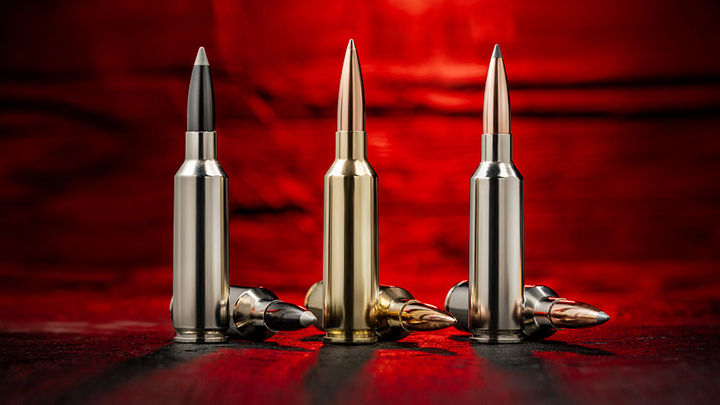
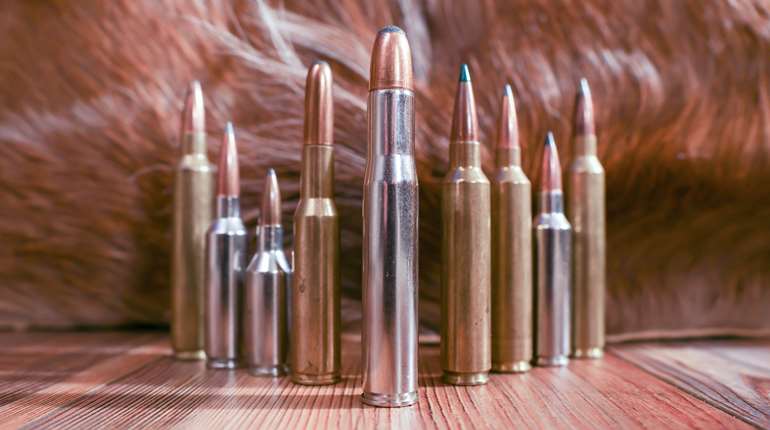
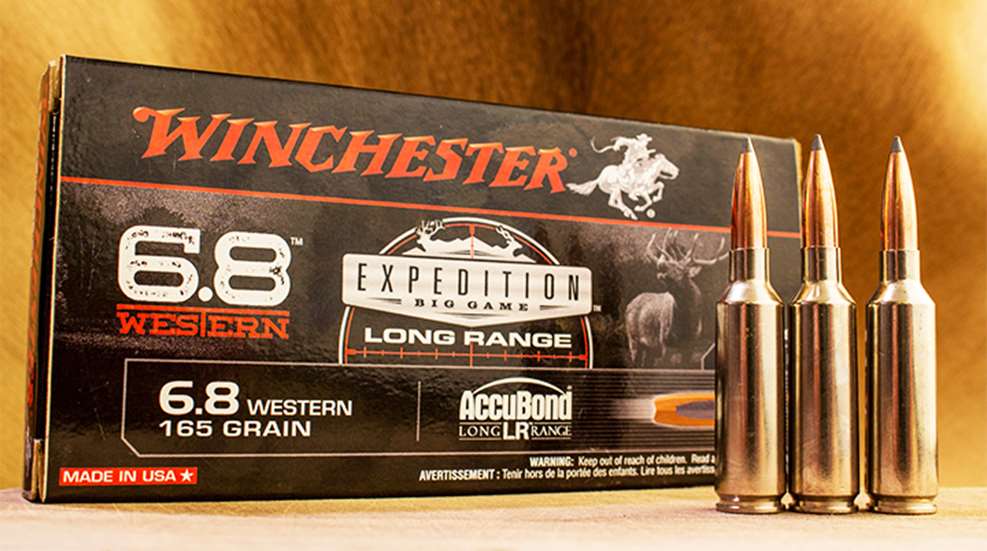
Inside the black Winchester box, a score of nickel-plated cartridges sat nose down in the Styrofoam insert, and upon pulling one out I saw what appeared to be a .270 WSM cartridge, except a bit shorter, with a long projectile on the business end. Glancing at the specifications on the back of the box, my eyebrows raised, and felt a smile creeping over my face. A 165-grain Nosler AccuBond Long Range, moving at a muzzle velocity of 2970 fps, from a short-action Winchester XPR was an intriguing prospect, and would make a great choice for both species we were after.
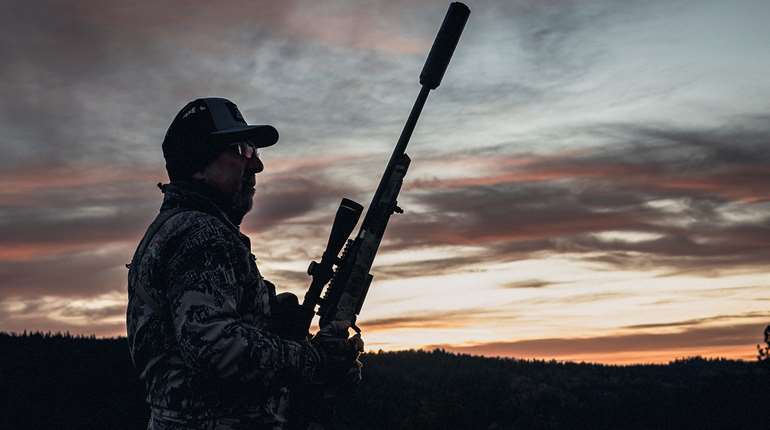
At last light of the following day, Leupold’s Shawn Skipper, our guide Eric Fleming and Yours Truly slipped over the break of a hill after a group of mule deer does with a pair of bucks in tow. Doing our best to maintain vertical stature in the mix of wet snow and Colorado clay, we got to the edge of a clearing on the side hill when Skipper spotted the first of those does, easing out of the brush. Eric spread the shooting sticks, and I prepared the rifle, in hopes the larger of the two bucks would follow the does. In that manner that gets us males in trouble far too often, the bucks followed as if drawn on a string. That 165-grain bonded core bullet travelled just over 200 yards before ending the prospective romance that 4x4 muley was hoping for. On the last day of the hunt, a spike elk would meet the same fate; though the shot was a bit closer, he went down in the same dramatic fashion. This experience was not just my own; the other hunters on that trip saw the same scenario unfold.
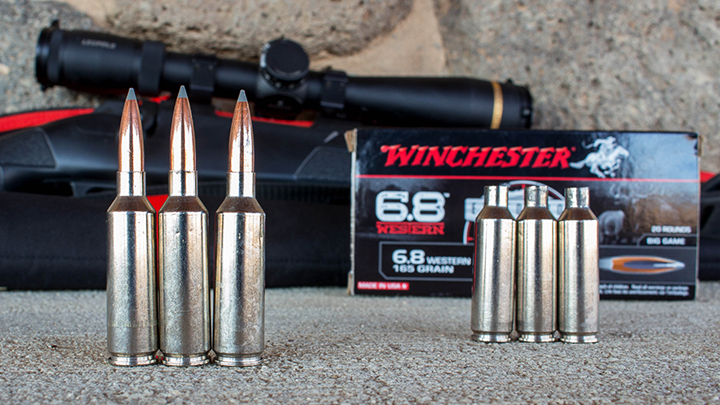
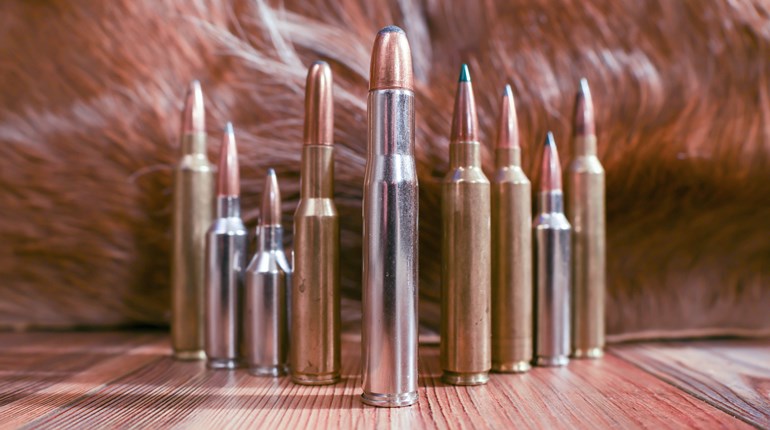
What exactly is the new 6.8 Western? Well, my initial suspicions were correct; it is a shortened version of the .270 Winchester Short Magnum, designed to allow proper seating of the longer .277-inch diameter bullets in a short-action magazine. The same 35-degree shoulder is carried forward from the .270 WSM, though the datum line—the distance from the cartridge base to the shoulder—has been reduced from the .270 WSM’s 1.664 inches to 1.583 inches, and the case length shortened from 2.100 inches down to 2.020 inches. According to the SAAMI specifications, the maximum cartridge overall length for the 6.8 Western is 2.955 inches; for the Winchester 165-grain AccuBond Long Range load I measured an average overall length of 2.895 inches. However, that ABLR is not the only bullet offered for the 6.8 Western.
Browning is manufacturing a 175-grain Long Range Pro Hunter load—a Sierra GameKing with the gold Browning polymer tip—driven to a muzzle velocity of 2830 fps. With a G1 B.C. of 0.617 (in comparison to the 165-grain ABLR’s G1 of 0.620) the Browning load gives the shooter an option of a cup-and-core bullet, with a Sectional Density of 0.326, capable of excellent wind deflection values and retained energy.
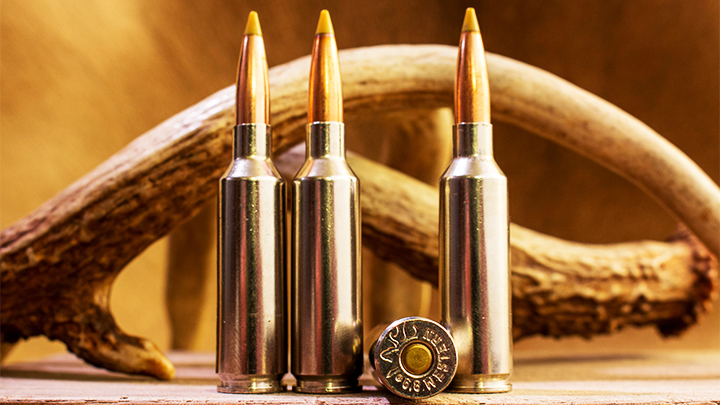
For those who are wondering why Winchester would go through the time and expense to produce their third cartridge in this bore diameter, and especially one which will inevitably have to compete with its own timeless .270 Winchester, look no further than the modern cartridge trends and popularity of long range shooting. The .270 Winchester and .270 WSM both share a 1:10” twist rate, which has precluded the use of most bullets heavier than 150 grains. To the average deer or antelope hunter this may not pose an issue, and at woods distances bullets between 130 and 150 grains will assuredly suffice. But Winchester decided to have the 6.8 Western pick up where the .270 WSM left off, and to do that they first needed to change the twist rate in the barrel.
The 1:10” twist rate was scrapped, and a 1:7.5” twist was employed to properly stabilize those long 165- and 175-grain bullets. Does this mean that we’re giving up the 130-, 140- and 150-grain slugs which are so readily available in the .277-inch caliber? Not at all, though at the time of this writing, you’ll have to handload those bullets, as the loads I've outlined above are the only two available. I have it on good authority that dies will be available shortly, and I can say that this cartridge, with the ability to handle bullets from 130 to 175 grains, is going to be popular among the reloaders.
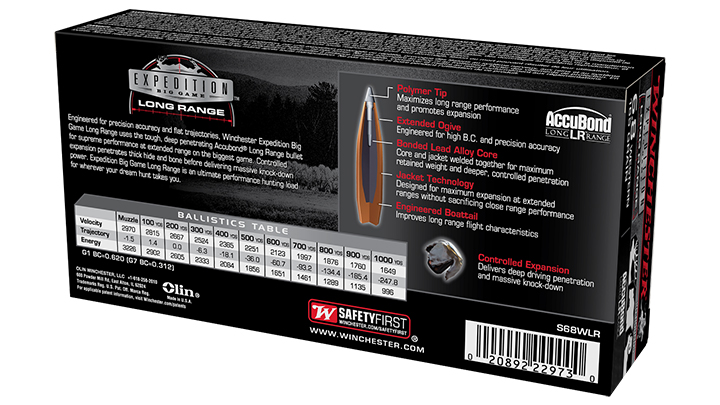
Though the 6.8 Western does not have the Magnum surname, make no mistake that this is a magnum cartridge. That 165-grain load—with a sectional density (SD) of 0.307, G1 BC of 0.620, G7 BC of 0.312 and a muzzle velocity of 2970 fps—will give a trajectory much like the .300 Winchester Magnum with a good 180-grain bullet, at least out to 500 yards. With a 200-yard zero, the 6.8 Western 165-grain ABLR load will strike 6.3 inches low at 300, 18.1 inches low at 400 and 36.0 inches low at 500 yards. That bullet starts out with over 3,200 ft.-lbs. of energy at the muzzle and still has 1,850 ft.-lbs. at 500 yards. Is that enough energy to handle a bull elk? Well, ask Browning’s Shaundi Campbell; she put a 5x5 bull elk in the salt with one well-placed shot at a bit over 450 yards. Nosler’s AccuBond is, undoubtedly a fantastic design, and the 6.8 Western is one helluva platform to deliver it. By the way, this load will still deliver 996 ft.-lbs. of energy at 1,000 yards.
Winchester’s new cartridge is another of what I call a ‘revisionist’ design, in that the case length and capacity will be sacrificed in order to utilize the longer bullets within a specific magazine length. The 6.8 Western isn’t as speedy as the longer .27 Nosler, but isn’t as hard on the throat of the barrel either. Judging by the accuracy I saw in the Winchester XPR rifles on that hunt—three shot groups running between ½ and ¾ MOA—and by the terminal performance on both elk and mule deer, Winchester has a winner here. There were no feeding issues at all (I wonder if moving the shoulder back ever-so-slightly helped the feed angle?) and I wouldn’t be surprised if the 6.8 Western takes what market share the .270 WSM currently occupies.