You need not hunt buffalo to realize the more you practice with your lever gun, the more prepared you’ll be to make a critical shot. The difference between a well-placed bullet and a miss—or no shot at all—often comes down to doing everything right in the span of a few seconds, no matter whether it’s a deer, bear or squirrel that suddenly appears in range. A quick-handling lever-action excels in situations where seconds count, but like any rifle is only as good as the hunter who’s carrying it.
Last spring Gunsite Academy conducted a special training class that combined elements of the school’s 270 Rifle, Hunter Prep and Defensive Lever Gun courses in order to teach students how to best use a lever-action’s qualities to their advantage. Just as important, instructor and lever-gun lover Lew Gosnell also pointed out the shortcomings of lever-actions and offered advice on how to deal with them. I’ve hunted with a lever gun for 30 years, but I came away from the three-day class with more confidence in my ability with a Winchester Model 94 than I had developed in the past three decades. Here are some of the points that stuck with me.
Remember the Hammer
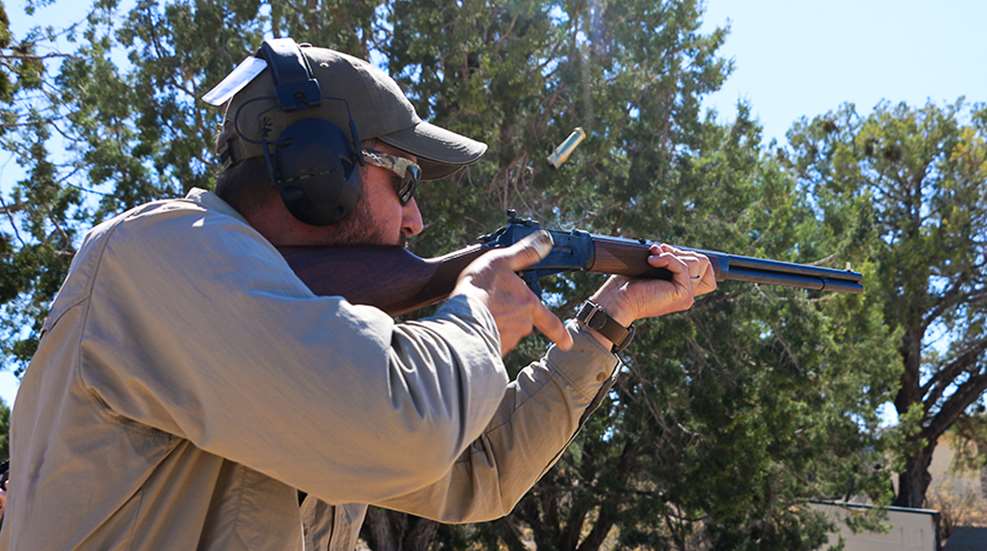
Traditional lever guns have an exposed hammer, and cocking it should be part of the gun-mounting process once you’ve decided to shoot. Thumb back the hammer while bringing the buttstock to your shoulder and directing the muzzle toward the target (with your finger off the trigger, of course). That way, when your sights align with the animal’s vitals, you are ready to trigger an immediate shot. If your lever gun also has a push-button hammer-block safety—many modern variations of the classics do—disengaging it should also happen during the mount.
Work that Lever
Experienced lever-action shooters make cycling the action look like one smooth movement, but it’s actually a two-part process. Be sure to first push the lever loop all the way forward to eject the spent shell and cock the hammer before pulling it back to chamber a fresh round. Forcefully running the lever forward until it stops will prevent the dreaded short-stroke, which leads to a jam. There is no need to baby the action; run it like you mean it. Strive to keep your cheek on the stock and your dominant eye aligned with the sights or scope while you work the action. This is easier than it sounds and takes concentration, so practice it repeatedly during dry-fire sessions.
Always Reload
Most lever guns hold more ammo than you’ll need to down an animal—most of the time. But not always. If you’re not positive that buck is dead, it’s smart to reload as soon as you no longer have an opportunity to take a shot. Carry ammo in a holder on your belt or on the buttstock of your rifle so you can grab individual shells quickly. The Ammo Caddy from VersaCarry attaches to both belt and buttstock, and lets you move it between the two as the situation dictates.
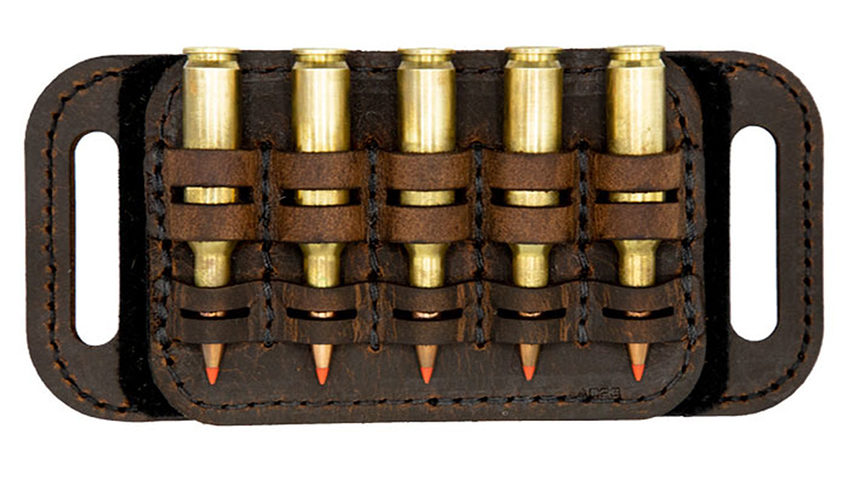
Refilling the magazine tube is as simple as pushing rounds through the loading gate in the receiver of most lever guns. Be aware, however, that the gate can close on the tip of your finger, which is especially painful and often bloody if you’re not wearing gloves. Leave the rim of the first cartridge outside the gate (tension will hold it in place) to make feeding the next round easier. Repeat until the magazine is full, pushing the last cartridge all the way into the tube. Reload with the rifle held near eye level so you can watch the area where you last saw the animal while using your peripheral vision to guide the loading process.
If you run the rifle dry and need to take another shot right away, in most lever-actions you can load a round through the open action port and close the lever to chamber it. This is more efficient than loading a round into the magazine tube and then cycling it into the chamber, and with practice you can become quite fast at single-loading without taking the gun from your shoulder.
Set Your Sights
A finely crafted open sight is a smart upgrade to a fine lever-action rifle. Here are two suggestions.
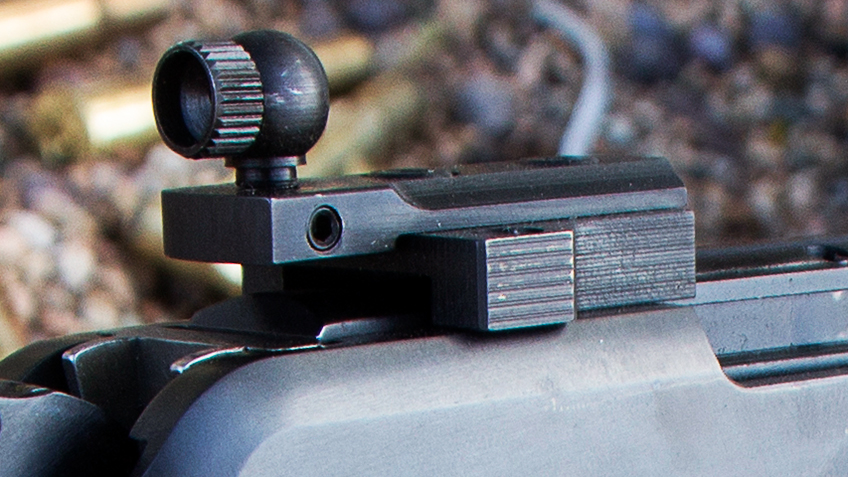
Skinner Sights are handmade in Montana. On the company’s website lever gun fans will find solutions for Marlin models 39, 1894, 1895 and 336, and Winchester models 1871, 1886 and 1894. Many Henry rifles may be outfitted with Skinner’s barrel-mounted dovetail sight (blued or brass) and an octagon barrel screw mount. More choices are available for rifles from Rossi, Ruger, Browning and others. These are quality sights machined from solid steel or brass bar stock then hand-fitted to precise tolerances. All are adjustable for windage and elevation. Every purchase is covered by a 30-day money-back guarantee. For more information, visit skinnersights.com.
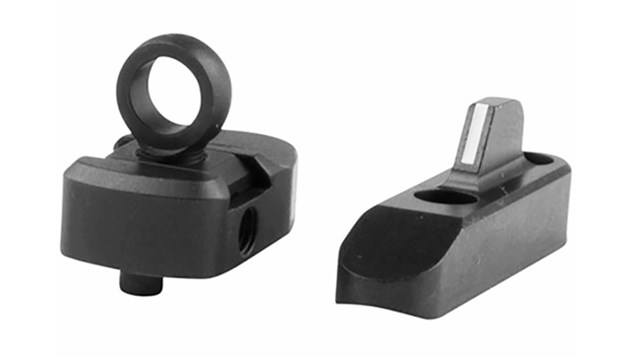
XS Sights of Texas has been in business since 1996 (once upon a time it was known as Ashley Outdoors). Its Ghost Ring rear aperture, made in the USA, has been famous for 20 years. Ghost Rings are adjustable for windage and elevation; sets include .191 and .230 apertures, and a white-on-black front post for fast target acquisition. In most cases XS packages match existing screw holes to minimize or eliminate drilling. Sights are available for models from Marlin, Winchester, Puma, Rossi and more. For more information, visit xssights.com.
Add a Pad
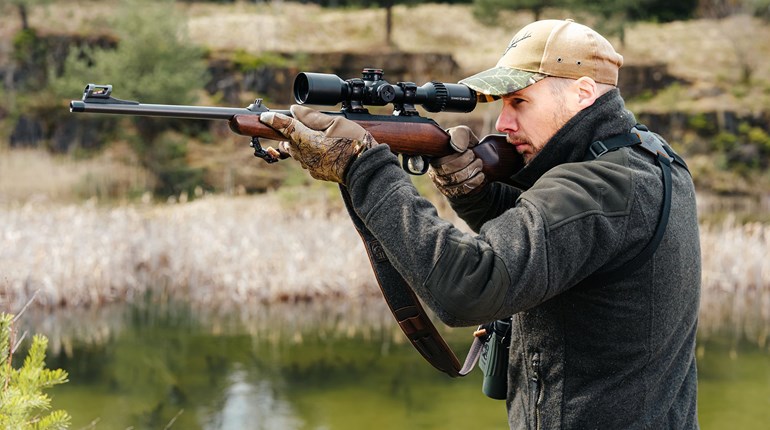
Many hunters top their lever guns with scopes because most of us shoot better with optics than with irons. Classic lever-actions, however, have buttstocks that are best designed for iron-sight use. When a traditionally styled lever gun comes to the shoulder, its low comb places the shooter’s dominant eye just above the bore, where the sights sit, while allowing the shooter to snug a cheek against the stock for a solid weld.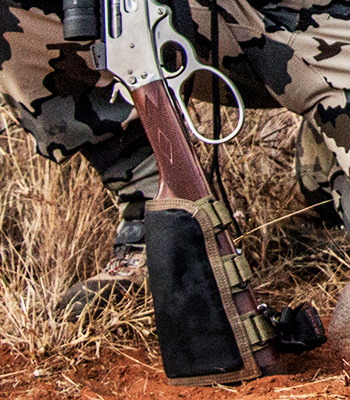
Since a reticle is typically positioned an inch or more above the irons, cheek weld on most lever-gun buttstocks becomes more like chin weld when using a scope. Eye alignment with the scope can become inconsistent, and accuracy can suffer. The solution is to attach a cheek pad to the buttstock, which in essence raises the comb. Blackhawk offers a nylon/no-slip design with different inserts to change the comb height; it attaches to the stock via hook-and-loop straps. If you want something more traditional, Rob Lowe Custom Leather makes a lace-up leather riser.
Modern Lever-Gun Loads for Hunters
Lever-actions are seeing new life breathed into the platform thanks to advancements in ammunition for the rifles. The .45-70, for instance, has several tiers of modern ammo available that take advantage of the more contemporary loads on the market today.
First level loads like the 300-grain SJHP and 405-SJSP from Remington generate about 1,000 ft.-lbs. muzzle energy. They’re low-pressure loads suitable for use in any .45-70; I’ve used them on black bear, warthogs and wildebeest with great success.
Second level .45-70 loads such as the 300-grain Federal Fusion or Barnes Vor-Tx generate twice the energy, expand wide and penetrate deep. Just prior to my buffalo hunt, I used the Barnes load to take a mountain zebra stallion. For anything in North America and African plains game—even lion and leopard—these are ideal.
Third level .45-70 loads are topped with hardcast bullets weighing more than 400 grains. They generate 3,000-plus ft.-lbs. of kinetic energy and will penetrate on par with any dangerous-game cartridge. The 430-grain Buffalo Bore ammunition all the buffalo hunters used performed admirably. The key, like with just about anything related to hunting, is putting them in the killing spot.
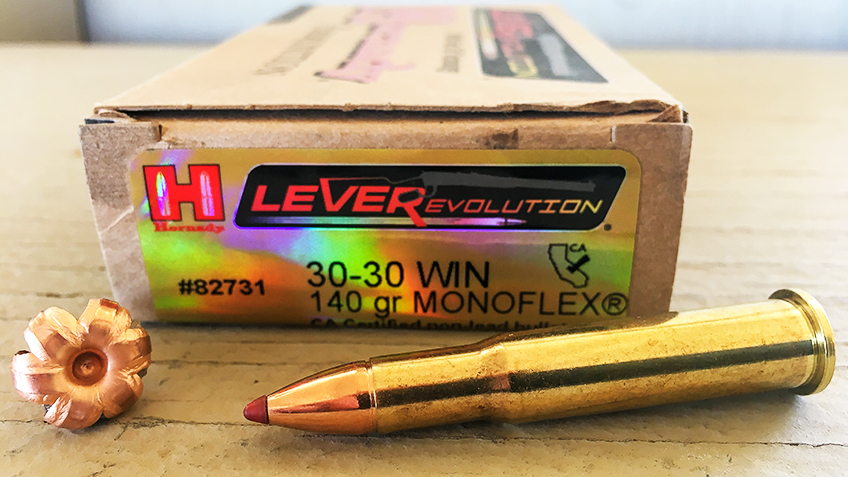
Aside from these .45-70 loads, lever-gun loads abound for those looking for options outside of the realm of the revered big-bore government cartridge, such as the classic .30-30 Win.
Hornady offers a line of specific lever-action ammo, Leverevolution, topped with the company’s Monoflex or FTX bullets. Normally, pointed bullets are a no-go in lever guns, but Hornady’s Flex Tip mitigates that problem while providing better expansion across the velocity spectrum. The tip and a secant ogive improves ballistic coefficients for long-range performance, as well. For example, the company’s 140-grain Monoflex bullet, with a BC of .277, in the .30-30 Win. Leverevolution load travels at 2465 fps and produces almost 2,000 ft.-lbs. of energy at the muzzle. When zeroed at 200 yards, the bullet drops only a foot or so at 300 yards, and still carries more than 850 ft.-lbs. of energy at that distance.
Federal and Winchester both offer heavy-for-caliber .30-30 loads for those looking for more bullet weight for penetration purposes. Federal’s Fusion and Winchester’s Power-Point 170-grain loads both produce 2200 fps at the muzzle, and still carry around 1,000 ft.-lbs. of energy at 200 yards.