I admit it: I sound more like a turkey with a call in my hands than one in my mouth. Most of the guys I hunt with do, too. Although experienced turkey hunters are expected to be masters of the mouth call, the truth is the pot call is easier for most hunters to run—and to run well. And while I’ve listened to expert callers who can narrate a hen’s biography with a diaphragm, a pot can produce a wide range of turkey talk, too. Plus a pot call puts control of tone, volume and more subtle elements of sound such as pitch and tempo at the fingertips, where the eyes can help guide the caller.
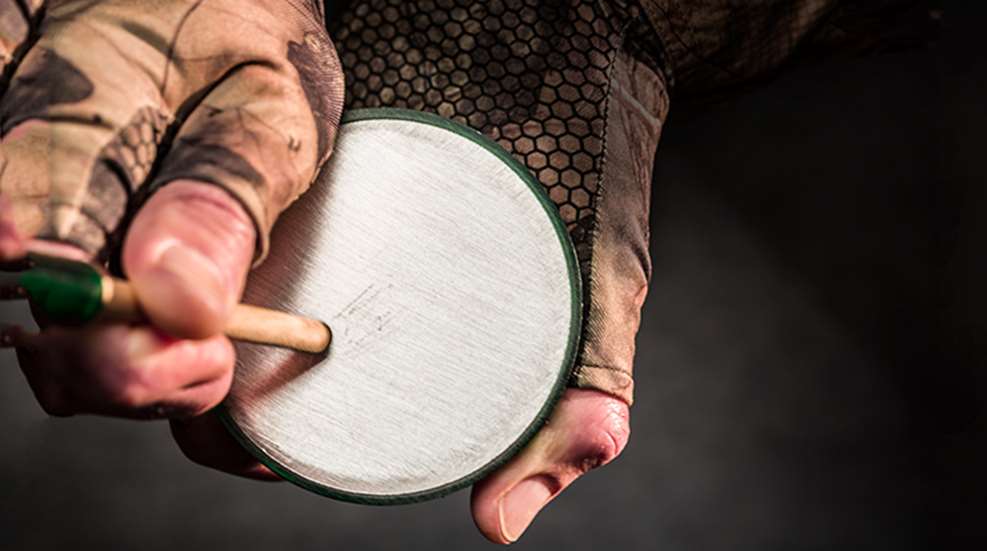
The simple concept of the pot call—moving a wooden dowel across the surface of a hard material to create friction and therefore sound—has tricked turkeys since the 1800s. Old-time woodsmen would cup a piece of slate in one hand and “scratch” on it with a peg to lure longbeards into range. Pot calls are sometimes still referred to as “slate” calls because of this, even though many of today’s calls use something other than slate for the calling surface. The peg is now called a “striker,” may or may not be made of wood, and varies widely in shape. Of course the biggest difference between today’s pot calls and the old-timers’ slate is the pot itself, which is turned from wood or made of a composite material and houses an internal sound board that aids in resonance.
Advances in materials and manufacturing have made pot calls more versatile, even specialized, as different combinations of surface, pot, sound board and striker produce different sounds. The downside is all these options can be overwhelming. I asked John Perry, brand manager for Knight & Hale Game Calls, and champion caller Chris Parrish to dissect pot calls and explain what really matters when choosing one to use this spring.
On the Surface
Slate
The original call surface is still the best for beginners, suggests Perry. “Consistency is one of its greatest advantages,” he says. “The closest thing to a ‘bad’ note you will get off a slate call will be a dull note.” Slate produces a soft, subtle tone, which makes it best for calling to birds on the roost or just after they’ve pitched to the ground.
Aluminum
“This is the loudmouth of pot call surfaces,” says Parrish. “Aluminum is the go-to in windy conditions or in open country. I love to use an aluminum call as a locator as well.” Another benefit: aluminum will run when wet (with a waterproof striker) because it’s not porous like slate. It is higher and somewhat limited in pitch, but Perry says it’s underrated.
Ceramic
Think slate but with a higher pitch and the ability to turn up the volume. Parrish notes that a ceramic surface allows for consistent striker contact, which makes it easy to use. Because of its porous nature, though, it will soak up oil from hands and needs regular conditioning or sanding. Perry likes it for clean yelps and quick, loud cutts.
Etched Glass
Acid-etching helps create friction. “This is another excellent surface for beginner and intermediate hunters,” says Perry. “You get great yelps and cutts without having to worry so much about conditioning or your skill level.” Although glass isn’t as versatile as crystal, it’s also not as expensive. “It’s a great all-around surface,” notes Parrish.
Crystal
Perry calls crystal the epitome of pot surfaces. “The versatility in tone you get is pretty insane,” he says. “You can go from soft to loud, deep to high, raspy to clean.” The drawback is crystal has almost no natural friction, so it requires a lot of careful conditioning and skill with a striker to make it sound right. Crystal, like aluminum, also plays well in the rain.
At the Tip
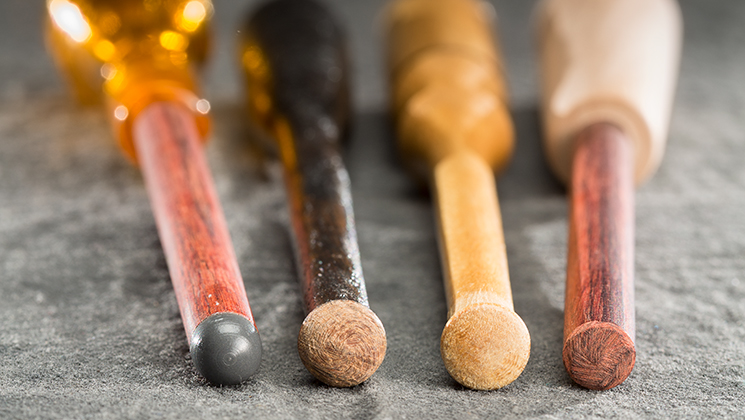
The striker has as much to do with the type of sound coming from a pot call as the surface and the other parts, explains Parrish. “Matching the striker to the pot is critical,” he says. “The length and weight along with the materials make a particular striker work best on a given surface.” Most manufacturers include strikers with their pot calls that take many of these variables into account. Still, says Perry, hunters can change strikers to produce different sounds.
“What makes the most difference is the striker’s tip. You can change the shape of the tip and make a significant difference in how you run the call.” Wide-tipped strikers are the most user-friendly. Those with a finer tip are more versatile, especially on a crystal surface, but can be difficult to run because they don’t provide as much contact. Flat-tipped strikers produce a higher peak at the top of the yelp. Some strikers, like the Knight & Hale EchoTech, have tips covered in a waterproof material that maintains friction when wet.
Regardless of the striker’s shape and material, conditioning the tip is a must. Keep it roughed up with light sandpaper to prevent dust from the pot’s surface from filling its texture.
Around the Edges
“It is funny how much the pot gets overlooked when talking about pot calls,” notes Perry. “It’s an important part of the anatomy, which is built around controlling friction and vibrations.” Such control hinges on aspects like the density of the pot material, the depth and size of the pot, the placement of the sound board, even the amount of glue used in construction. Although most turkey hunters don’t need to be rabid material specialists, they should keep a few things about pot components in mind.
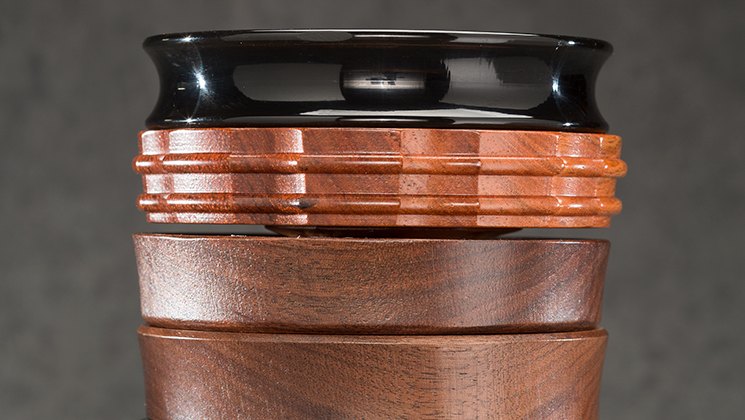
■ Acrylic is dense and provides volume. It’s also waterproof. Hand-turned acrylic holds tight tolerances—important for assembly—and is stunningly beautiful when polished.
■ Wood is the traditional pot material. It’s favored for its acoustics and the air of craftsmanship it lends to a call. Walnut, cherry, poplar and purpleheart are pretty but have a weakness: Temperature and moisture can change the way a wood pot call sounds, and in extreme cases can even damage it.
■ Polycarbonate is both durable and cost-effective. It’s molded, which aids in consistency from pot to pot, but it lacks the acoustical qualities of acrylic and wood. This is one reason why the sound board, usually made of acrylic or slate, is so important.